
Bucket List Species
Yellowtail Kingfish
World Record
114 lb 10 oz / 52 kg
New Zealand
Distribution
Temperate and subtropical waters of the Southern Hemisphere
Season
Available year-round in parts of their range
Techniques
Live baits, vertical and slow-pitch jigs, poppers, stickbaits, soft plastics, trolling
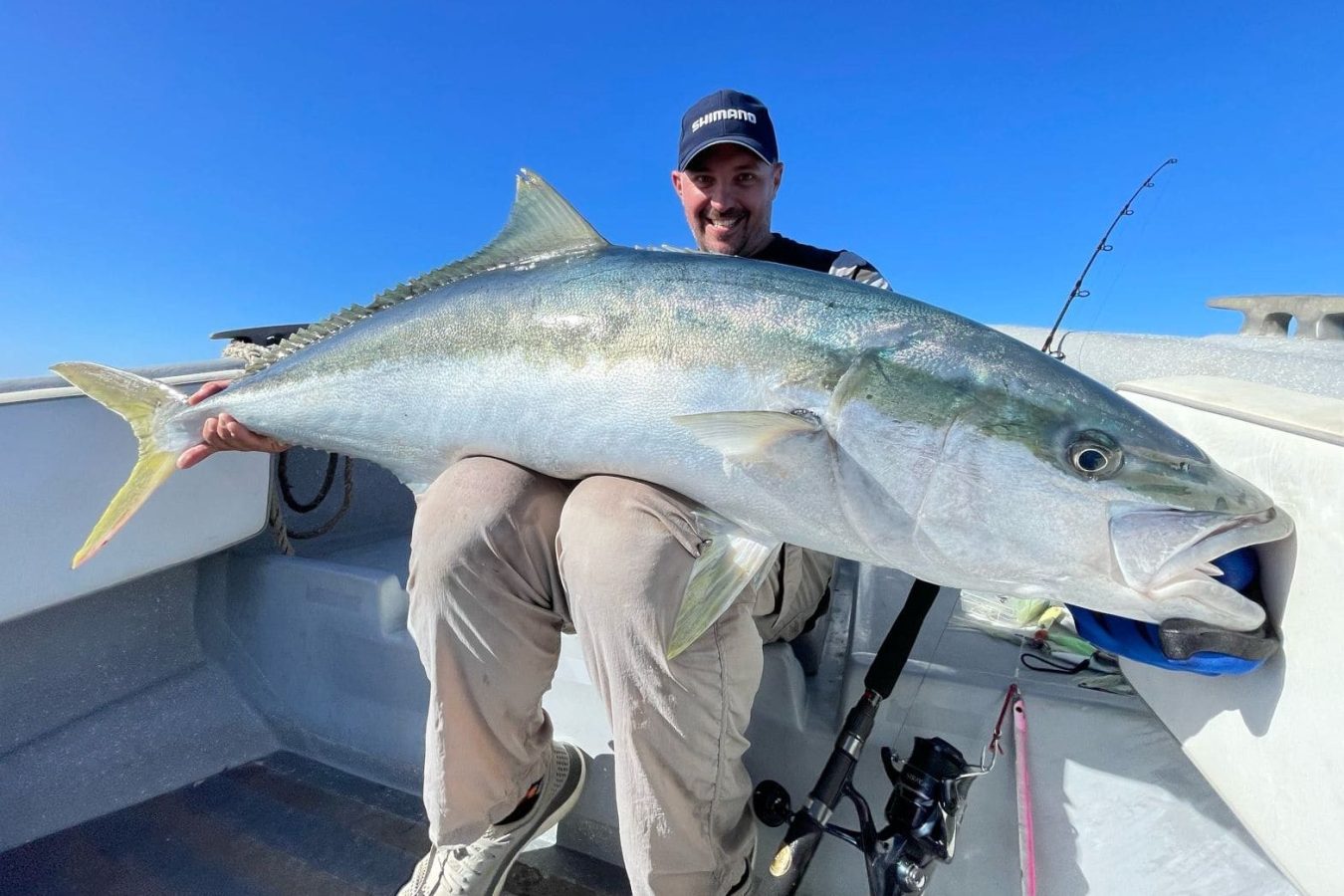
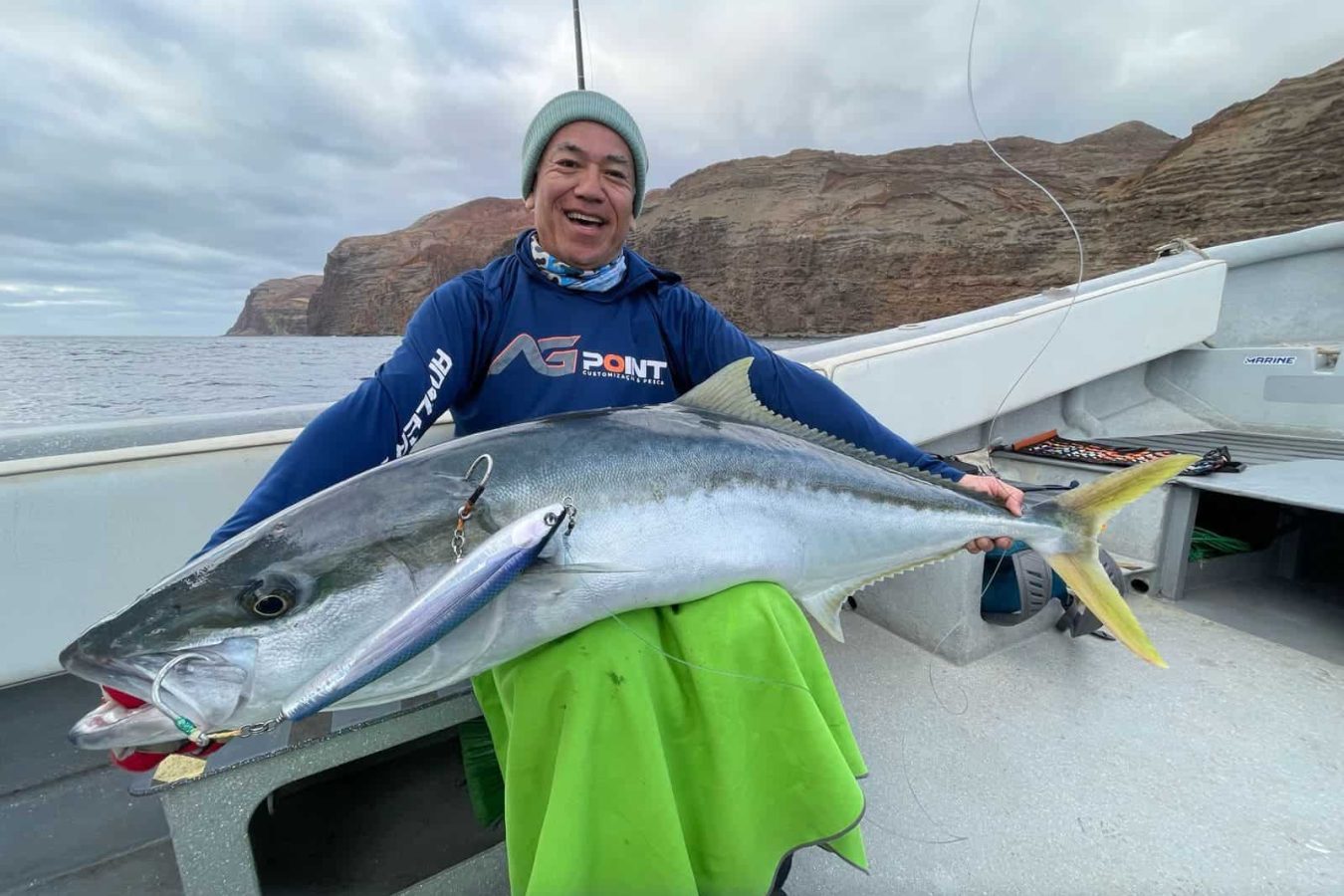
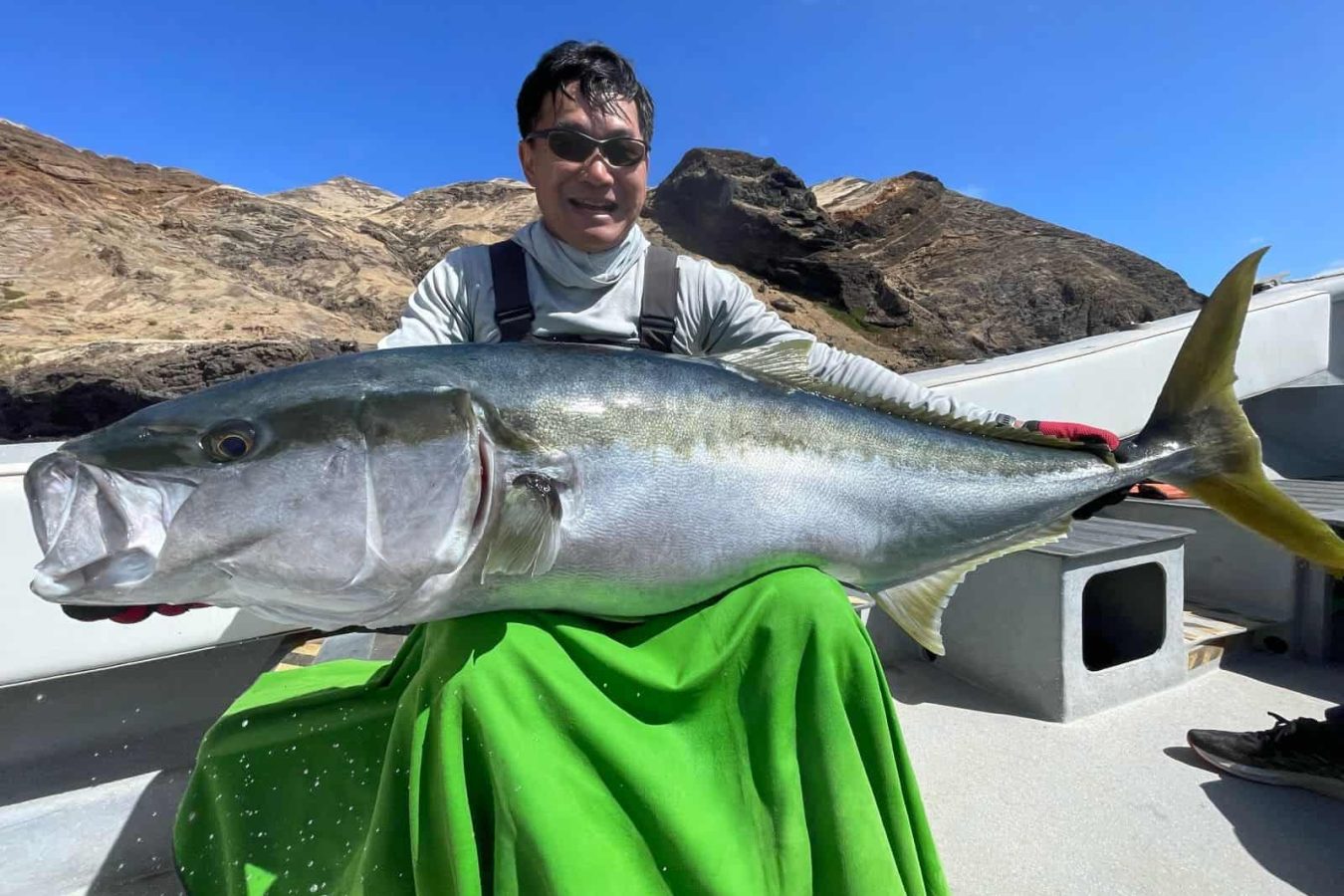
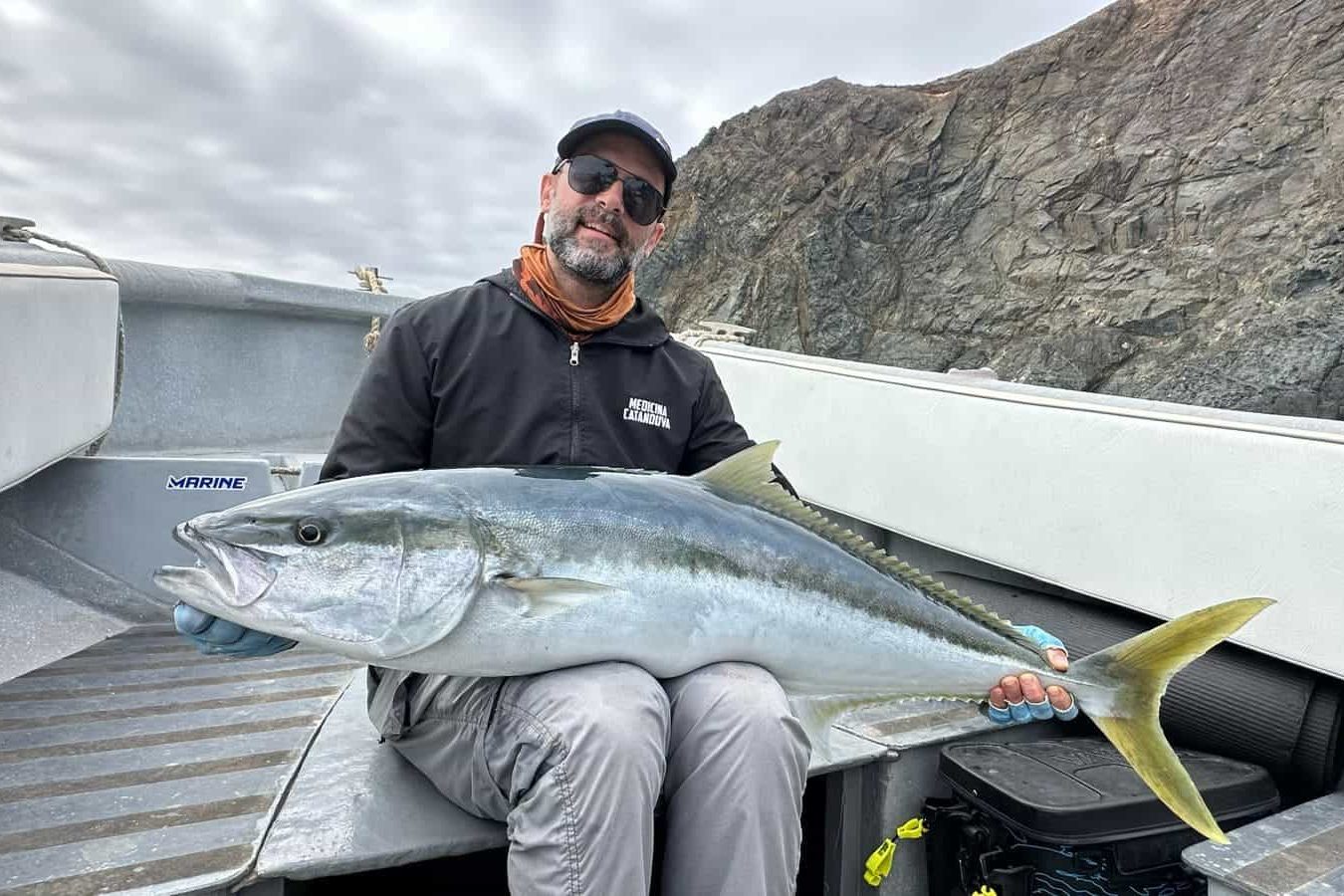
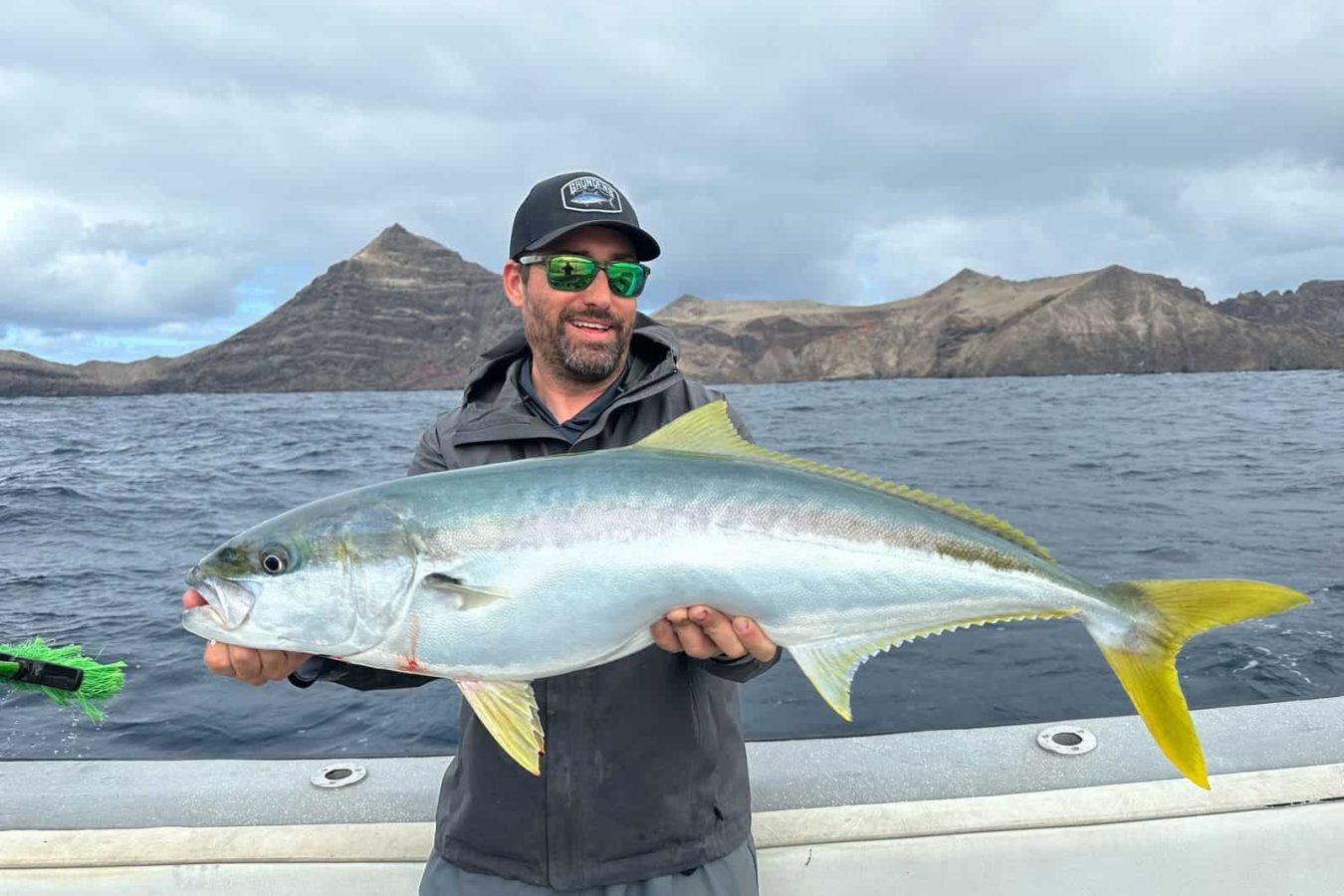
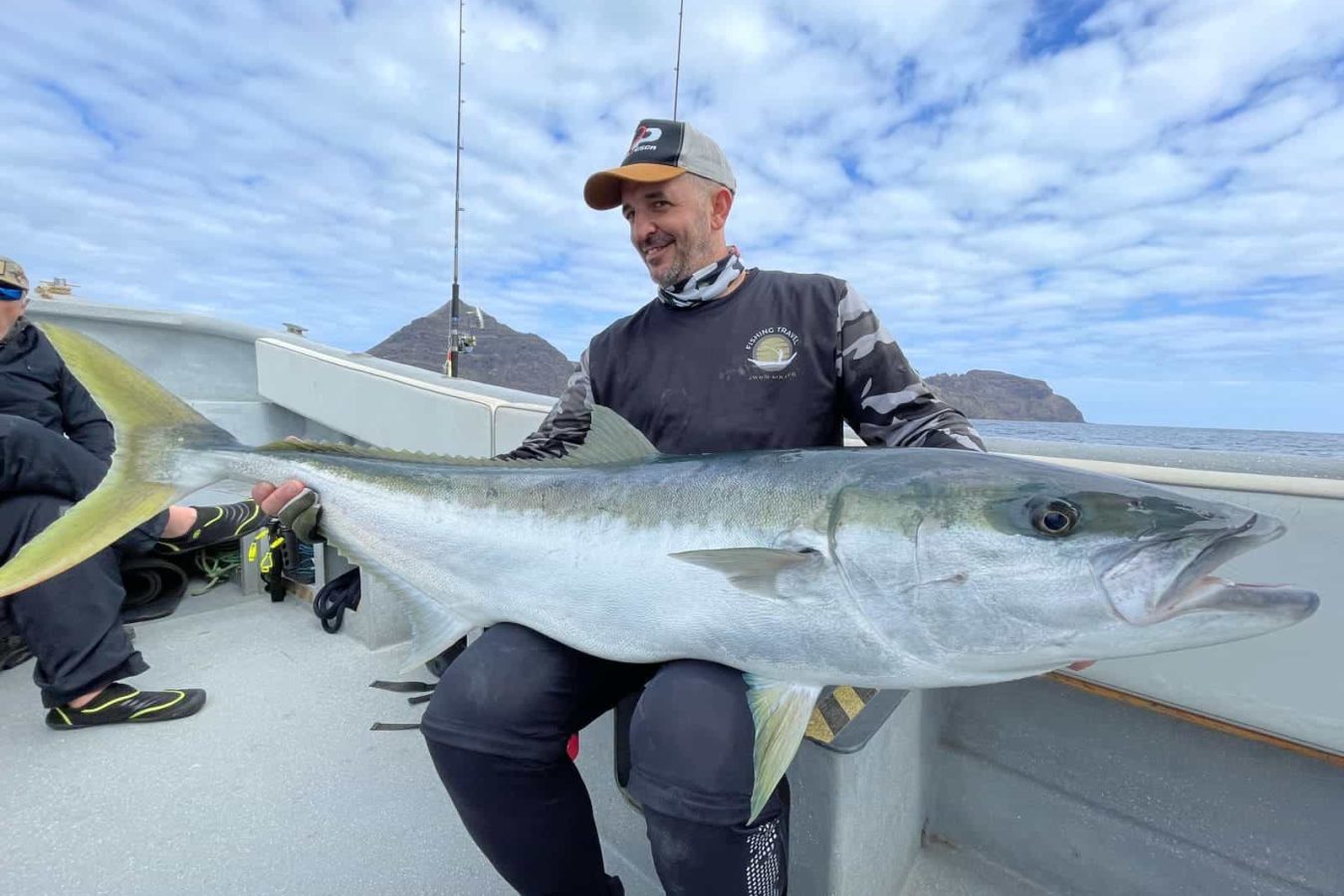
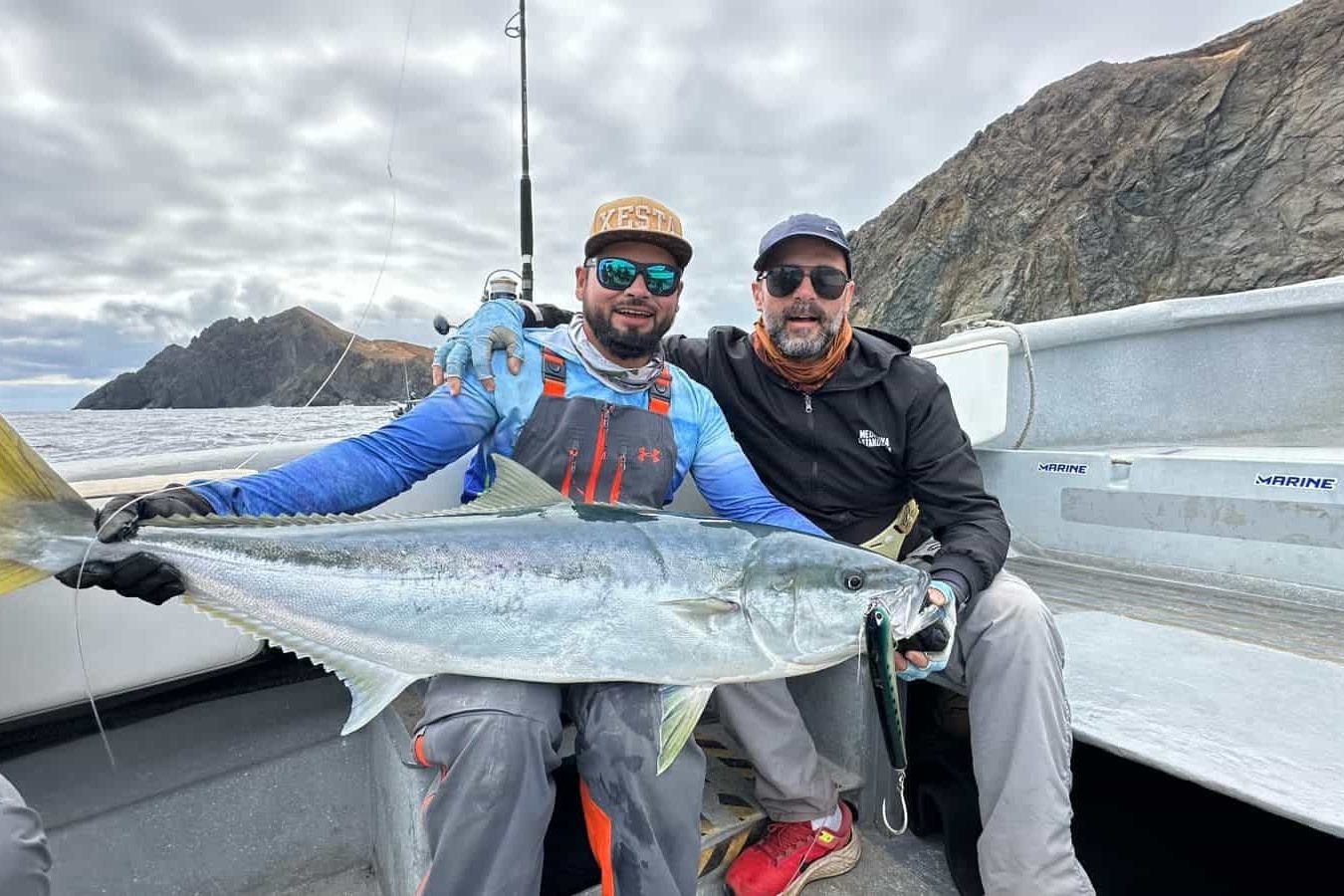
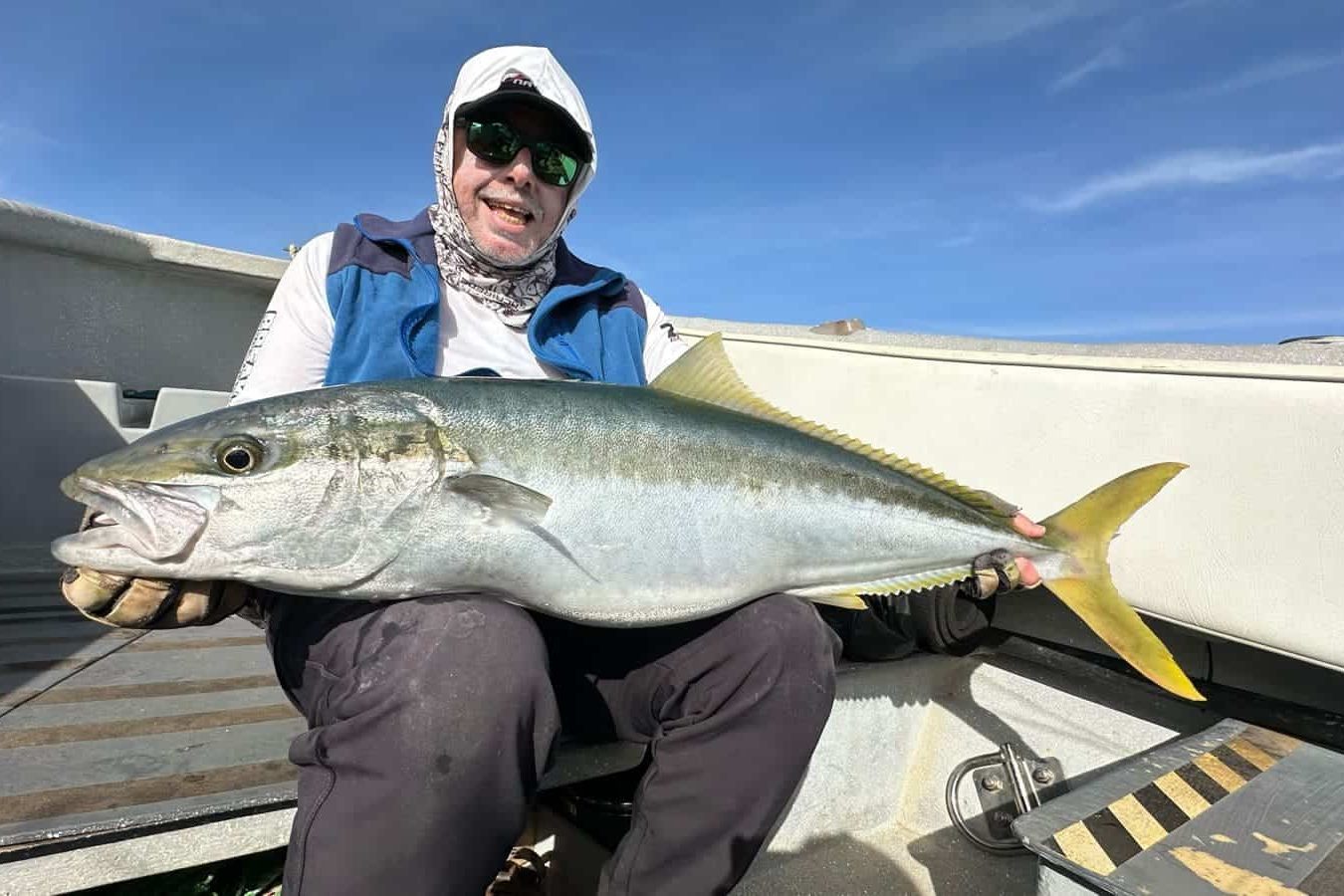
Yellowtail Kingfish
Species Overview
Yellowtail kingfish (Seriola lalandi) are large, athletic members of the jack family and one of the most highly regarded gamefish in southern waters. Known simply as kingfish or kingies in Australia and New Zealand, they have streamlined silver bodies, greenish-blue backs and a clear yellow stripe running towards a bright yellow, deeply forked tail. Large fish become thick through the shoulders and tail wrist, giving them the build needed to accelerate quickly and maintain heavy pressure once hooked.
They belong to the same broad group as greater amberjack, Japanese amberjack and other Seriola species, but yellowtail kingfish have their own appearance, range and character. Their long, clean profile separates them from the deeper-bodied greater amberjack, while the yellow lateral stripe and tail are usually the most obvious identifying features.
Habitat & Distribution
The species is widely distributed through temperate and subtropical waters, with major populations around Australia, New Zealand, southern Africa and parts of South America. New Zealand and southeastern Australia are particularly well known for large fish, while South Africa has a long-established fishery around reefs, offshore banks and rocky coastlines. In the eastern Pacific, similar yellowtail populations are traditionally associated with California and Baja, although their exact taxonomic classification has been treated differently over time.
Kingfish are closely connected to structure, but they are not reef-bound fish. They patrol rocky headlands, kelp beds, offshore islands, wrecks, pinnacles, artificial reefs and deep channels, often gathering wherever current concentrates bait. They can also enter harbours and large bays, sometimes feeding around pylons, marker buoys and steep shoreline structure within sight of a city.
Their depth range is equally impressive. Kingfish may hunt close to the surface in only a few metres of water during warmer periods, then move onto deeper reefs and shelf structure exceeding 200 metres. Some schools remain around one productive reef for a time, while others travel considerable distances in response to currents, water temperature, spawning movements and food. One tagged fish travelled roughly 970 kilometres along Australia’s southeast coast in only 57 days, showing how quickly these fish can move when conditions change.
Size & Feeding Habits
Yellowtail kingfish are fast, opportunistic predators that feed mainly on fish and squid. Sardines, mackerel, scad, garfish and other schooling baitfish all form part of the diet, along with squid and occasional crustaceans. They may hunt individually, but competitive schools can be far more aggressive, pushing bait against reefs, shorelines or the surface before attacking at speed.
This behaviour can make them highly visible. A school may suddenly appear beneath wheeling birds, around a bait ball or behind a hooked fish. At other times, the only sign is a group of marks holding deep beside a pinnacle or wreck. Their ability to feed throughout the water column is one reason so many different fishing methods work for them.
Most kingfish encountered by anglers weigh somewhere between 5 and 20 kilograms, although local averages vary widely. Fish above 20 kilograms are serious specimens, while a 30-kilogram kingfish has the weight and power to dominate even heavy tackle. Exceptional fish exceed 40 kilograms, and the recognised all-tackle record stands at 114 pounds 10 ounces, or approximately 52 kilograms. Two fish share that record, both caught in northern New Zealand waters.
Fishing
Kingfish can be targeted with spinning, conventional and fly tackle. Live baits remain one of the most reliable methods for large fish, particularly around deep reefs, headlands and offshore structure. Vertical and slow-pitch jigs are widely used when schools are holding deep, while poppers, stickbaits and soft plastics come into their own when fish rise through the water column. Trolling and downrigging cover larger areas, and fly anglers regularly target surface-feeding fish around harbours, reefs and bait schools.
Whatever the method, the first run explains the kingfish’s reputation. The fish usually turns towards the nearest reef, wreck, kelp bed or mooring and applies immediate pressure. In Australia, large fish are often called hoodlums, a name earned through their habit of finding the one piece of structure capable of ending the fight. Even in open water, they remain difficult opponents, using long runs, sudden changes of direction and heavy circles beneath the boat.
Yellowtail combine the speed of a pelagic predator with the close-range power of a reef fish. They can be caught from rocky shorelines, inside major harbours or above remote offshore pinnacles, and every setting reveals a different side of the species. A school-sized kingfish is already a proper fight. A mature fish with heavy shoulders and a clear route back to structure is something else entirely.