
Bucket List Species
Tarpon
World Record
286 lbs 9 oz
West Africa
Peak Season
Year-Round
Fishing Techniques
Spinning • Fly Fishing • Conventional
Distribution
Western Atlantic • West Africa
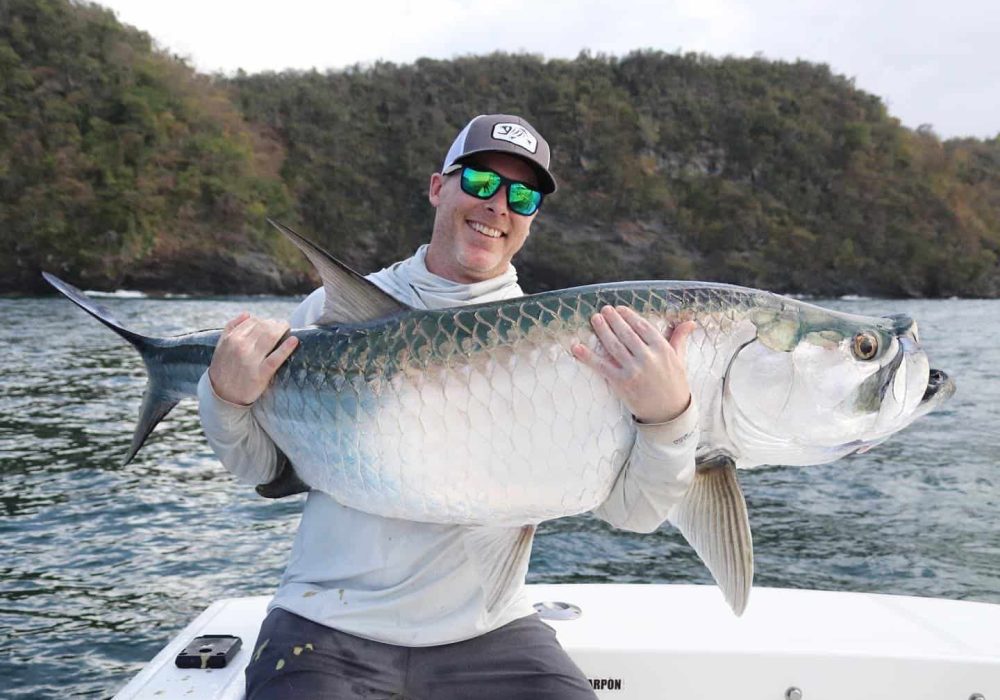


Tarpon (Megalops atlanticus)
Species Overview
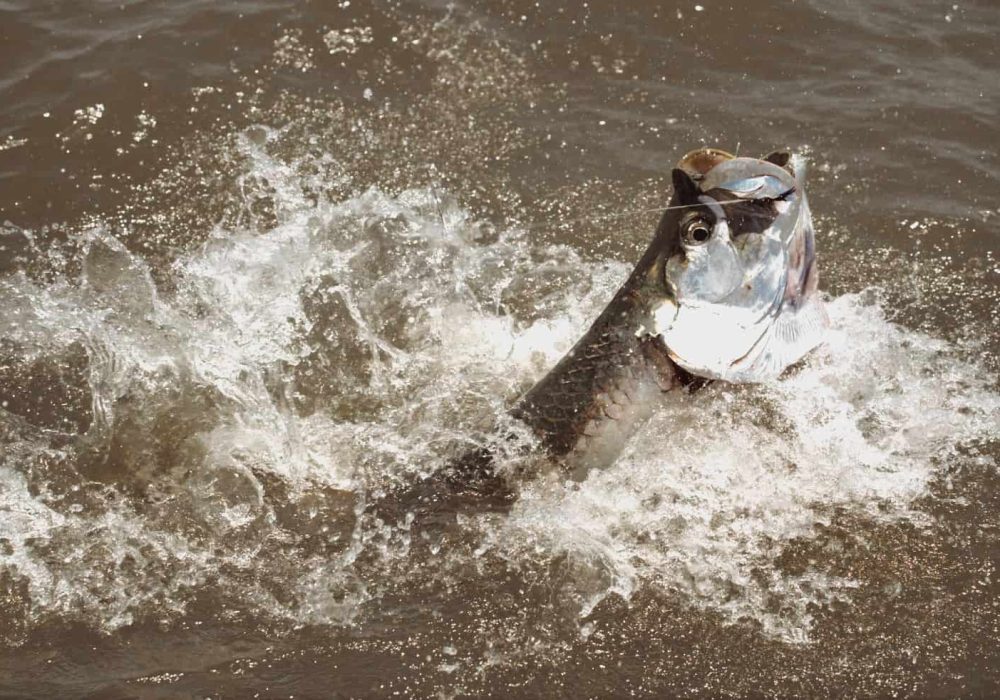
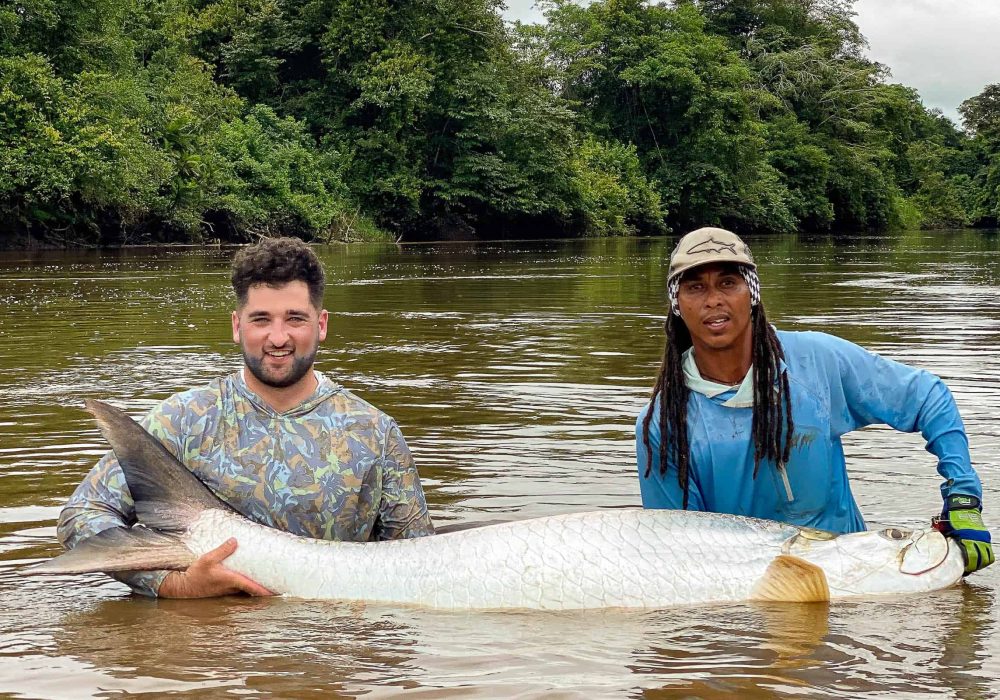
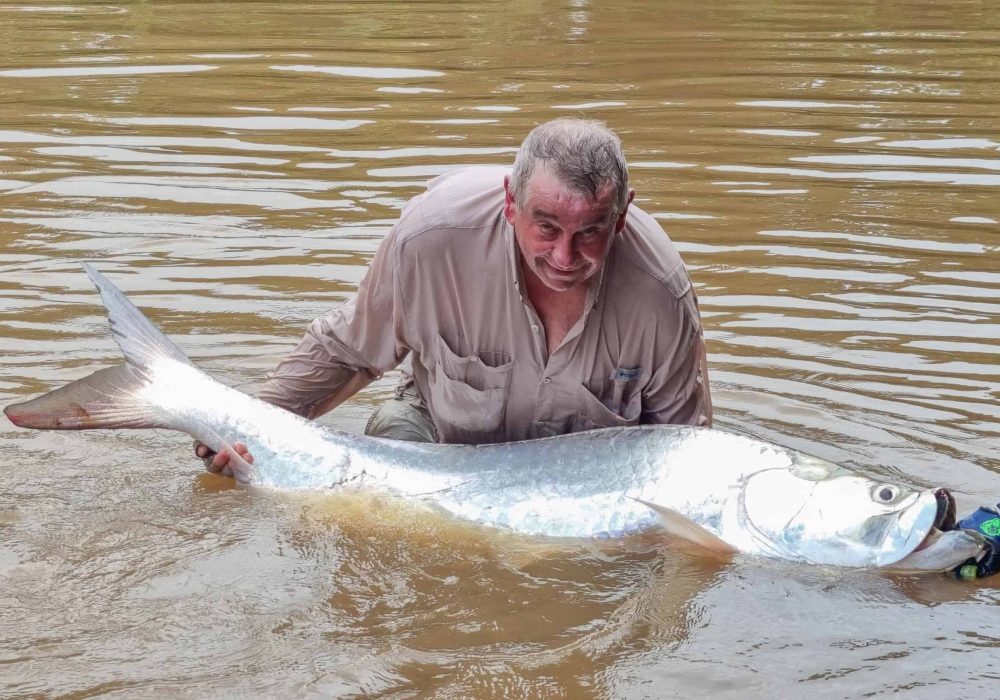
Tarpon (Megalops atlanticus) are one of the great saltwater gamefish of the Atlantic, instantly recognisable by their huge silver scales, deeply forked tail, large upward-facing mouth and long trailing ray from the dorsal fin. Known almost universally as the Silver King, they combine genuine big-game size with the speed and jumping ability of a much smaller fish. A mature tarpon can be more than two metres long and weigh well over 200 pounds, yet it is still capable of clearing the water repeatedly once hooked.
Habitat & Distribution
Atlantic tarpon have a huge natural range. In the western Atlantic they occur from the southeastern United States through Florida, the Gulf of Mexico, Bahamas and Caribbean, then south through Central America and along the South American coast to Brazil. Across the Atlantic, they also inhabit the tropical coast of West Africa, from Senegal south towards Angola. Florida may be the species’ most famous fishery, but Mexico, Belize, Cuba, Costa Rica and parts of the wider Caribbean all offer important populations, while West Africa has produced some of the largest tarpon ever caught.
There is also a second species, the Indo-Pacific tarpon, Megalops cyprinoides, found through parts of Africa, Asia, Australia and the wider Indo-Pacific. It is a considerably smaller fish. When anglers talk about 100, 150 or 200-pound tarpon, they are talking about Megalops atlanticus.
One of the most interesting things about Atlantic tarpon is the range of habitats they can use. Adults move through open coastal water, beaches, passes, bays, lagoons, estuaries, mangrove shorelines and river mouths. They can also travel surprisingly far into freshwater. Juveniles often grow up in shallow creeks, marshes, mangrove ponds and backwaters where oxygen levels can become extremely low.
Tarpon can survive in these places because their swim bladder does more than control buoyancy. It also functions as an accessory breathing organ, allowing them to gulp atmospheric oxygen at the surface. That familiar rolling tarpon, where the fish briefly breaks the surface and disappears again, is actually taking a breath. The adaptation gives young fish access to nursery habitat that many predators and competing species struggle to tolerate.
Their life cycle is equally interesting. Tarpon spawn offshore during the warmer months, producing transparent, ribbon-shaped larvae known as leptocephali. Currents eventually carry these larvae towards coastal nursery areas, where they transform into juvenile tarpon. Growth is relatively slow compared with fish such as mahi-mahi, and tarpon do not mature until roughly seven to thirteen years of age. They are also remarkably long-lived, with individuals capable of surviving for more than 50 years.
Size & Feeding Habits
Tarpon are predators throughout most of their lives. Smaller fish feed on insects, shrimp, crabs and small baitfish, while adults take mullet, sardines, menhaden, anchovies and other schooling fish. Their large mouth allows them to engulf prey rather than cut or tear it apart. When bait becomes concentrated around passes, beaches, river mouths or current lines, large groups of tarpon can gather to feed.
Size varies enormously. Juvenile tarpon may weigh only a few pounds, and fisheries for these smaller fish can be found deep inside mangrove systems and coastal rivers. Mature adults commonly range from around 40 to 150 pounds, while fish over 200 pounds belong to another class entirely. The IGFA All-Tackle record is a 286-pound 9-ounce tarpon caught by Max Domecq at Rubane, Guinea-Bissau, in 2003. West Africa has produced a remarkable number of heavyweight fish, including several historic catches above 200 pounds.
Tarpon Fishing
Tarpon can be targeted with fly, spinning and conventional tackle. Fly fishing has become a major part of the species’ reputation, particularly on the flats of Florida, Mexico, Belize and Cuba, where individual fish can be sighted and cast to in clear water. But tarpon fishing goes far beyond fly tackle. Live mullet, sardines, crabs and other natural baits account for huge numbers of fish, while jigs, soft plastics, swimbaits, hardbody lures and surface presentations all have their place. Some fisheries involve sight casting in shallow water, while others are about drifting baits through deep passes or finding feeding fish around river mouths and coastal bait schools.
The fight is what made tarpon famous. A hooked fish can launch completely clear of the water, shake its head violently and then tear off on a long run before repeating the process. Larger fish add sheer weight and stamina to the equation, and a 100-pound tarpon can make surprisingly powerful tackle feel very ordinary.
The appeal of tarpon comes from how many different versions of the same fish exist. A five-pound juvenile rolling beneath mangroves, a 70-pound fish cruising a clear Caribbean flat and a 200-pound giant moving through an African estuary are all Atlantic tarpon. Few gamefish can occupy such different environments, grow to this size and still retain the speed and athleticism that made the Silver King famous in the first place.