
Bucket List Species
Tanganyikan Perch
World Record
132 lb / 60 kg
Distribution
Endemic to Lake Tanganyika
Season
September to April
Techniques
Spinning and conventional tackle
Trolling deep-diving lures, vertical jigging, soft plastics
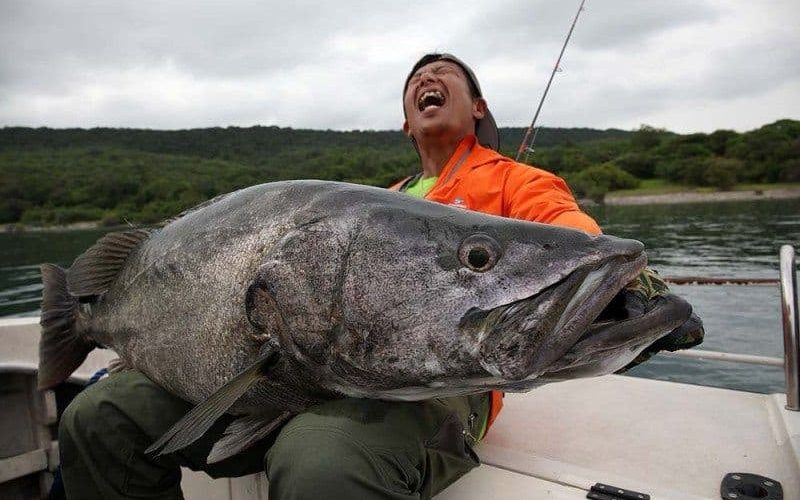
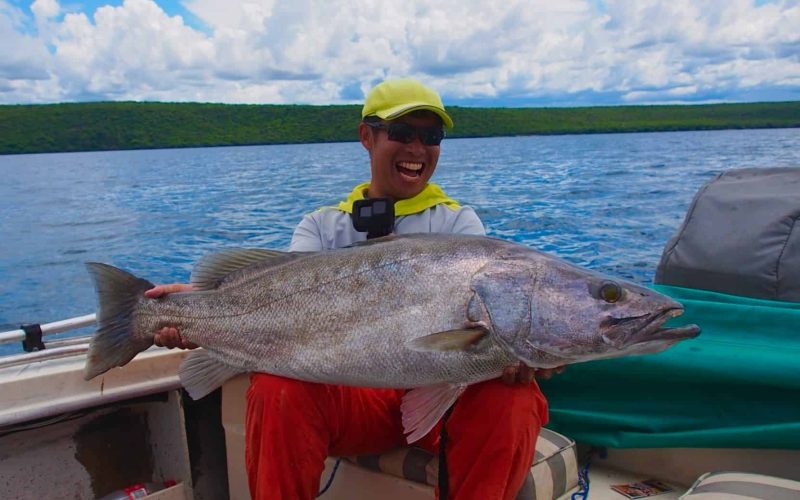
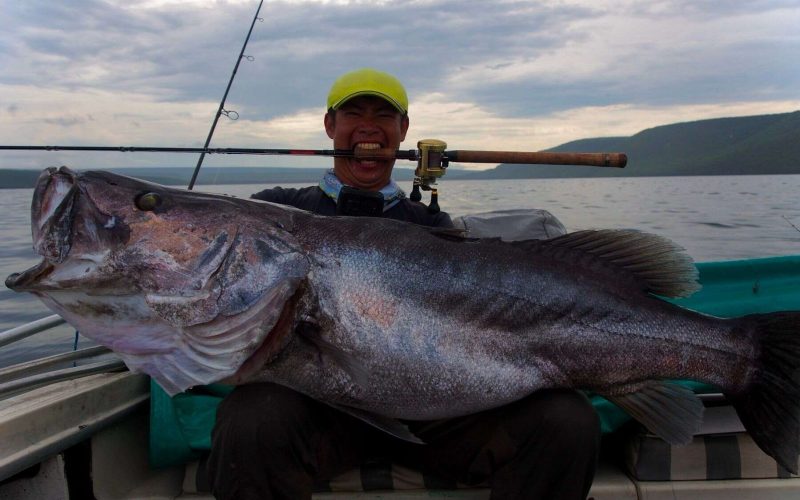
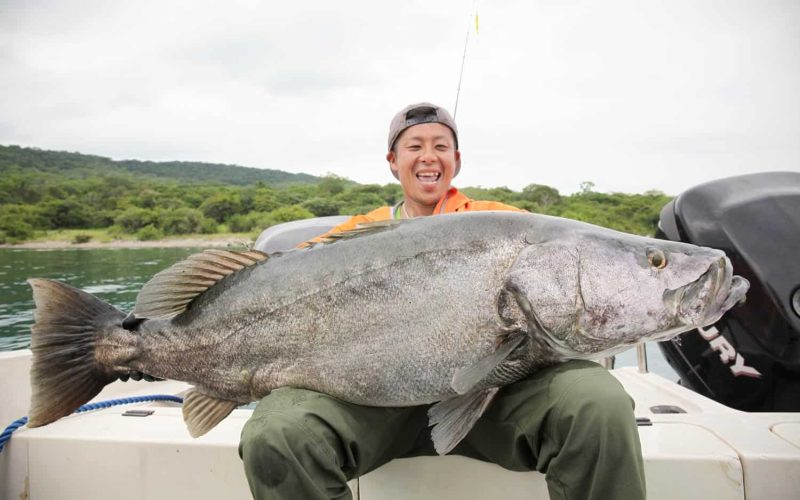
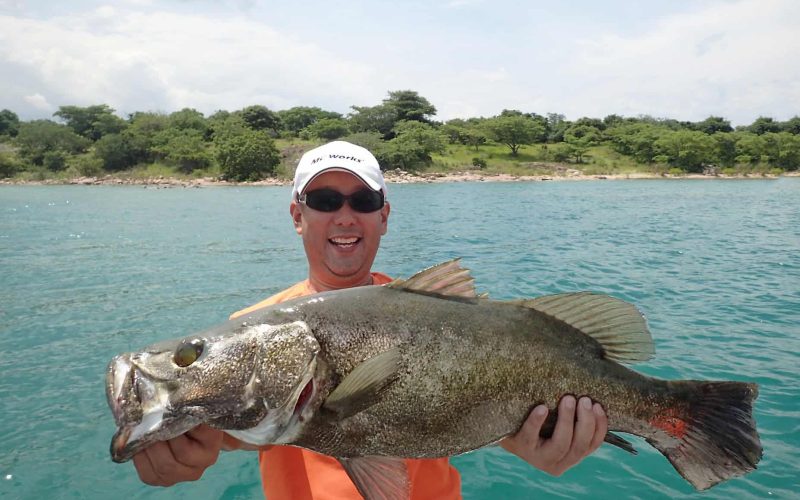
Tanganyikan Perch (Tanganyika lates)
Species Overview
Tanganyikan perch (Lates angustifrons), also known as Tanganyika lates, are the largest predatory fish found in Lake Tanganyika and one of the largest freshwater fish in Africa. They have the familiar outline of a Lates species, with a long, heavily built body, broad flattened head, large mouth and powerful tail. Adult fish are generally silver-grey, while younger specimens can show warmer golden tones. Although closely related to the Nile perch, this is a separate species with its own range, ecology and identity. Lake Tanganyika actually holds four endemic Lates species, but Lates angustifrons is the largest and the fish anglers generally mean when talking about the Tanganyikan perch.
The species is endemic to Lake Tanganyika and its immediate connected waters, meaning it occurs naturally nowhere else. The lake is shared by Zambia, Tanzania, Burundi and the Democratic Republic of the Congo, with perch found across much of its enormous length. This restricted distribution makes the fish very different from the widespread Nile perch, which inhabits several major African river and lake systems.
Habitat & Distribution
Lake Tanganyika is an unusual place for a freshwater predator. It is ancient, exceptionally deep and filled with fish that have evolved in isolation. The lake’s clear water, rocky shoreline, steep underwater walls and vast offshore depths create several completely different habitats within the same system. Tanganyikan perch are capable of using much of that water, but their preferred habitat changes as they grow.
Juvenile fish live close to shore, often around vegetation, protected bays and the slower water near river mouths. These areas provide cover and an abundance of small prey. As the fish mature, they move onto rocky bottoms, steep drop-offs and deeper sections of the lake. Adults can range from the shoreline zone into deep water near the lower edge of the lake’s oxygenated layer. They are generally solitary predators rather than schooling hunters, using depth and structure to remain hidden between feeding opportunities.
Size & Feeding Habits
Their diet is made up almost entirely of other fish. Lake Tanganyika supports an extraordinary variety of cichlids, many of which live around rocky bottoms and provide an important food source for large perch. They also feed on the lake’s endemic sardines when these small pelagic fish become available. Rather than spending all day chasing prey through open water, mature Tanganyikan perch appear well suited to waiting near the bottom or beside structure before attacking at close range.
Size is a major part of the species’ reputation. Tanganyikan perch are capable of reaching around two metres in length and, at the extreme, weights approaching 100 kilograms. Fish of that scale are exceptionally rare today, but the potential places Lates angustifrons among the largest freshwater predators in Africa. Modern sport-caught specimens are more commonly measured in tens of kilograms, and even a fish of 15 to 25 kilograms is an imposing lake predator with an enormous head and heavy body.
Tanganyikan Perch Fishing
Fishing is largely boat-based because of the scale and depth of the lake. Anglers use conventional and spinning tackle, with trolling, deep jigging and natural baits all forming part of the wider approach. Rocky points, underwater shelves, steep drop-offs and areas holding concentrations of baitfish are the obvious places to search. Fish may be encountered closer to shore during periods of low light, but much of the fishing involves working deeper water and relying on local knowledge to understand where the lake floor rises and falls.
The fight is usually heavy rather than spectacular. Tanganyikan perch do not need to jump or make long surface runs to test an angler. A large fish can stay deep, use its body weight against the tackle and pull towards rock or the bottom. Much like the Nile perch, the real impression comes from the weight through the rod and the sense that the fish below is considerably larger than anything visible on the surface.
The species also carries an important conservation story. Tanganyikan perch are vulnerable to intensive fishing, particularly because large adults take many years to replace. Bigger fish have become increasingly uncommon, and the species is now considered endangered. Protecting mature breeders and controlling pressure across a lake shared by four countries will be essential if the largest examples are to remain part of Tanganyika’s future.
Tanganyikan perch is not simply a smaller version of the Nile perch or another large African predator. It is a fish shaped by the depth, isolation and remarkable biodiversity of Lake Tanganyika. That combination of restricted range, genuine size and a lake unlike anywhere else gives the species a character of its own.