
Bucket List Species
Golden Mahseer
World Record
75 lb / 34 kg
Mahakali River, India
Distribution
Himalayan river systems
Best-known fisheries in northern India, Nepal and Bhutan
Season
March to May
Mid-September to November
Techniques
Fly fishing, spinning and conventional
Streamers, spoons, hard lures and baitfish imitations
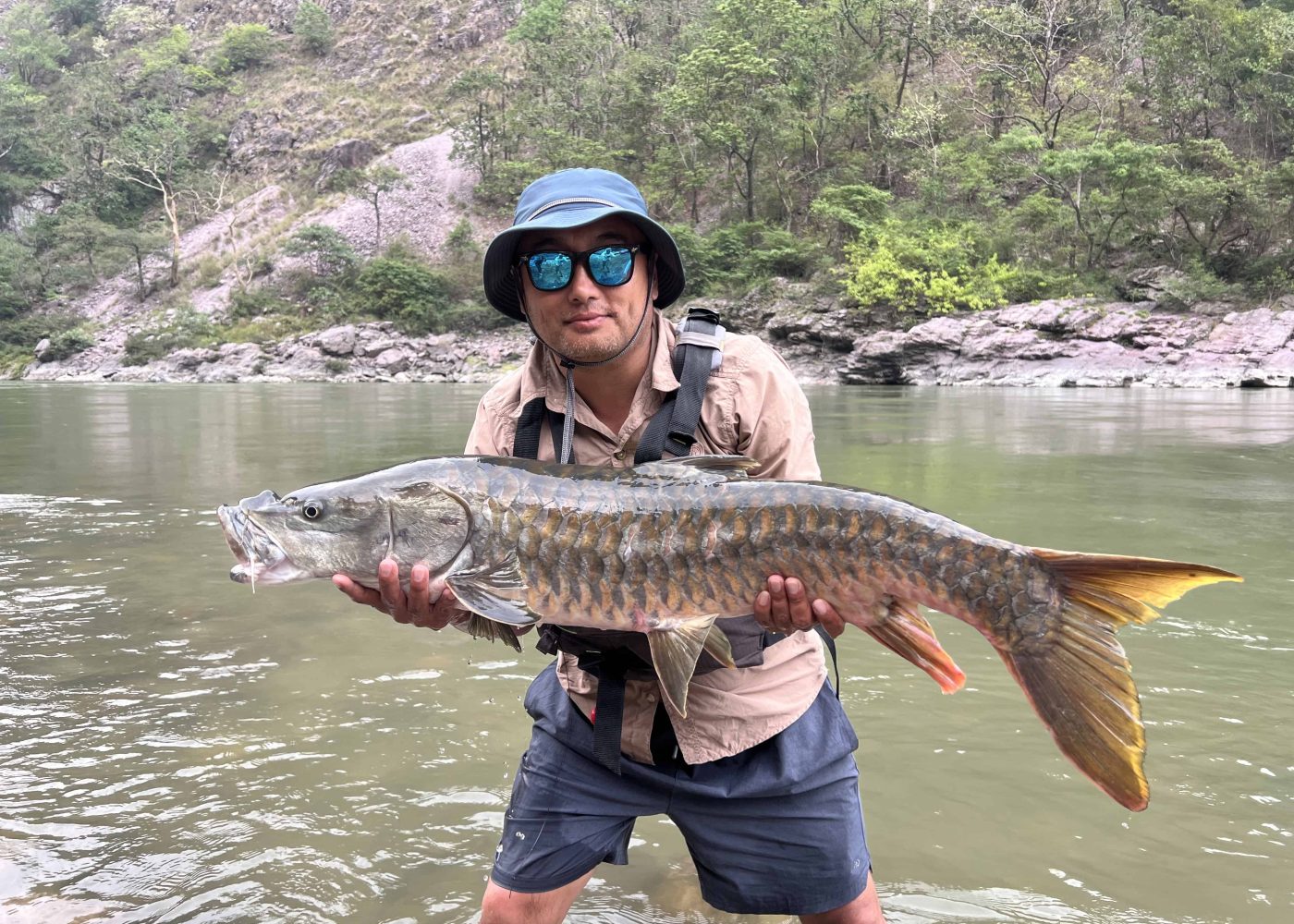
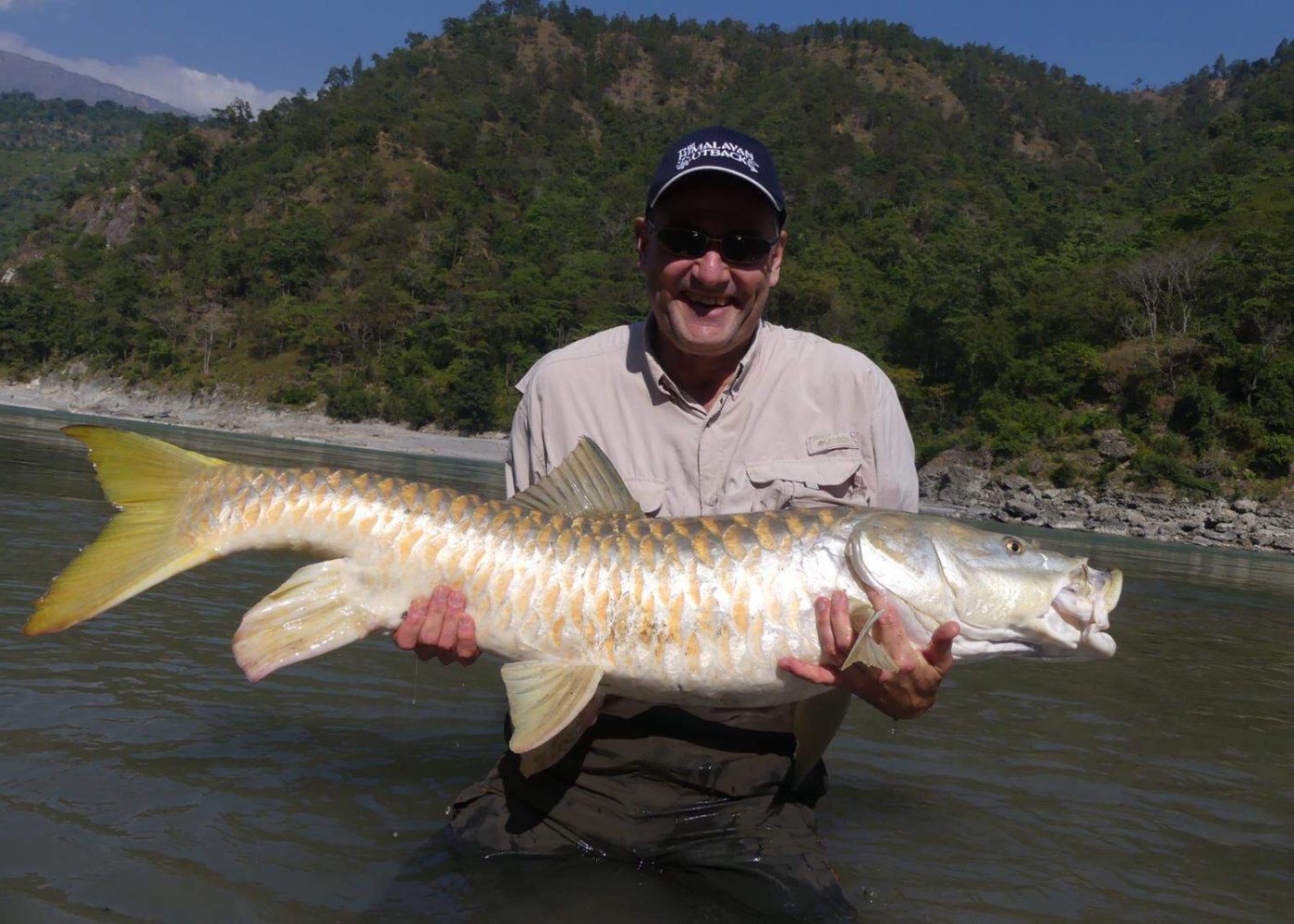

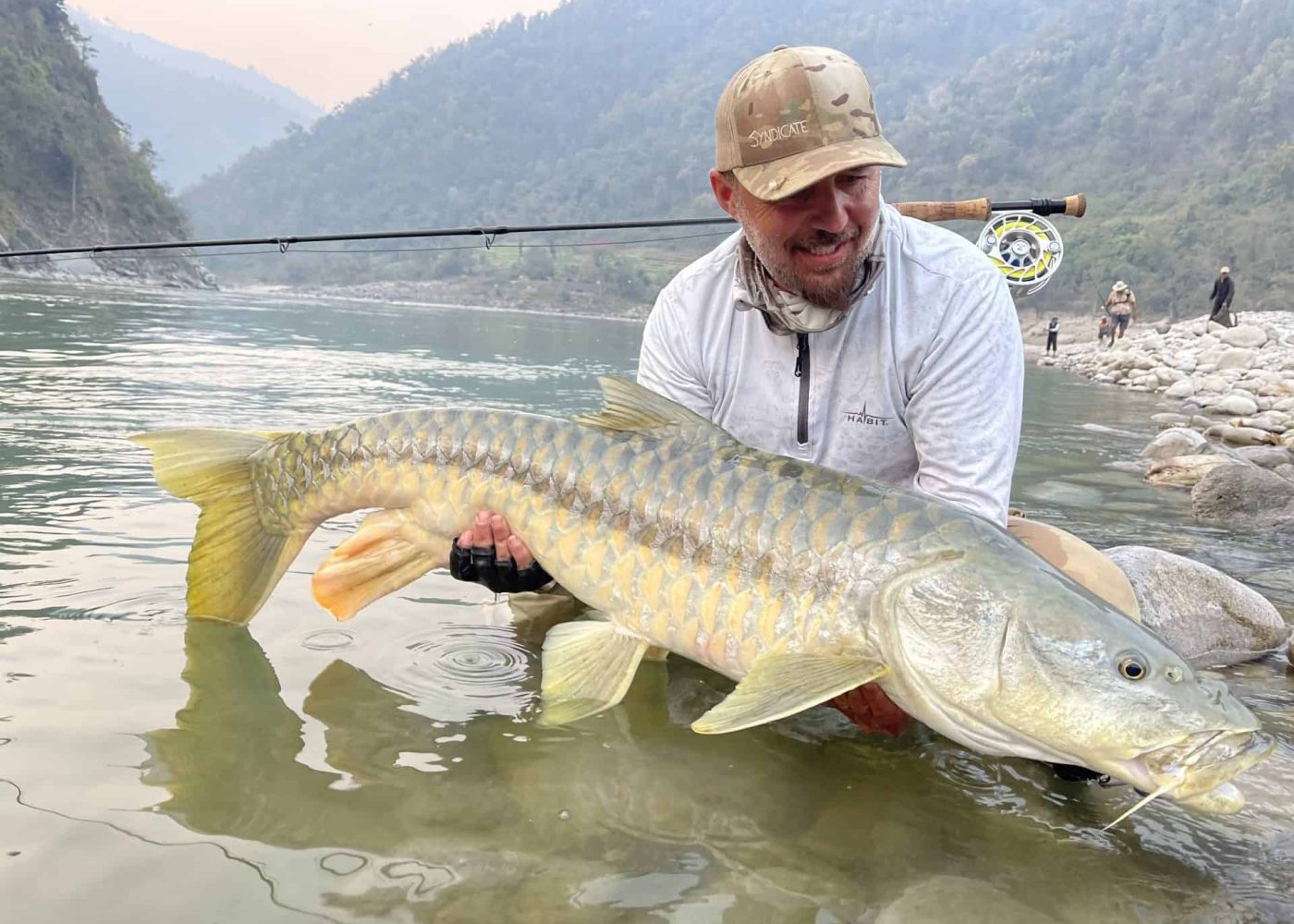
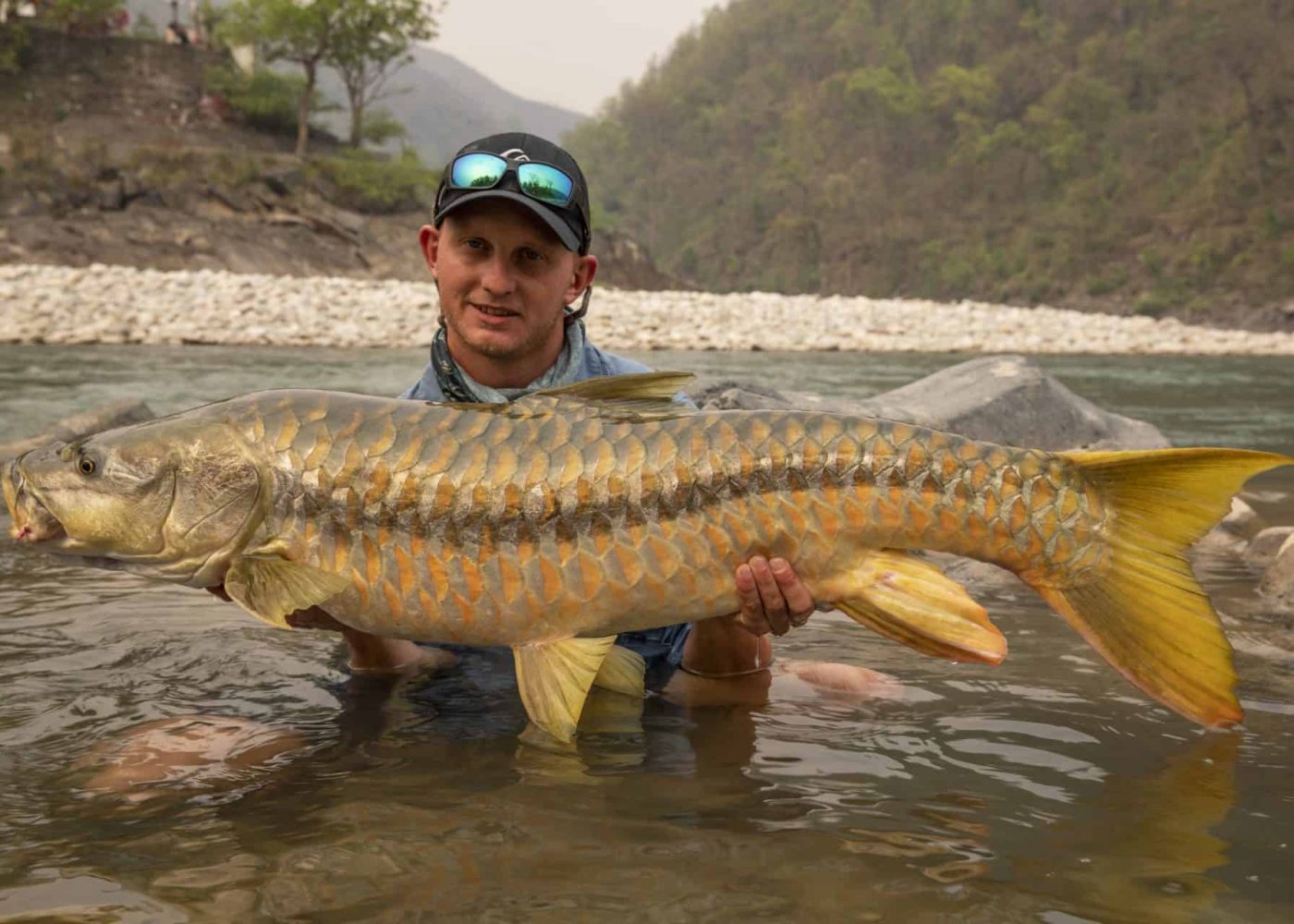
Golden Mahseer
Species Overview
Golden mahseer (Tor putitora) are large, migratory members of the carp family and one of Asia’s most respected freshwater gamefish. Their bodies are protected by oversized golden scales, with a broad head, powerful mouth and deeply forked tail built for life in fast water. Mature fish often carry bronze or copper tones across the back, fading into bright gold along the flanks, with yellow or orange through the fins. They look heavily armoured, but there is nothing slow or awkward about them once they enter the current.
Habitat & Distribution
The species is native to the Himalayan region, with the best-known recreational fisheries found in northern India, Nepal and Bhutan. Rivers such as the Saryu, Mahakali, Ramganga, Punatsang Chhu and Mangde Chhu flow from the mountains through deep valleys, subtropical forest and isolated rural communities. These are not neat, easily controlled fisheries. They are large river systems shaped by snowmelt, monsoon rainfall and seasonal changes in water level.
Golden mahseer favour high-gradient rivers with deep pools, strong runs, back eddies and areas where smaller tributaries join the main channel. In Bhutan, fish have been observed gathering below the mouths of warmer, clearer tributaries entering cold, glacial rivers. These junctions can bring changes in temperature, water clarity and food, creating natural holding areas for fish moving through the system.
They are highly mobile and capable of travelling significant distances through connected rivers. Their movements are closely linked to changing flows, water temperature and seasonal conditions. In northern India, spring snowmelt can trigger an upstream movement, while the monsoon transforms both the river and the location of the fish. This is why most fishing takes place during the more stable periods before and after the main summer rains.
Size & Feeding Habits
Despite their relationship to carp, golden mahseer are not simple bottom feeders. They are true omnivores, eating fish, insects, crustaceans, seeds and fruit washed into the river. Larger fish become increasingly predatory and are fully capable of taking substantial baitfish. They may hunt alone or in groups, although clear water and low flows can make them remarkably cautious and selective.
Size has always been a major part of the mahseer story. Historical accounts describe golden mahseer weighing more than 100 pounds, although fish of that scale are now exceptionally rare. A double-digit fish is a meaningful catch on modern fly tackle, while specimens between 20 and 50 pounds remain possible in the right rivers. A 54-pound fish caught on fly from India’s Saryu River set the recognised fly-fishing benchmark, showing that genuinely large mahseer still survive in Himalayan waters.
Golden mahseer are sometimes grouped together with other regional species, but the name should not be used for every mahseer found in Asia. Bhutan’s rivers, for example, also hold chocolate mahseer, Neolissochilus hexagonolepis. Chocolate mahseer are generally shorter and more heavily built, with darker colouration and different proportions. They share some habitat with golden mahseer but are a separate species with their own behaviour and character.
Fishing
Fishing for golden mahseer can involve fly, spinning and conventional tackle. Anglers work large pools, current seams, river mouths and deep runs from the bank, raft or exposed river beaches. Streamers, spoons and hard lures all have a place, with the approach often compared to fishing for steelhead or Atlantic salmon. Long periods of searching can be followed by a sudden take and a fish using the full weight of the river against the angler.
Once hooked, the tail and current do most of the work. A large mahseer can leave a pool, enter the main flow and take line downstream before there is much chance to regain control. They do not need repeated jumps or elaborate displays to earn their reputation. The power comes through the rod, with long runs, heavy changes of direction and the constant threat of rocks or rapids farther downriver.
Golden mahseer are inseparable from the rivers and cultures of the Himalayas. They are part carp, part migratory river predator, and far more difficult to understand than their appearance suggests. Their scarcity is also part of the reality. Dams, habitat fragmentation and pressure on river systems have reduced many historic populations, making the remaining wild fisheries increasingly important. A golden mahseer is not simply a large fish from an exotic location. It is one of the great survivors of Asia’s mountain rivers.