
Bucket List Species
Golden Dorado
World Record
55 lb 11 oz / 25.3 kg
Uruguay River, Argentina
Distribution
Argentina, Bolivia, Brazil, Paraguay and Uruguay
Season
October to April in Argentina
June to October in Bolivia
Techniques
Fly Fishing, Spinning, Baitcasting
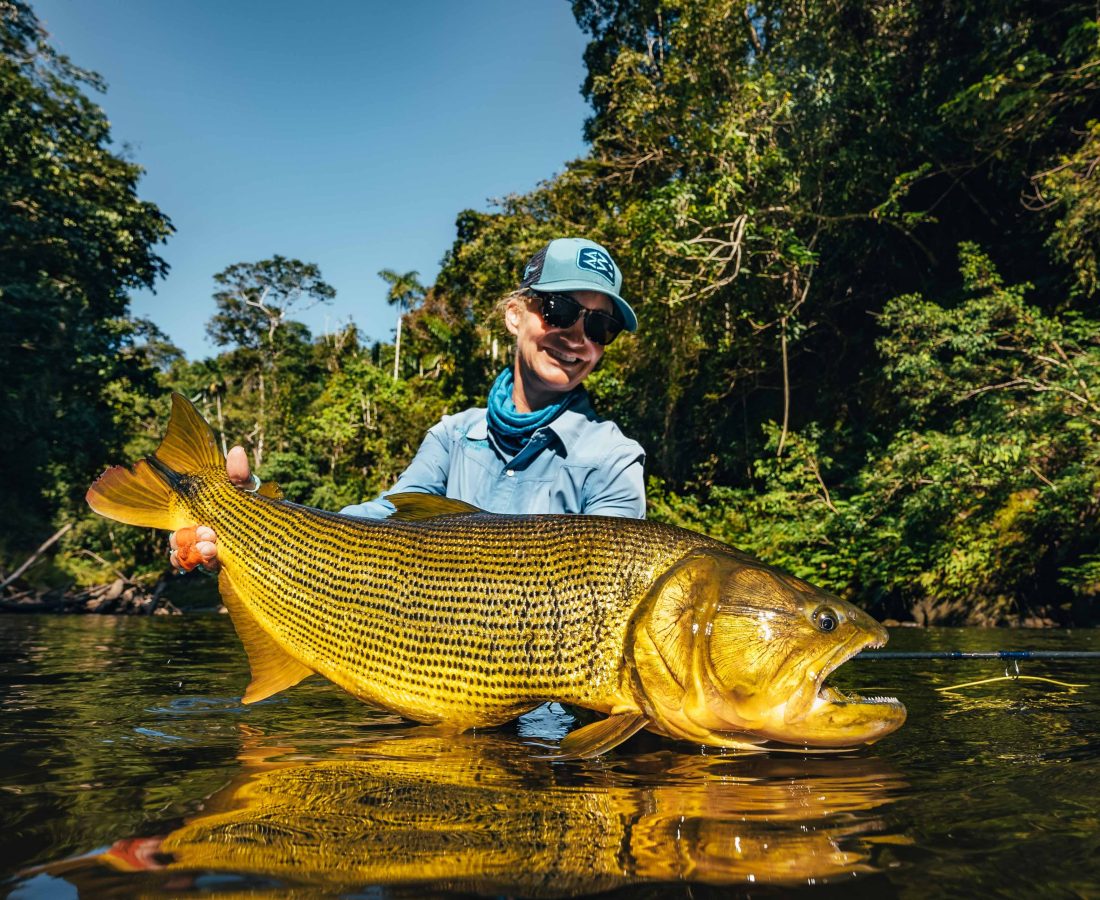
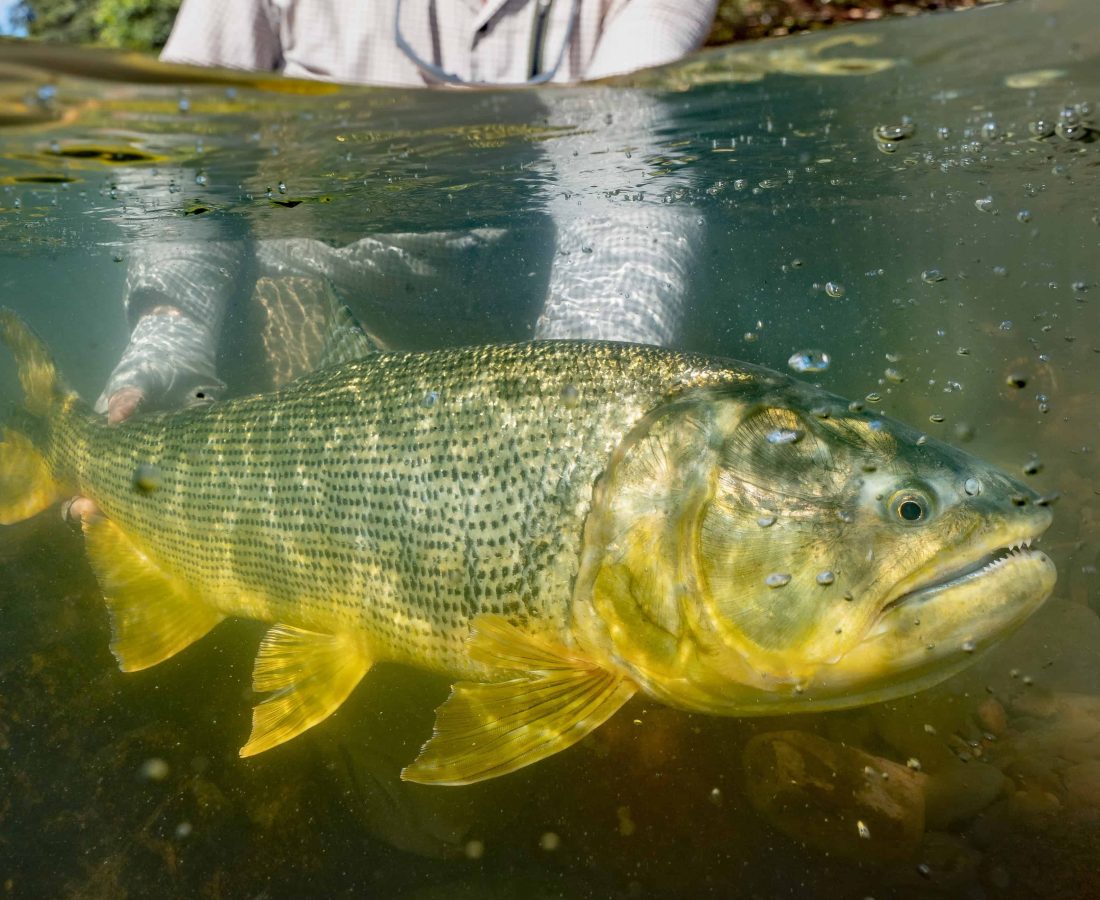
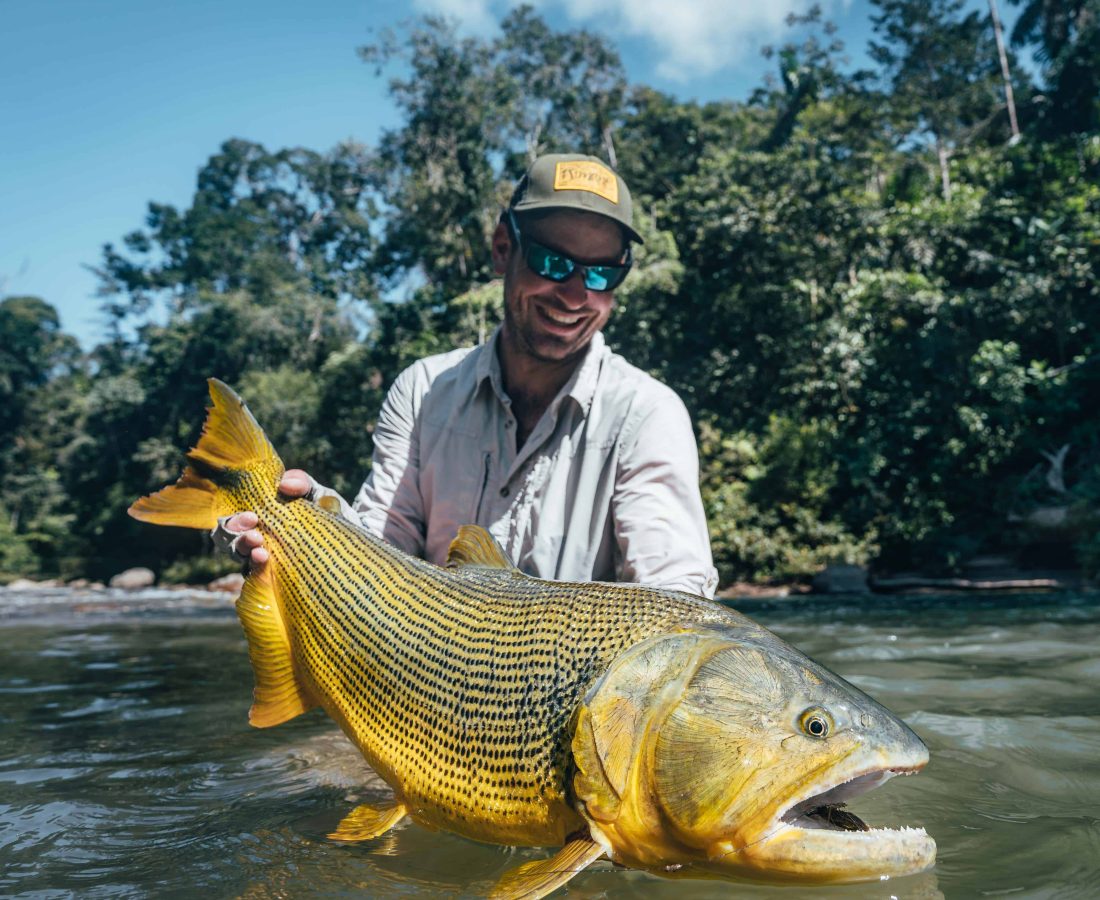
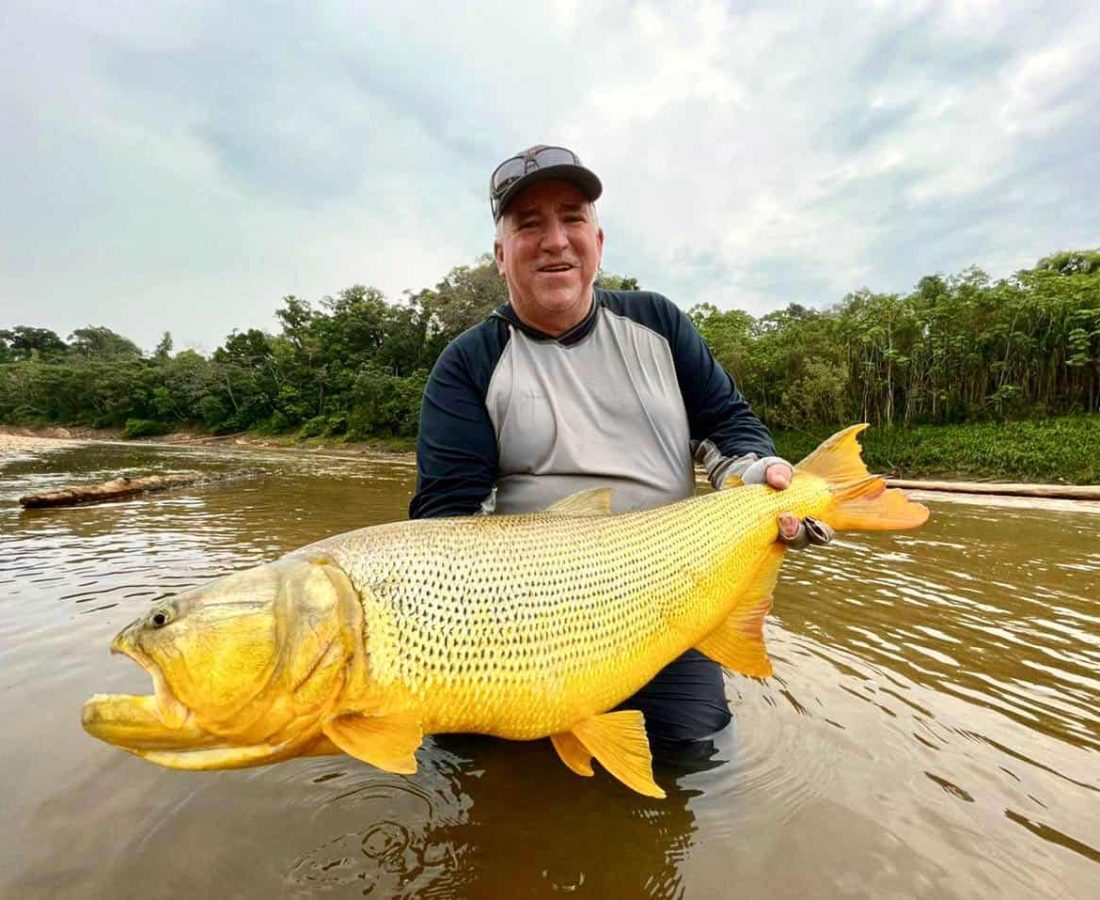
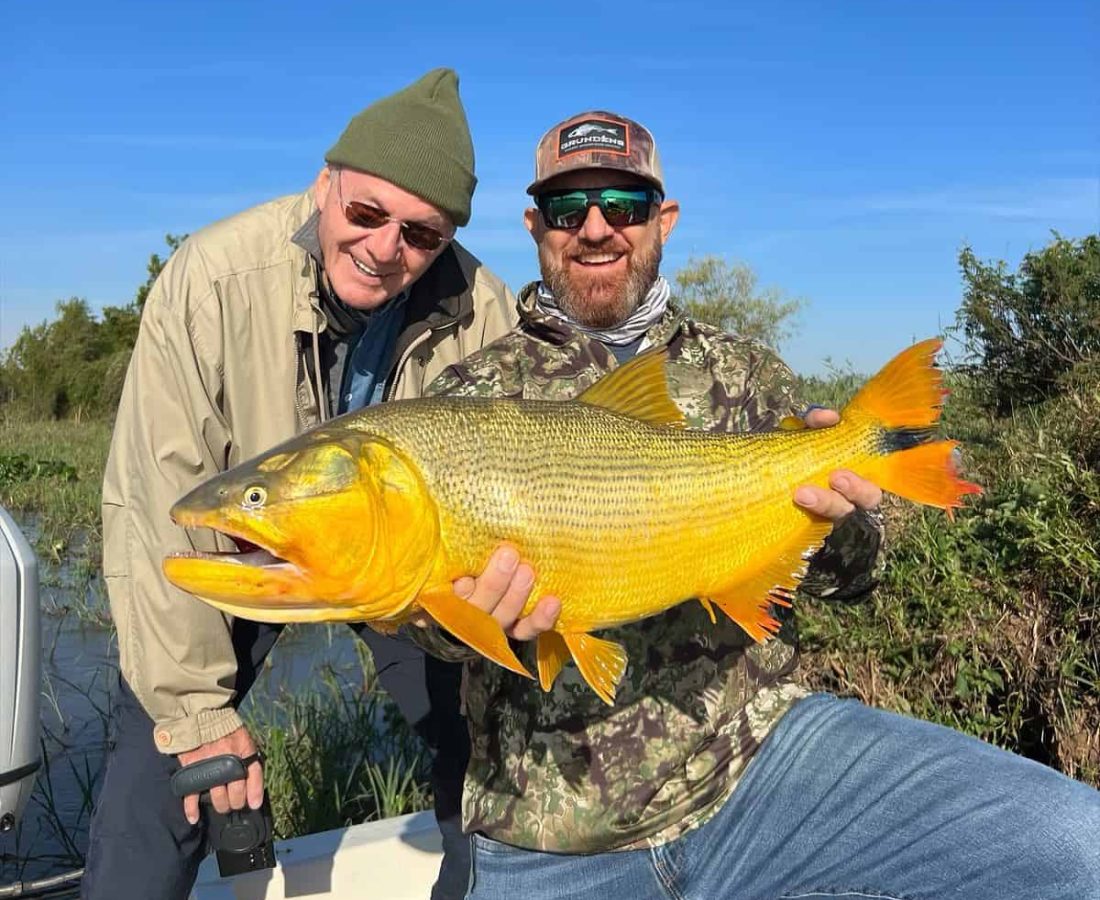
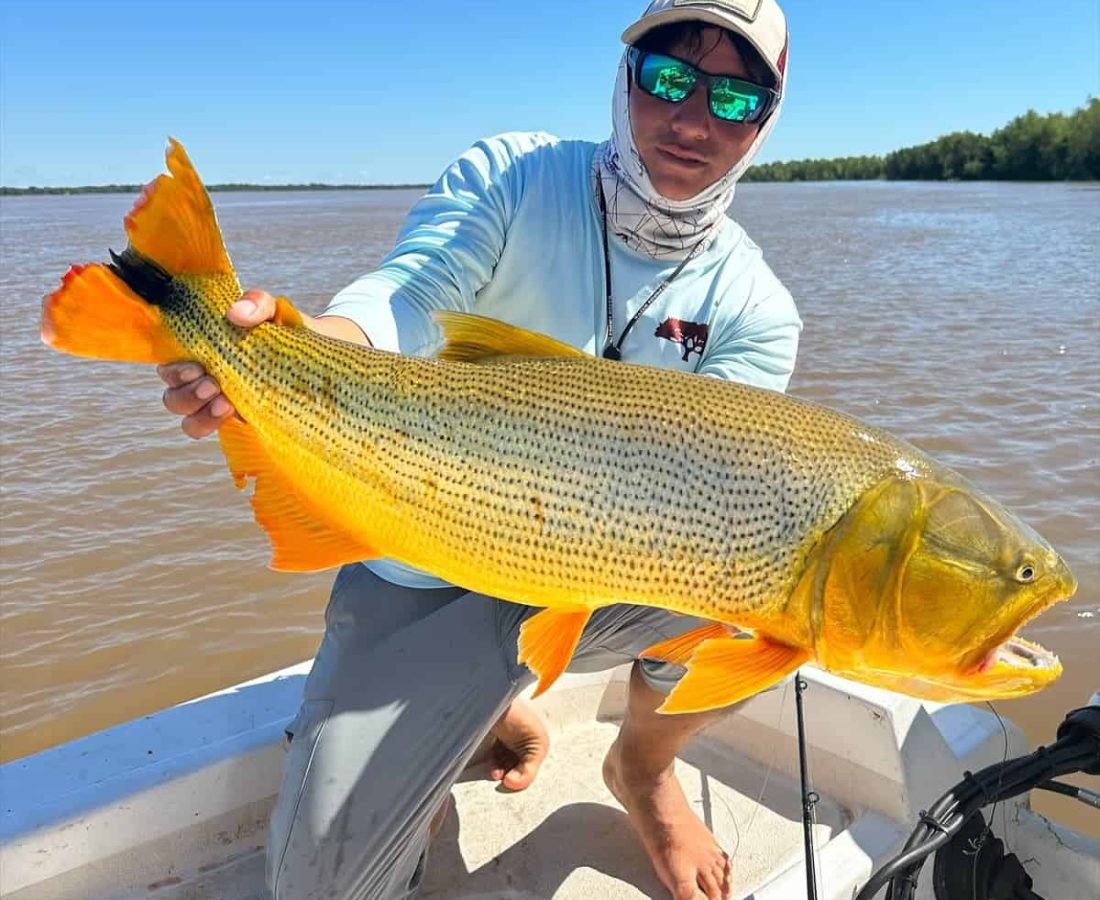
Golden Dorado (Salminus brasiliensis)
Species Overview
Golden dorado (Salminus brasiliensis) are powerful freshwater predators recognised by their metallic gold bodies, orange fins, deeply forked tails and rows of dark markings running along each scale. Large fish develop thick shoulders, heavy jaws and a mouth lined with sharp conical teeth. Known locally as dorado in Spanish and dourado in Portuguese, the name simply means golden. They are sometimes called the river tiger, a nickname that suits both their appearance and the way they hunt.
Distribution & Habitat
Despite the name, golden dorado are completely unrelated to the saltwater dorado, better known as mahi-mahi or dolphinfish. They are native to South America, with their main stronghold in the enormous Río de la Plata drainage, including the Paraná, Paraguay and Uruguay river systems. Their range covers parts of Argentina, Bolivia, Brazil, Paraguay and Uruguay, with smaller populations also found in sections of the Amazon basin.
The variety of water they inhabit is one of the most interesting things about the species. In Bolivia, dorado move through clear jungle rivers flowing out of the Andean foothills. In Argentina and Paraguay, they occupy vast channels, marshes, lagoons, braided rivers and seasonally flooded wetlands. They can be found around sandbars, current seams, rocky runs, submerged timber and the mouths of smaller tributaries.
Golden dorado are highly mobile fish. They move through connected river systems in response to changing water levels, spawning conditions and the movement of baitfish. In the Paraná, large schools of sábalo form an important part of the food chain and can draw dorado into particular channels and sandbars. In the Iberá wetlands, the same species behaves differently, hunting through clear creeks, shallow lagoons and open marshland.
Size and Feeding Habits
This is a dedicated fish-eating predator. Dorado use speed, current and structure to close the distance before attacking with remarkable force. Their jaws are designed to grip and disable prey, while the large forked tail provides the acceleration needed to strike in fast water. Smaller fish may chase bait through shallow channels, while mature dorado are capable of taking surprisingly large prey. The attack is often followed by an immediate change of direction, which is part of what makes them so difficult to hook and control.
Size varies considerably between fisheries. Many dorado encountered by travelling anglers fall between 5 and 15 pounds, while fish over 20 pounds are considered serious specimens almost anywhere in their range. The Paraná system and certain Bolivian rivers regularly offer chances at larger fish, with exceptional dorado capable of exceeding 30 kilograms, or roughly 66 pounds. These giants are rare, but they show just how large the species can grow when migration routes, habitat and food remain intact.
Golden Dorado Fishing
Golden dorado can be targeted with fly, spinning and conventional tackle. Large streamers, crankbaits, jerkbaits, spoons, jigs and surface lures all imitate the baitfish they hunt, while natural baits remain part of the traditional fishery in several regions. Some dorado are sighted in clear, shallow water, while others are found by working current lines, banks and submerged structure.
Once hooked, they fight with a combination of speed, power and repeated jumps. A dorado may strike close to the boat, clear the surface almost immediately and then use the river’s current to pull downstream. Their hard mouths and violent head movements mean that even well-hooked fish are regularly lost. A large dorado does not need a long fight to leave an impression.
Golden dorado bring together everything you look for in a freshwater gamefish. They are visually striking, genuinely powerful and found across some of South America’s most varied river landscapes. One fish might be hunted on foot in a clear Bolivian tributary, while another is found beneath circling birds on the Paraná or moving through the quiet channels of the Iberá wetlands. The setting changes, but the fish remains unmistakable.