
Bucket List Species
Wolffish
World Record
30 lb 8 oz
Hoplias aimara, Brazil
Distribution
Tropical South America
Season
Varies by river system
Generally best during falling and low water
Techniques
Fly fishing, spinning and baitcasting
Streamers, jigs, jerkbaits, soft plastics, spoons, poppers, propellers
Wolffish (Trairão)
Species Overview
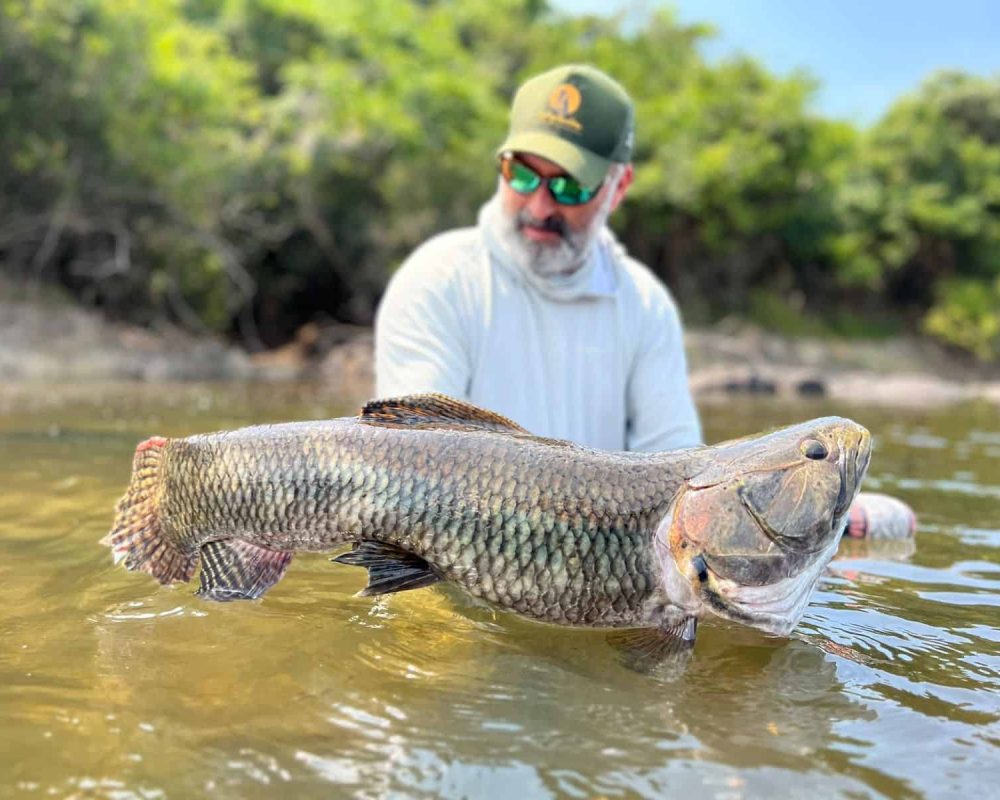
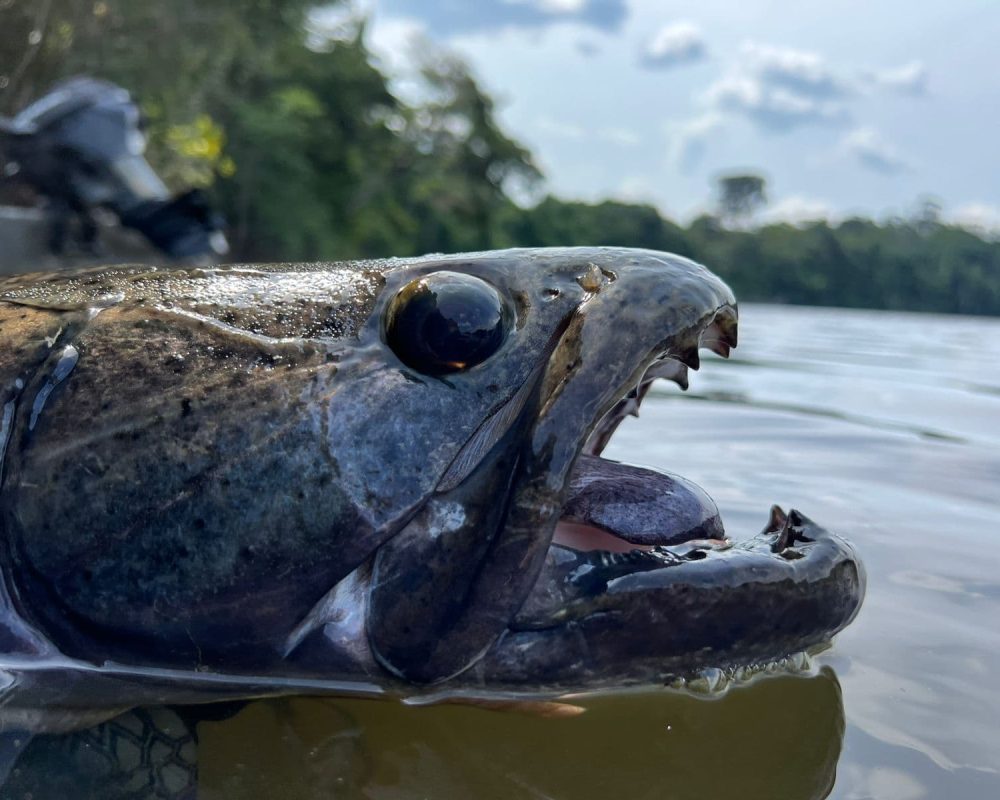
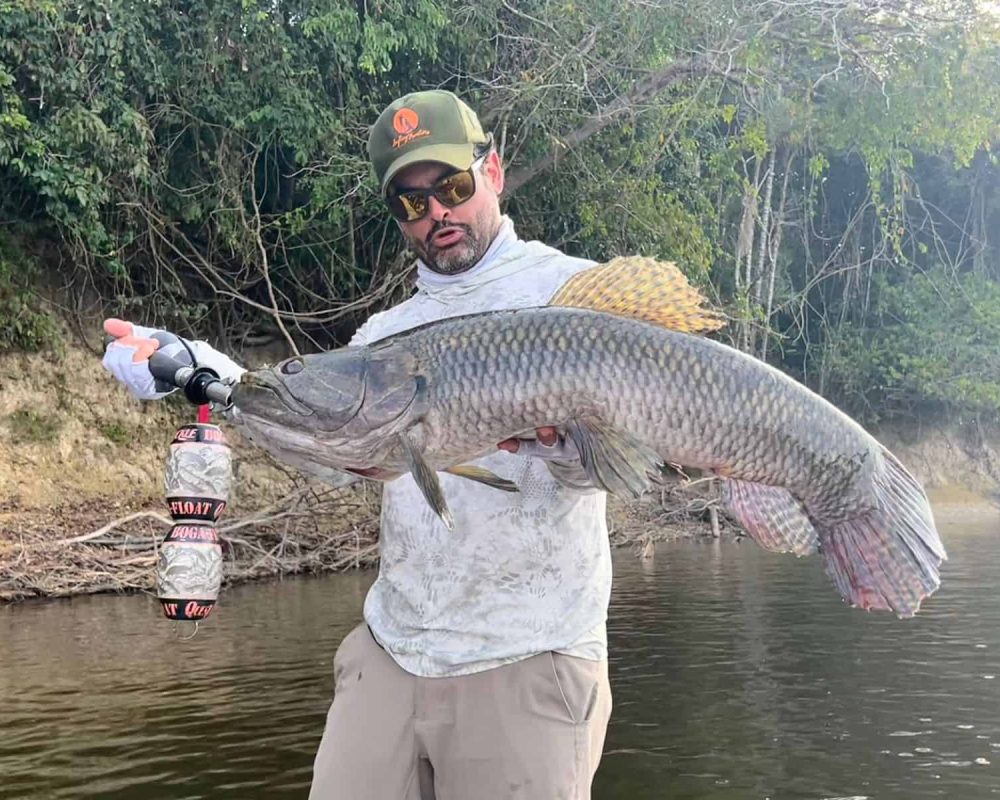
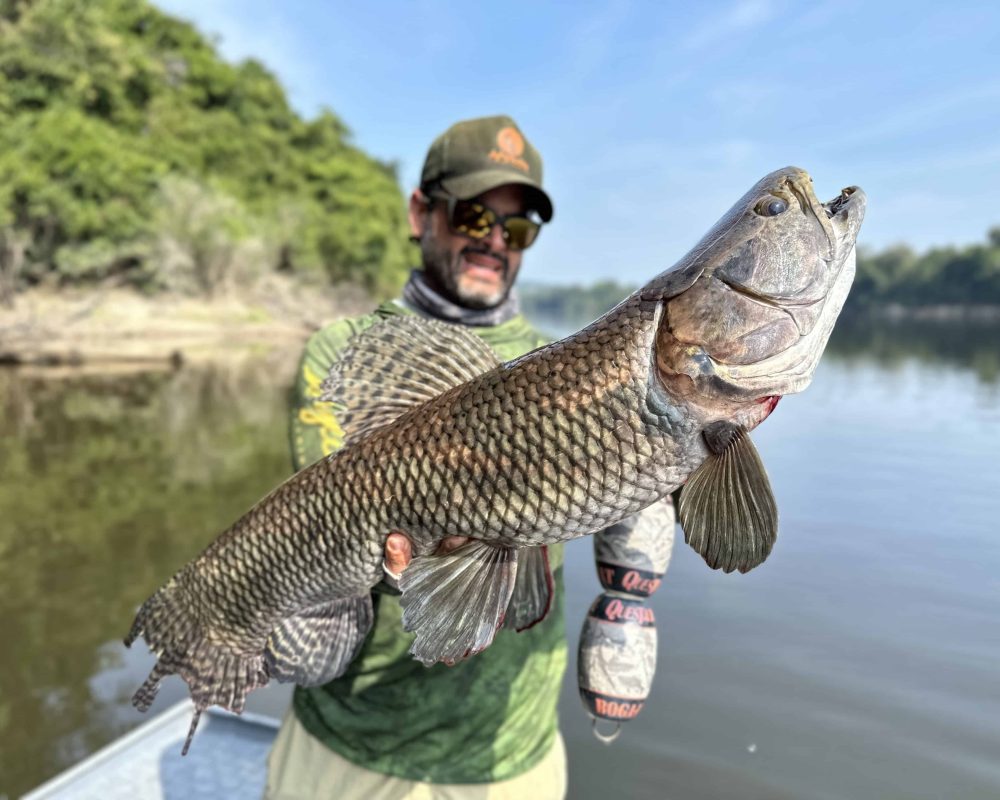
South American wolffish are a group of heavily built freshwater predators belonging to the genus Hoplias. The fish most travelling anglers mean when they talk about trairão is the giant wolffish, Hoplias aimara, while traíra, sometimes written as trahira, generally refers to smaller members of the Hoplias malabaricus group. Local names vary between countries and river systems, but all share the same unmistakable shape: a broad flattened head, thick body, rounded paddle-like tail and a mouth filled with prominent canine teeth.
They look like fish that have changed very little over time. Their colour usually ranges from olive and brown to charcoal or almost black, broken by darker markings that blend into rock, timber and leaf litter. Large trairão develop deep bodies and heavy jaws, while the eyes sit high on the head, giving them a clear view of anything moving above or ahead of their hiding place.
Habitat & Distribution
Wolffish are found across much of tropical and subtropical South America. Smaller traíra are particularly widespread, occurring in the Amazon, Orinoco, Paraná and several coastal river systems. Giant wolffish have a more northern distribution, with important populations in Brazil, Guyana and neighbouring parts of the Guiana Shield and Amazon drainage. The clear waters of Brazil’s Iriri River and remote rivers in Guyana are among the best-known fisheries for large Hoplias aimara.
Their habitat is remarkably varied. Traíra can live in ponds, lagoons, marshes, creeks and slow river channels, including water that becomes warm and poorly oxygenated during the dry season. Giant wolffish are often associated with more powerful river environments, including rocky pools, runs, creek mouths, pocket water and the quieter edges of rapids.
Whatever the setting, cover is important. Wolffish regularly hold beneath overhanging vegetation, beside submerged logs, inside fractured rock and along undercut banks. Their shape is not designed for long open-water pursuit. Instead, they remain almost motionless until prey enters range, then close the distance with a sudden burst from the tail. Anglers sometimes find surprisingly large fish tucked into a pocket or crevice that appears barely large enough to hold them.
Size & Feeding Habits
These are dedicated ambush predators. Their diet is dominated by fish, although frogs, crustaceans and other small animals may also be taken when available. The teeth grip struggling prey, while the broad mouth allows a wolffish to engulf a substantial meal. They are also territorial and willing to attack surface disturbances, which explains the explosive strikes that have made them such memorable lure and fly targets.
Size depends heavily on the species. Many common traíra weigh only a few pounds, although larger examples can reach the low double digits. Giant wolffish belong to a different class. Mature Hoplias aimara regularly exceed 15 pounds in the better rivers, with exceptional fish capable of approaching 40 pounds. At that size, the head becomes enormous, the body takes on the weight of a serious jungle predator and the tail provides far more acceleration than its rounded shape suggests.
Wolffish Fishing
Wolffish can be targeted with fly, spinning and baitcasting tackle. Streamers, poppers, divers, propellers, jerkbaits, spoons and soft plastics all suit the way these fish hunt. Clear rivers can offer genuine sight fishing, with anglers placing an offering beside a visible fish or close to its hiding place. In darker water, the approach becomes more about covering structure and creating enough movement to draw a response.
The strike is usually the most dramatic part of the encounter. A wolffish may appear from beneath a rock or log, hit at close range and immediately turn back towards cover. They are not built for long runs, but they fight with short, heavy surges, violent head movements and repeated attempts to reach timber or rock. Their teeth also make strong bite-resistant leader material essential, regardless of the tackle being used.
Wolffish are different from the faster, more open-water predators of South America. They do not need a school of bait or a wide river channel. A dark pocket beneath a bank, a gap between two rocks or a quiet corner behind the current is enough. Most of the time, the fish remains completely hidden. Then the water opens, the broad head appears and the entire encounter is decided within a few seconds.