
Bucket List Species
Taimen
World Record
52.39 kg (115 lb 8 oz)
Tugur River, Russia
Distribution
Northern Eurasia
Season
June – October
Techniques
Fly Fishing & Spinning
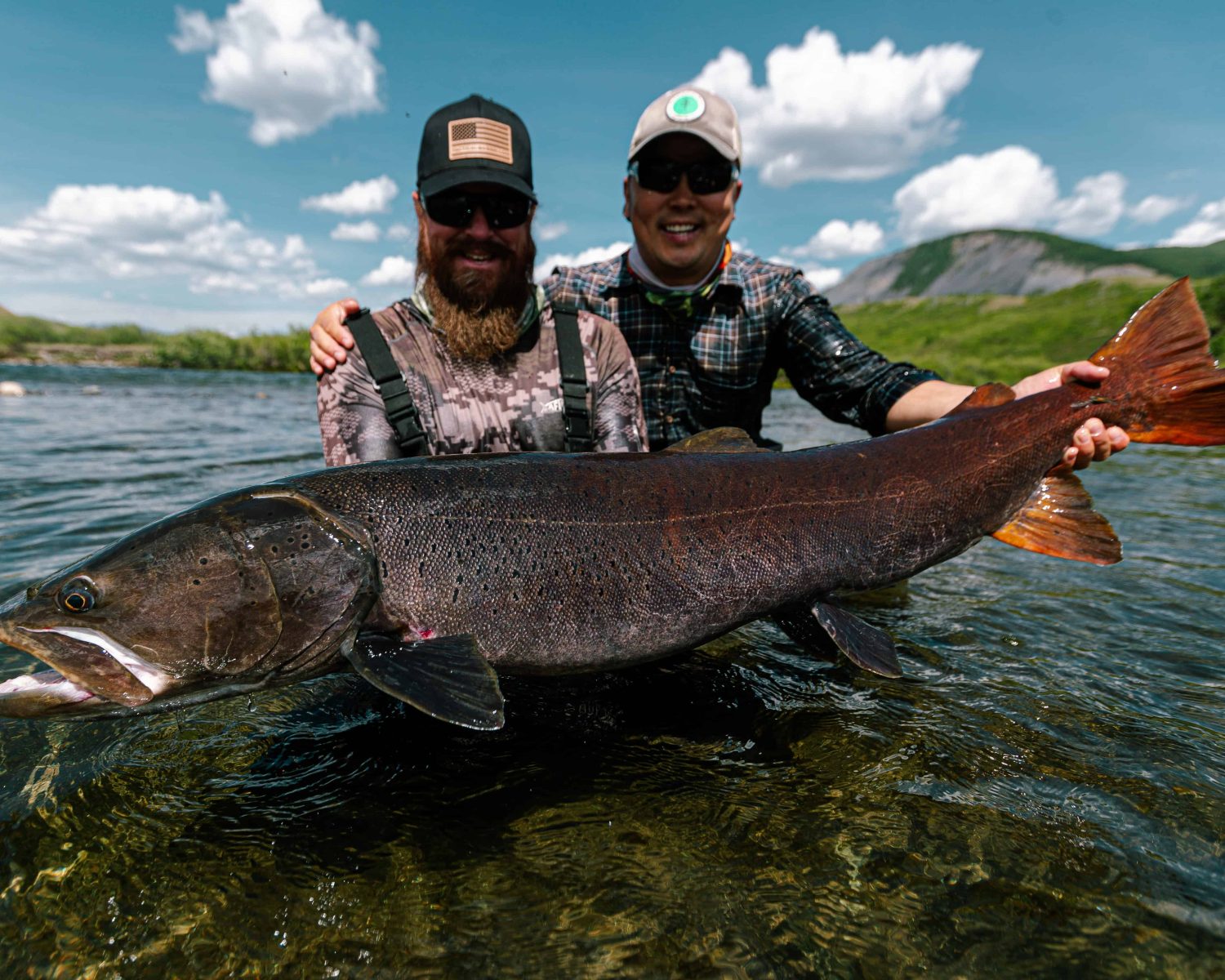
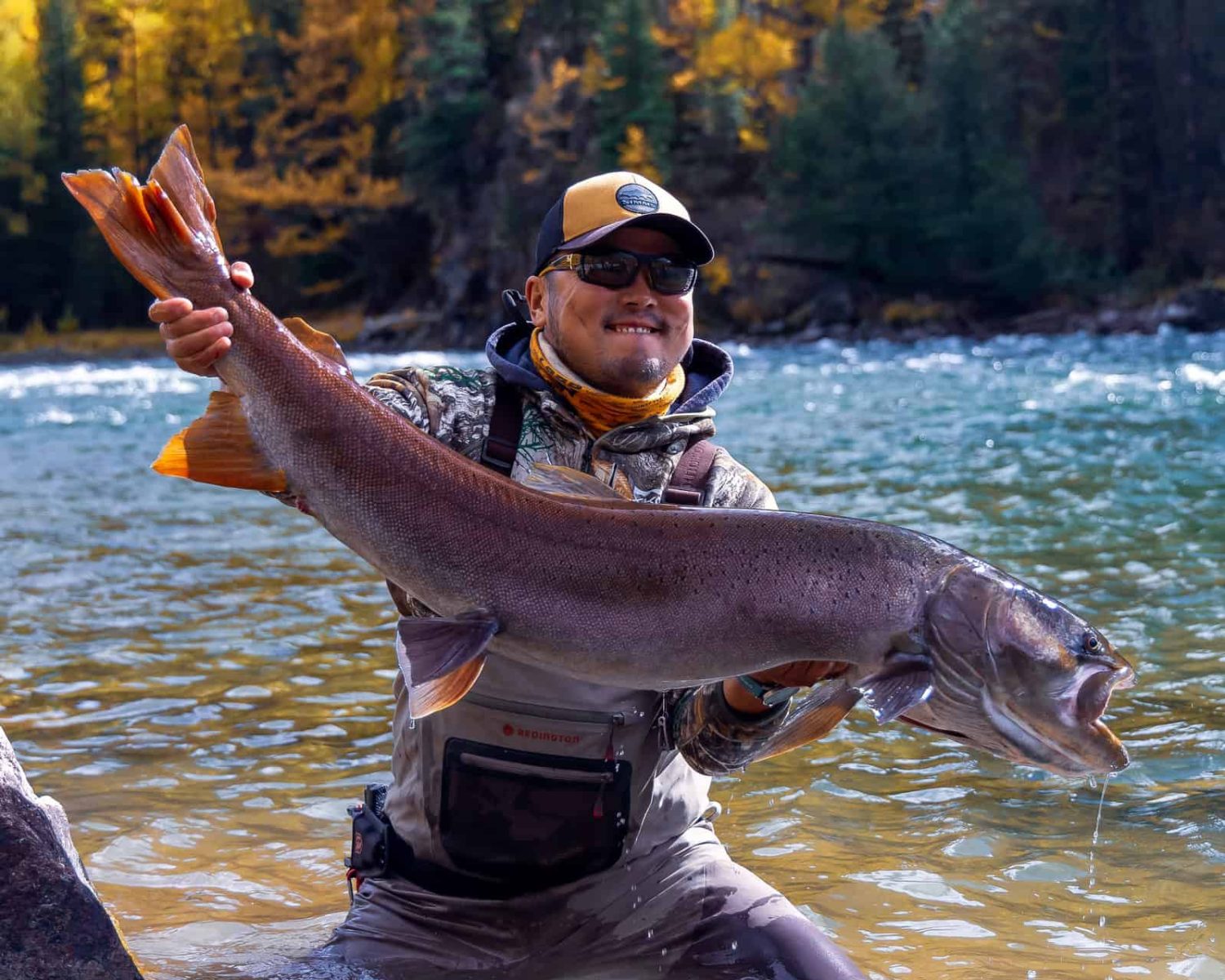
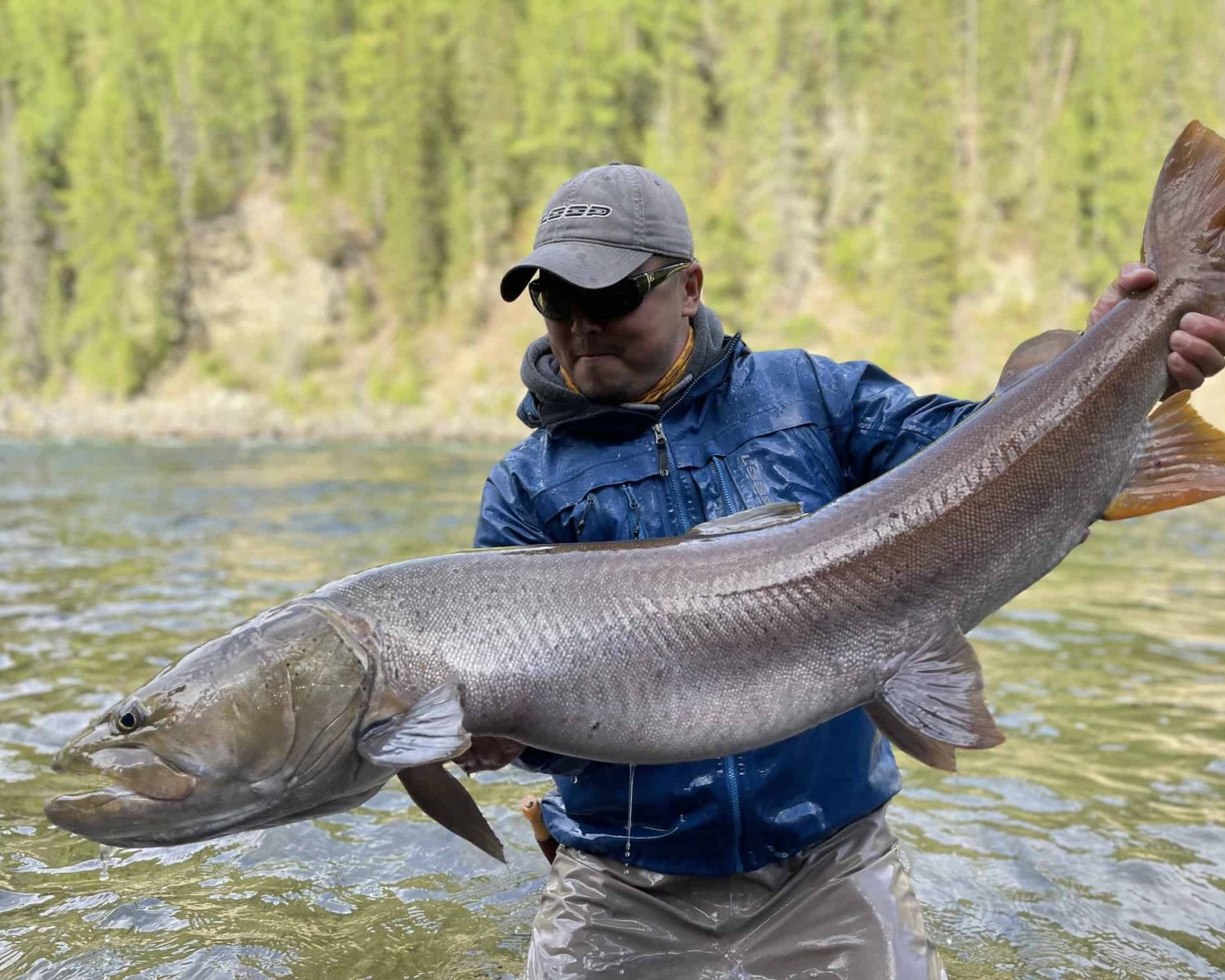

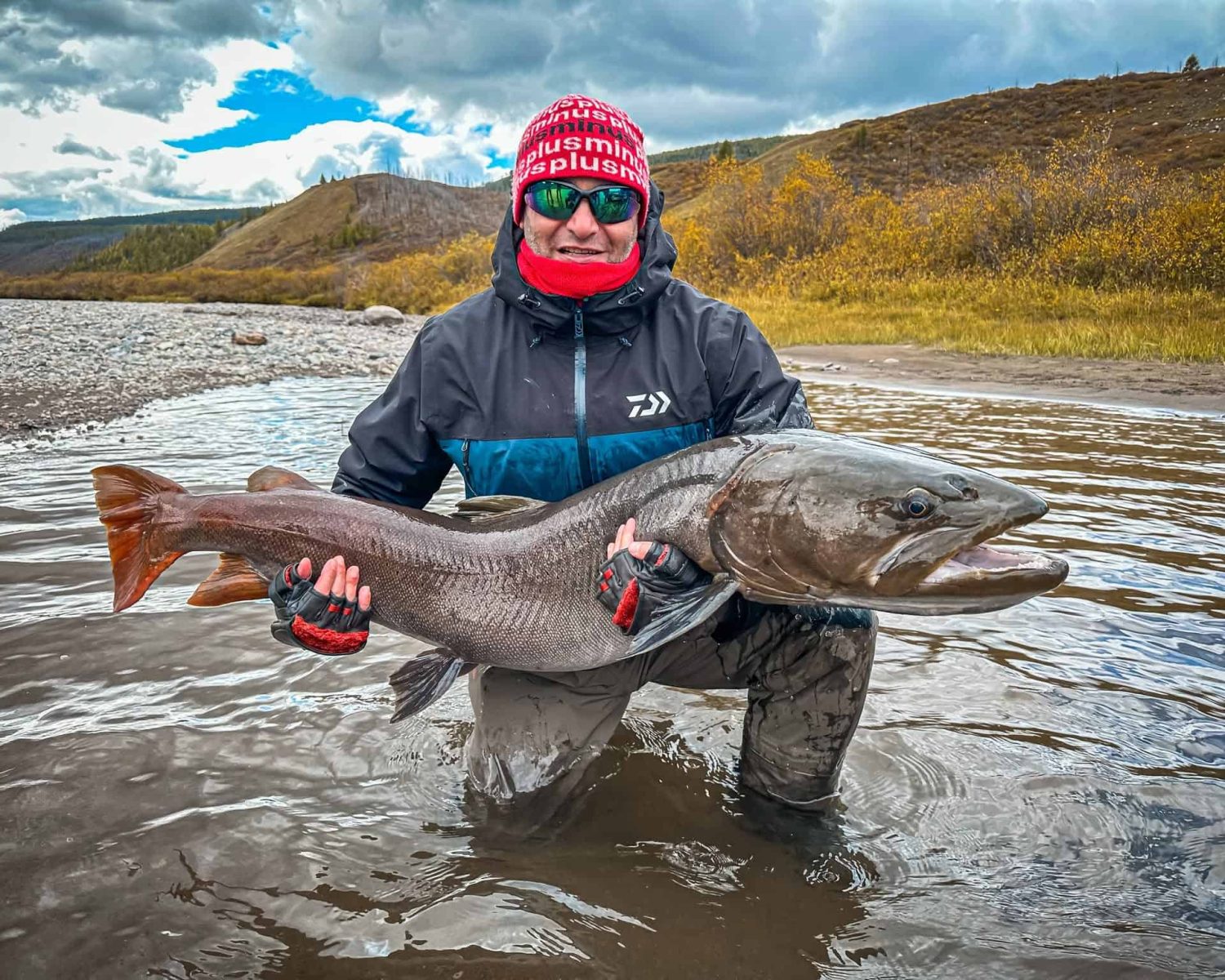
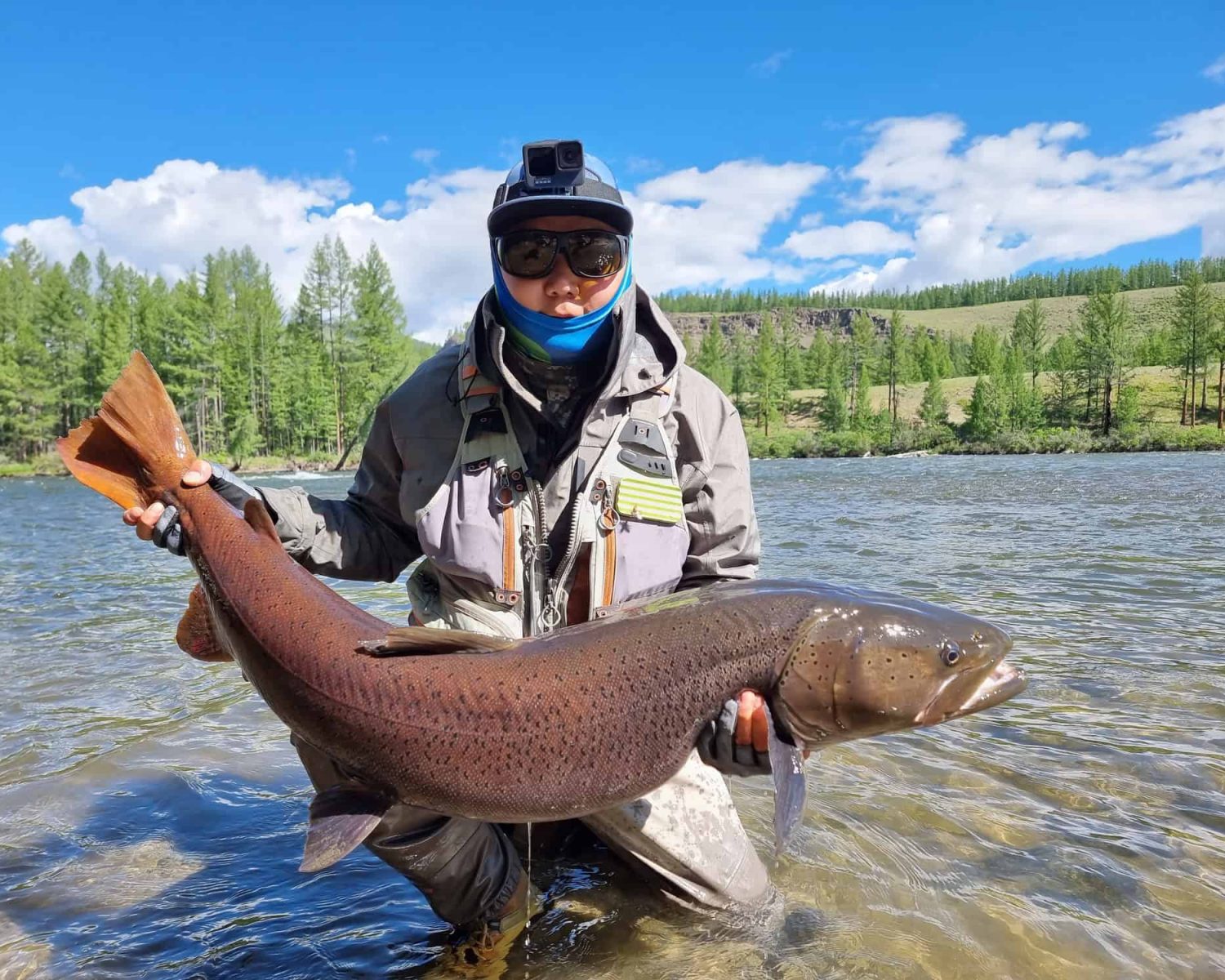

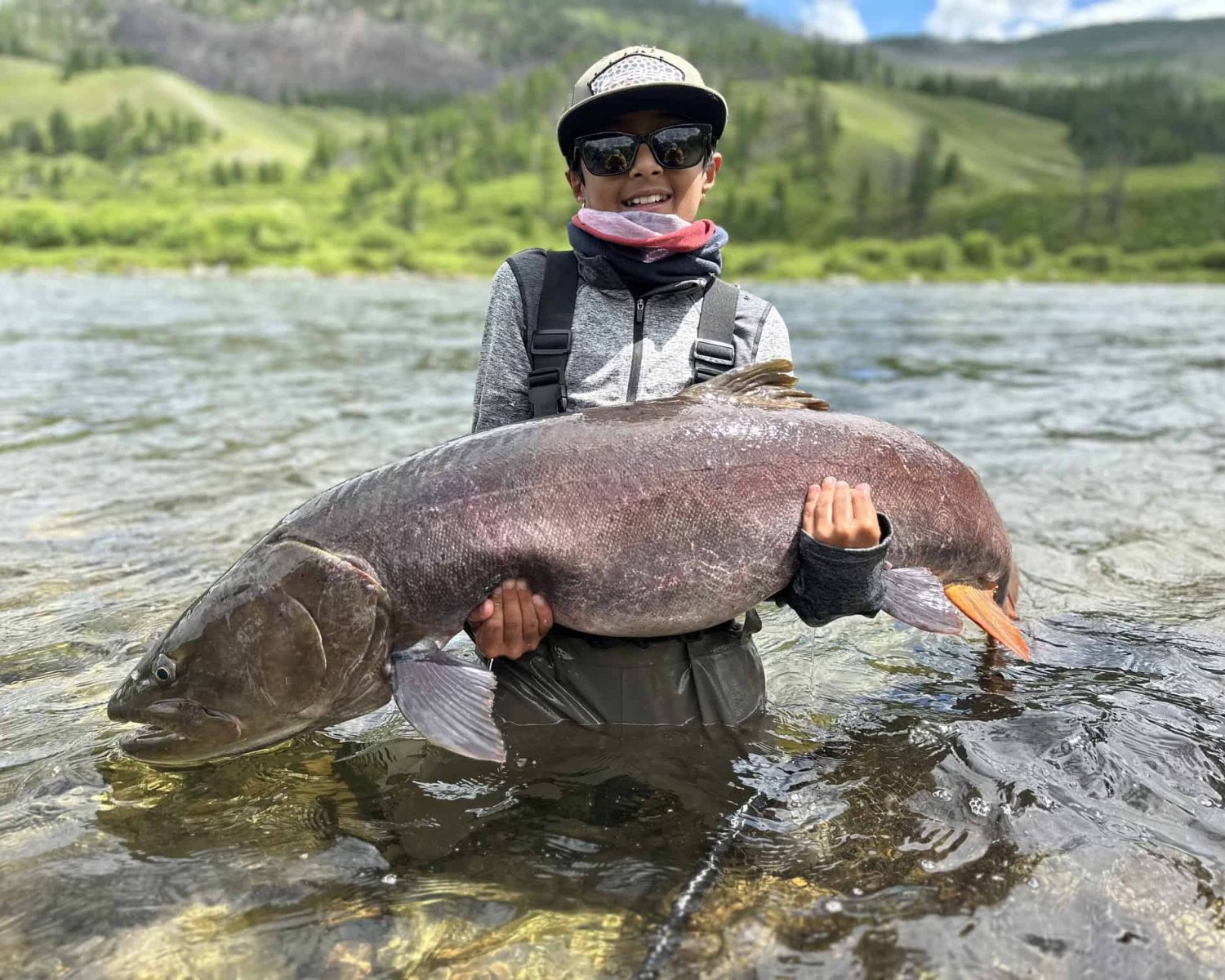
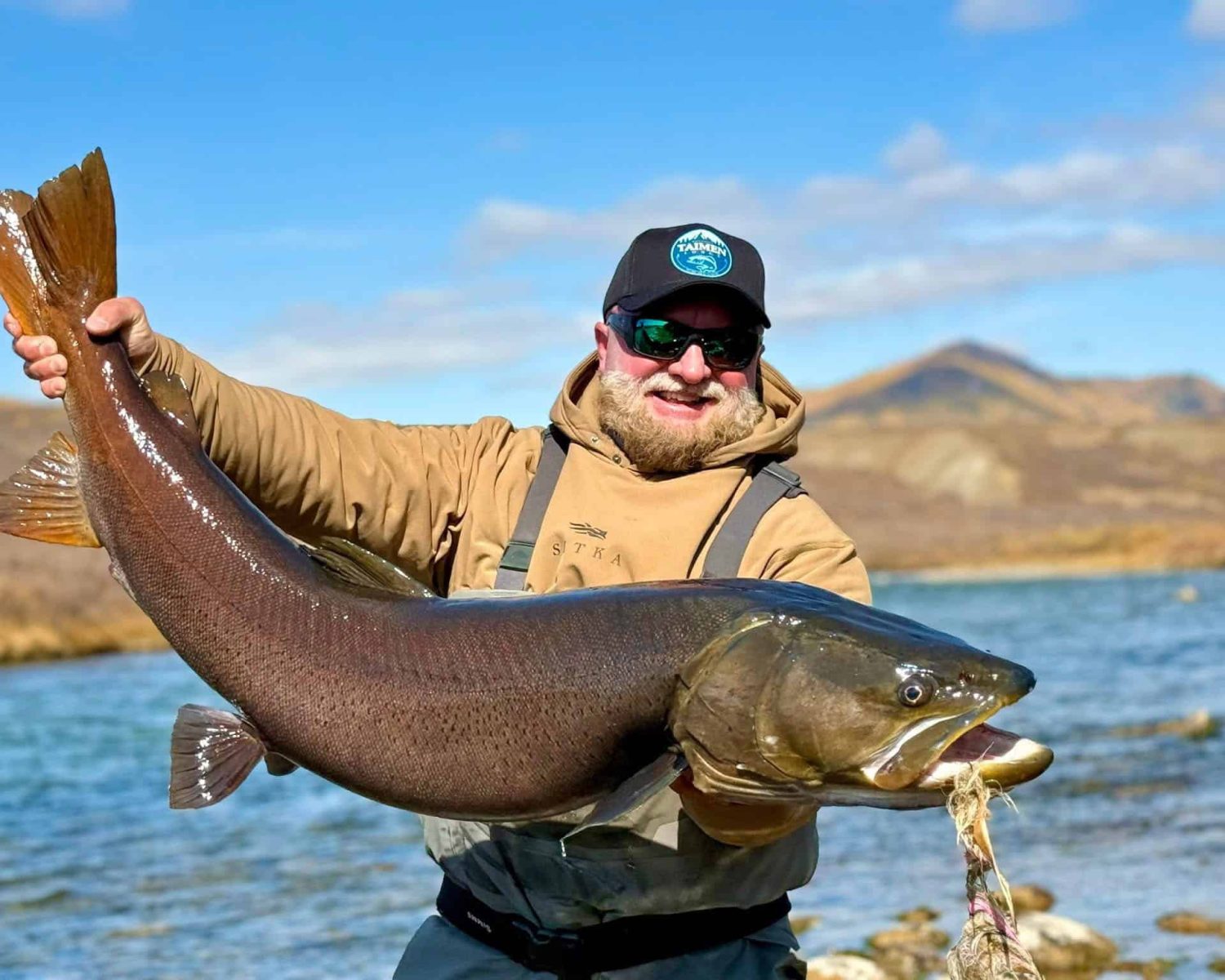
Taimen (Hucho taimen)
Species Overview
The Siberian taimen, Hucho taimen, is the largest living member of the salmon family. A completely freshwater fish, spending its entire life in rivers and connected lakes rather than migrating to the ocean like many salmon species.
Taimen are apex predators. Long, powerful bodies, broad heads and large mouths capable of swallowing surprisingly big prey. Mature fish are usually olive, bronze or reddish-brown, with darker markings along the body and strong red tones in the tail and lower fins. Large adults can exceed 1.5 metres in length, and can live for more than 50 years. That slow growth and long lifespan are important parts of its biology. A metre-long taimen is not simply a large fish. It is often a decades-old predator that has survived floods, freezing winters and major seasonal changes within the same river system.
Young taimen feed on aquatic insects and small fish. As they grow, fish become the main part of their diet, including grayling, lenok, whitefish and pacific salmon returning from the ocean. Mature taimen also take frogs, rodents and small birds when the opportunity arises.
Why it makes our list
Size is part of the attraction, but it is not the whole story. Taimen belong on a bucket list because they combine a major freshwater predator with pristine environments. Healthy populations require cold, clean, connected rivers with productive food webs and enough space for seasonal movement and are closely tied to the landscapes in which they live. Taimen habitat consists of Mongolian steppe, Siberian taiga, broad gravel rivers, forested valleys and mountain tributaries. Targeting them often means travelling through remote country where roads are limited, settlements are scattered and the river remains the main route through the landscape. A taimen encounter is memorable because of the animal, but also because of the scale and isolation of the river around it.
Distribution and habitat
The natural range of the Siberian taimen stretches across northern Eurasia. It includes river systems in Russia, Mongolia, northern China and parts of Kazakhstan, from western drainages near the Ural region to the Amur basin in the Russian Far East. Major taimen waters are connected to the Yenisei, Lena and Amur systems, along with several other Arctic and Pacific drainages. Mongolia holds important populations in both Arctic-flowing and Pacific-flowing rivers.
Taimen favour cold, oxygen-rich rivers with deep pools, strong current lines and access to tributaries. They use different sections of a river throughout the year, moving between spawning areas, feeding water and deeper winter habitat. Although they are occasionally found in lakes and reservoirs, taimen are primarily river fish. Adults often hold in deep pools during periods of inactivity, then move into shallower runs, pool tails and tributary mouths to hunt.
Taimen vs Huchen vs Sakhalin taimen
The names taimen and huchen are sometimes used as though they describe the same fish. They actually refer to two separate species within the same genus. The Siberian taimen is Hucho taimen. It is native to the great river systems of northern Asia. The huchen is Hucho hucho, also known as the Danube salmon. It is a European species native to the Danube drainage and is now found in a much smaller and more fragmented range.
Both are large, long-bodied freshwater salmonids with similar predatory habits. The main distinctions are their species, geography and maximum size. Siberian taimen generally grow larger and occupy a far broader natural range. Huchen are associated with central and southeastern Europe, while Siberian taimen belong to the rivers of Mongolia, Siberia and eastern Russia. Sakhalin taimen are different again. Despite the name, the Sakhalin taimen belongs to the separate genus Parahucho and has a life history that can include coastal and estuarine waters.
Taimen
Huchen
Best Time to Plan a Trip
The taimen season generally runs from early summer into autumn, although the exact timing depends on latitude, snowmelt, water temperature and local regulations. In Mongolia, the legal season opens after the spring spawning period and runs from mid-June until the beginning of November. June offers post-spawn fish and longer daylight, while July and August bring warmer conditions and more stable summer weather. September and October are colder, with shorter days and rapidly changing conditions, but autumn is one of the classic periods for taimen activity.
Russian seasons vary considerably between regions. Northern rivers may remain affected by ice and runoff well into early summer, while winter conditions can return quickly in autumn. In general, June through October covers the main planning window across most established taimen destinations.
Best locations for taimen
Mongolia is arguably the best-known taimen destination with its pristine rivers flowing through open steppe, wooded valleys and remote mountain country renowned for healthy taimen populations. Siberia holds the largest portion of the species’ range with vast and varied river systems, from relatively accessible southern waters to remote northern tributaries reached only by air, boat or multi-day overland travel.
Eastern Russia, particularly the Amur basin and surrounding regions, also supports important taimen populations. These waters can differ greatly from the open rivers of Mongolia, with more forest, larger drainage systems and strong connections to salmon-rich ecosystems. Taimen also occur in parts of northern China and Kazakhstan, although access, population health and angling regulations vary significantly.
Fishing for Taimen
Taimen can be targeted with fly or spinning tackle. Large streamers, baitfish imitations and surface patterns produce results for fly anglers, while spinning anglers fish hardbodies,, spoons and soft-plastics. The fishing is usually based on covering water rather than repeatedly working one small area. Taimen occur at relatively low densities and may move considerable distances between feeding, spawning and winter habitat.
Their surface feeding has become a defining part of taimen fishing. Large fish are capable of attacking rodents and other terrestrial prey, which allows anglers to use surface flies and lures and while it makes for epic bites, taimen remain opportunistic predators rather than dedicated surface feeders.
The Siberian taimen is undoubtedly one of freshwater’s bucket-list predators, but its importance extends beyond its dimensions. There is the possibility of encountering a truly large fish, but there is also the river journey, the remoteness and the knowledge that the animal has spent its entire life moving through the same wild watershed. Taimen are not simply giant trout. They are the defining predator of Eurasia’s greatest rivers and one of the clearest examples of how a fish, a river and a landscape can become inseparable.