
Bucket List Species
Semutundu catfish
World Record
101 lb 7 oz / 46 kg
Murchison Falls, Victoria Nile, Uganda
Distribution
Tropical Africa
Found across the Nile, Niger, Senegal, Volta and Lake Chad
Season
Year-round, depending on location
Techniques
Conventional tackle
Live or dead bait
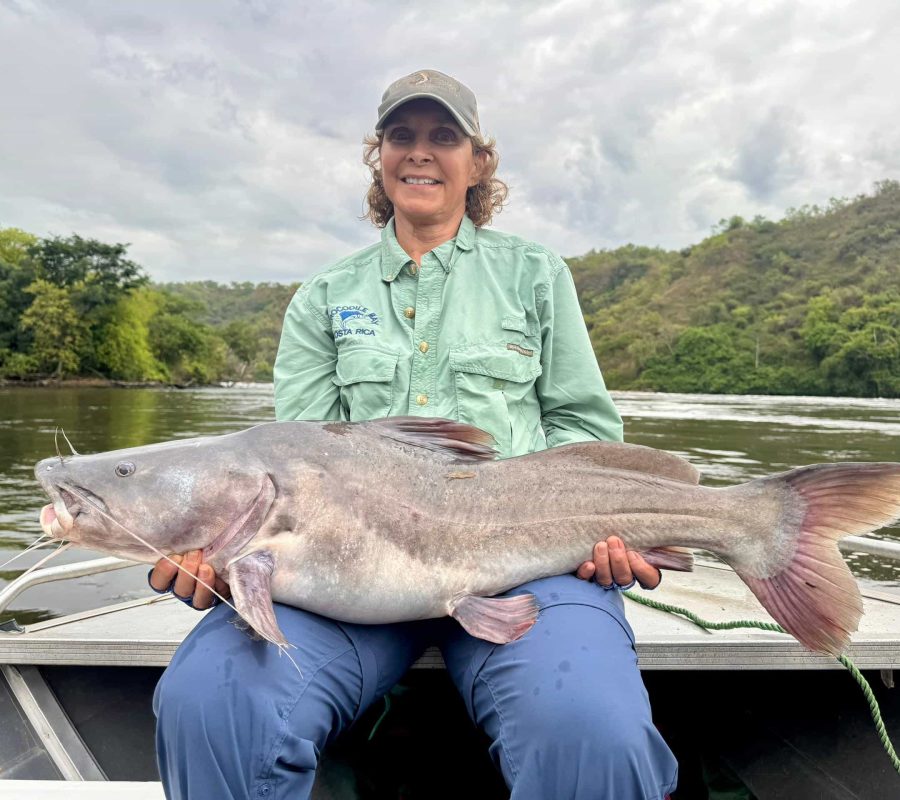
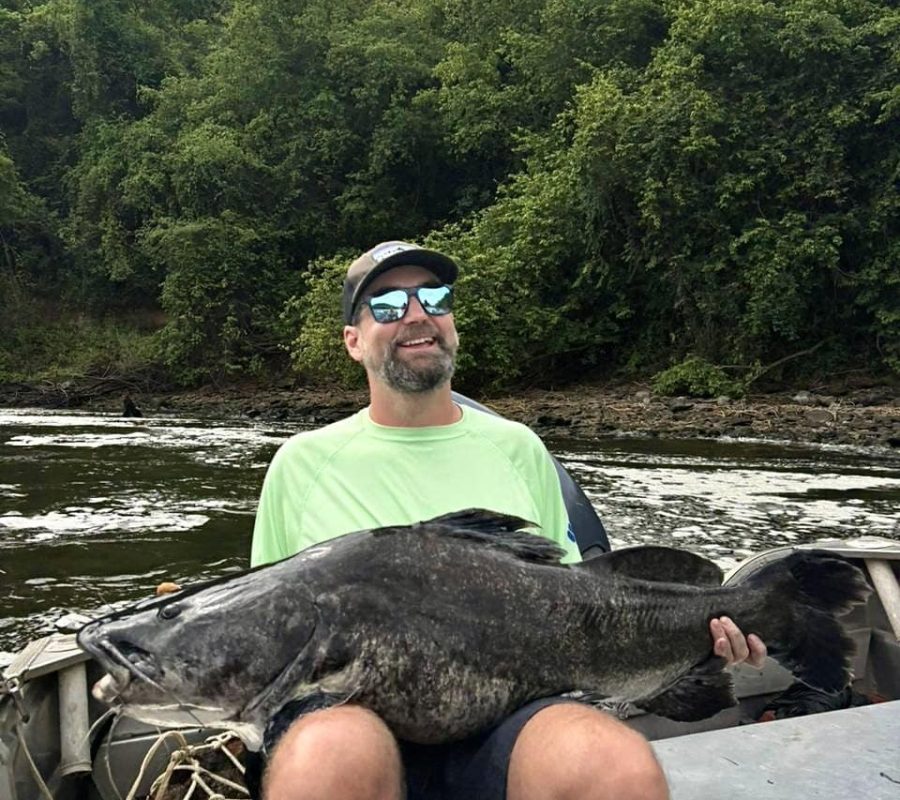
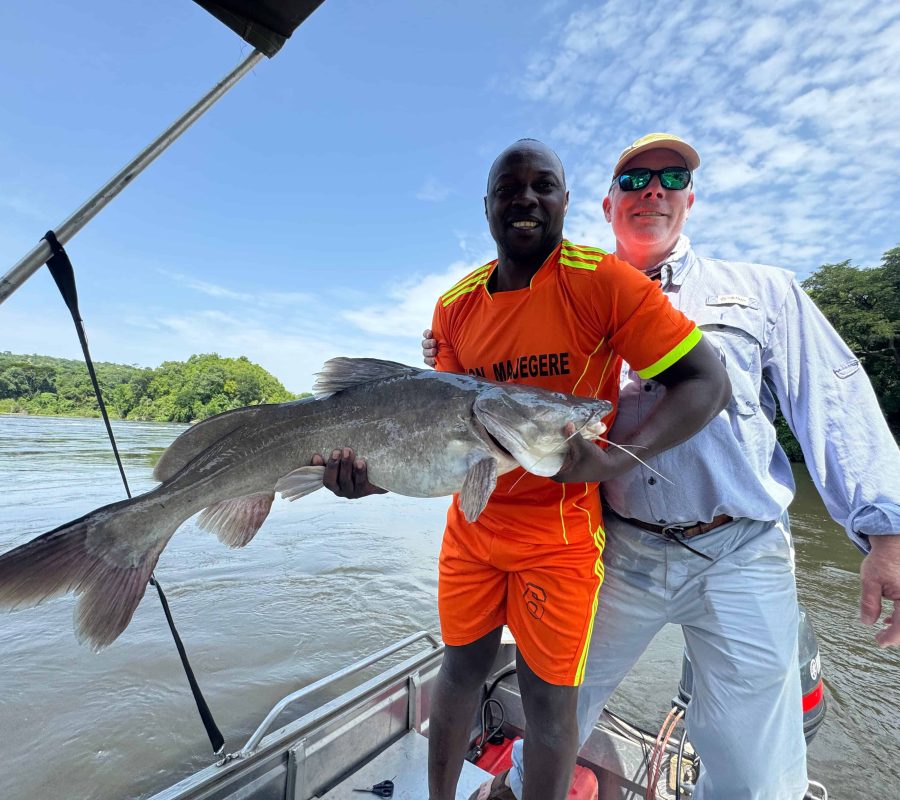
Semutundu Catfish (Bagrus docmak)
Species Overview
Semutundu catfish (Bagrus docmak) are large, predatory catfish found across tropical Africa, particularly in the rivers and lakes of the Nile and East African Great Lakes systems. They are also known as silver catfish or Sudan catfish, although semutundu is the name most anglers hear around Uganda. With a streamlined body, deeply forked tail, long adipose fin and several pairs of sensory barbels around the mouth, they look very different from the broad-headed, eel-tailed catfish found elsewhere in Africa.
Their colour varies with the water. Some fish are pale silver-grey, while others carry darker olive, brown or charcoal tones across the back. The belly is generally lighter, and mature fish develop a thick, muscular body behind the head. The forked tail is an important part of the design. Semutundu are active hunters capable of moving quickly through open water and strong current, rather than simply waiting on the bottom for food to arrive.
Habitat & Distribution
The species has a broad African distribution, but it is especially well known from Uganda and the wider Nile drainage. Semutundu occur in large rivers, lakes and connected waterways, including the Victoria Nile and waters around Lakes Victoria and Albert. They share these systems with Nile perch, tigerfish, tilapia and several other catfish species, often occupying the same deep channels, current lines and rocky feeding areas.
Large rivers suit them particularly well. Below Murchison Falls, the Victoria Nile widens into a powerful mixture of deep holes, swirling eddies, feeder streams and moving channels. Semutundu use these changes in depth and flow to find food without sitting directly in the strongest water. River mouths, current breaks and the deeper edges of fast runs can all provide feeding opportunities.
In lakes, they occupy a wider range of water. Smaller fish may remain closer to shore, while mature semutundu move through deeper areas, rocky bottoms and places where baitfish gather. They can feed close to the bottom, but they are not restricted to it. When prey moves higher in the water column, the catfish are capable of following.
Size & Feeding Habits
Semutundu are opportunistic predators. Young fish feed on insects, crustaceans and smaller aquatic animals, but fish become increasingly important as they grow. Large adults take cichlids, small barbs and other available prey, using their sensitive barbels to locate food in dark or discoloured water. Their eyes, streamlined bodies and forked tails also allow them to hunt more actively than many anglers expect from a catfish. They can reach serious size. Semutundu can grow to over 45 kilograms, although most fish encountered by anglers are considerably smaller. A fish above 10 kilograms is already a substantial river predator, with enough weight and tail power to test heavy tackle.
Semutundu Fishing
Semutundu can be targeted with conventional tackle. Live or dead bait fished through deep holes and slower water beside the main current is the main approach for larger fish. Their fight is very different from the slow, bottom-hugging struggle many people associate with catfish. A hooked semutundu can run hard across the current. Once the initial speed fades, the fish settles into a dogged battle, using its body weight and the river’s flow to resist every metre gained. Their combination of acceleration and sustained pressure makes them a surprisingly sporting catch.
Semutundu rarely receive the same attention as the Nile perch sharing their waters, but they are far more than an incidental catfish. They are large, active predators with the speed of a fork-tailed river fish and the strength expected from a serious African catfish. They may not have the oversized mouth of a Nile perch or the teeth of a tigerfish, but it belongs completely to the same wild river environment. In the deep channels and heavy current of the Nile, a large silver shape accelerating away from the boat is a proper gamefish by any measure.