
Bucket List Species
Roosterfish
World Record
114 lb / 51.7 kg
La Paz, Mexico
Distribution
Eastern Pacific
Baja California and the Sea of Cortez south through Central America to Peru
Season
Year-round across their range
Baja: May to July and September to October
Costa Rica: December to May is the most popular window
Techniques
Fly fishing, spinning and conventional
Live bait, poppers, stickbaits, spoons, trolling and baitfish imitations
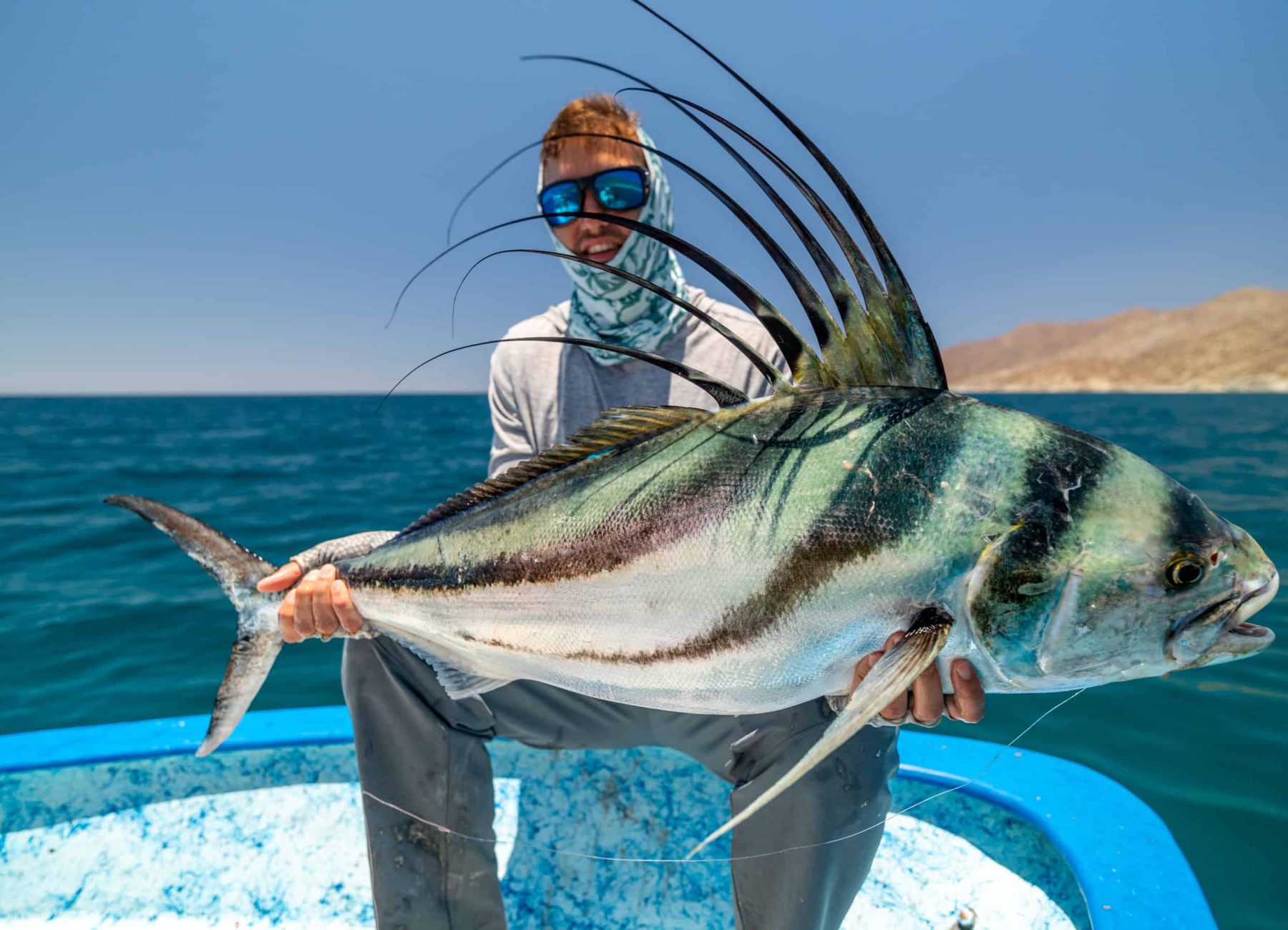

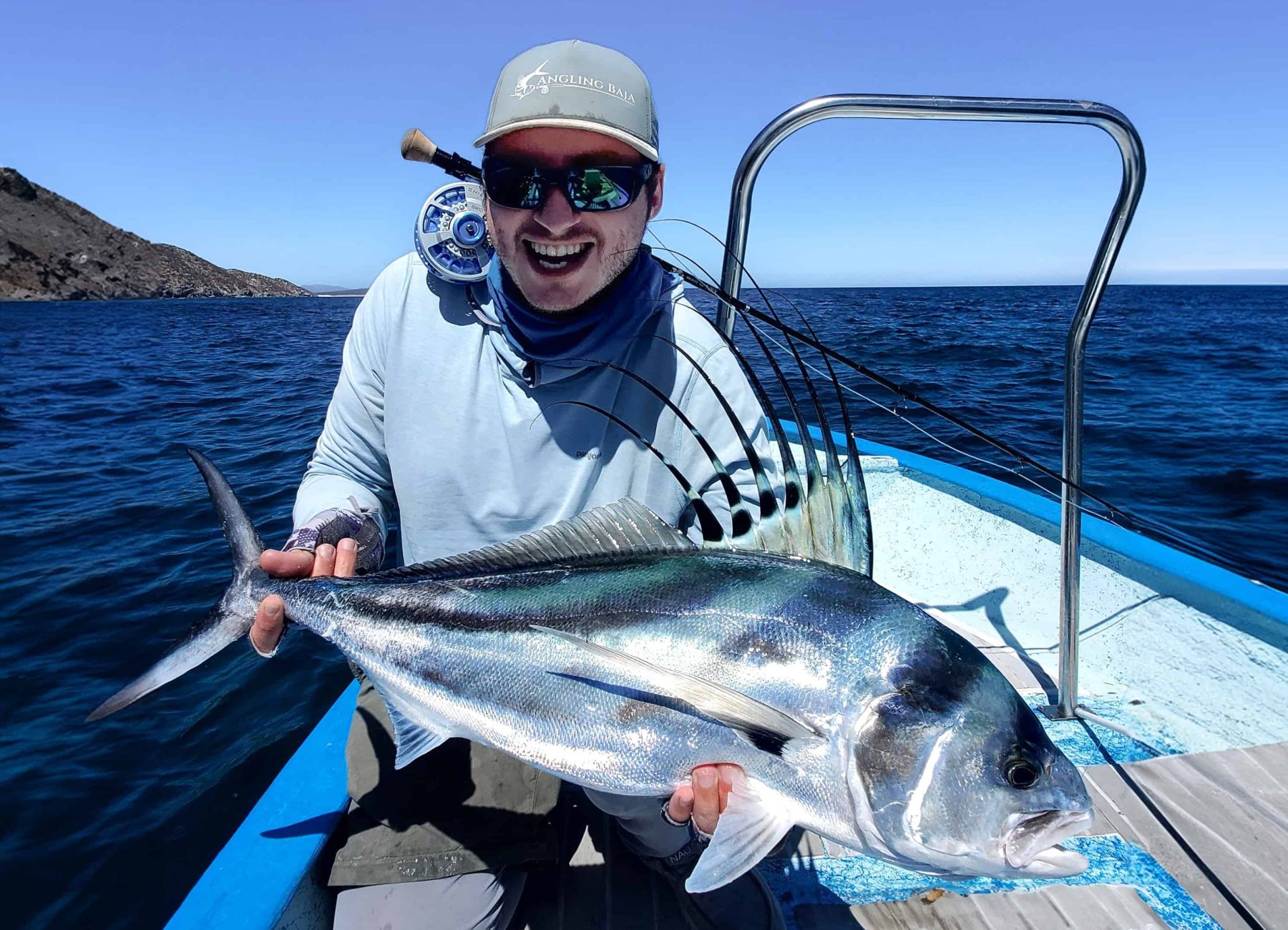
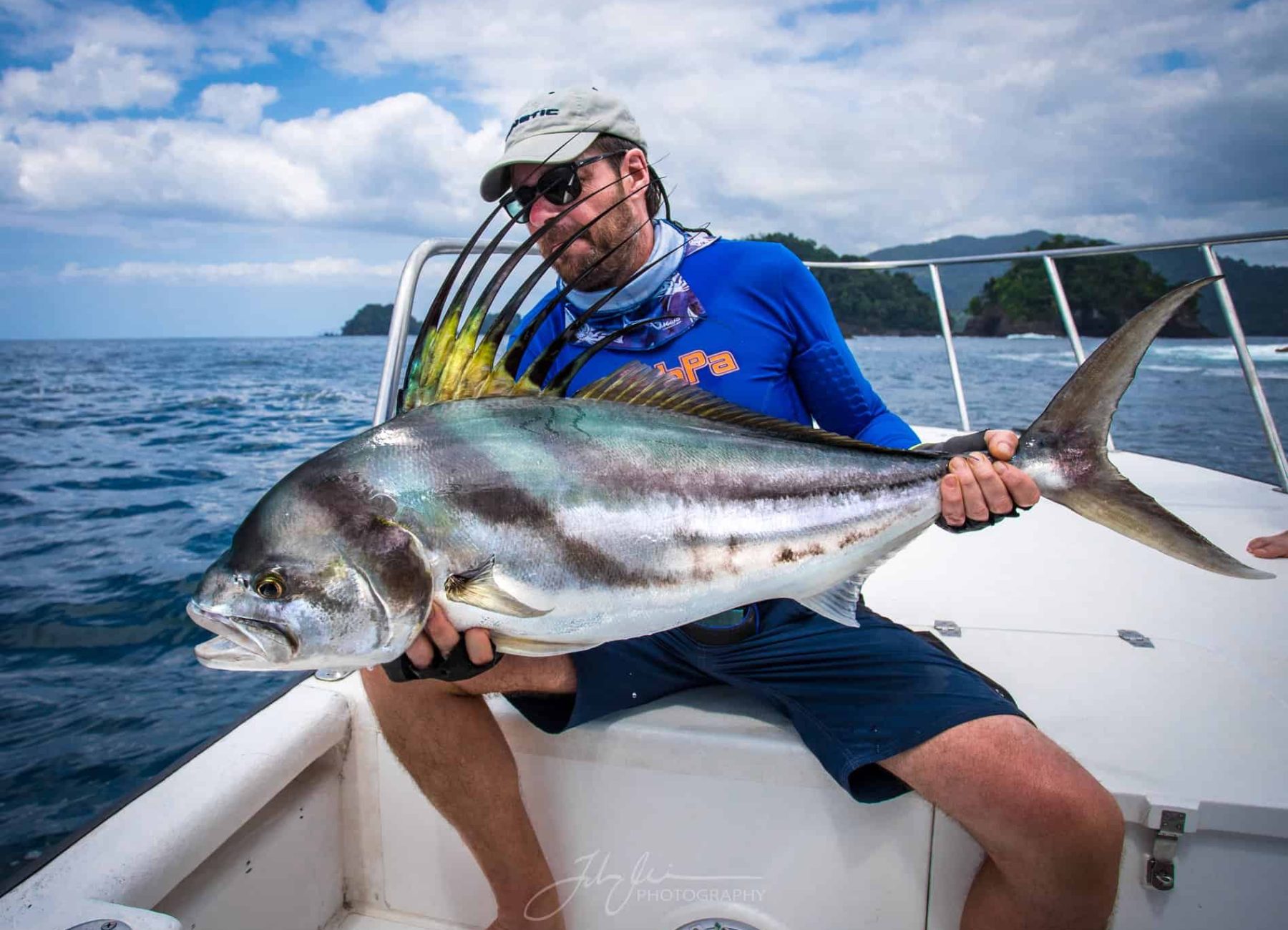
Roosterfish
Species Overview
Roosterfish (Nematistius pectoralis) are one of the most recognisable inshore gamefish in the world. Their name comes from the seven long dorsal spines that rise above the back like a rooster’s comb, often cutting through the surface when a fish is hunting in shallow water. A series of dark blue or black bands runs across the silver flanks, while the deeply forked tail and broad shoulders give the fish the build of a powerful coastal predator. Roosterfish are the only species in the genus Nematistius, and there is nothing else in their range that looks quite like them.
Habitat & Distribution
The species is found only in the eastern Pacific, from Mexico’s Baja Peninsula and the Sea of Cortez south through Central America to the tropical Pacific coast of South America. Mexico, Costa Rica and Panama are the best-known destinations, although roosterfish also occur along the coasts of Guatemala, El Salvador, Nicaragua, Colombia, Ecuador and Peru. Baja remains the classic location, particularly for anglers hoping to encounter fish from the beach as well as from a boat.
Roosterfish are coastal fish, closely associated with beaches, rocky headlands, inshore islands, reef edges and steep drop-offs. They regularly patrol the surf line in water shallow enough for their dorsal fins and tails to break the surface, but they are equally comfortable around deeper rock formations and current lines. Juveniles are often found in schools, while the largest fish may travel alone or in small groups. Their movements are strongly influenced by bait, tides and water conditions, so a beach that appears empty can suddenly come alive when sardines or mullet move close to shore.
Size & Feeding Habits
Everything about a roosterfish suggests speed. The body is deep but streamlined, narrowing into a strong tail wrist and a large forked tail that produces rapid acceleration. They hunt small schooling fish such as sardines, mullet and other coastal baitfish, often forcing them against beaches, rocks or the surface. Feeding fish can appear with little warning, their combs cutting through the water before the school erupts in spray. A roosterfish may chase prey almost onto dry sand, then turn and disappear into deeper water within seconds.
Most roosterfish caught by travelling anglers weigh between 10 and 40 pounds, although this varies considerably between destinations and seasons. A fish above 50 pounds is a serious trophy, while specimens over 80 pounds are exceptional. Roosterfish can exceed 100 pounds, with the all-tackle world record standing at 114 pounds. That fish was caught near La Paz, Mexico, in 1960 and remains one of the longest-standing major saltwater records.
Fishing
Roosterfish can be targeted with fly, spinning and conventional tackle. Trolling live bait is one of the most dependable approaches for larger fish, particularly along beaches, rocky points and bait schools. Casting poppers, stickbaits, spoons and other baitfish imitations from pangas offers a more active approach.
Fly fishing has added another dimension to the species, especially along Baja’s East Cape, where anglers walk long beaches looking for the distinctive comb of a cruising fish. It is an unusually physical form of sight fishing. A rooster may appear hundreds of metres away, forcing the angler to run down the beach, judge its direction and make a cast before it passes. Boat-based fly fishing is more common in Costa Rica and other parts of Central America, where fish are often located around bait schools, rocky shorelines and offshore structure.
Once hooked, roosterfish fight with speed rather than a rush towards cover. The first run can be long and fast, followed by powerful changes of direction and repeated surges away from the boat or beach. They do not have the teeth of a cubera or the reef-destroying tactics of a giant trevally, but they can cover water remarkably quickly and use their broad bodies well during the later stages of the fight. Roosterfish encounters are visual. The dorsal comb appears first, followed by the dark bands and heavy shoulders as the fish closes on the bait. Sometimes the chase unfolds in open water. At other times it happens almost at our feet in the surf. Few saltwater species are as distinctive, and even fewer combine that appearance with genuine size, speed and the possibility of catching them directly from the beach.