
Bucket List Species
Peacock Bass
World Record
29 lb 1 oz / 13.19 kg
Cichla temensis
Santa Isabel do Rio Negro, Brazil
Distribution
Tropical South America
Native to the Amazon and Orinoco basins
Season
Varies by river system
Techniques
Fly fishing, spinning and baitcasting
Poppers, prop baits, stickbaits, jerkbaits, crankbaits, jigs, swimbaits


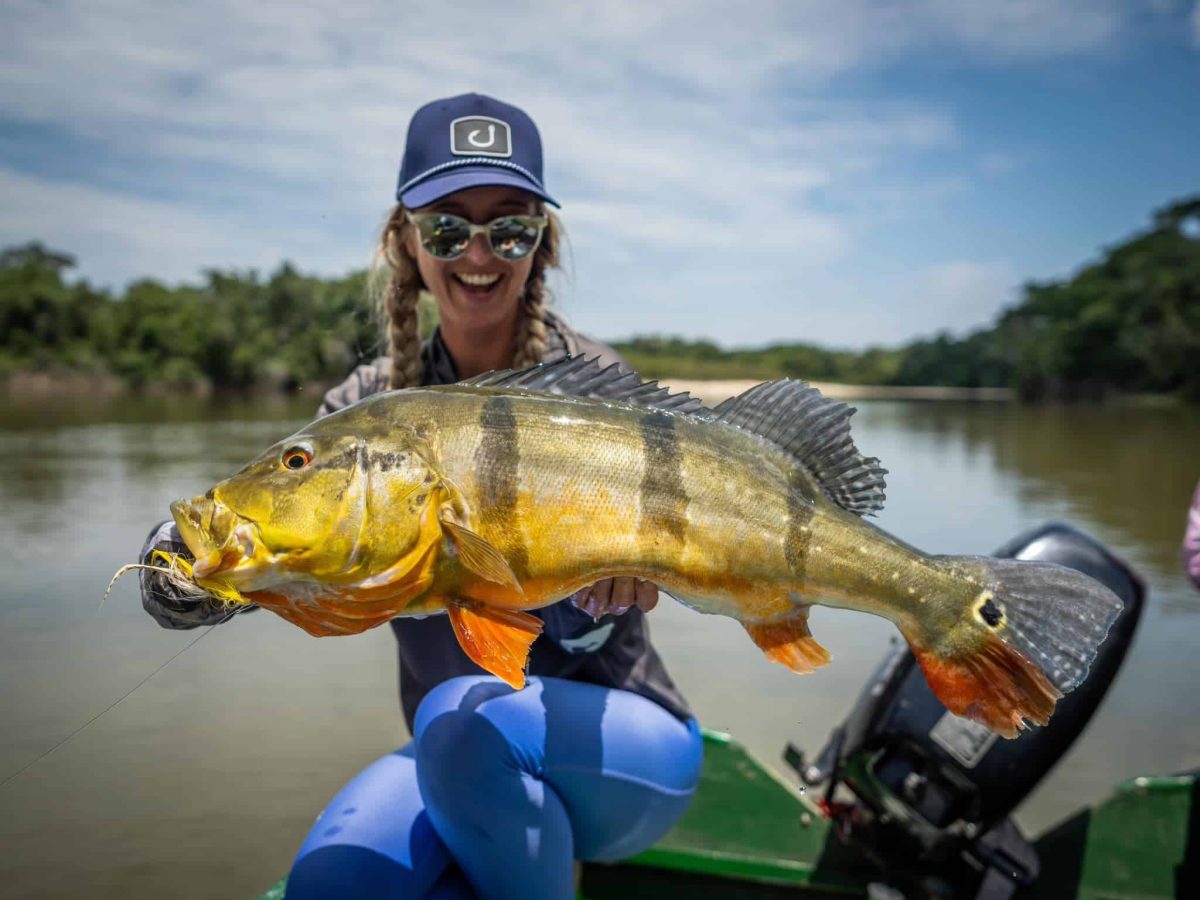
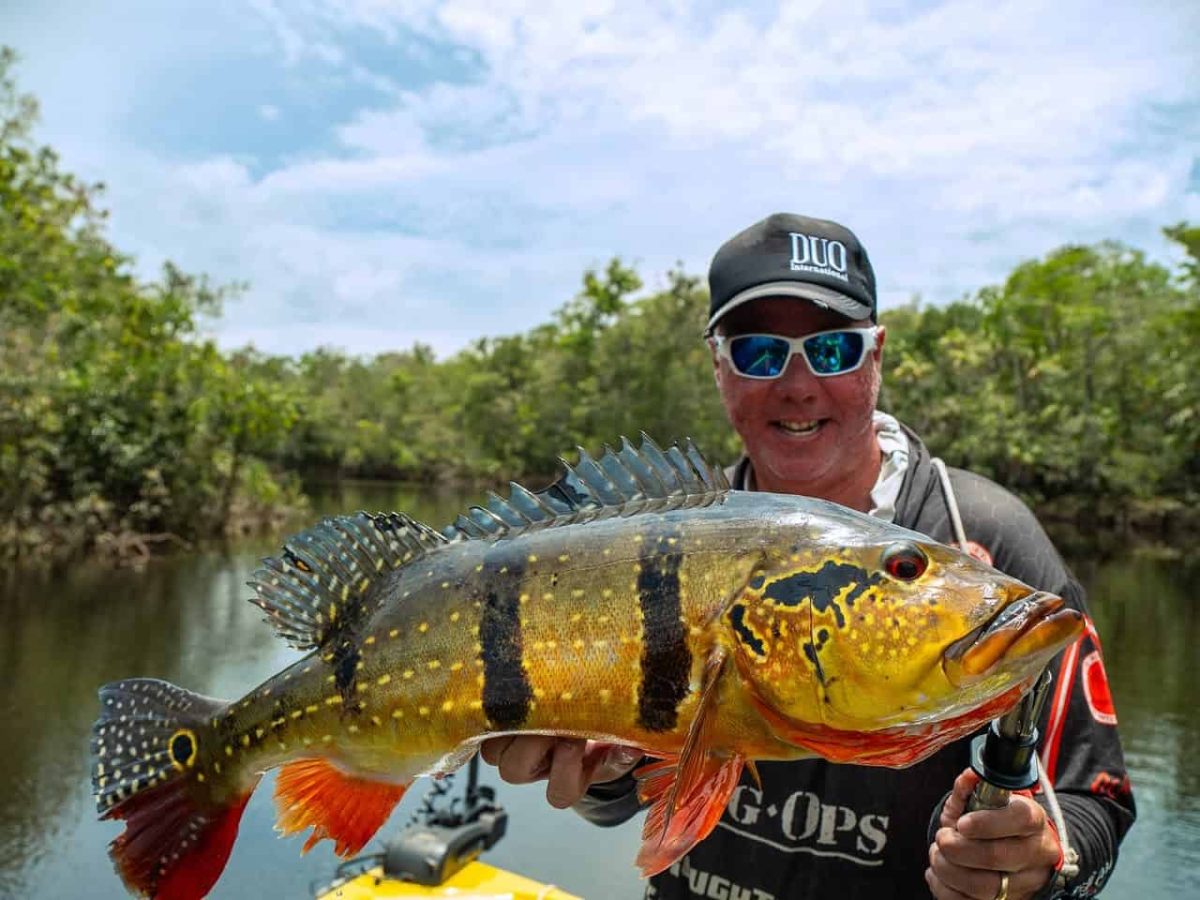
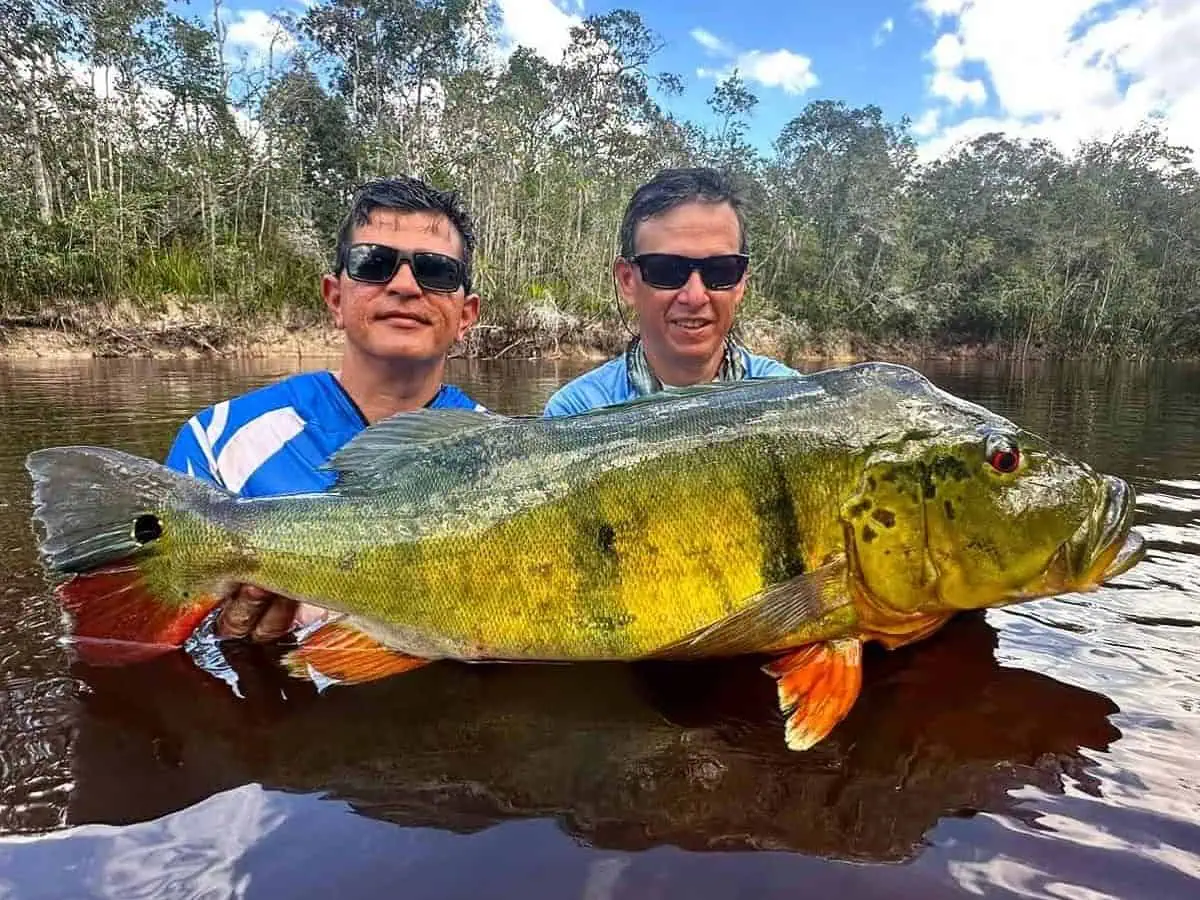
Peacock Bass
Species Overview
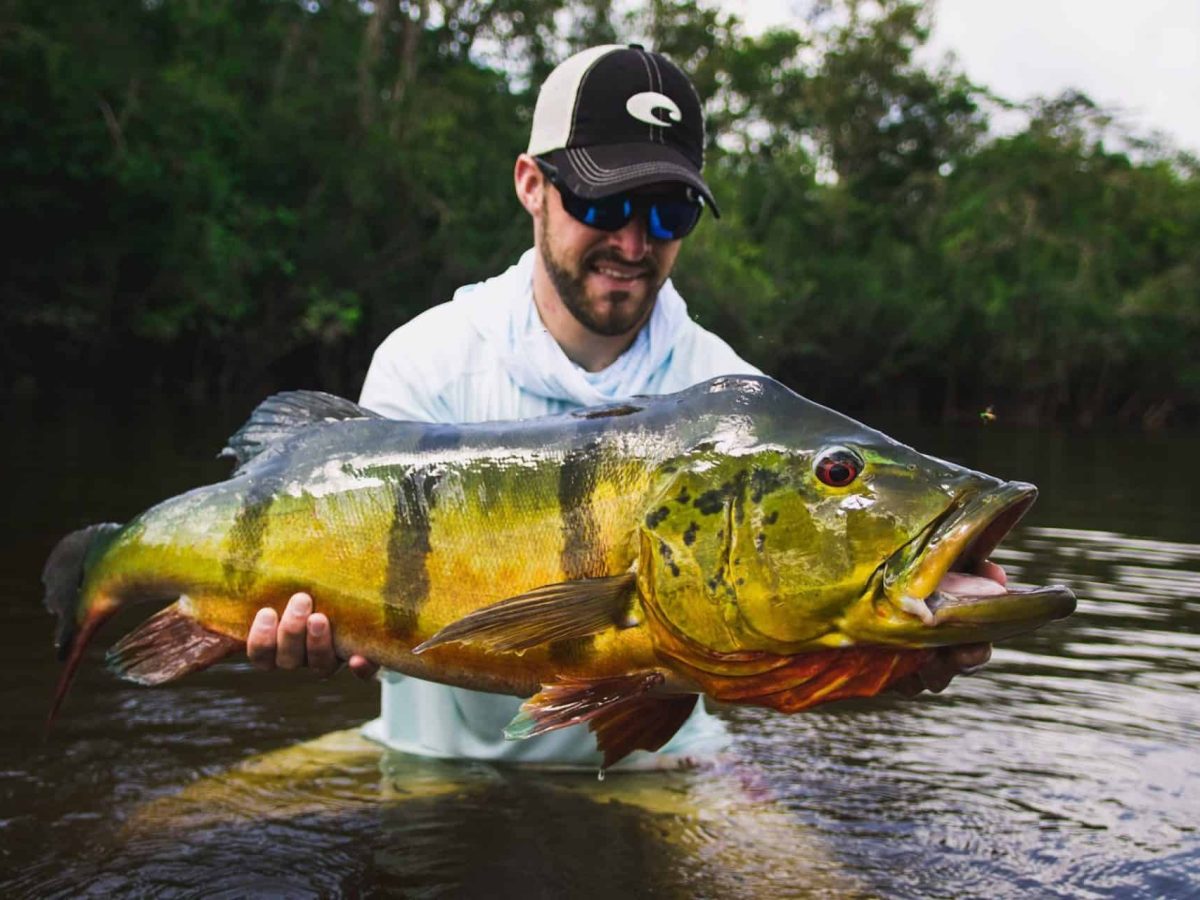
Peacock bass are a group of large tropical freshwater predators belonging to the genus Cichla. Despite the name, they are not true bass at all, but members of the cichlid family, which also includes tilapia and many familiar aquarium fish. They have deep, muscular bodies, large mouths, powerful forked tails and a distinctive dark eyespot near the base of the tail. Their colours range from olive and gold to yellow, orange, red and black, depending on the species, habitat and breeding condition.
More than a dozen species are recognised, each with its own natural range and appearance. The largest and best known is the speckled peacock bass, Cichla temensis, often called the three-barred peacock. Other important species include the butterfly peacock, Cichla orinocensis, the butterfly or ocellaris peacock, Cichla ocellaris, and the widespread monoculus peacock, Cichla monoculus. Local names can vary considerably, which is why anglers sometimes use the same common name for different fish in different river systems.
Habitat & Distribution
Peacock bass are native to tropical South America. Their range covers much of the Amazon and Orinoco basins, along with the river systems of the Guianas. Brazil, Colombia, Venezuela and Guyana hold some of the best-known fisheries, with populations also found in Peru, Bolivia, Suriname and French Guiana. They have been introduced into waters outside their native range, including parts of Florida, but the species is most closely connected to the warm rivers and flooded forests of northern South America.
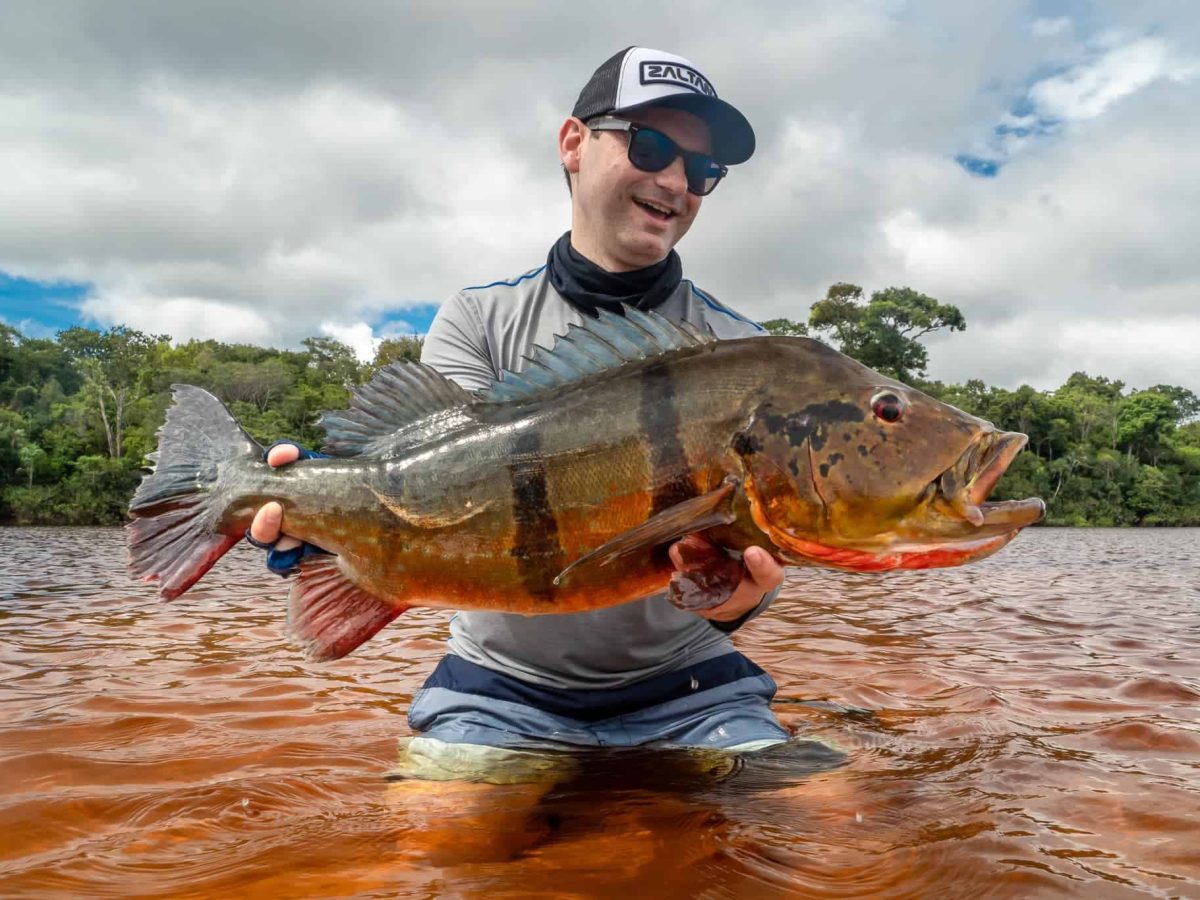
Within these systems, peacock bass occupy rivers, lagoons, oxbows, creeks, reservoirs and seasonally flooded forest. They are rarely far from some form of cover. Fallen trees, submerged branches, rocky banks, sandbars, creek mouths and the edges of flooded vegetation all provide places from which they can ambush prey. The indigenous name tucunaré is sometimes translated as “friend of the tree,” which is a good description of how closely these fish are associated with timber and structure.
Water levels have a major influence on their behaviour. When rivers rise, fish and bait can spread deep into the flooded forest, making them harder to locate. As levels fall, peacock bass are drawn back towards the main channels, lagoons and remaining pockets of deeper water. This concentrates both predator and prey, creating the conditions associated with the main fishing seasons across much of the Amazon.
Size & Feeding Habits
Peacock bass are visual predators that feed primarily on other fish. They may wait beside structure for prey to move within range, but they are equally capable of hunting in groups and driving bait against a bank, sandbar or the surface. Smaller species and juveniles often form schools, while mature Cichla temensis may hunt alone or in pairs. Their strike is sudden and direct, followed by an immediate attempt to reach the nearest timber or submerged cover.
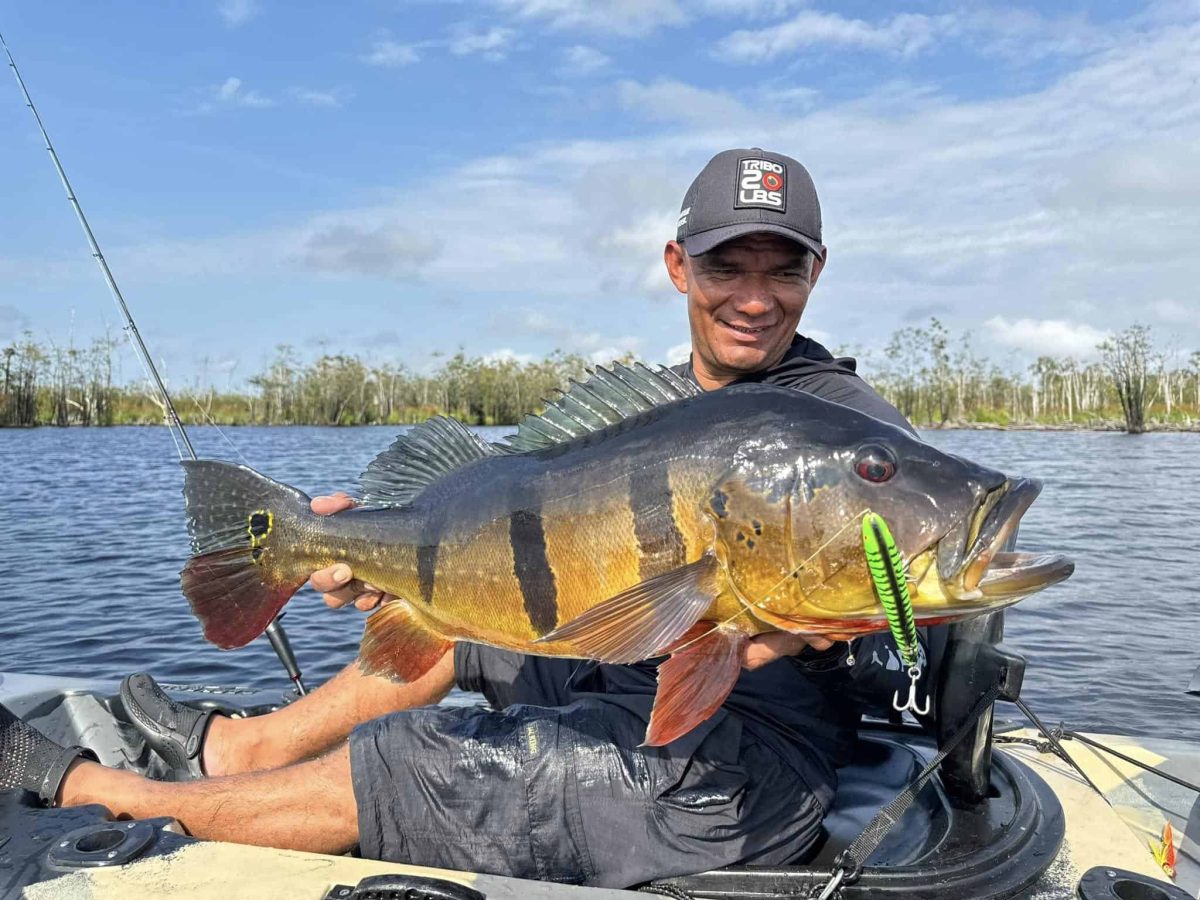
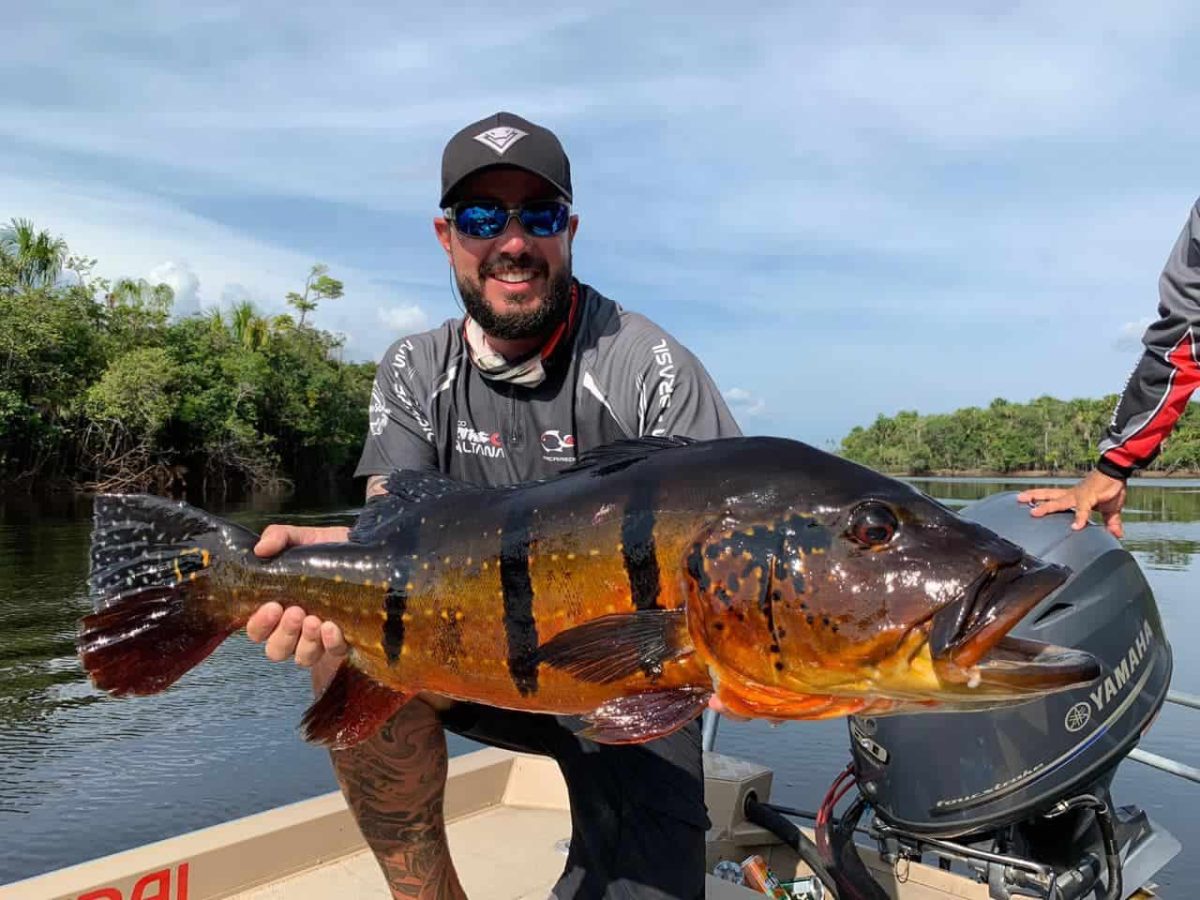
One of the most interesting features of Cichla temensis is the dramatic change between its non-spawning and spawning colour phases. The non-spawning fish is known as a paca and usually has a darker body covered with rows of pale spots. As spawning approaches, it develops the bold three-barred pattern known as the açu phase, with stronger greens, yellows, oranges and reds. Mature males can also develop a pronounced hump on the forehead. The two phases look so different that they were once thought to represent separate types of fish.
Size varies widely between species. Many butterfly peacocks weigh between two and seven pounds, although larger specimens certainly occur. A ten-pound peacock bass is a powerful fish regardless of species, while a Cichla temensis above 15 pounds is a serious trophy. Exceptional fish exceed 20 pounds, and the largest confirmed specimens approach 30 pounds. At that size, they are among the largest members of the cichlid family.
Peacock Bass Fishing
Peacock bass can be targeted with spinning, baitcasting, and fly tackle. Surface prop baits or wood-choppers, poppers and walk-the-dog style stickbaits are closely associated with the species because of the violent strikes they produce, but jerkbaits, crankbaits, swimbaits, jigs and large streamers are equally productive. The approach varies with the water, but the principle remains the same: draw the fish away from cover or stop it before it gets back there.
The fight usually begins at full speed. Peacock bass strike hard, change direction quickly and regularly jump, but the main danger is the first run towards structure. Even a modest fish can break tackle if it reaches submerged timber, while a large temensis has the weight and acceleration to make the encounter feel more like inshore saltwater fishing than conventional bass fishing.
The appeal of peacock bass lies in their variety. They range from brightly coloured schooling butterflies to heavy, three-barred temensis approaching 30 pounds. They live in clear rivers, dark tannin-stained lagoons, flooded forest and huge tropical waterways. Every fish carries the same basic shape and tail spot, but the species, colour and setting can change completely from one river system to the next.