
Bucket List Species
Papuan Black Bass (Snapper)
World Record
47 lb 8 oz / 21.55 kg
Tauri River, Papua New Guinea
Peak Season
March – October
Fishing Techniques
Spinning • Bait-casting
Distribution
New Guinea • Indonesia
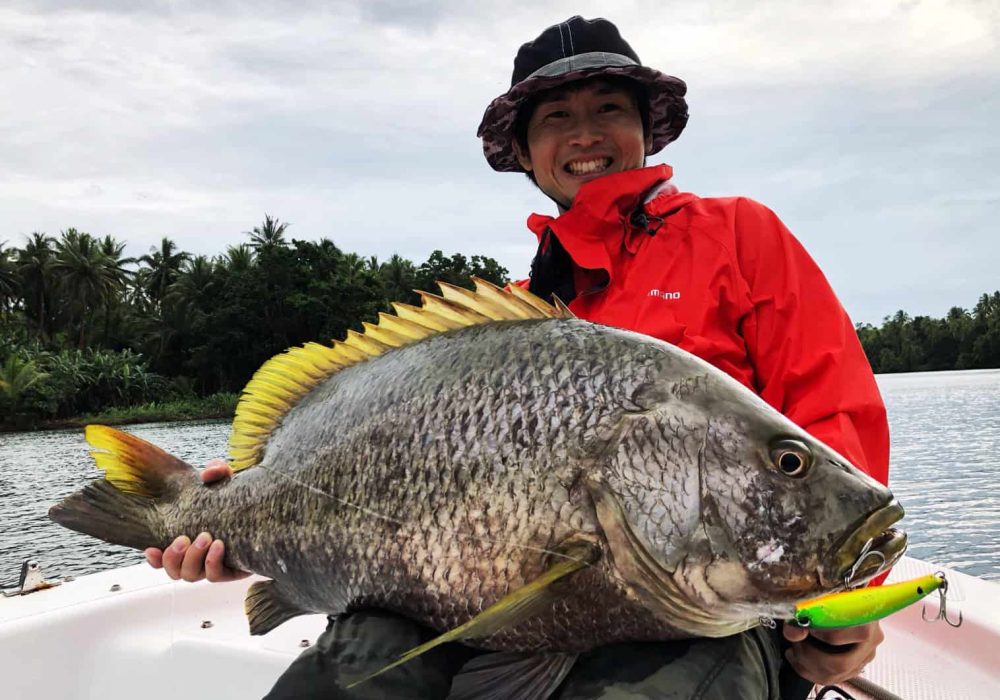
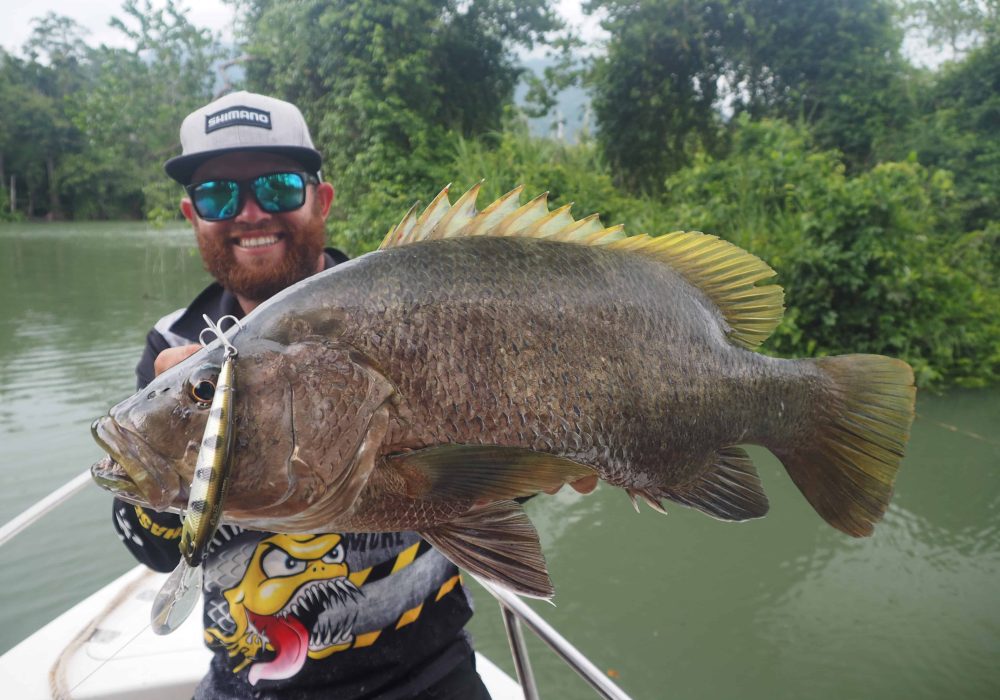
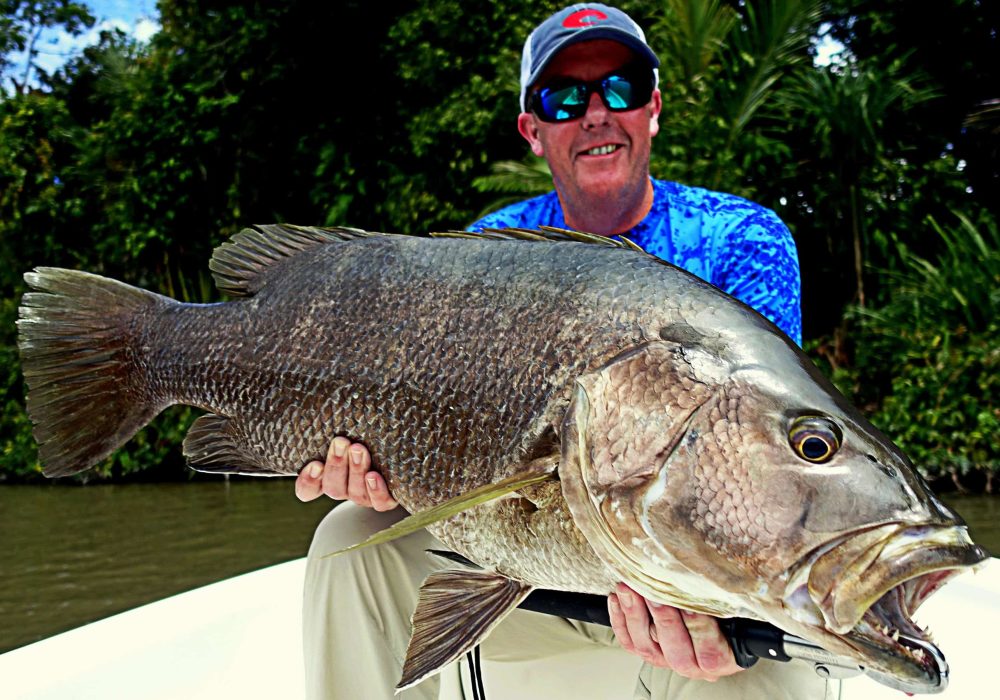
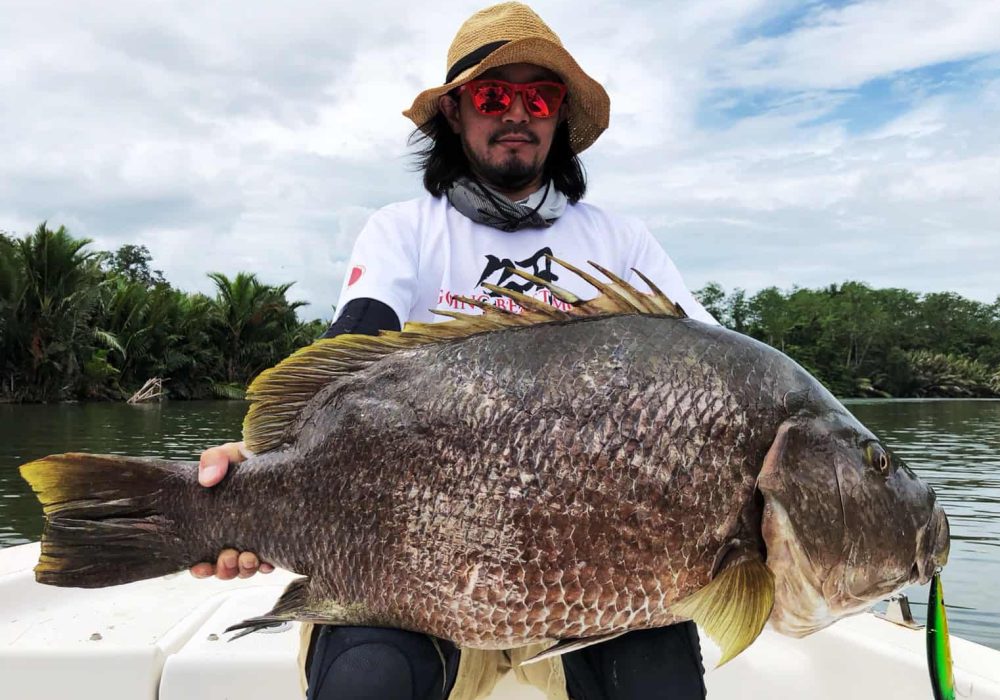
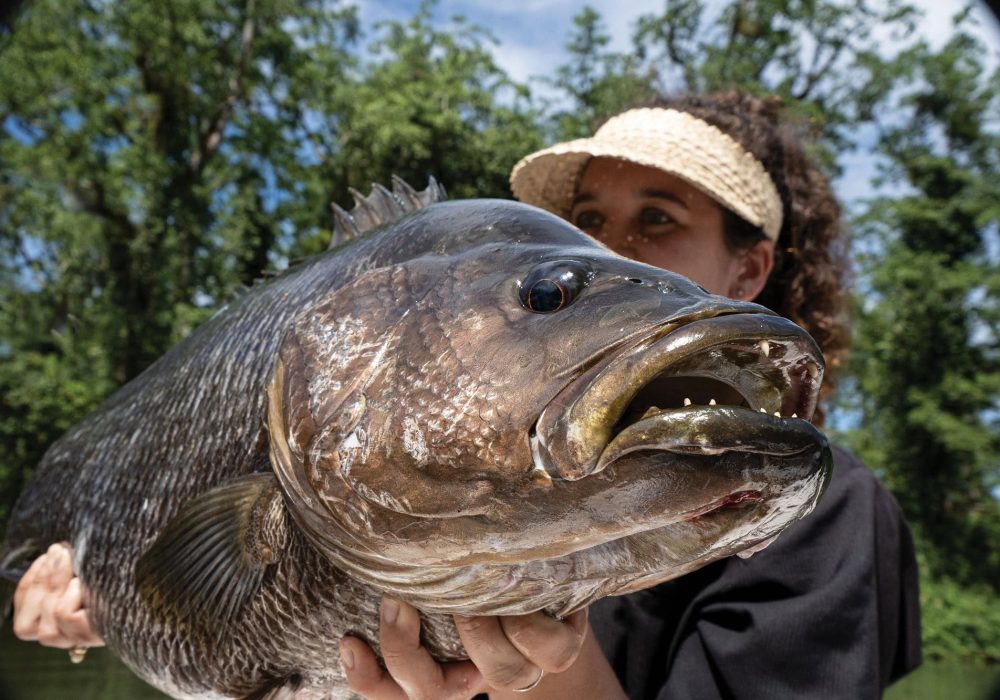

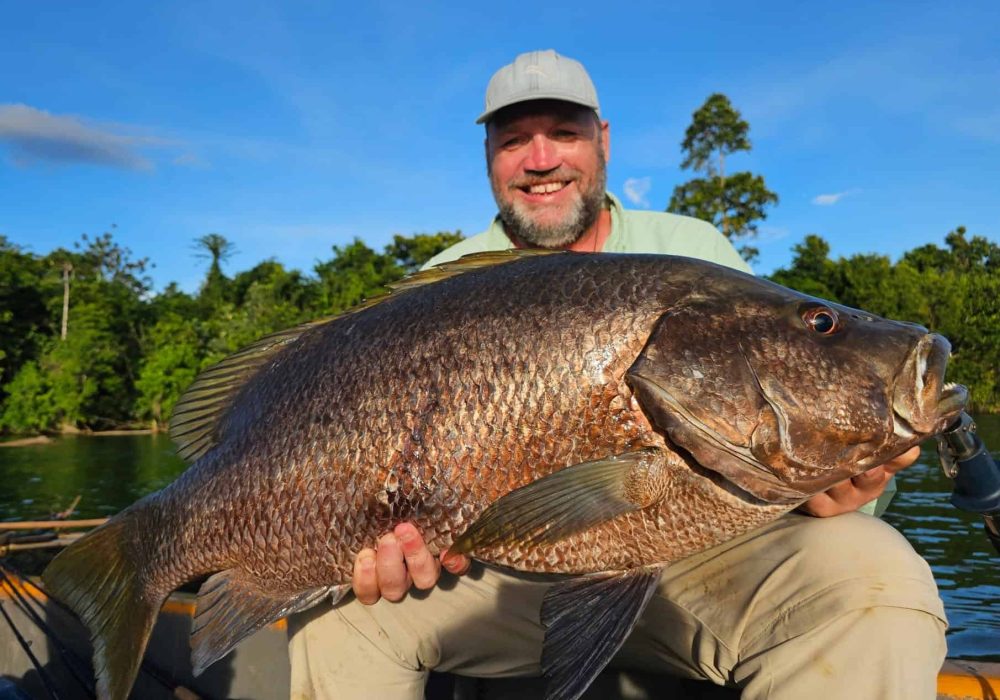
Papuan Black Bass / Snapper
Species Overview
Papuan black snapper (Lutjanus goldiei), also known as Papuan black bass or Niugini black bass, are heavily built river predators from the snapper family. Despite the name, they are not bass at all. They are true Lutjanus snappers, closely related to species such as mangrove jack, spottail snapper and cubera snapper. They have broad heads, powerful jaws, large canine teeth and unusually thick, muscular bodies. In the water they can show olive, bronze and green tones with darker vertical bands, but their colour can change quickly when stressed, often becoming deep grey or almost black.
Habitat & Distribution
Their natural range centres on New Guinea, with the species most strongly associated with Papua New Guinea and the river systems of New Britain. Populations have also been reported elsewhere around the wider region, including parts of the Solomon Islands and Indonesia. Even within this range they are far from common, and many of the best fisheries are remote tropical rivers reached by boat, small aircraft or expedition-style travel.
Black bass live mainly in the lower freshwater and brackish sections of rivers. This separates them from the Papuan spottail snapper, Lutjanus fuscescens, which can often be found farther upstream in clearer, faster freshwater. Black bass favour larger channels, estuaries and tidal reaches where deep water, heavy current and submerged timber come together.
Few fish are better suited to this environment. Fallen rainforest trees create huge underwater snag systems, while floods constantly reshape channels and move timber through the river. Black bass use these logs, root systems, rock formations and undercut banks as cover. A fish may sit almost motionless beside a submerged tree in fast water, waiting for prey to move within striking distance.
There is still a surprising amount we do not know about their biology. Their spawning movements and life cycle remain poorly understood, although research suggests adults may move between rivers, estuaries and coastal environments during parts of the year. What is clear is that large fish spend significant periods well inside river systems, including water that is completely fresh.
Size & Feeding Habits
Papuan black bass are opportunistic predators. Fish make up much of their diet, with mullet, smaller snappers and other river species all potential prey, along with prawns and crustaceans. Their feeding style is based on ambush rather than long pursuit. A black bass can remain hidden beside a snag before accelerating over a very short distance and hitting with extraordinary force.
That behaviour is central to their reputation as a gamefish. The fish begins the fight in the exact place an angler does not want it to be, usually beside a fallen tree, root system or rock ledge. After the strike, it immediately tries to return to cover. A black bass does not need a 100-metre run to win. Sometimes two or three metres is enough.
Papuan Black Bass Fishing
Fish between 10 and 20 pounds are already immensely powerful in this environment, while anything above 30 pounds is a serious trophy. A genuine 40-pound black bass is a rare fish. The recognised all-tackle record stands at 47 pounds 8 ounces, caught from Papua New Guinea’s Tauri River in 2015. There are long-standing reports of even larger fish from remote rivers, although reliable measurements and verified records are understandably difficult to obtain in these locations.
Black bass are mainly targeted with spinning and baitcasting tackle, although they can also be caught on fly and conventional gear. Deep-running hardbody lures, crankbaits, jerkbaits, soft plastics, swimbaits and surface lures are all used depending on water depth and structure. Much of the fishing involves placing a lure tight against submerged timber and working it through the strike zone before the fish has a chance to disappear back into cover.
In the right water, black bass will rise from beneath timber to attack poppers and stickbaits. The strike can be spectacular, but the real problem begins immediately afterwards when the fish turns back towards the snag. The Papuan black bass has earned a reputation as one of the hardest fish in the world to stop, and the habitat is a major reason why. Plenty of fish are stronger in open water, and plenty grow larger, but very few combine this level of power with such unforgiving surroundings.
A Papuan black bass is essentially a cubera snapper placed inside a jungle river filled with submerged trees. The fish has the strength to exploit every part of that environment, and it usually starts the fight only a few metres from safety. Landing one is never simply about the size of the fish. It is about stopping it before the river takes over.