
Bucket List Species
Greater Amberjack
World Record
163 lb 2 oz / 74 kg
Zenisu, Tokyo, Japan
Distribution
Warm temperate and tropical seas
Found throughout the Atlantic, Mediterranean and Indian Ocean
Season
Year-round, depending on location
Techniques
Live baits, vertical and slow-pitch jigs, trolling, diving lures, poppers, stickbaits
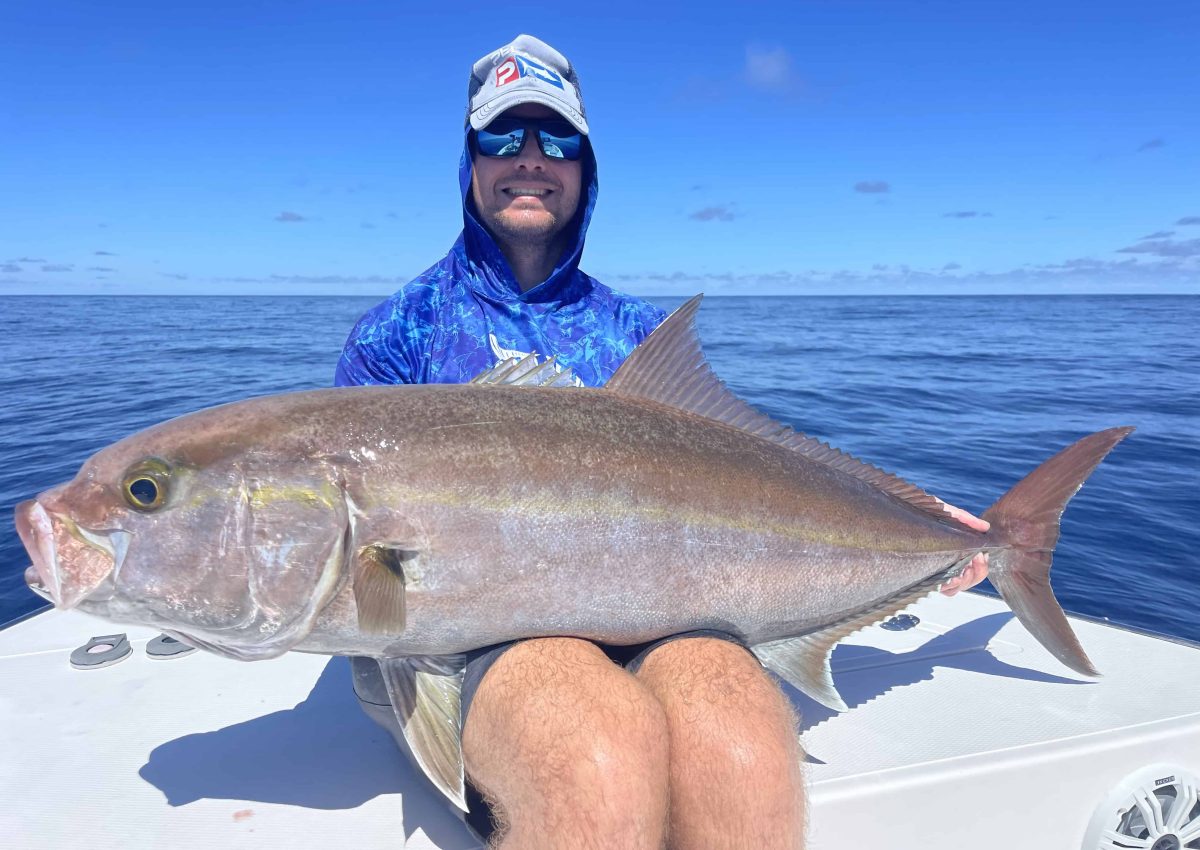
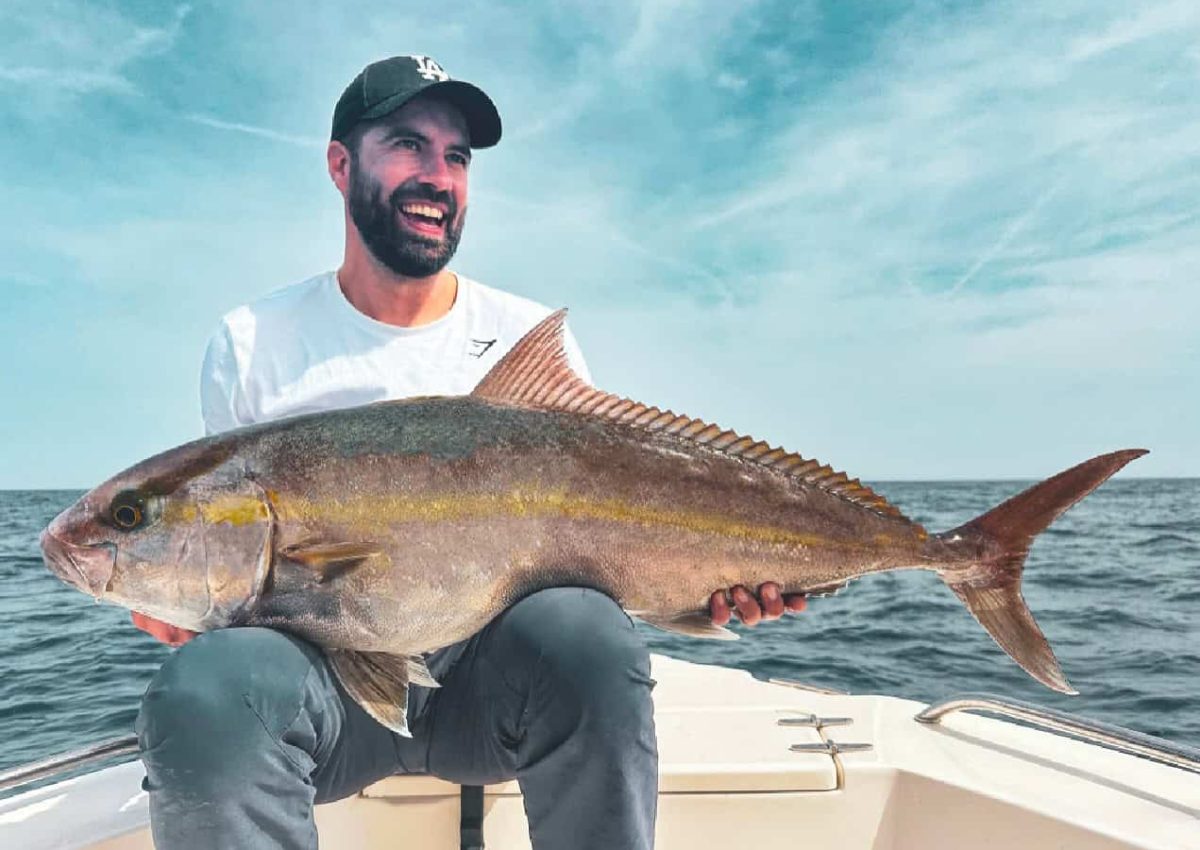
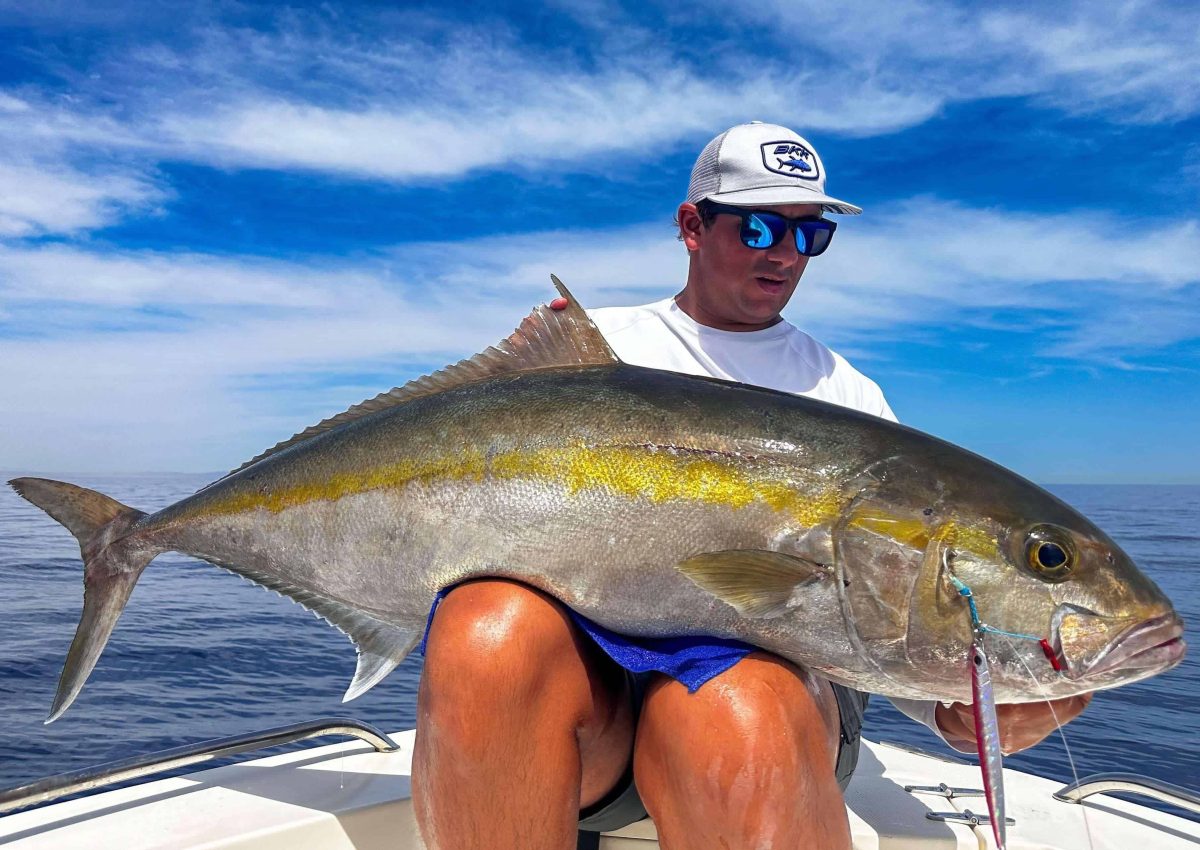

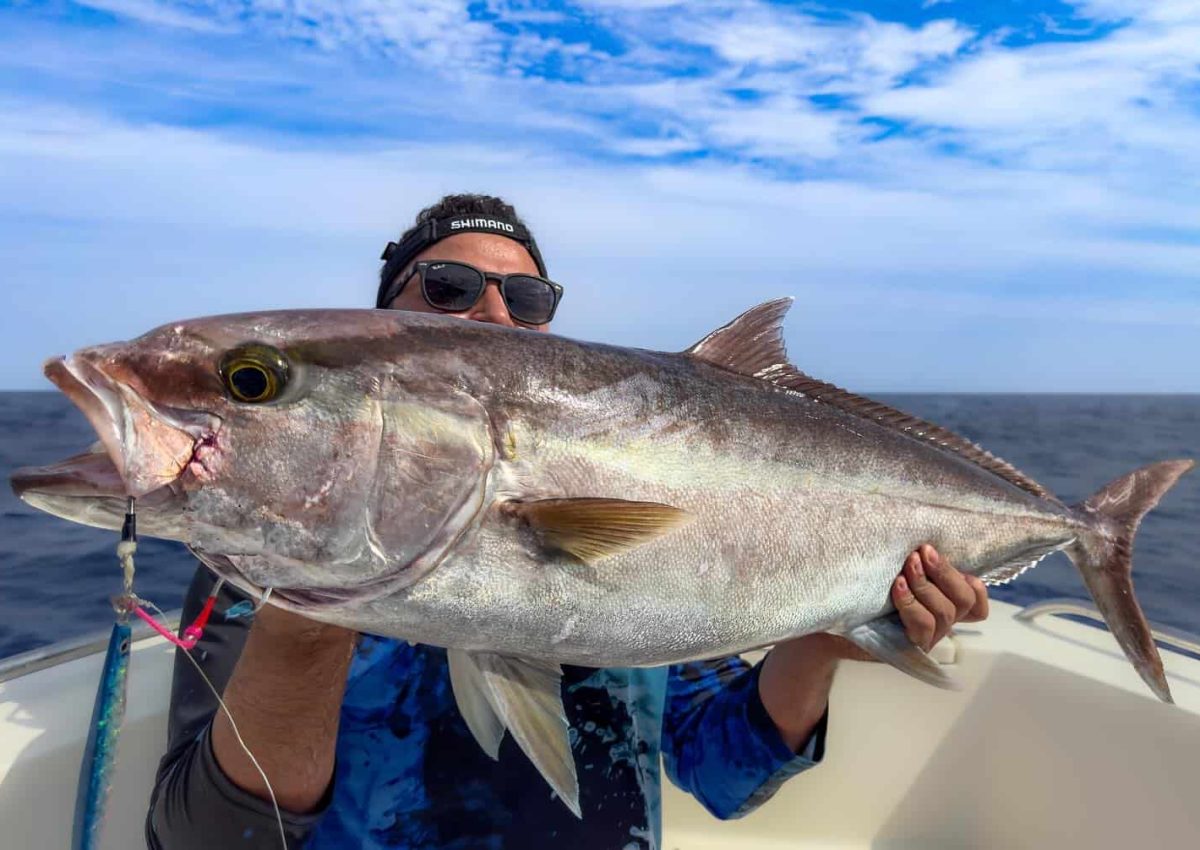
Greater Amberjack
Species Overview
Greater amberjack (Seriola dumerili) are the largest members of the amberjack group and among the strongest fish found around offshore reefs and wrecks. They have long, muscular bodies, broad heads, small eyes and deeply forked tails built for sustained power. Their colour is usually blue-grey or olive across the back, fading into silver or white along the belly, with a darker stripe running from the snout through the eye. Larger fish become exceptionally thick through the shoulders and tail wrist, which gives them far more weight than their streamlined profile initially suggests.
They are sometimes confused with almaco jack (Seriola rivoliana), but they are separate species. Almaco jack generally have deeper, more compressed bodies and a noticeably taller second dorsal fin. Greater amberjack are longer and more streamlined. It is also worth noting that neither species is restricted to a single ocean. Greater amberjack occur across warm temperate and tropical waters worldwide, although this spotlight focuses mainly on the important Atlantic, Mediterranean and Indian Ocean fisheries.
Habitat & Distribution
In the Atlantic, their range stretches from the northeastern United States through the Gulf of Mexico, Caribbean and Brazil, as well as across the eastern Atlantic from Europe and the Mediterranean to West Africa. They are also found throughout much of the Indian Ocean, including waters around eastern and southern Africa, the Arabian Peninsula and offshore island groups. The species also occurs in the Pacific, with Japan producing some of the largest specimens ever recorded.
Greater amberjack are closely tied to structure, particularly once they reach adulthood. They gather around wrecks, reefs, oil platforms, deep pinnacles, steep drop-offs and offshore banks, usually where structure rises into moving water. Fish may hold just above the bottom or suspend high in the water column, often gathering in loose schools around the up-current side of a wreck or reef. Large adults are regularly found at depths between roughly 15 and 120 metres, although they can move much deeper.
Younger fish live a more pelagic life. Juveniles are sometimes found beneath floating debris, weed lines and offshore objects, where they feed and find protection before moving towards deeper structure as they mature. This change in habitat is typical of the wider Seriola group, which includes yellowtail kingfish, Japanese amberjack and Samson fish.
Size & Feeding Habits
Greater amberjack are opportunistic predators that feed mainly on fish and squid. Their diet includes mackerel, scad, sardines, herring and other schooling baitfish found around offshore structure. They are fast enough to chase prey through open water, but reefs and wrecks give them an obvious advantage. Current concentrates bait, and the structure provides a place from which amberjack can rush upward or outward to attack.
Their eyesight, large gill area, powerful heart and high-aspect-ratio tail all contribute to their reputation for strength. An amberjack can move quickly through the water column and maintain heavy pressure for far longer than many fish of a similar size. This is why anglers often describe them as one of the hardest-fighting fish in the sea, even when the fish itself is not especially large.
Most greater amberjack encountered by anglers weigh between 10 and 40 kilograms, although fish above 50 kilograms are possible in the right areas. The species can exceed 70 kilograms, with the all-tackle world record standing at 163 pounds 2 ounces, or just over 74 kilograms. It was caught off Japan in 2015. Fish of that size are rare, but even an amberjack of 20 kilograms has enough strength to turn a seemingly balanced outfit into a serious physical contest.
Fishing
Amberjack can be targeted with spinning, conventional and fly tackle. Live baits are widely used around wrecks and deep reefs, while vertical jigs, slow-pitch jigs, diving lures and trolled lures account for plenty of fish. When amberjack rise towards the surface, they may also take poppers, stickbaits and large flies. Seeing several heavy fish following a hooked amberjack towards the boat is common, particularly when the school becomes competitive.
The fight normally begins with an immediate attempt to return to structure. A large amberjack does not need much line to reach a wreck, reef edge or cable. When stopped before it reaches cover, it settles into a heavy, sustained battle beneath the boat, using its broad body and powerful tail to resist every metre gained. Even close to the surface, the fish rarely feels finished and often finds enough energy for another deep surge.
An amberjack’s reputation is based on something very simple. They are exceptionally strong fish living in places where strength matters. There is no elaborate display and usually no long period of uncertainty after the strike. The rod loads, the fish turns towards the wreck, and the entire encounter becomes a test of whether the angler can stop it.