
Bucket List Species
Giant Trevally
World Record
160 lb 7 oz / 72.8 kg
Tokara, Japan
Distribution
Indo-Pacific
East Africa and the Red Sea to Australia, Southeast Asia, Hawaii and the central Pacific
Season
Year-round across their range
Techniques
Fly fishing, spinning and conventional
Poppers, stickbaits, jigs, trolling and live or dead baits

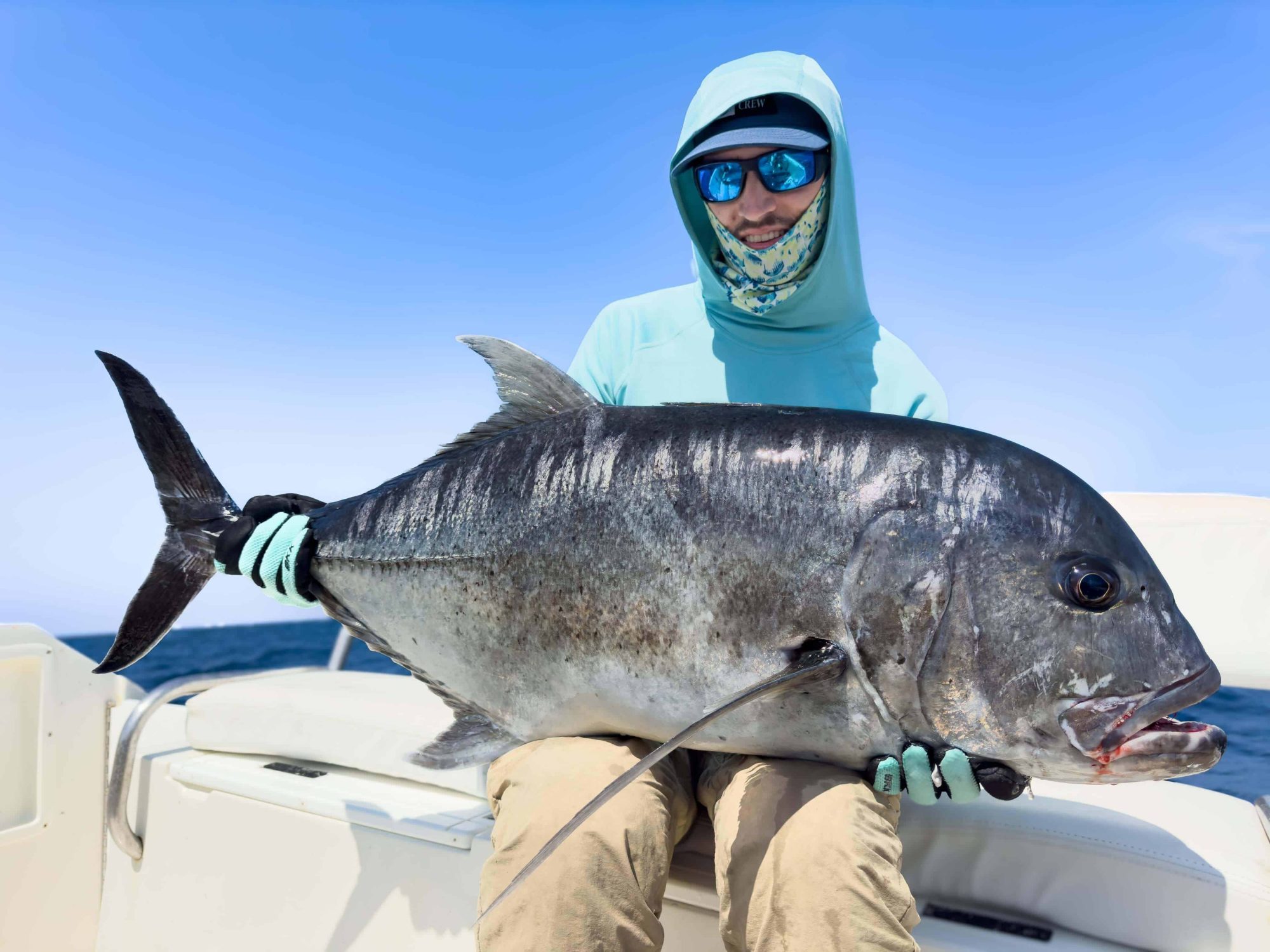

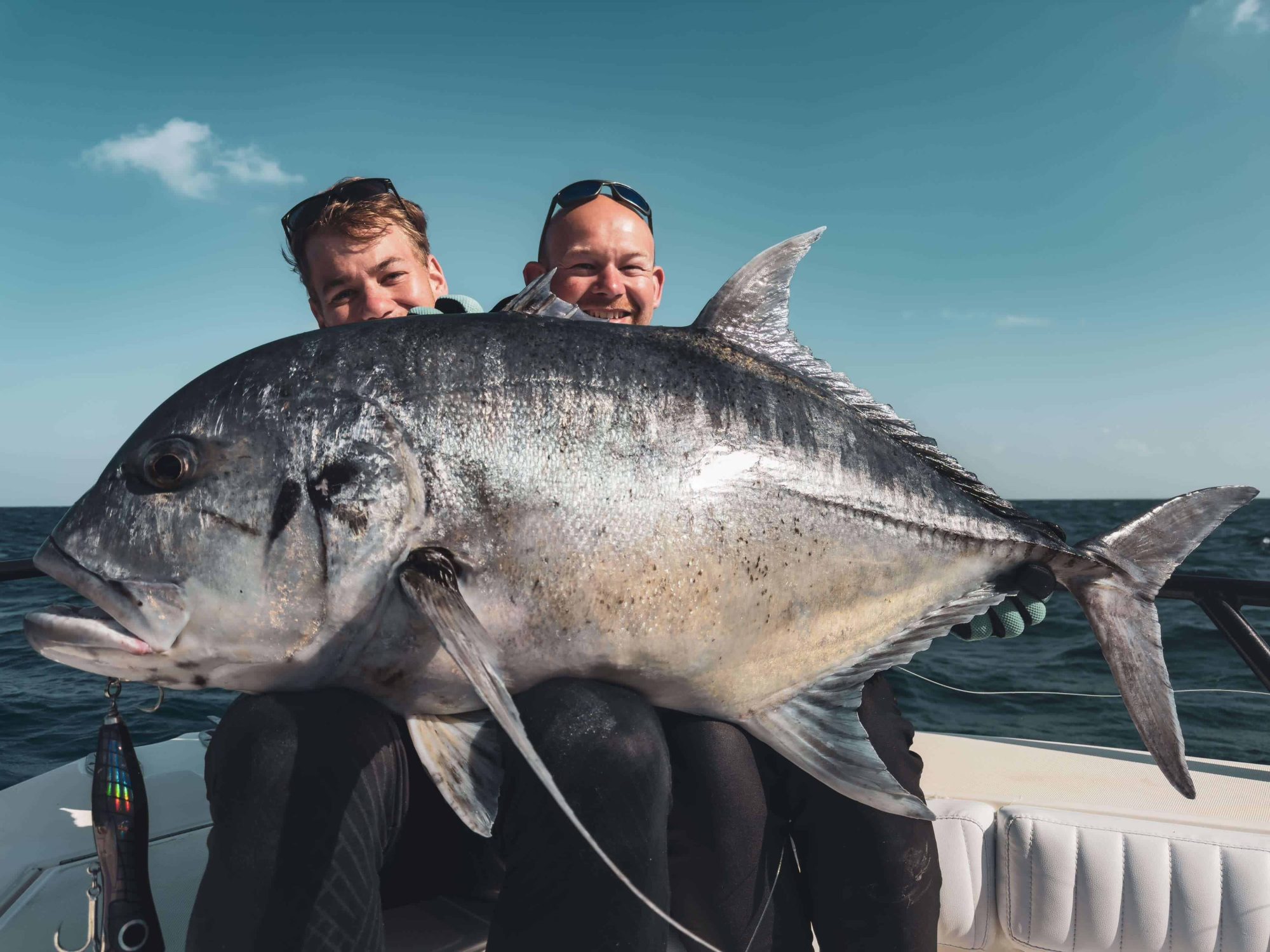
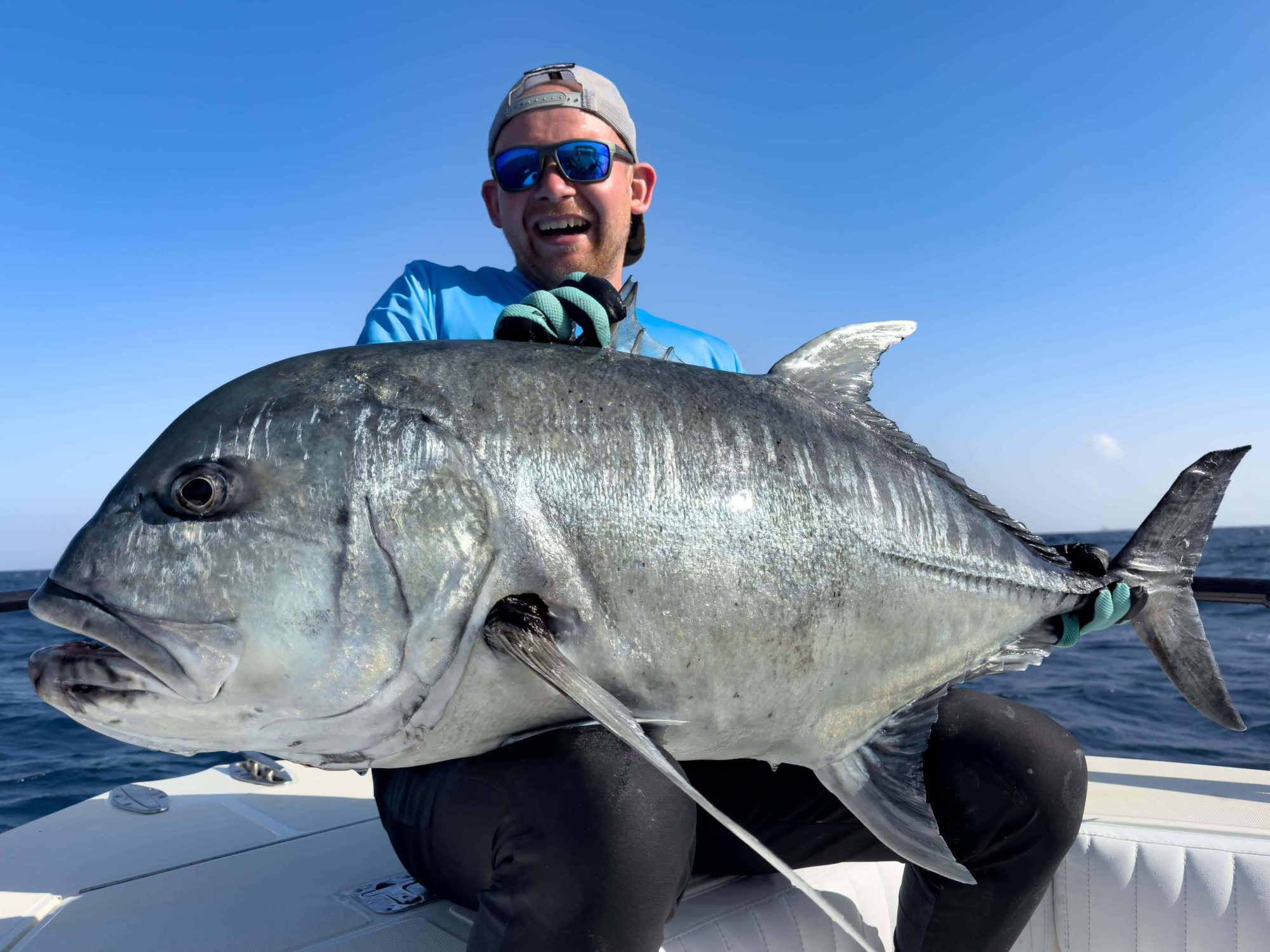

Giant Trevally
Species Overview
Giant trevally (Caranx ignobilis), known simply as GTs, are the largest of the trevallies and one of the most powerful inshore predators in the Indo-Pacific. They have deep, muscular bodies, broad heads, thick tail wrists and heavily forked tails built for sudden acceleration. Smaller fish are usually bright silver with darker backs, while mature GTs can take on shades of gunmetal grey, charcoal and almost black. Large adults develop a steep forehead and the heavy, blunt profile that makes the species instantly recognisable.
Habitat & Distribution
Their distribution stretches across an enormous area, from the east coast of Africa and the Red Sea through the Indian Ocean, Southeast Asia and northern Australia, then east across the tropical Pacific to islands such as Hawaii. Well-known fisheries include the Seychelles, Oman, the Maldives, Christmas Island, French Polynesia, Fiji, Papua New Guinea and the remote reef systems of northern Australia. Despite that wide range, GT populations are closely connected to healthy reefs, productive coastlines and abundant prey.
Giant trevally occupy far more than the open reef. Juveniles are commonly found in estuaries, mangrove creeks, lagoons and sheltered coastal waters, where they feed and grow before moving into larger reef systems. Adult fish patrol outer reef edges, channels, rocky headlands, drop-offs, offshore banks and surf zones. On remote atolls they also move onto shallow flats, sometimes cruising in water barely deep enough to cover their backs.
Although they are capable of travelling across large areas, research suggests some adult GTs remain surprisingly loyal to individual reefs. Their movements often follow tides, currents and concentrations of prey rather than long, constant migrations. This helps explain why certain reef passes, points and channels repeatedly produce fish when conditions line up.
Size & Feeding habits
GTs are opportunistic predators with a diet that includes fish, squid, octopus and crustaceans. They hunt around reef edges and current lines, but they are equally capable of driving bait into shallow water or attacking from beneath the white water. Their feeding behaviour can be remarkably bold. In the Seychelles, GTs have even been documented launching themselves from the water to catch young seabirds flying above the surface.
A GT may follow a stingray across a flat, rush baitfish against the reef or sit beneath a channel waiting for current to carry food past. They are capable of changing from slow, controlled movement to a full-speed attack in seconds.
Size is a major part of their reputation. A GT of 10 to 20 kilograms is already an extremely powerful fish, while specimens above 30 kilograms are serious trophies in most fisheries. Fish over 40 kilograms are exceptional, and the largest individuals can exceed 70 kilograms. The all-tackle world record weighed 160 pounds 7 ounces, or just under 73 kilograms, and was caught from shore in Japan in 2006. Research also suggests that metre-long GTs may already be eight to ten years old, while the largest fish can live for more than 25 years.
Giant Trevally Fishing
Giant trevally can be targeted with spinning, conventional and fly tackle. Poppers and stickbaits have become synonymous with the species because they produce such visual strikes, but jigs, lipped lures, live baits and trolled offerings also account for plenty of fish. On the flats, anglers may sight cast to individual GTs, while deeper reefs and offshore structure call for a completely different approach.
Whatever the method, the first part of the fight is usually the most important. A GT does not need to run far to reach coral, rocks or a reef ledge. The strike is often followed by an immediate turn towards structure, and even smaller fish can overpower tackle before the angler has properly gained control. Giant trevally can appear over a white sand flat, smash a lure beside a rocky headland or rise from deep water beneath a boat. The setting changes, but the result is usually the same. Once a GT commits, everything happens very quickly.