
Bucket List Species
Coral Trout
World Record
14.60 kg (32 pounds, 2 ounces)
Swain Reefs, Australia
Distribution
Indo-Pacific
Season
Year-round
Techniques
Jigging & Reef Fishing
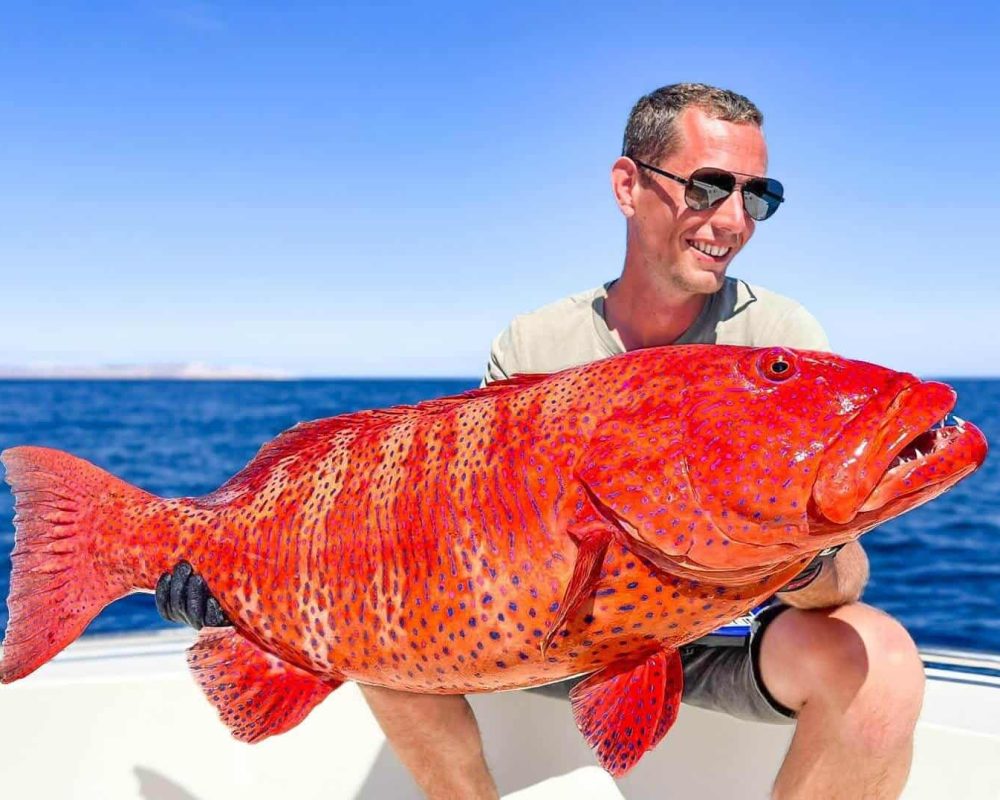
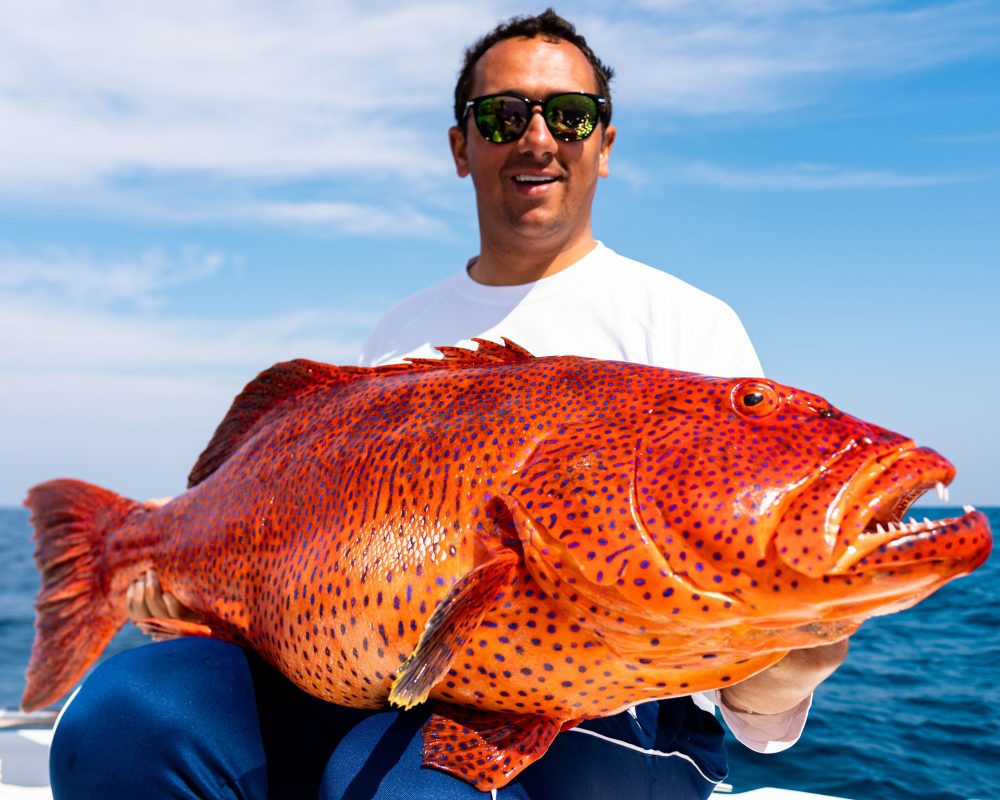
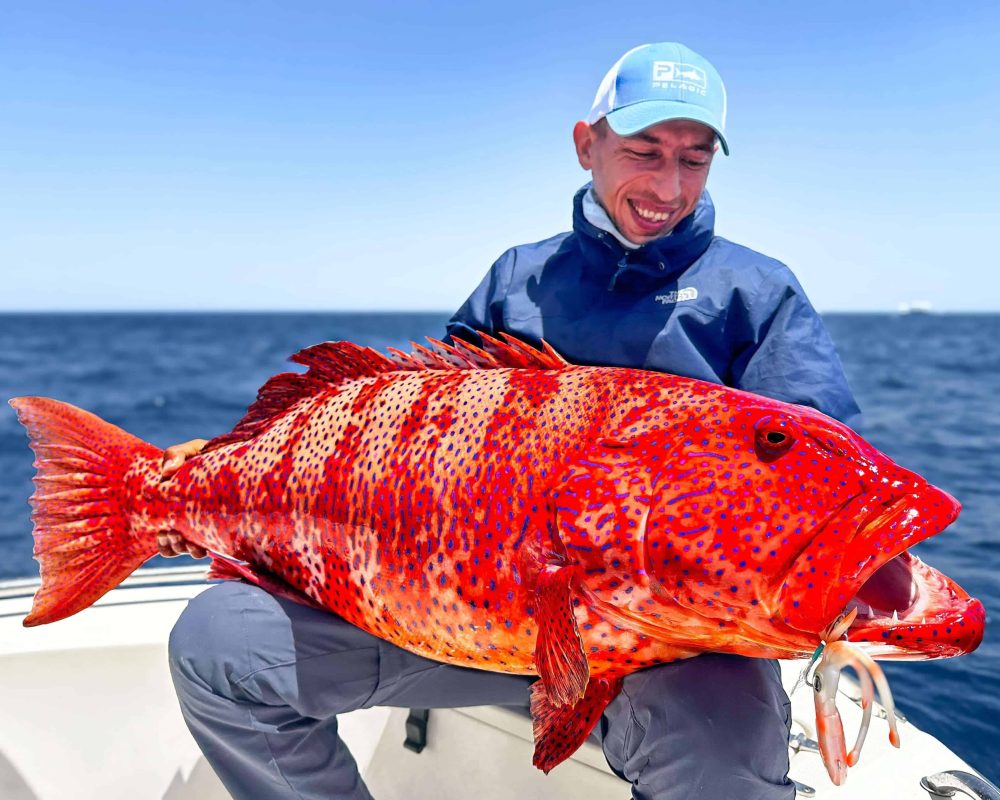
Coral Trout (Plectropomus spp)
Species Overview
Coral trout have everything a travelling angler wants in a reef fish: striking colour, an aggressive bite, serious pulling power and a habit of living in some of the most beautiful tropical waters on the planet. They are not true trout. Coral trout belong to the grouper family, with the name covering several closely related species from the genus Plectropomus. Each has its own markings and range, but they share the same essential character: stunning reef predators built to strike hard and reach cover quickly.
Coral trout are easy to recognise. Most have thick bodies, large mouths and bright blue spots scattered across shades of red an orange. Their colours can change with mood, surroundings and activity, so the same fish may look deep crimson in one moment and dark or mottled the next. They spend much of their lives close to coral, caves, ledges and reef walls. From this cover, they ambush smaller fish with a sudden burst of speed. They are important reef predators, helping shape the balance of fish life around them.
The common coral trout is the best-known member of the group in Australia, while other species include barcheek, squaretail, bluespotted and roving coral groupers. The Red Sea has its own distinctive coral trout, the Red Sea coral grouper.
Why coral trout make our list
Coral trout offer much more than a good-looking catch. They live in clear tropical seas, around coral gardens, reef passages and dramatic drop-offs. Reaching them often forms part of a larger journey involving remote islands, long boat runs and reefs far beyond the usual tourist routes.
The fishing is direct and exciting. The strike comes without warning, and like most groupers, they immediately turn towards the nearest coral head or ledge. There is no time to admire the scenery once the rod loads up. Coral trout respond to bait, soft plastics, jigs, diving lures and stickbaits, giving anglers plenty of options without demanding one highly specialised technique.
Distribution and habitat
Coral trout are found across the tropical Indo-Pacific, from the Red Sea and Indian Ocean through Southeast Asia, northern Australia and the Pacific islands. Their range includes the Great Barrier Reef, the Coral Sea, northern Western Australia, Papua New Guinea, Indonesia, the Maldives, Fiji, New Caledonia and the Solomon Islands. The Red Sea adds another major coral trout region, with fish found along reef systems bordering Egypt, Sudan and Saudi Arabia. Their preferred habitat is structured reef, outer reef slopes, channels, coral bommies and steep walls which provide feeding areas and quick access to shelter. The most productive water combines healthy structure, moving current and plenty of baitfish to ambush.
Best locations for coral trout
Australia’s Great Barrier Reef remains one of the standout destinations. Its sheer size creates opportunities across shallow reef flats, deep edges, isolated coral heads and offshore reef systems. The adjoining Coral Sea offers even more remote water, although access requires a capable long-range vessel. Northern Western Australia also holds excellent coral trout habitat, particularly around the Kimberley and offshore reef systems.
Papua New Guinea and the Solomon Islands combine extensive coral reef with a strong mix of reef and pelagic fishing. Indonesia, Fiji and New Caledonia add another vast selection of lagoons, reef passages and outer slopes.
The Red Sea deserves equal recognition. Its steep reef walls, clear water and deep channels hold trophy coral trout species found nowhere else. Southern Egypt, Sudan and Saudi Arabia offer the strongest reef habitat, with remote reefs known to produce record-class fish.
Fishing for coral trout
The first rule of coral trout fishing is to stay close to structure. Focus on coral heads, reef corners, ledges, channels and drop-offs where current pushes bait past cover. Live or fresh bait works well when presented close to the bottom. Soft plastics and jigs are effective on deeper edges, while diving minnows and sinking stickbaits suit shallow reefs and pressure points. Tackle needs enough strength to stop the first run. Coral trout fights are often short, but they are decided in the opening seconds. Once hooked, they head straight for coral. Firm drag, a strong leader and immediate pressure are more important than chasing distance. Accurate casting also makes a major difference. A lure landing a metre from the reef may be ignored, while one landing tight against the structure can be hit immediately.
Coral trout leave a lasting impression long after the fishing is done. With their rich red and orange colouring, bright blue spots and bold reef markings, they are among the most striking fish in the ocean. They may not always be the fish you set out to target, but they are a welcome bycatch and the kind of catch that delivers a photograph you will keep for a long time.