
Bucket List Species
Chinook Salmon
World Record
97 lb 4 oz / 44.11 kg
Kenai River, Alaska
Distribution
North Pacific
Native from California north through British Columbia and Alaska, and across to Russia and northern Japan
Season
Varies by destination and individual run
Techniques
Fly fishing, spinning and conventional
Trolling, mooching, jigging, drifting, plugs, spoons, large flies and natural baits
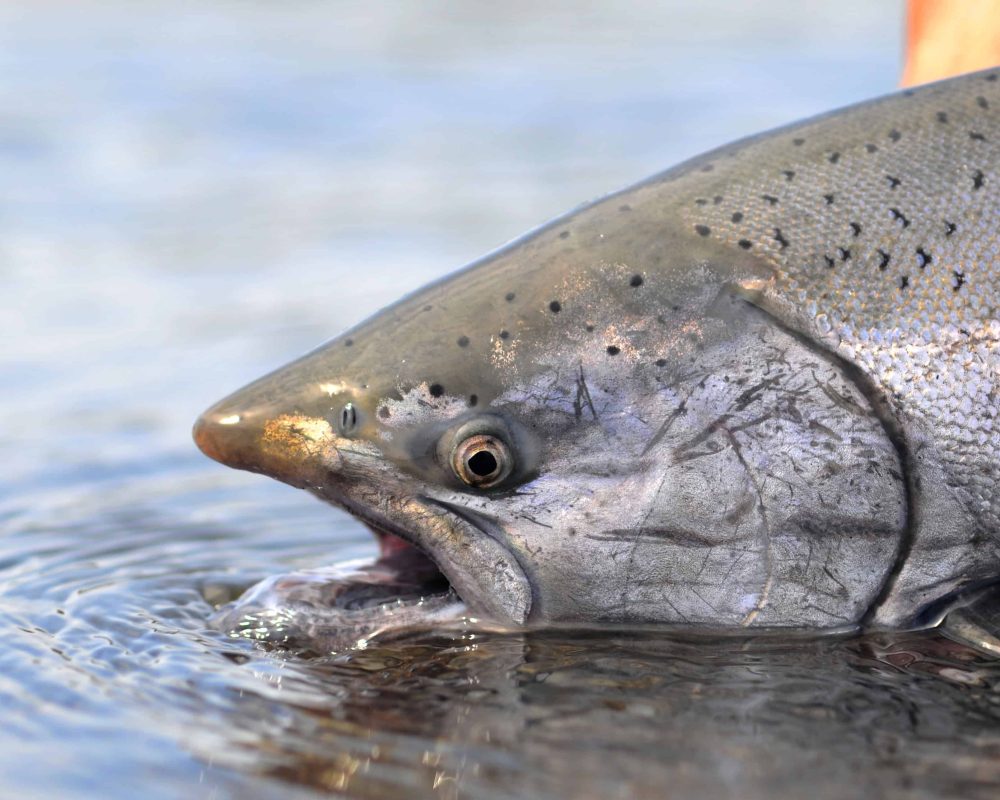


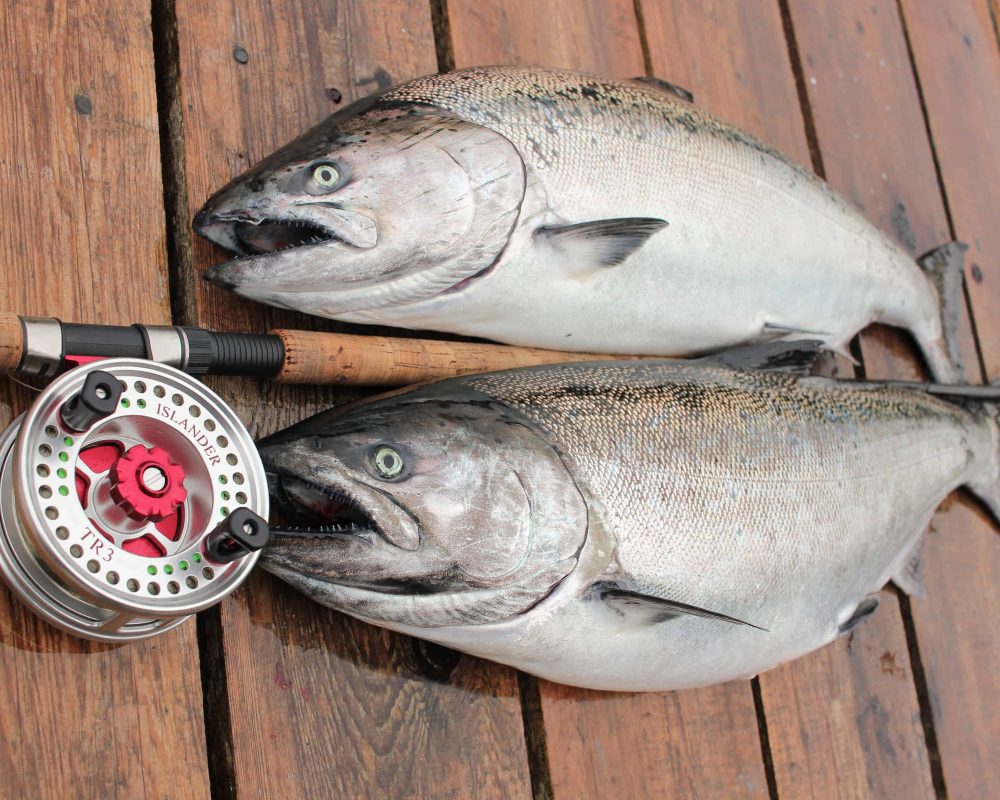
Chinook Salmon (King Salmon)
Species Overview
Chinook salmon (Oncorhynchus tshawytscha) are the largest of the Pacific salmon and one of the most powerful migratory fish an angler can encounter. They are known as king salmon across much of North America, spring salmon in British Columbia, and quinnat salmon in New Zealand. Ocean-bright fish have dark blue-green backs, silver flanks and small black spots across the upper body and both lobes of the tail. The black gumline along the lower jaw is another reliable identifying feature. As spawning approaches, their silver colouring fades and the body darkens, with some fish developing deep bronze, red or almost black tones.
Habitat & Distribution
Their native range covers the North Pacific, from California north through British Columbia and Alaska, then across to Russia and parts of northern Japan. They are far more abundant along the western coast of North America, where major river systems such as the Columbia, Fraser, Skeena, Yukon and Kenai support numerous separate runs. Each population follows its own timetable, with fish entering rivers during spring, summer or autumn depending on where and when they spawn.
Chinook are anadromous, beginning life in freshwater before migrating to sea. Some juveniles leave for the ocean within months of emerging from the gravel, while others remain in rivers for a full year. Once at sea, they may travel thousands of kilometres through coastal and open-ocean feeding grounds. Most mature between three and five years of age, although some live considerably longer. They eventually return to their home river to spawn, often navigating long distances and heavy rapids before completing their life cycle and dying.
This ability to move between very different environments is central to the Chinook’s success. Juveniles use streams, side channels and estuaries before entering saltwater. At sea, adults range through deep coastal water, channels, kelp edges and offshore feeding areas. Returning fish occupy tidewater, broad main channels and the deeper pools of powerful rivers. Some runs spawn close to the coast, while others travel hundreds or even thousands of kilometres inland.
Size & Feeding Habits
Young Chinook feed on insects, crustaceans and small fish. In the ocean they become serious predators, with herring, sand lance, anchovies, squid and other schooling prey making up much of their diet. They often feed deeper than coho salmon and can track bait across large sections of coastline. Their movements outside the spawning season are driven largely by food, which is why productive areas can change quickly as bait moves with temperature, current and tides.
Size varies enormously between river systems and age classes. Many Chinook caught by anglers weigh between 10 and 30 pounds, while a fish over 40 pounds remains a major catch almost anywhere. Certain historic runs in Alaska and British Columbia produced much larger salmon. The all-tackle record weighed 97 pounds 4 ounces and was caught from Alaska’s Kenai River in 1985. British Columbia anglers traditionally use the name “tyee” for a Chinook weighing at least 30 pounds, a mark that still carries real significance along the coast.
Chinook Salmon Fishing
Although native to the North Pacific, Chinook have also established important introduced fisheries. Stocked populations support major sport fisheries in the North American Great Lakes, while self-sustaining runs occur in New Zealand’s South Island and parts of Patagonia. Chilean and Argentine fish migrate between the South Pacific and cold Andean rivers, with some runs producing ocean-bright salmon exceeding 40 or even 50 pounds. These southern populations are impressive, although they remain introduced fish within ecosystems that originally had no native salmonids.
Chinook can be targeted with conventional, spinning and fly tackle. In saltwater, trolling, mooching, jigging and fishing natural baits all account for fish. In rivers, anglers use spoons, plugs, drifting presentations and large flies. The method depends on the setting, but the attraction is consistent. A fresh Chinook carries an extraordinary amount of weight and strength, particularly when it has only recently left saltwater.
The fight is usually more powerful than acrobatic. Chinook can make long initial runs, hold deep beneath the boat or use the full force of a river to move downstream. Fish hooked close to tidewater are especially difficult because they still carry the condition and energy built during years of ocean feeding. Even experienced anglers lose them regularly, particularly in large rivers where the fish has both current and distance on its side.
Chinook salmon connects entire landscapes. A single fish may begin life beneath the gravel of a mountain river, cross a large part of the Pacific, grow into a predator weighing more than most freshwater gamefish, and then return to the same watershed to spawn. Their size earns them the title of king salmon, but it is the scale of that journey that gives the name its real meaning.