
Bucket List Species: Arapaima
Arapaima: South America’s Giant of the Amazon
The Amazon River is a place of superlatives. It carries more water than any other river system on Earth, supports the richest biodiversity of any ecosystem, and hides within its floodplains creatures that seem drawn from myth. Among them is one of the most extraordinary freshwater fish in the world: the arapaima. Known as pirarucu in Brazil and paiche in Peru, the arapaima has captivated scientists, local communities, and traveling anglers for centuries. Its enormous size, unique biology, and fascinating adaptations make it a true icon of the Amazon Basin.
A Living Fossil
The arapaima belongs to the ancient order Osteoglossiformes, sometimes called the “bony-tongued fishes.” Fossil records suggest its lineage stretches back more than 20 million years, making it a living relic of prehistoric South America. At first glance, it looks like a creature unchanged since the age of dinosaurs. Its elongated, torpedo-shaped body is armored with massive scales that shimmer in hues of green and bronze, ending in a reddish-orange tail. The scales themselves are a marvel of natural engineering: scientists have found that their layered structure combines hardness with flexibility, inspiring research into new materials for human use. The arapaima’s most remarkable adaptation, however, is its ability to breathe air. Unlike most fish, it relies heavily on a modified swim bladder that functions like a lung. Every 10–20 minutes, it must surface with a loud gulp to take in oxygen. This adaptation allows it to thrive in stagnant, oxygen-poor waters where other fish would perish—an evolutionary advantage in the Amazon’s floodplains.
Giants of Freshwater
The arapaima is one of the largest freshwater fish on Earth. Historical reports from the 19th century tell of specimens exceeding 4.5 meters (15 feet) in length, though modern confirmed records place the maximum closer to 3 meters (10 feet). Even so, an adult weighing 200 kilograms (440 pounds) is not unusual, and trophy specimens occasionally push past 250 kilograms (550 pounds). For context, the arapaima rivals the Mekong giant catfish of Southeast Asia and the beluga sturgeon of Eastern Europe in terms of size. Within South America, no other freshwater fish matches it for both mass and length. World-record catches are hard to pin down due to conservation rules and the difficulty of weighing such massive animals in the wild. However, credible accounts of fish in the 400–500 pound range remain common in Brazil, Guyana, and Peru. These giants have secured the arapaima’s place on virtually every freshwater angler’s bucket list.
Life in the Floodplain
The Amazon Basin is not a stable river channel but a seasonal pulse of water. During the rainy season, rivers burst their banks, and vast tracts of forest become flooded. For the arapaima, this cycle defines life. During high water (Nov–May), arapaima disperse into flooded forests, where food is abundant. They feed on other fish, small mammals, birds, and even fruit that falls into the water. Their diet is opportunistic, and their feeding strategy—lunging forward and creating a vacuum with their massive mouths—is among the most powerful in freshwater. As waters recede during low water (Jun–Nov), arapaima concentrate in oxbow lakes and deeper channels. This is when they are most accessible to humans, whether fishers or ecotourists, and it is also the prime time for spawning. Arapaima create saucer-shaped nests in shallow sandy areas, often just before waters rise. Females lay thousands of eggs, and males play an extraordinary role in parenting: they guard the nest and, once the fry hatch, carry them in their mouths for protection. This form of mouthbrooding, coupled with the fish’s large size and late maturity, means populations can recover slowly if overfished.
Arapaima Conservation: From Collapse to Recovery
By the mid-20th century, the arapaima faced serious decline. Its surface-breathing habit made it vulnerable: hunters simply waited for the telltale gulp and harpooned the fish. With its size and value as food, overfishing pushed populations to the brink in many regions. In response, Brazil outlawed commercial harvests outside of certified community-managed lakes. Over the past two decades, community-based conservation programs have sparked remarkable comebacks. In Mamirauá Reserve (Brazil), fishers and scientists created quotas and protection zones. Populations there rebounded dramatically, and today the reserve supports both sustainable harvests and catch-and-release tourism. In Acre, Brazil, one project documented a 300% increase in arapaima numbers within just three years of management. In Guyana, arapaima are strictly protected, with fishing allowed only under catch-and-release rules. Indigenous-run lodges now use the species as a flagship for eco-tourism. These programs demonstrate how a fish once nearly lost can thrive again when communities see value in protecting it. To learn more about arapaima conservation, check out this article on National Geographic.
Fascinating Facts
- Vacuum Feeder: Arapaima strike by opening their mouths so fast they create a suction strong enough to pull in prey—and sometimes even small birds perched at the water’s edge.
- Rapid Growth: Few fish grow faster; juveniles can reach two meters in just a few years.
- Living Air Pumps: Their breathing is so forceful that locals say you can hear an arapaima’s gulp from across a lake.
- Scales of Steel: Arapaima scales are so strong they can withstand piranha bites. Scientists have studied them as models for body armor.
- World-Class Size: Alongside the beluga sturgeon and Mekong catfish, the arapaima is one of the heaviest freshwater fish alive today.
Top Destinations for Arapaima Fishing
For traveling anglers, seeing or catching an arapaima is one of the great bucket list achievements in freshwater fishing. Several destinations stand out across South America:
- Mamirauá Sustainable Development Reserve, Brazil: A pioneering conservation model and home to Pirarucú Lodge, offering some of the world’s best opportunities for catch-and-release encounters.
- Pacaya-Samiria National Reserve, Peru: Nicknamed the “Jungle of Mirrors,” this vast wetland is one of Peru’s most important arapaima habitats.
- Essequibo River, Guyana: Rewa Eco-Lodge and other indigenous projects provide access to thriving arapaima populations under strict protection.
- Tambopata Reserve, Peru: A biodiversity hotspot where anglers and travelers alike may encounter arapaima in remote oxbow lakes.
- Colombian Amazon: Around Leticia and Caquetá, community-managed areas are helping restore populations and offer emerging eco-tourism experiences.
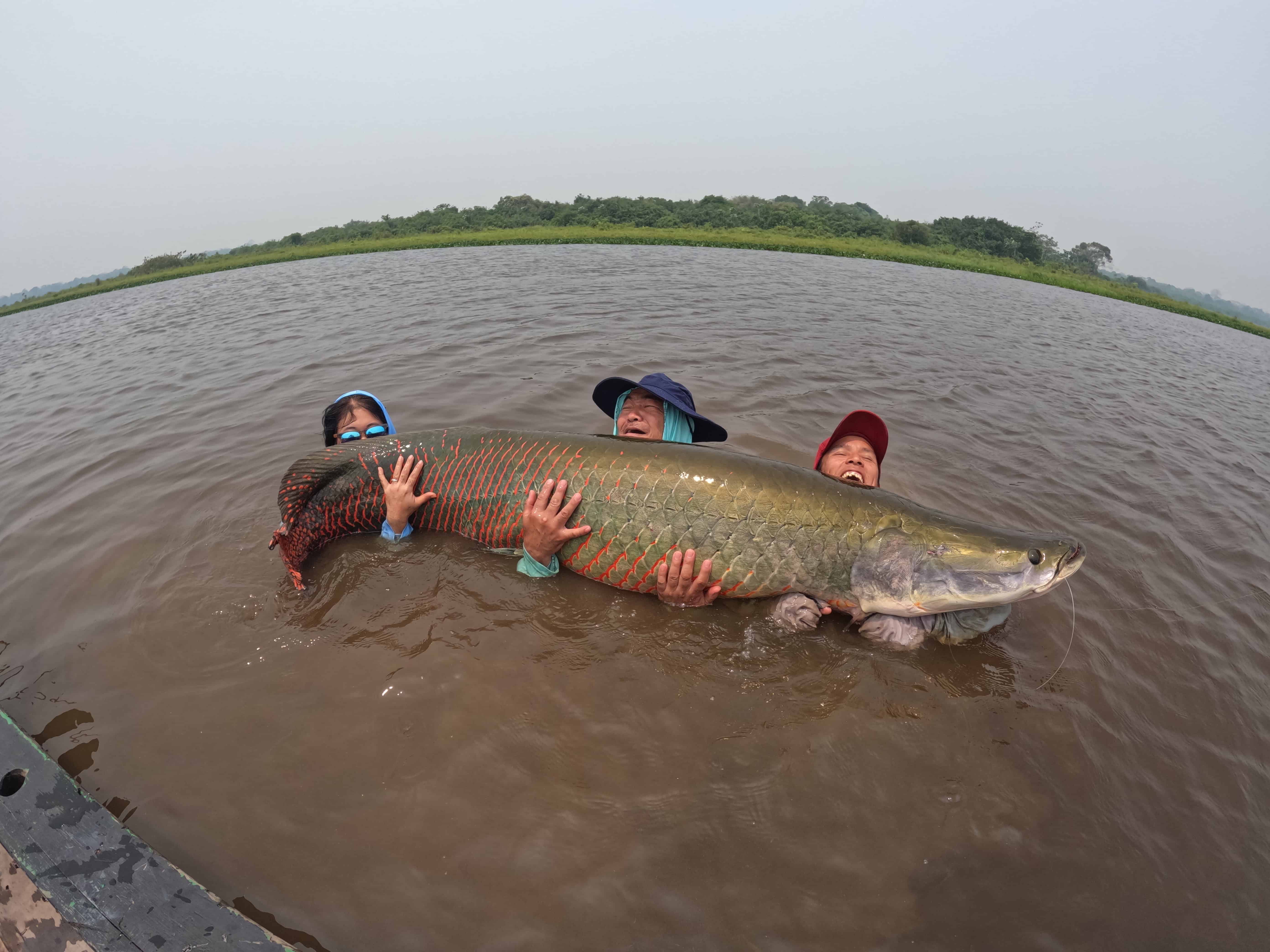
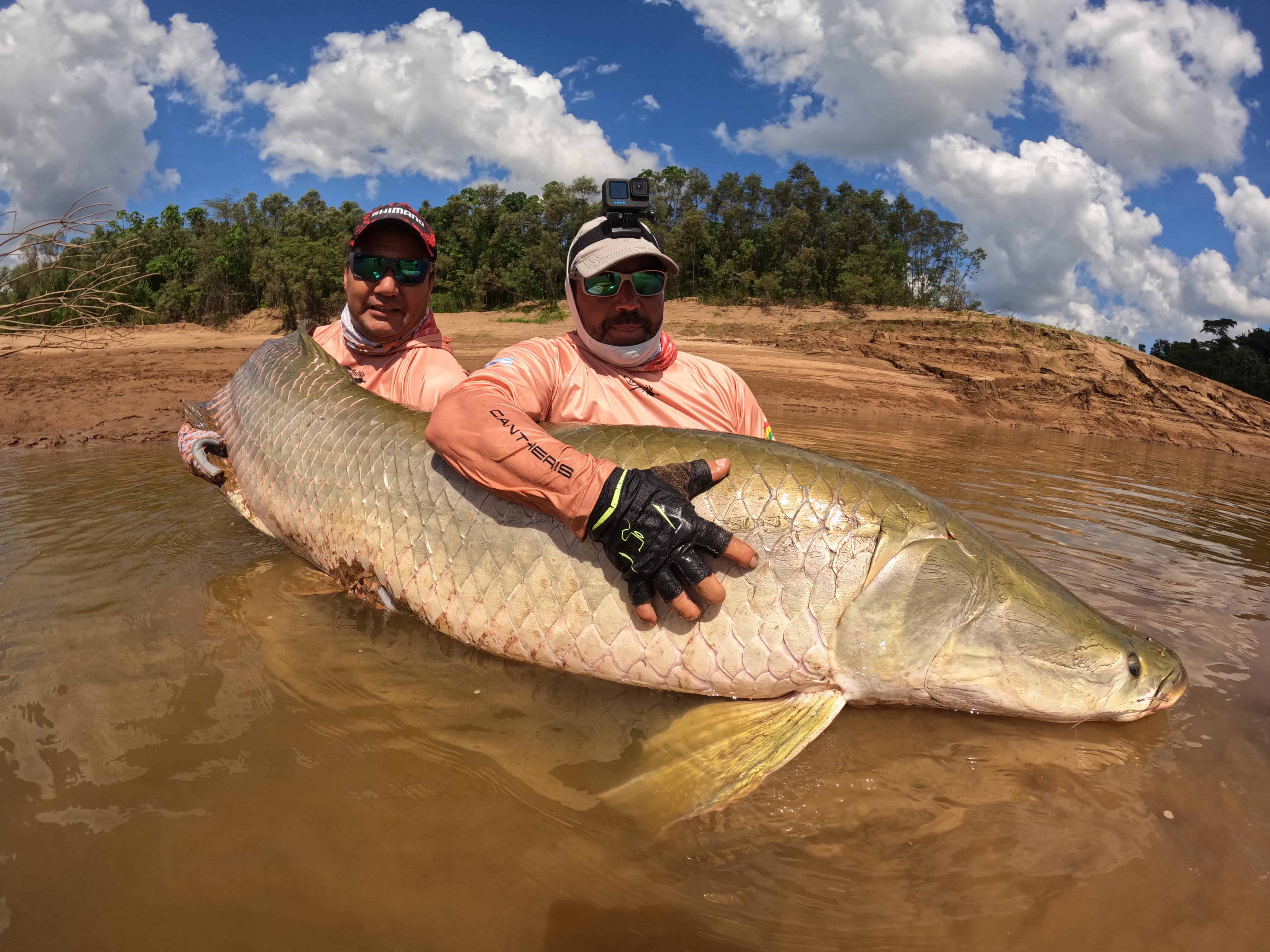
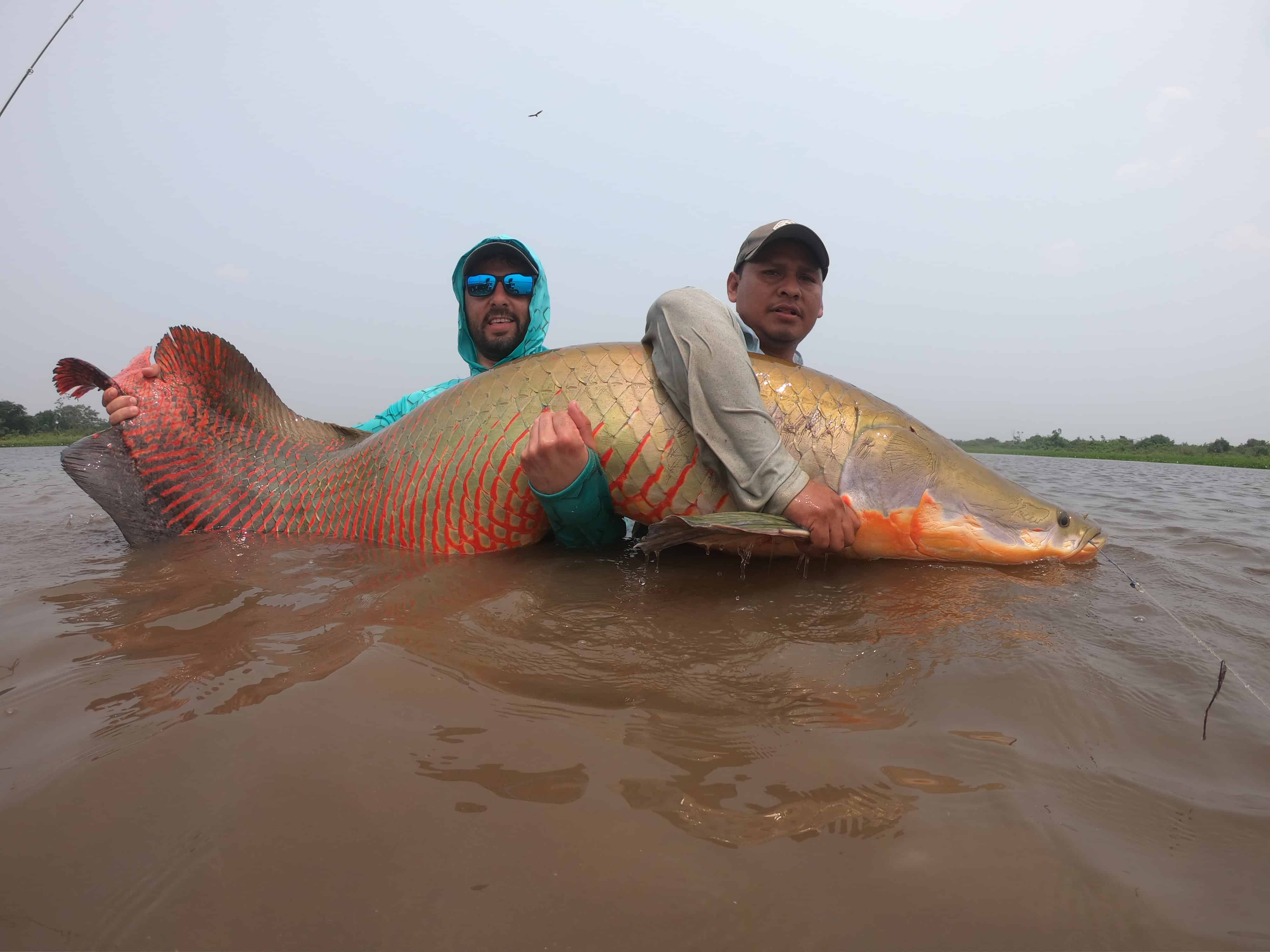
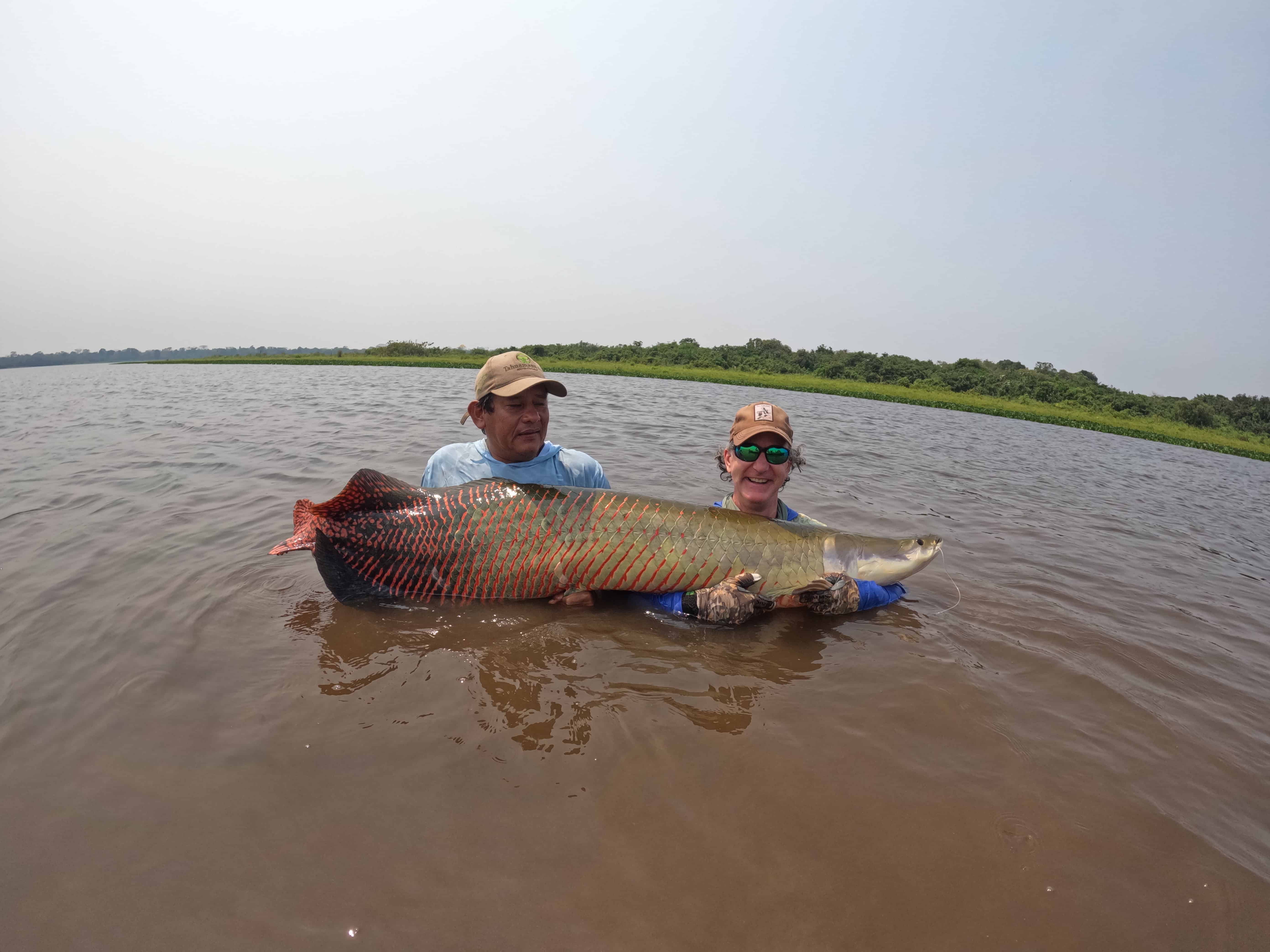
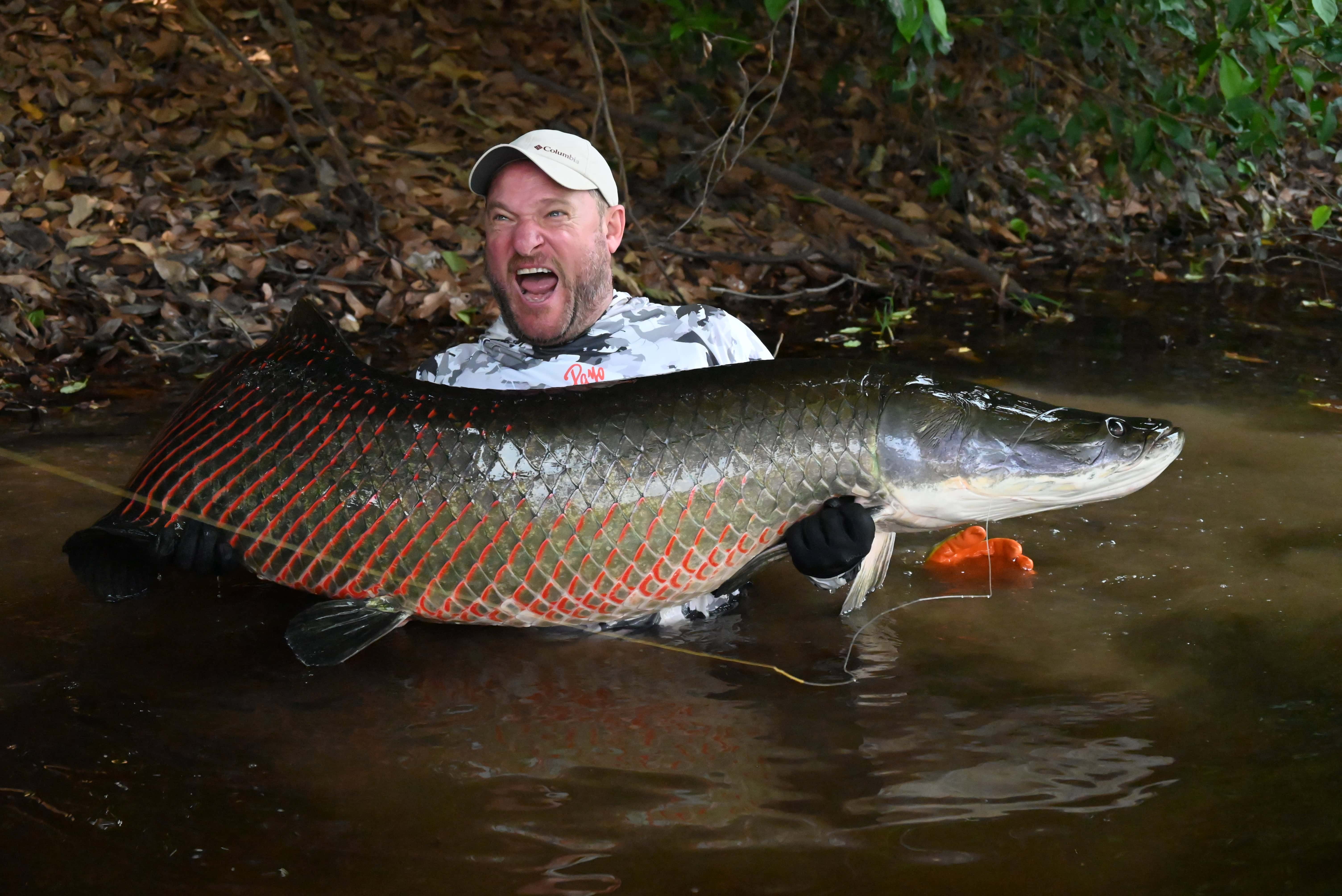
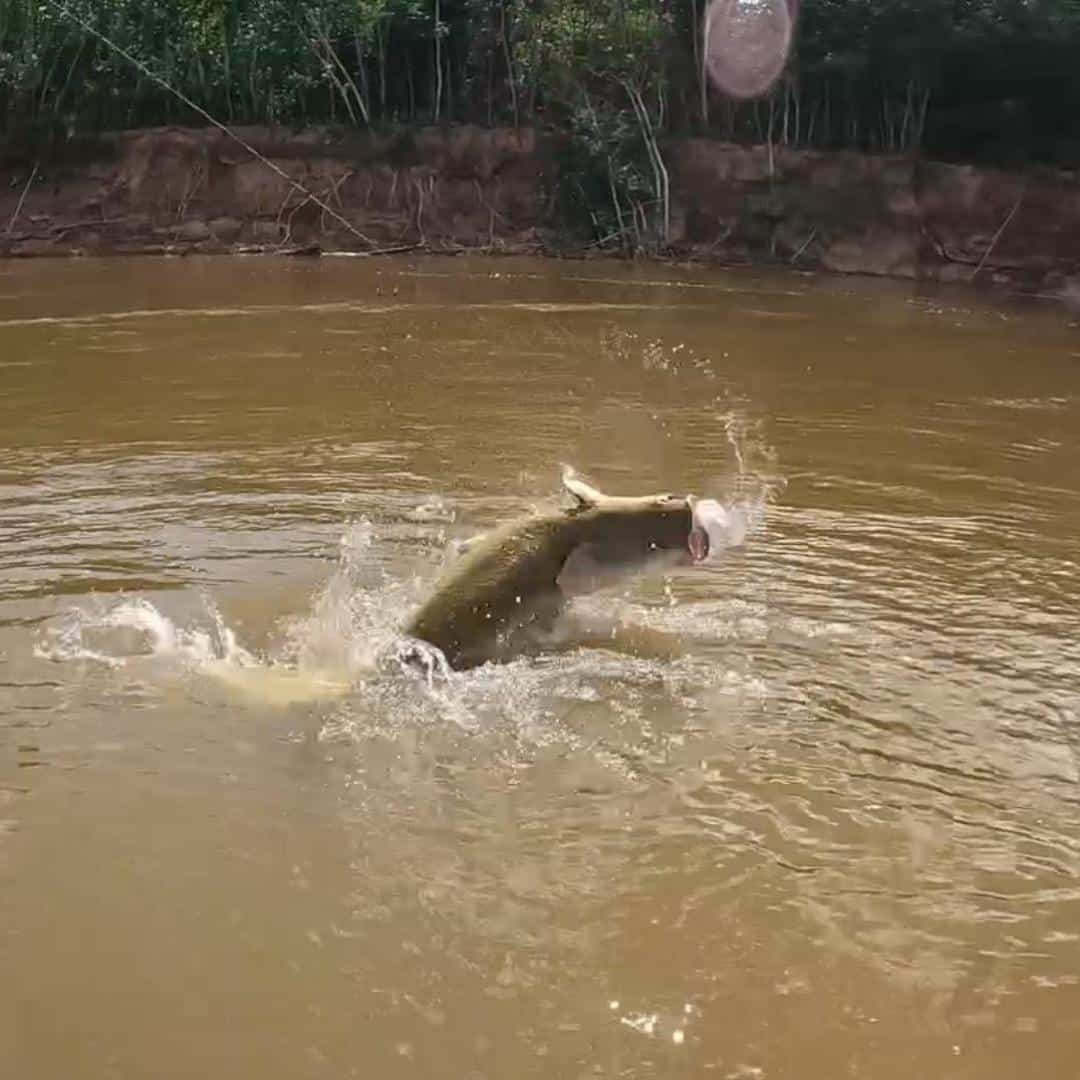
- Bolivia: Though less known, parts of the Bolivian Amazon are now recognized for healthy arapaima populations, with community-based lodges beginning to offer specialized fishing programs. One such lodge is Jungle Fishing Camp where the photos below were taken. The images speak for themselves!
Why the Arapaima Belongs on Your Bucket List
It is hard to overstate the presence of an arapaima. Watching a 200-kilogram fish explode from the water is unforgettable, but equally captivating is the knowledge that this species has endured for millions of years in one of Earth’s most dynamic ecosystems. For anglers, it represents not only one of the greatest freshwater trophies in the world but also a chance to support conservation and local communities. To pursue an arapaima is to experience the Amazon at its rawest and most authentic. It is not just a fish—it is an adventure, a story, and a memory that will last a lifetime.
Plan Your Arapaima Adventure
Ready to tick the mighty arapaima off your bucket list? At Bucket List Fishing Trips, we connect you with the best lodges and guides across Brazil, Peru, Guyana, Bolivia, and beyond. From pristine reserves to community-run eco-lodges, we’ll help you experience this giant of the Amazon in a way that is both thrilling and sustainable. Start planning your Amazon fishing expedition today and make the arapaima part of your story.
Learn more about other bucket list species like payara, peacock bass, and many more on our species page. Get in touch via the form below to plan your next bucket list fishing trip.
Frequently Asked Questions:
What is an arapaima?
The arapaima, also known as pirarucu in Brazil and paiche in Peru, is one of the largest freshwater fish in the world. It can grow up to 3 meters (10 feet) long and weigh over 200 kilograms (440 pounds).
Where can I go arapaima fishing?
Top destinations for arapaima fishing include the Mamirauá Reserve in Brazil, Pacaya-Samiria in Peru, the Essequibo River in Guyana, parts of the Colombian Amazon, and the Bolivian Amazon. These areas combine healthy populations with community-based conservation programs.
When is the best time to fish for arapaima?
The best season is the dry season, when water levels drop, typically between June and November in most regions. In Guyana, peak fishing runs from September to February.
How big do arapaima get?
Modern specimens regularly reach 2 to 3 meters and weigh 200–250 kilograms. Historical records describe fish up to 4.5 meters long, though those sizes are extremely rare today.
Are arapaima endangered?
Arapaima populations declined severely due to overfishing in the 20th century, but community-led conservation efforts have helped them rebound in protected areas. Today, fishing is often restricted to catch-and-release only, ensuring the species’ survival.
What makes arapaima fishing unique?
Unlike most freshwater fish, arapaima must surface to breathe. Anglers often spot them by their telltale gulp of air before casting. Their sheer size, power, and prehistoric appearance make them one of the most exciting bucket list species to pursue.