
Skimmer Island Lodge
Angola



Accommodation
Safari Camp
Season
January – March
Species
Tarpon
Fishing Style
Spinning, Fly Fishing, Conventional
Skimmer Island Tarpon Lodge 🇦🇴
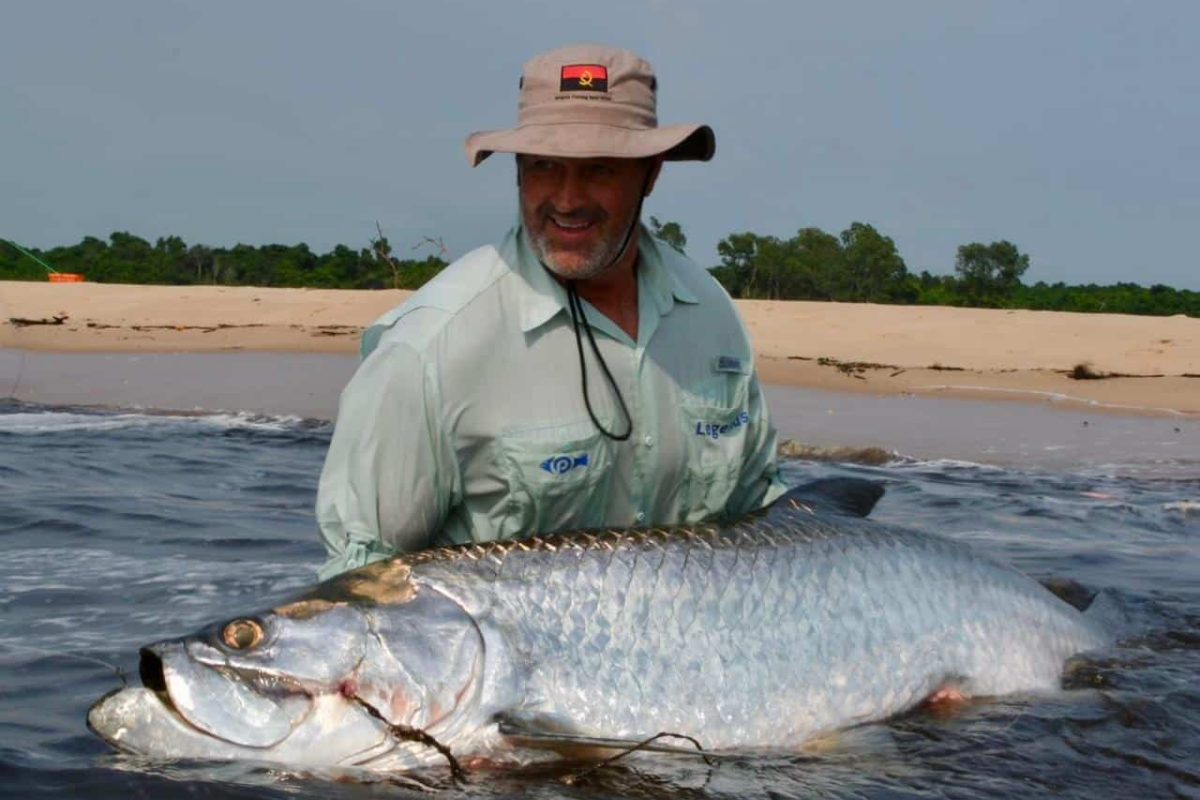
Skimmer Island Tarpon Lodge is a remote saltwater fishing camp in Cabinda, Angola’s northernmost province. Set between Lake Massabi, extensive mangrove forests and a wild stretch of Atlantic coastline near the Republic of Congo border, the lodge provides access to one of West Africa’s least-explored tarpon fisheries. Exceptionally large tarpon are the main attraction, with jack crevalle, cubera snapper, tripletail and other coastal game fish adding variety. The camp is reserved for small private groups, creating an expedition-style experience with very little outside fishing pressure.
Fishing at Skimmer Island is built around fly fishing for giant Atlantic tarpon. These fish move through the estuary mouth, coastal channels and turbulent water where the lagoon meets the Atlantic. Anglers may cast from the beach, fish from boats anchored in the mouth or work the backline and colour changes created by clear ocean water meeting the darker estuary flow. Fish exceeding 100 pounds are possible, while considerably larger tarpon have also been landed in the area.
This is a specialist, low-volume fishery rather than a destination built around high daily catch numbers. Opportunities can be limited, but each encounter may involve a very large fish. Anglers need to make quick, accurate casts with heavy equipment and apply firm pressure once a tarpon is hooked. Changing tides, surf, current and water clarity influence where the guides position the boats and whether the fishing is concentrated around the beach, estuary mouth or offshore colour lines.
The fishing is fly-only when targeting tarpon. Heavy 12 to 14-weight rods, large-arbor reels, substantial backing and strong tropical fly lines are required. Large baitfish patterns are presented on heavy shock leaders, and every part of the tackle system must be capable of handling long runs and sustained pressure. Anglers should bring several complete outfits because replacement specialist equipment is extremely limited.
Other possible species include jack crevalle, cubera snapper, red snapper and tripletail. The surrounding oil platforms also create artificial reef habitat for jacks, snapper, dorado and other pelagic species, although these should be viewed as secondary opportunities rather than the main focus of the trip. Standard fishing weeks are offered from January through March.
Skimmer Island is a rustic but comfortable tented camp surrounded by mangroves, forest and deserted coastline. The camp hosts a maximum of eight anglers, although standard fishing groups are often smaller and the published package is priced around four anglers.
Accommodation is in spacious Meru-style canvas tents arranged for single occupancy. Each tent has its own ensuite bathroom and a shaded deck. A second roof constructed from local thatch covers the tent and deck, helping to keep the interior cooler during the heat of the day.
The camp is designed to provide the practical comforts anglers need without removing the feeling of being in a remote coastal wilderness. Meals are prepared by the resident chef and served in the communal dining area. Full-board arrangements apply during the camp stay, with dietary requirements accommodated when provided in advance.
Wi-Fi is available at camp, although the isolated location means service may be intermittent. Mobile reception is sporadic and should not be relied upon.
Skimmer Island is located in northern Cabinda, close to the Republic of Congo border. Cabinda is separated from mainland Angola and is reached by domestic flight from Luanda.
International anglers first fly into Luanda, where they are met by an English-speaking representative. The journey continues with an approximately 45-minute scheduled flight from Luanda to Cabinda. Anglers are transferred to a beach hotel near Cabinda for the first night.
The following morning, the group travels north by four-wheel-drive vehicle. The journey takes approximately three to three-and-a-half hours and passes through coastal forest, palm-lined floodplains and increasingly remote country before reaching the Lake Massabi and Skimmer Island area.
At the end of the fishing week, anglers return by four-wheel-drive vehicle to Cabinda Airport and fly back to Luanda. A final night in Luanda may be required depending on the international flight schedule. Anglers should avoid tight onward connections because domestic flights, road conditions and weather can affect the journey.
Rates Per Angler:
Starting from $4,000.00 per angler
What’s Included:
- Five days of guided fishing
- Accommodation at Skimmer Island Tarpon Lodge
- Hotel accommodation in Cabinda and Luanda as required by the itinerary
- Domestic flights between Luanda and Cabinda
- Airport and hotel transfers in Luanda and Cabinda
- Four-wheel-drive transfers between Cabinda and Skimmer Island
- Meet-and-greet service from an English-speaking representative
- Fishing boats and fuel
- Full-board meals during the camp stay
- Breakfast at hotels outside camp
- Standard camp drinks
- Wi-Fi at camp
What’s Not Included:
- International flights to and from Angola
- Fishing rods, reels, lines, leaders, flies and terminal tackle
- Premium alcoholic drinks
- Gratuities for guides, drivers and camp staff
- Passport and visa expenses where applicable
- Yellow fever vaccination and other medical costs
- Additional hotel nights not included in the itinerary
- Meals outside camp other than the specified hotel breakfasts
Day 1: Arrival in Angola
Arrive in Luanda and meet the local representative. Continue on the scheduled domestic flight to Cabinda before transferring to the included beach hotel for the night.
Day 2: Transfer to Skimmer Island
After breakfast, travel north by four-wheel-drive vehicle through the Cabinda countryside to Skimmer Island Tarpon Lodge. The group normally arrives during the morning, allowing time to check into the tents, prepare fishing equipment and begin the first fishing session.
Days 3 to 6: Tarpon Fishing
Spend full days fly fishing for tarpon around the estuary mouth, beach, coastal channels and surrounding structure. The daily plan is based on tides, surf, water clarity and recent tarpon activity. Secondary species may be targeted when conditions allow.
Day 7: Return to Luanda
Leave camp and travel by four-wheel-drive vehicle to Cabinda Airport. Take the scheduled flight back to Luanda and transfer to the included hotel when an overnight stay is required.
Day 8: Departure
Transfer to Luanda International Airport for the onward international flight.
What level of fishing experience is required?
Skimmer Island is best suited to anglers with previous saltwater fly-fishing experience. Anglers should be able to cast heavy rods, deliver large flies accurately and manage strong fish in current and surf. The guides provide direction, but this is not an ideal destination for learning basic fly casting.
What is the best time to visit?
Standard fishing weeks are offered from January through March. Tarpon movements can vary with rainfall, tides and estuary conditions, so no week can guarantee a particular number or size of fish.
What fishing equipment should anglers bring?
Anglers should bring their own 12 to 14-weight rods, large-arbor reels, tropical fly lines, backing, leaders and flies. Several complete outfits are recommended because heavy tarpon fishing places considerable strain on rods, reels, knots and lines.
Is fishing equipment included?
No. Specialist tarpon tackle is not included. Anglers must arrive with all required equipment, replacement fly lines, leaders, flies and essential spare parts.
How demanding is the fishing?
The trip involves heat, humidity, surf, boat transfers and long periods of casting heavy equipment. Opportunities may be limited, but the potential size of the fish makes each shot significant. Anglers should arrive prepared for an expedition rather than a high-numbers fishery.
How many anglers are accommodated?
The camp can host up to eight anglers. The standard published package is based on a private group of four, while larger groups and additional days can be arranged separately.
Is the camp air-conditioned?
No. Accommodation is in ventilated canvas tents covered by locally constructed thatched roofs. The camp is comfortable for its setting but should not be presented as an air-conditioned luxury resort.
Is Wi-Fi available?
Yes. Wi-Fi is available in camp, although service can be inconsistent. Mobile reception is sporadic.
What health precautions are required?
A valid yellow fever vaccination certificate is required. Cabinda is also a malaria area, so anglers should obtain current medical advice before travelling. Comprehensive medical and emergency evacuation insurance is compulsory.


