
Amazon Jungle Expedition
Amazonas, Brazil
Located in the North Eastern portion of the state of Amazonas, this expedition takes you to a virgin jungle region and rarely seen topography in Brazil, adding to the allure of this remote and impenetrable 424,400 hectare wilderness protected area.


Accommodation
Wilderness Camp
Season
August – November
Species
Peacock Bass, Wolffish, Bicuda, Payara, Pacu, Piranha, Matrinxã
Style
Spinning, Fly-fishing
EXCLUSIVE ACCESS TO 400KM OF PRIVATE JUNGLE RIVERS
Highlights:
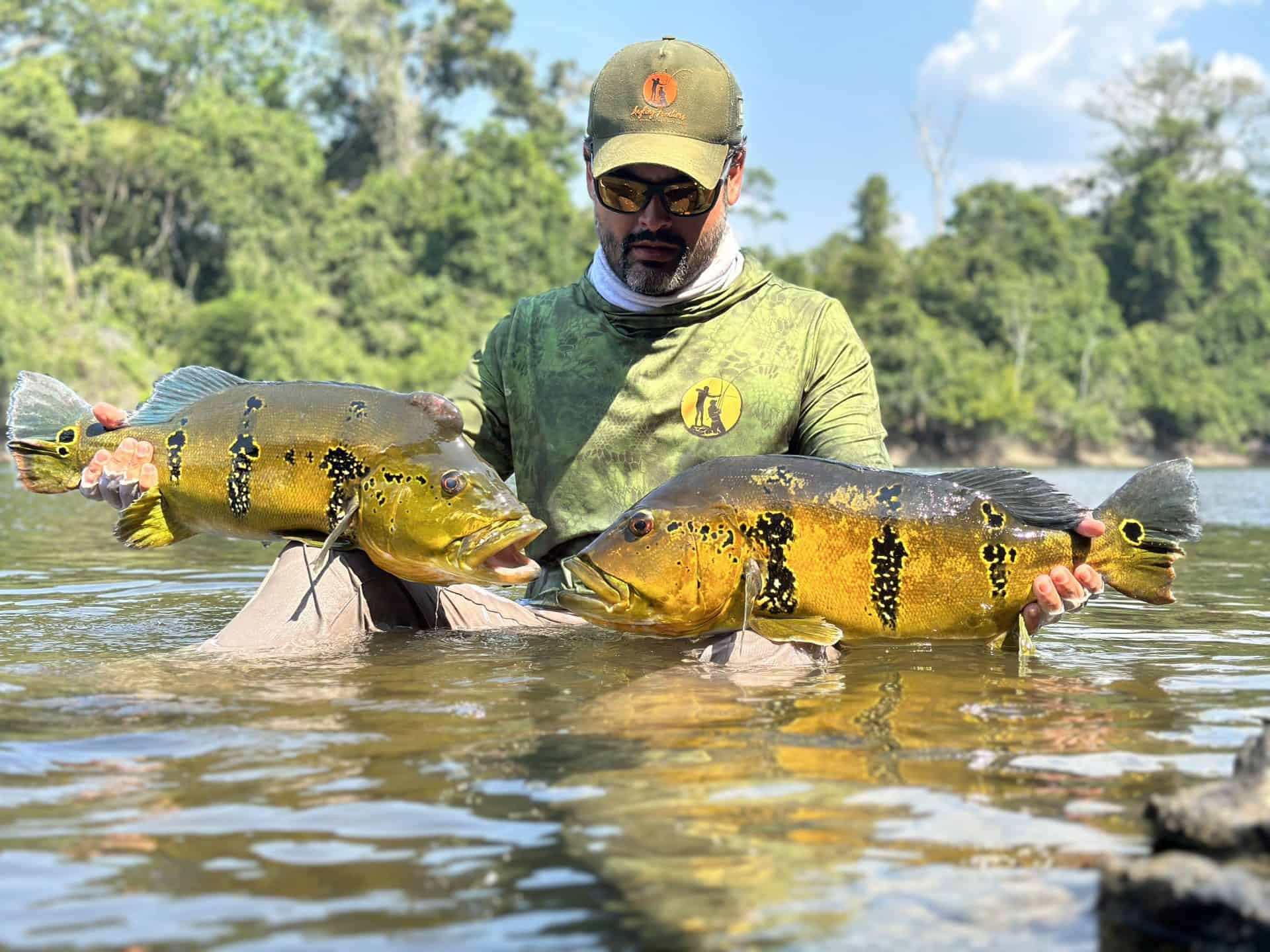
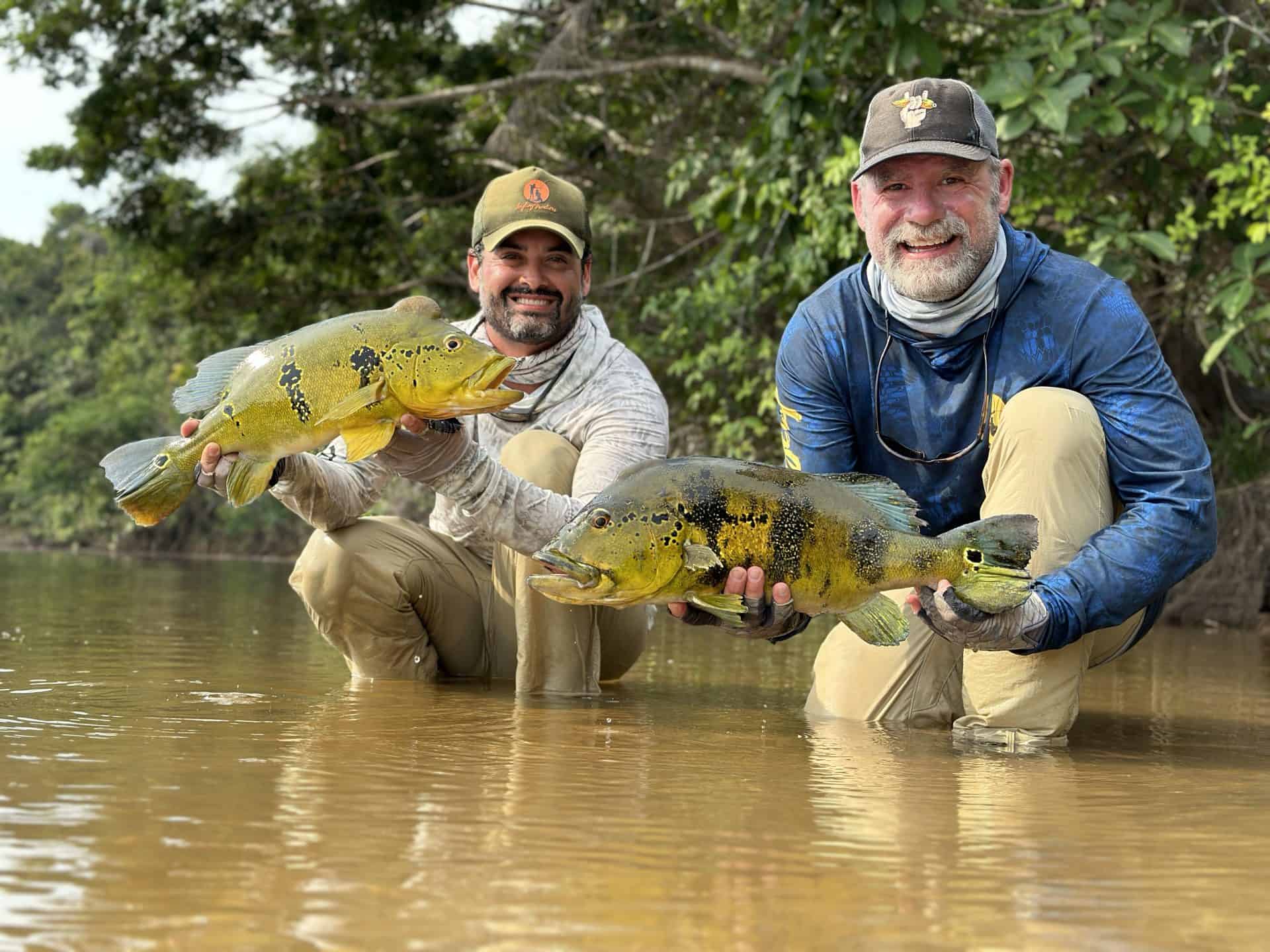
- Chasing Rare Peacock Bass: Pursue an exceptionally rare subspecies of Peacock Bass that exists only in a few untouched rivers of Brazil. These fish are not just bucket-list targets but living jewels of the Amazon, offering anglers a truly exclusive experience few have ever encountered.
- Battling Aggressive Jungle Predators: Take on some of the most ferocious freshwater fighters in the world. From the giant Wolf fish—renowned for its crushing strikes and brute strength—to razor-toothed Payara and lightning-fast Bicuda, every cast holds the promise of raw, heart-pounding action.
- Immersed in Indigenous Territories: Journey deep into the ancestral lands of the Hixkaryana tribe, where centuries of harmony with the rainforest have created a pristine environment. Here, you’ll be welcomed by hosts who share their culture, traditions, and stewardship of one of the most biodiverse regions on earth.
9 DAY PACKAGE
US$6,900 per angler
- Round-trip ground transfers & floatplane flight to lodge.
- Seven days guided fishing.
- Fully equipped boats, unlimited fuel.
- All meals, drinks & alcoholic beverages in the jungle.
- All accommodations, daily laundry & satellite WIFI.
This river system offers a diverse array of fishing scenarios you should be prepared for. You will fish mainly from the boat, but will have the opportunity to fish from the beach, rocks, or wet wading in the shallows.
Target Species:
Peacock Bass, Wolf fish, Payara, Bicuda, Red-tail Catfish, Surubi Catfish, Matrinxā, Black Piranha, Pacu.
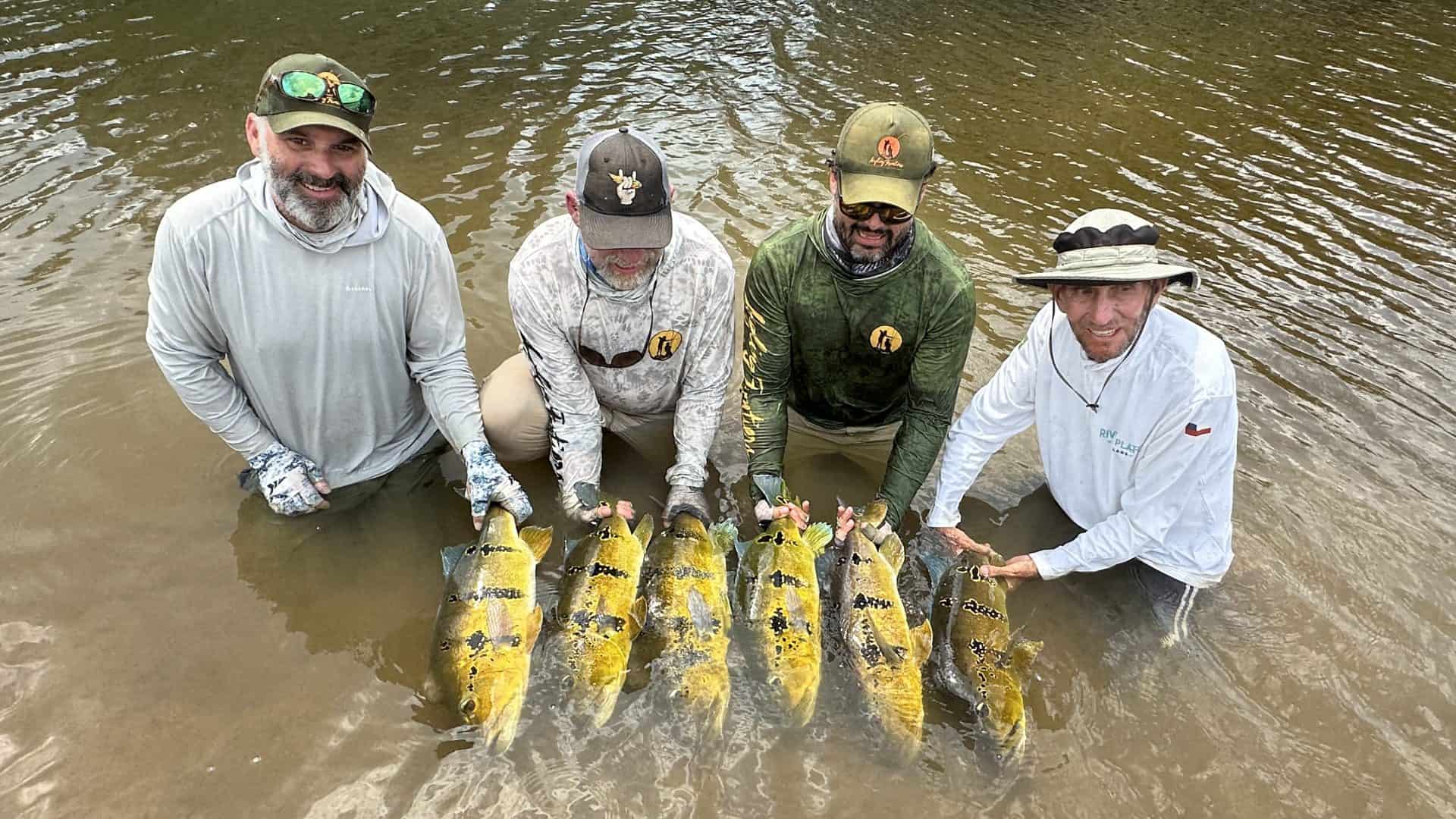
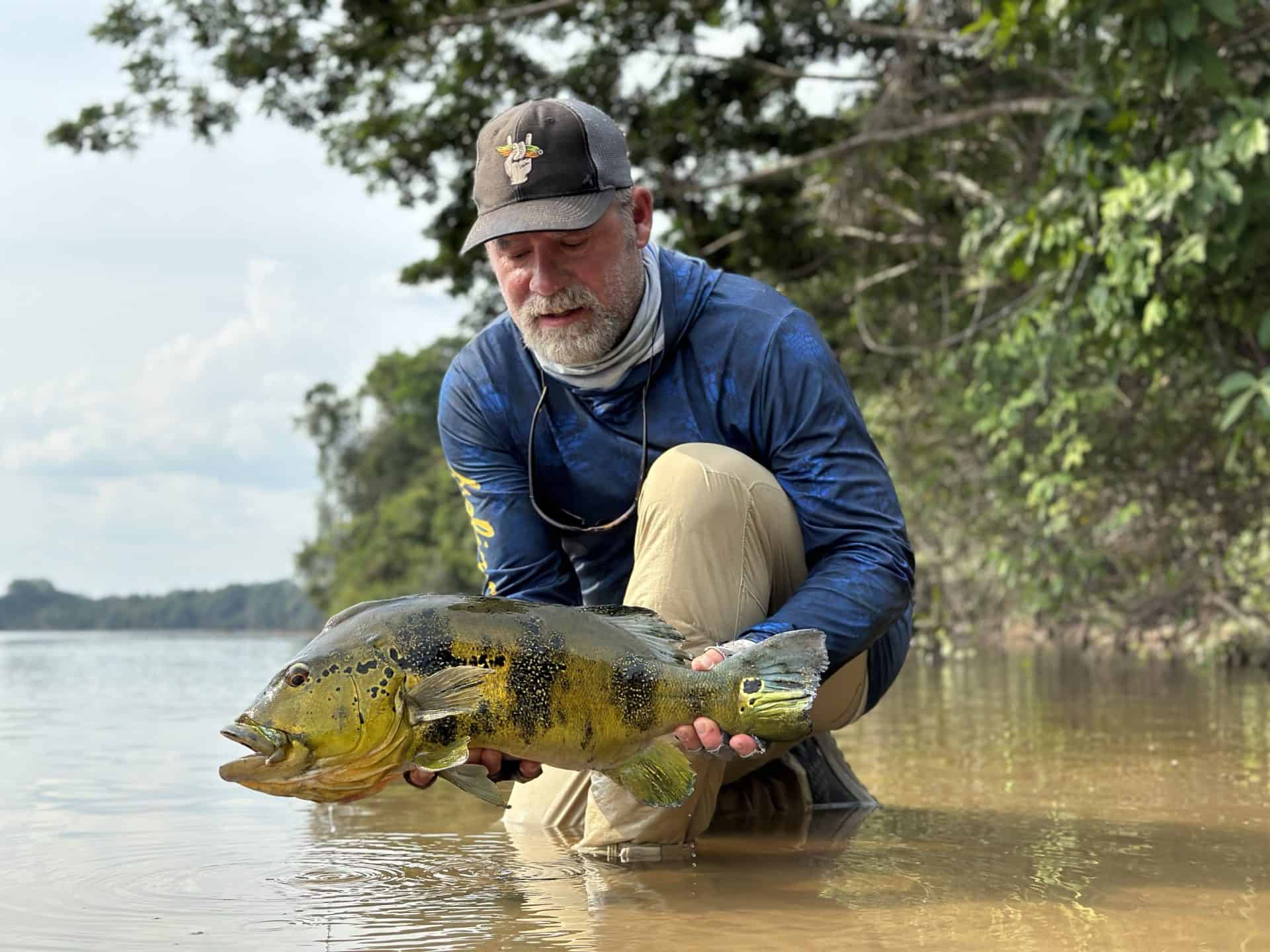
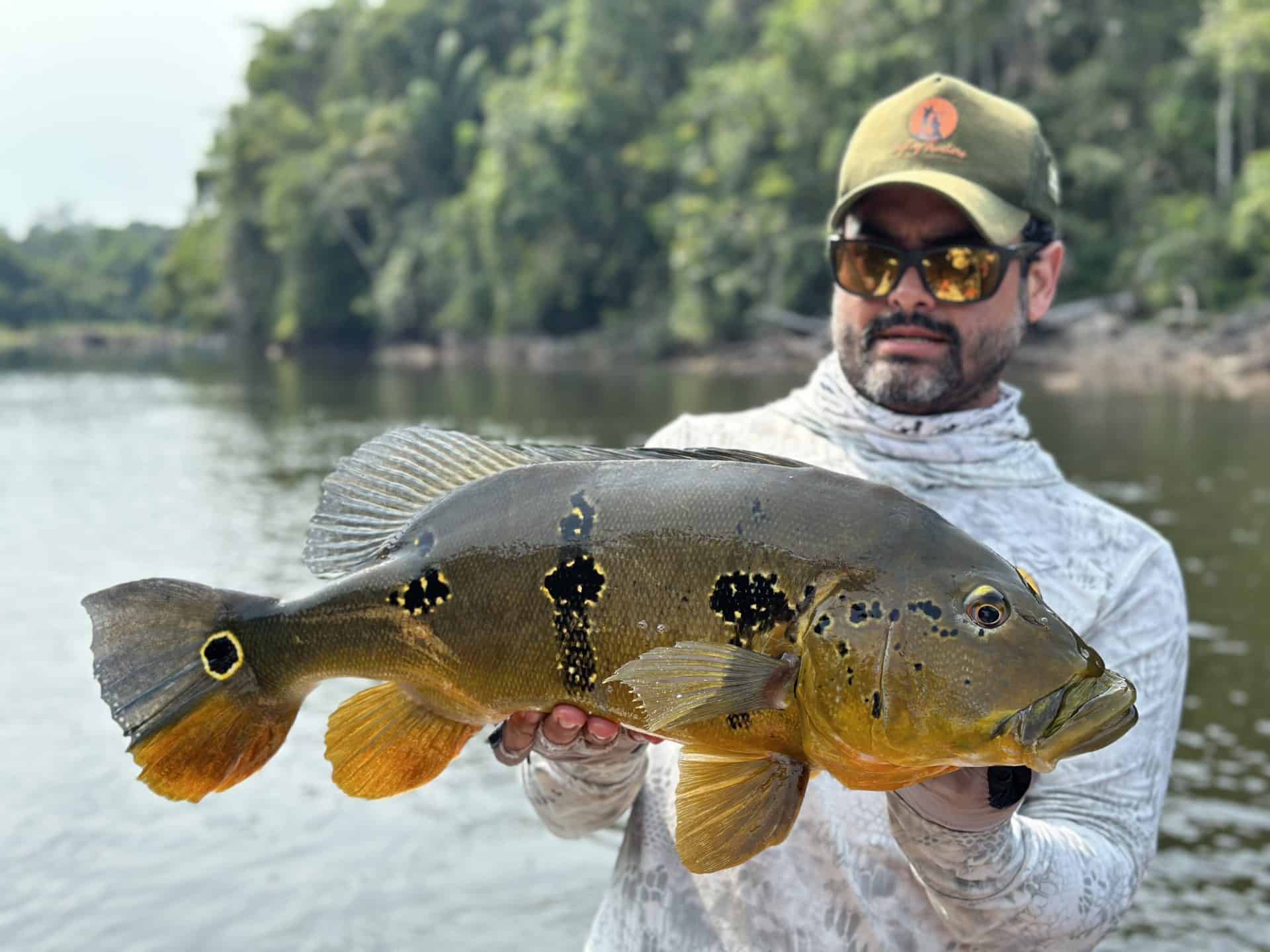
The peacock bass dominating these waters is a very rare species, found only in a handful of river systems in Brazil. In fact, it may be a new species, as is suspected by experts, but science has still not defined it with specific DNA analysis in order to prove or disprove the theory. Until that study yields results, for our purposes, we will assume it is the closest identifiable described species, the Thyrorus Peacock Bass.
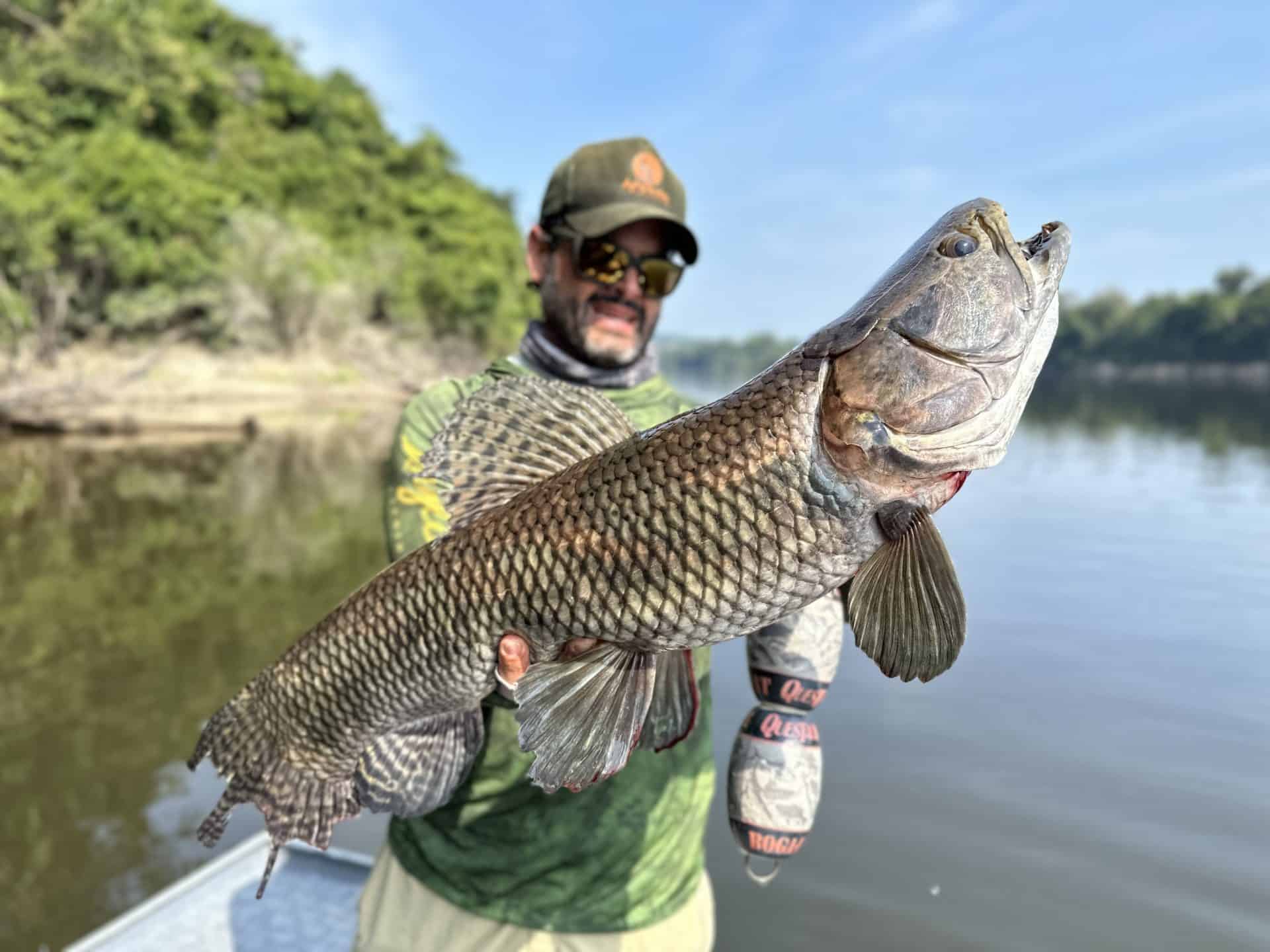
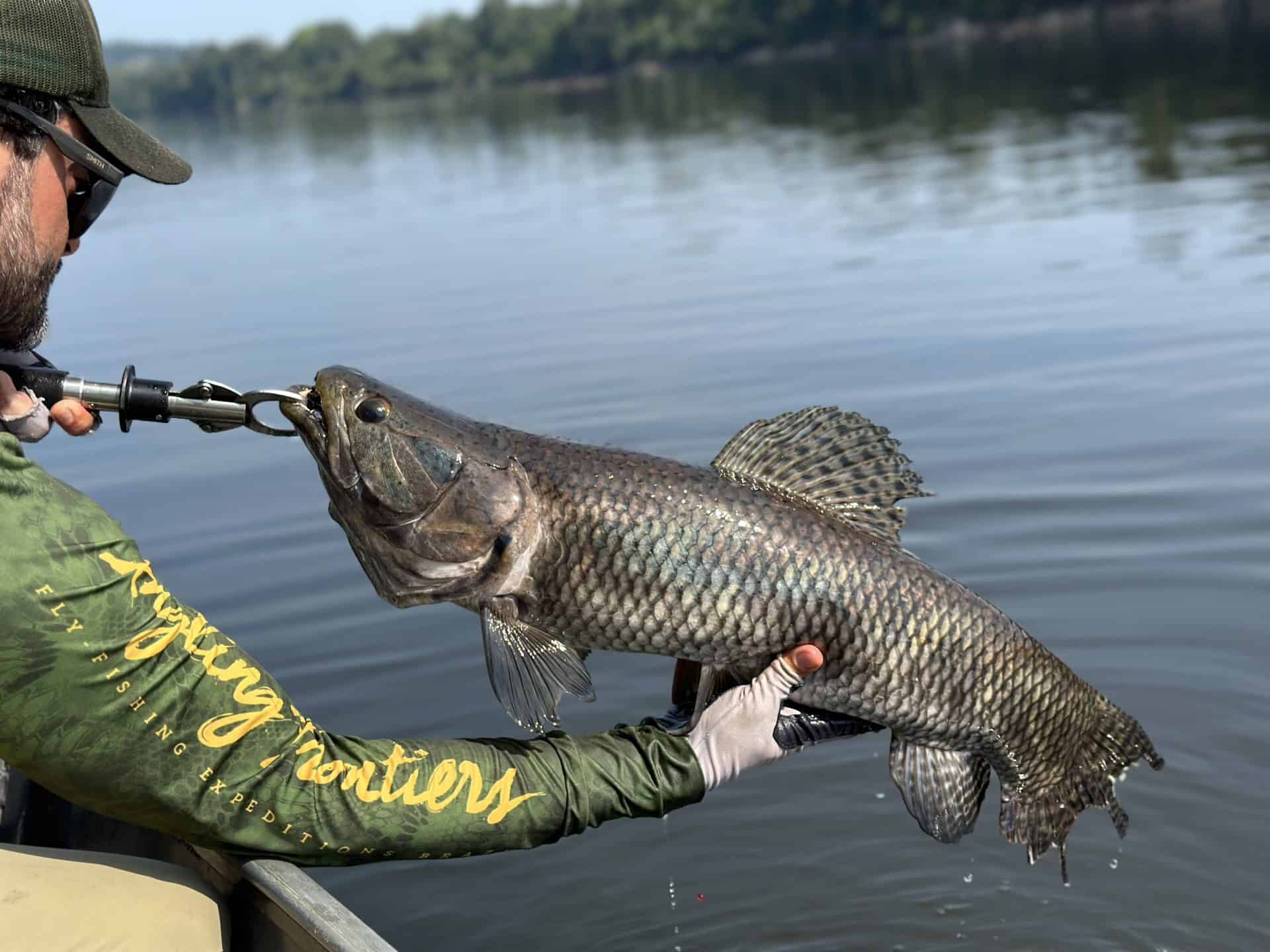
Another species that steals the show is a real brute. The giant wolf fish or Hoplias aimara, reaching a staggering top weight of 35-40lbs, is a terrifying predator for any fish that swims these waters. Being a perfected ambush predator, their oar like giant caudal fin propels this fish at short but accelerated bursts of power.
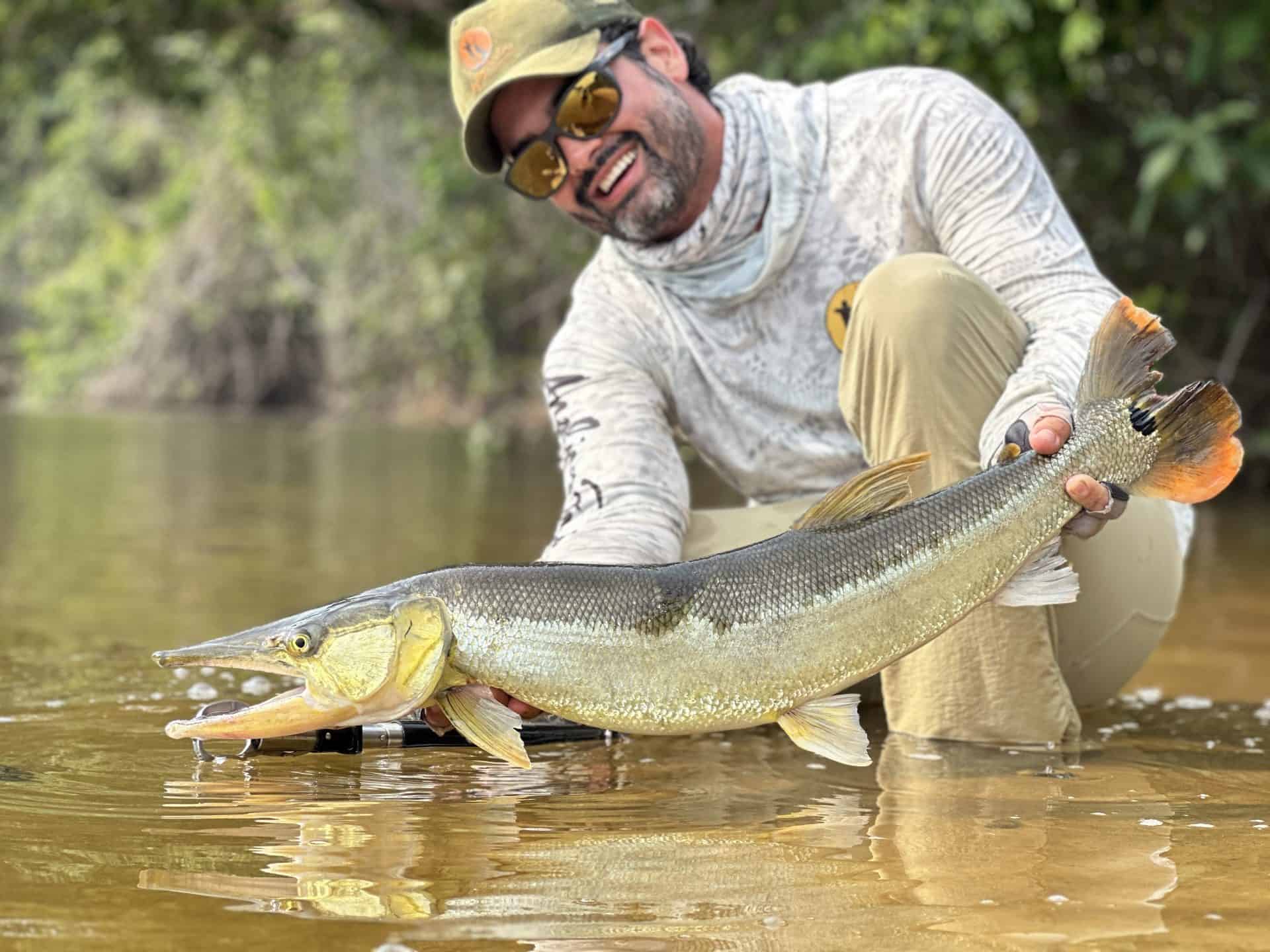
Bicuda or Bicuda Larga, is an athlete of a fish. A “pike-characin” as they are called, these fish look like a cousin of the dorado, but stretched and elongated from tip of the snout to tail. Their fusiform bodies are built for speed and cutting through strong currents. Boulengerella cuiveri are surface to mid-water oriented hunters, searching for prey around sandy shores or in structure around rapids. These fish smash flies with tremendous speed, immediately jumping multiple times and peeling line out with several strong runs before exhausting every last ounce of energy in their bodies.
Environment:
The river is a clear-water system of considerable proportions, but breaking into a series of smaller channels when approaching sections with boulders or rapids. There are giant deep back eddies where true monster fish can be found, and lots of rapids and rocky structure that creates a ton of pocket water to be fished. Rocky islands, small creek inlet mouths and boulder scattered shores are a hotspot for these predatory fish.
The crystal clear waters with black boulders and exposed bedrock with sandy beaches makes for a splendid backdrop for your adventure. This river system is an exceptionally rich ecosystem within a breathtaking landscape of scattered jungle covered hills. A true gem, even for Brazil standards, this fishery will prove to be a must-have bucket list experience for every experienced travelling angler and species collector!
Lodging:
The accommodations are a hybrid of wooden structures and tents, including our kitchen and storage, dining area, staff quarters, fully functional bathrooms and double or single occupancy rooms that are large tents fully equipped with furniture, electrical power and air conditioning for added comfort. We accommodate only 8 anglers per week, to give you a more personalized and exclusive experience.
The Camps are built and operated with the most eco-conscious approach possible, whilst still providing an exceedingly comfortable and top notch experience. You will sleep in cozy beds with the A/C on full power, enjoying the fully immersed jungle experience, but in unfathomable comfort for the middle of the proper Brazilian Amazon jungle.
Food & Drinks:
Food is a mix of local cuisine with international gourmet dishes. We want to give you a culinary experience as well as some familiarity with a subtle touch of Amazon flavors. We will personalize your meals as much as possible, working around any preferences or special dietary needs. The chef and kitchen staff will keep you satisfied with a very complete breakfast and excited to return to the lodge for dinner, wondering what the surprise dessert will be that night! The Chef will prepare your packed lunches, making them easy to digest, flavorful, nutritive and not heavy, so that you can have the energy to fish all afternoon. We will also be able to eat certain species and class sizes of fish according to your indigenous guides’ recommendation. They will be preparing your shore lunches upon request, which will be some fresh fish, rice, farofa, salad, and other local side dishes.
How to get there:
Direct commercial flights are available from Miami to Manaus, Brazil.
From there our team will handle all the ground transfers from Hotel – Airport for you. Guests will stay one night at the Hotel (included) and next morning they are transferred to catch their floatplane flight to the lodge. When the trip ends, guests will arrive back to the Manaus airport to catch their flight back home.
Documents Required:
A valid passport and visa is required for Brazil. Some countries do not require a visa. We will inform you what is needed based on your country.
Sample Itinerary
Trip Duration: 9 Days
7 Days Fishing
Day 1:
Arrive to Manaus and transfer to the hotel for an overnight stay already in Manaus (both included in the package).
Day 2:
Breakfast at hotel. Transfer to airport to catch floatplane flight to the lodge. Arrive to camp 1 and settle in your quarters. A thorough briefing and an early welcome lunch before heading out for the first afternoon of fishing. Return to Camp 1 for dinner and rest.
Day 3:
Breakfast. Fish first set of Camp 1 beats for the day. Shore lunch. Fish the rest of the afternoon. Return to Camp 1 for dinner and rest.
Day 4:
Breakfast. Fish 2nd set of Camp 1 beats for the day. Shore lunch. Fish the afternoon. Return to camp 1 for the night. Pack luggage to move to Camp 2 tomorrow. Dinner and rest.
Day 5:
Breakfast. Fish our way over to Camp 2. Shore lunch. Fish all afternoon and arrive at Camp 2 for dinner and rest.
Day 6:
Breakfast. Fish our 1st set of Camp 2 beats for the day. Shore lunch. Fish the afternoon and return to Camp 2 for dinner and rest.
Day 7:
Breakfast. Fish our 2nd set of Camp 2 beats for the day. Shore lunch. Fish the rest of the afternoon and return to Camp 2 for dinner and rest.
Day 8:
Breaksfast. Early outing to fish the morning. Shore lunch. Return to Camp 1 after lunch, fishing along the way. Arrive at Camp 1 for farewell dinner and rest.
Day 9:
Breakfast. Leave cargo with staff. Option for an extra early outing of a couple hours to finish off the week and meet the crew at the landing site to put away all your gear and be ready to board the plane. Your guide calls the shots, so he will get you there in time. Fly out back to Manaus. Arrive to airport and catch your flight back home
Rates Per Angler:
Group size: 8 anglers max
$6,900 USD (+ $450 Indigenous fee) per angler
What’s Included:
- All ground transfers to and from the hotel and airports. One overnight stay at the Quality Hotel in Manaus. Cessna Caravan Floatplane roundtrip flight to the lodge. Professional chef and experienced guides.
- All meals, drinks and alcoholic beverages in the jungle.
- Daily laundry service out in the jungle.
- Satellite internet Wi-Fi.
- Fully equipped boats with 30hp engines for two anglers, with unlimited fuel.
- All accommodations in the jungle.
- Trilingual (English/Spanish/Portuguese) professional head guide and Manager on site, available to accompany any clients that would like extra instruction or help during any of their days fishing.
What’s Not Included:
- Commercial air travel.
- Meals and drinks outside of the jungle.
- Tips for guides & staff.
Fishing equipment, terminal tackle and flies.
GALLERY
Frequently Asked Questions:
What makes the Peacock Bass in this region different from those in other parts of Brazil?
The Peacock Bass found here is believed to be a rare subspecies that exists only in a handful of remote rivers in northeastern Amazonas. Unlike their more widespread cousins, these fish are adapted to crystal-clear jungle streams with strong currents and rocky structure, giving them explosive power and unique coloration. Anglers targeting them are often among the very few outsiders ever to fish these waters.
How does fishing with the Hixkaryana tribe enhance the experience?
The expedition is hosted by the Hixkaryana people, who have lived in this region for centuries. Their deep knowledge of the river systems and surrounding rainforest allows anglers to reach secluded waters and untouched habitats that would otherwise be inaccessible. Beyond guiding, they share stories, traditions, and meals, giving guests an authentic cultural connection that goes hand in hand with the fishing adventure.
What kind of fishing techniques work best for Wolf fish, Payara, and Bicuda in these rivers?
Each species demands a different approach. Wolf fish are best targeted with heavy tackle and lures that can withstand their crushing bite, often fished near rocky ledges and submerged timber. Payara prefer deep pools and fast currents, where sinking lures or flies with strong wire leaders are essential. Bicuda, on the other hand, are lightning-fast hunters that smash topwater plugs and streamers in shallow runs, rewarding anglers who love visual, surface-level strikes.