
Bucket List Species: Tarpon
The Silver King: A Deep Dive into Tarpon
Every angler has a list. A mental checklist of species that fuel daydreams and drain bank accounts. And for anyone who’s ever picked up a fly rod or chucked a lure into a mangrove-lined channel, tarpon tend to sit near the top of that list. Known as the Silver King, Megalops atlanticus is not just another gamefish. It’s a species that defines saltwater sportfishing for many anglers around the world, especially those chasing fish that hit hard, leap high, and make your reel sing like it’s on fire.
I’ve chased tarpon from the Gulf Coast of Florida down through the Yucatan and as far south as Costa Rica. Every encounter feels like a privilege. But beyond the thrill of the fight and the spectacle of a hundred-pounder cartwheeling out of a tidal flat, tarpon are flat-out fascinating. They’ve been around for a very long time, and they’re far more complex than most of us give them credit for.
A Fish Built for Survival
Tarpon are prehistoric in every sense of the word. They first appeared more than 100 million years ago, which makes them older than most dinosaurs. And unlike a lot of ancient creatures, tarpon haven’t changed much. That’s probably because they haven’t needed to. Evolution gave them a pretty sweet deal.
They can survive in both salt and freshwater, and even in oxygen-poor environments that would kill most fish. This is thanks to a modified swim bladder that functions like a lung. Juvenile tarpon especially make use of this adaptation, rolling at the surface to gulp air. That’s why you’ll often see smaller tarpon thriving in stagnant backwaters, ponds, and creeks that seem like they shouldn’t support anything but mosquitoes and muck.
This air-breathing ability is part of what allows tarpon to grow rapidly in their early stages. Juveniles can reach about two feet in their first year under the right conditions. They start life as leptocephalus larvae, looking more like clear ribbons than fish. During this stage they absorb nutrients directly from the water. It’s a bizarre process, but it works.
Once they’ve transformed into recognizable juvenile tarpon, they become more mobile and start hunting. That’s when the real fun begins for anglers, especially those fishing small rivers, mangrove channels, or suburban drainage canals.
Distribution and Migration
You’ll find tarpon throughout the western Atlantic, from as far north as Virginia down through the Caribbean and into Brazil. There’s also a smaller Pacific population along Central America’s coast, likely the result of a few individuals passing through the Panama Canal back when it first opened in the early 1900s. Cross the Atlantic and you’ll find another strong population along the West African coast, particularly around Gabon and Northern Angola.
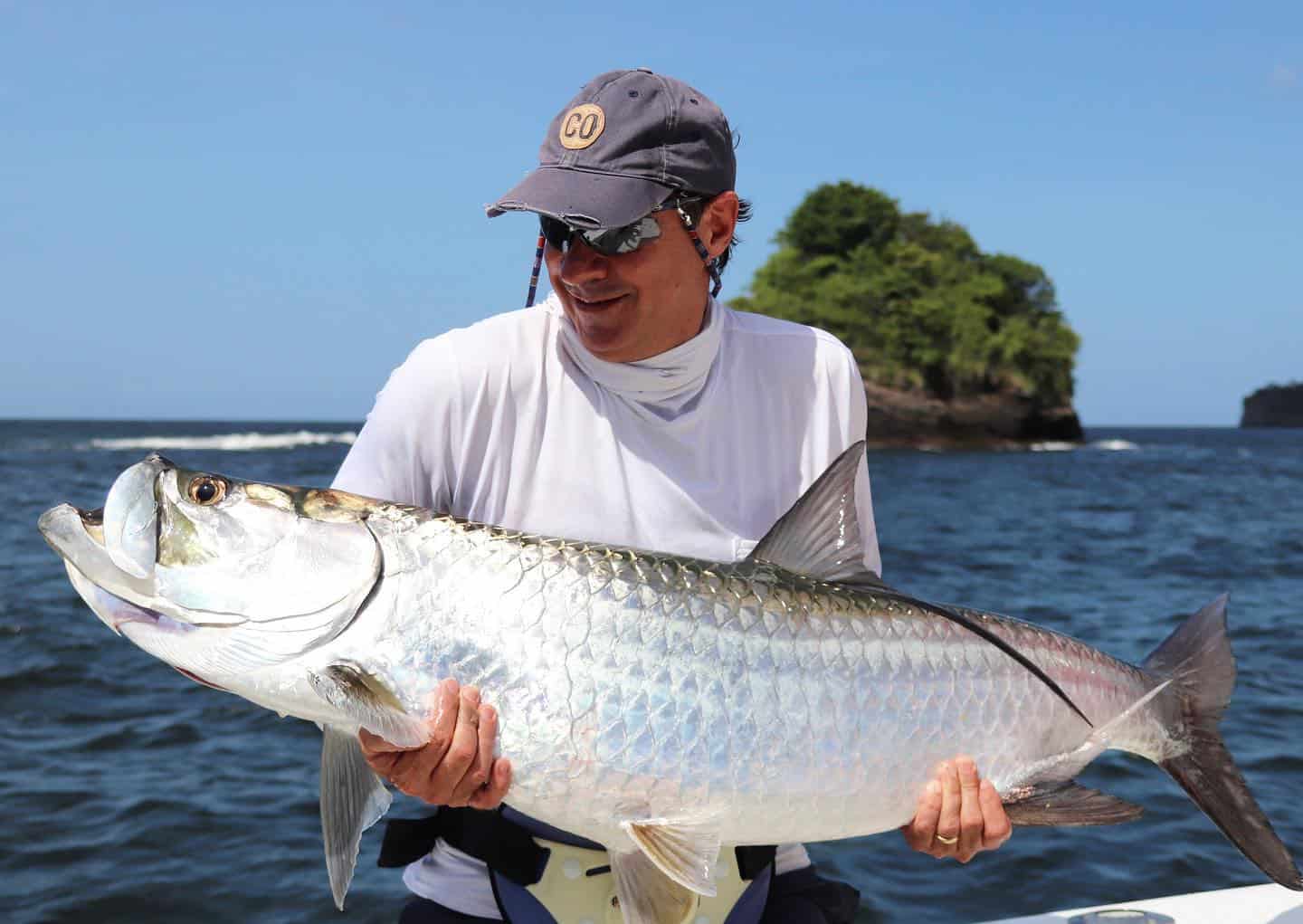
The most famous migratory routes are in the Gulf of Mexico and the Florida Keys. Every spring, as the water temperatures rise to about 75 degrees Fahrenheit, the big fish show up. These are the mature adults, the 60 to 150-pounders, and even bigger if you’re lucky. They travel in schools, cruising clear flats and channels, and staging along beaches. They’re moving with purpose, making their way to offshore spawning grounds.
For anglers, this migration is like a holiday season. It’s when tarpon are most visible and accessible, especially to sight-fishing purists. If you’ve never stood on the bow of a skiff, scanning gin-clear water for a line of dark, slow-moving giants, you’re missing out. It’s a mix of anticipation, pressure, and pure joy.
The Fight
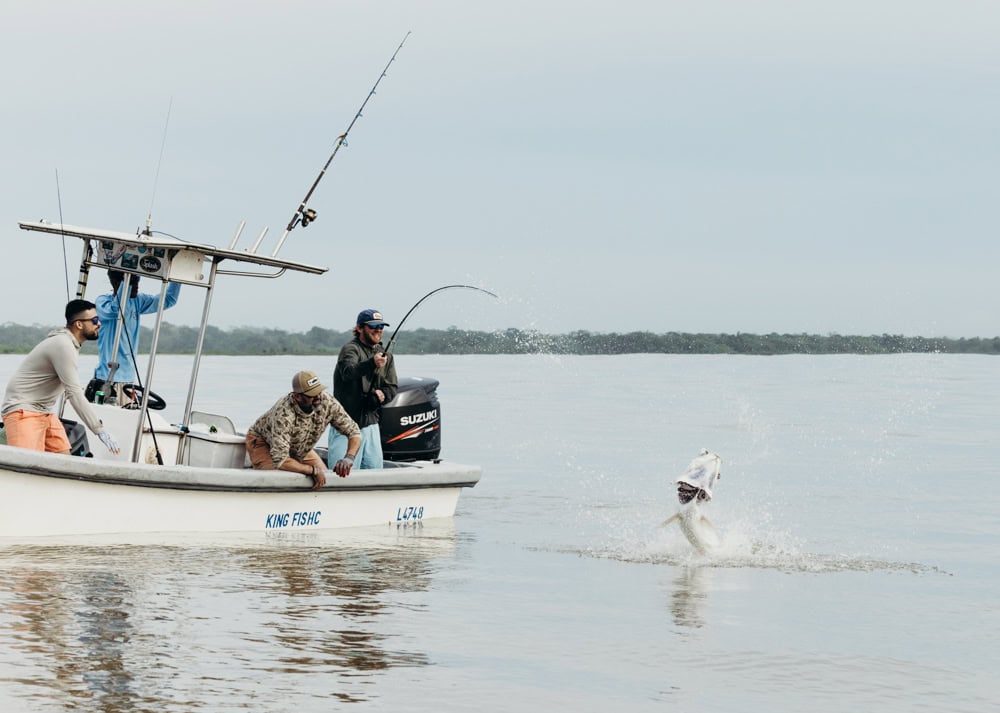
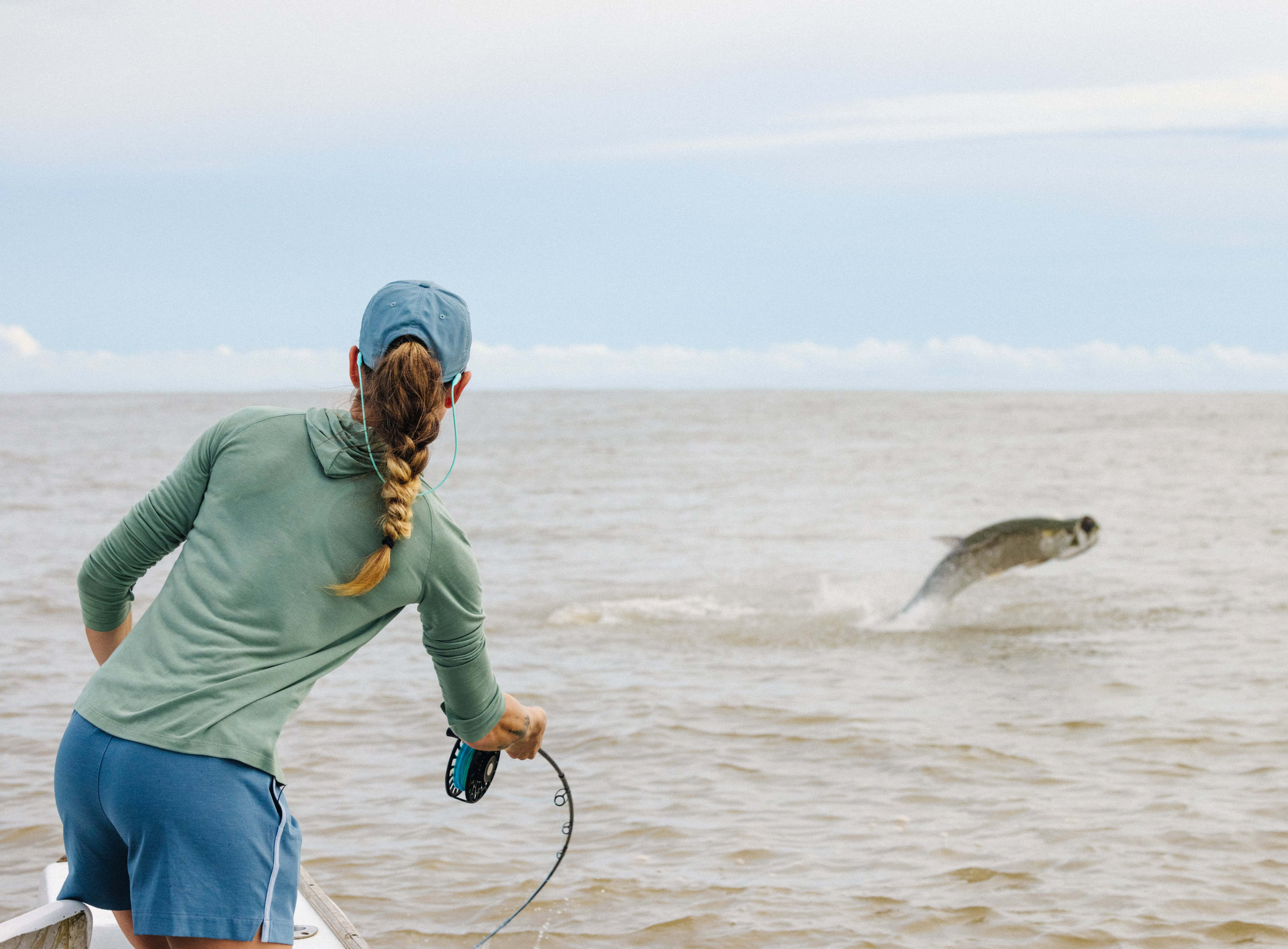
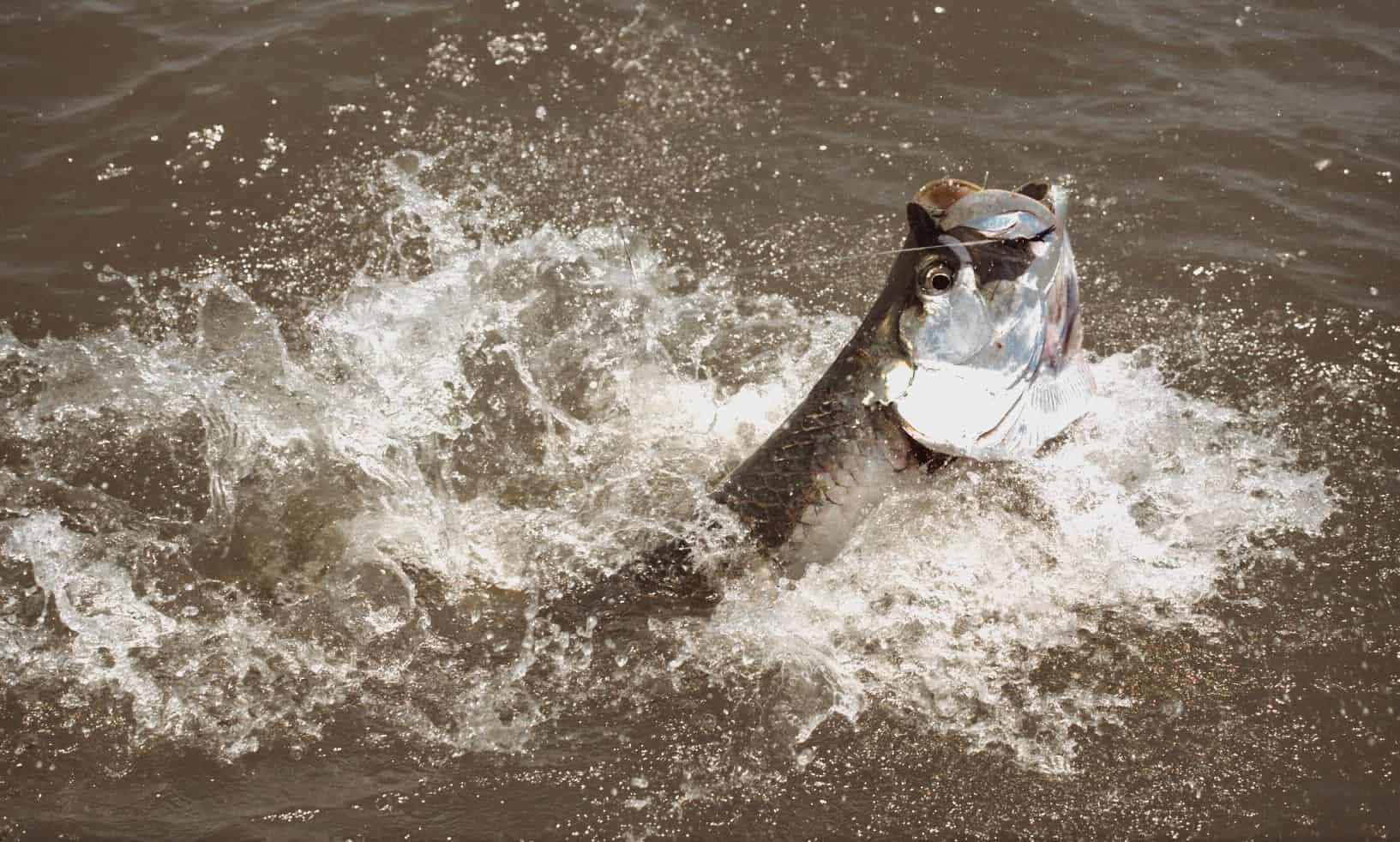
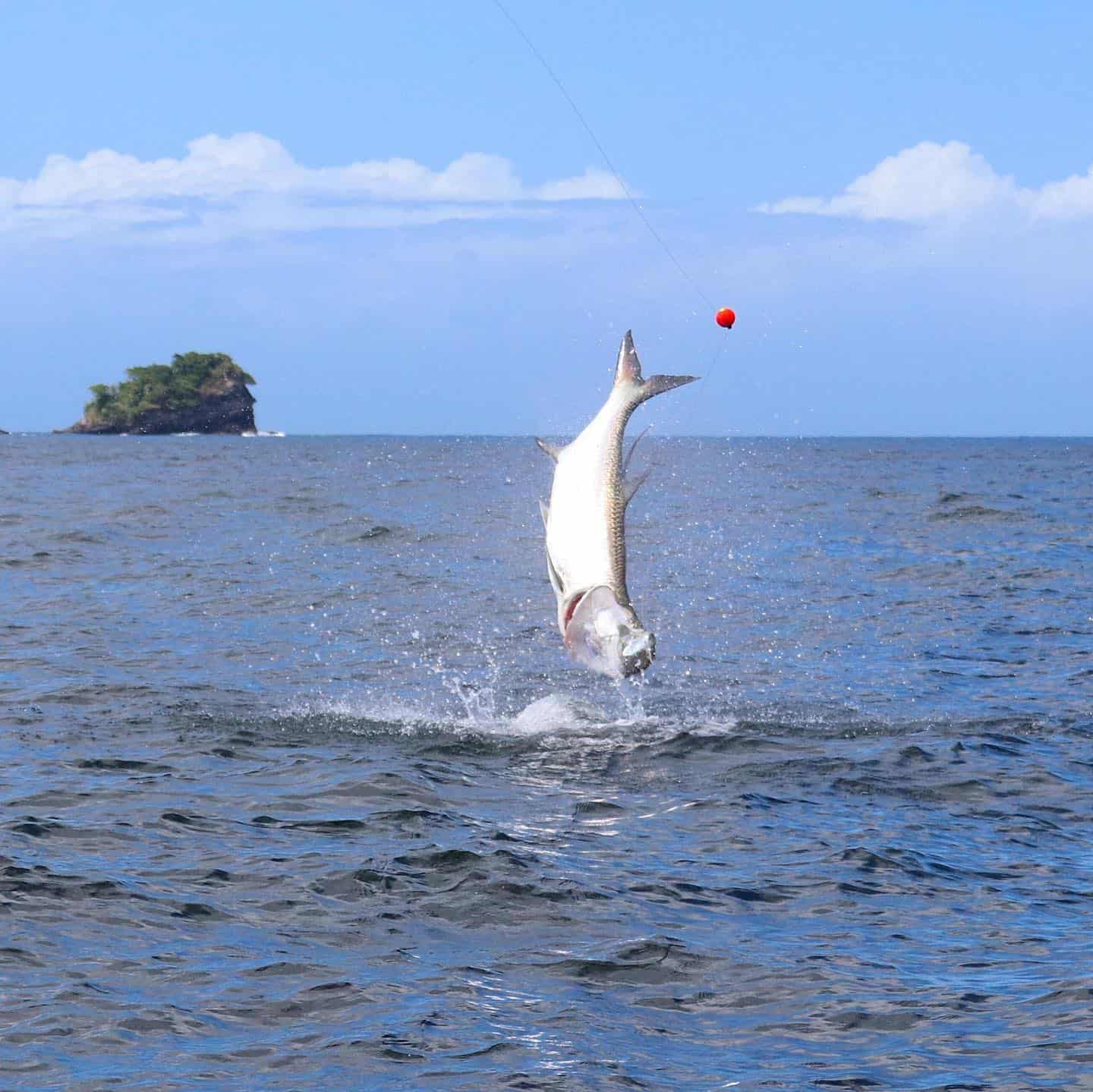
Tarpon are not the strongest fish in the ocean pound for pound, but what they lack in brute force they make up for in stamina and acrobatics. They hit lures and flies with incredible speed, and once hooked, they go airborne immediately. These aren’t little hops either. They jump six, sometimes eight feet into the air, twisting and throwing water in all directions.
The famous “bow to the king” maneuver comes from this behavior. When a tarpon jumps, you’re supposed to lower your rod tip and give it some slack. This reduces pressure on the hook and helps keep it from tearing out of the tarpon’s bony mouth, which is one of the trickiest parts of landing one.
That armor-plated mouth is part of why so many tarpon are lost. Even with sharp hooks and heavy gear, getting a solid hookset can take some effort. And once you’re hooked up, you’re in for a long fight. I’ve had fish that ran me into the backing in seconds, then dogged me for 45 minutes before coming to hand. Others wear you down in ten minutes, only to surge again just when you think it’s over.
Tackle and Techniques
You can catch tarpon with just about every style of tackle, but what you use depends a lot on the size of the fish and the environment.
For juvenile tarpon, spinning rods in the 7 to 8-foot range, matched with 3000 to 5000-size reels and 20 to 30-pound braid, are ideal. These fish eat swimbaits, jerkbaits, and soft plastics with enthusiasm. In tighter cover, weedless rigging is key.
Adult tarpon, especially the migratory giants, call for heavier gear. Most anglers use 10 to 12-weight fly rods or heavy spinning and conventional setups with 50 to 80-pound braid and leaders in the 80 to 100-pound range. Fluorocarbon helps with stealth, especially in clear water.
Fly fishing for tarpon is a different game entirely. You’re often casting 12-weight lines in the wind at moving targets, hoping to land a fly in just the right spot to trigger a follow. Flies like black-and-purple toads, Cockroach patterns, or chartreuse and white baitfish imitations are standard fare.
Presentation matters. Strip speed, pause timing, and angle of the cast can all make or break a shot. When it works, though, it’s pure magic. There’s nothing like watching a tarpon peel off from a school, follow your fly, and then inhale it with a flash of gill and scale.
Conservation and Handling
While tarpon are targeted heavily, they’re generally not harvested. In most places, they’re protected by law or custom. Florida, for example, requires a special tag to harvest one, and even then it’s almost exclusively for record-setting or research purposes. Catch-and-release is the norm, and for good reason.
Tarpon are long-lived fish. Some have been aged at over 60 years old. They reach sexual maturity between 7 and 13 years of age, and they don’t spawn until they’ve reached at least 40 inches in length. That means every big fish you catch is important to the next generation.
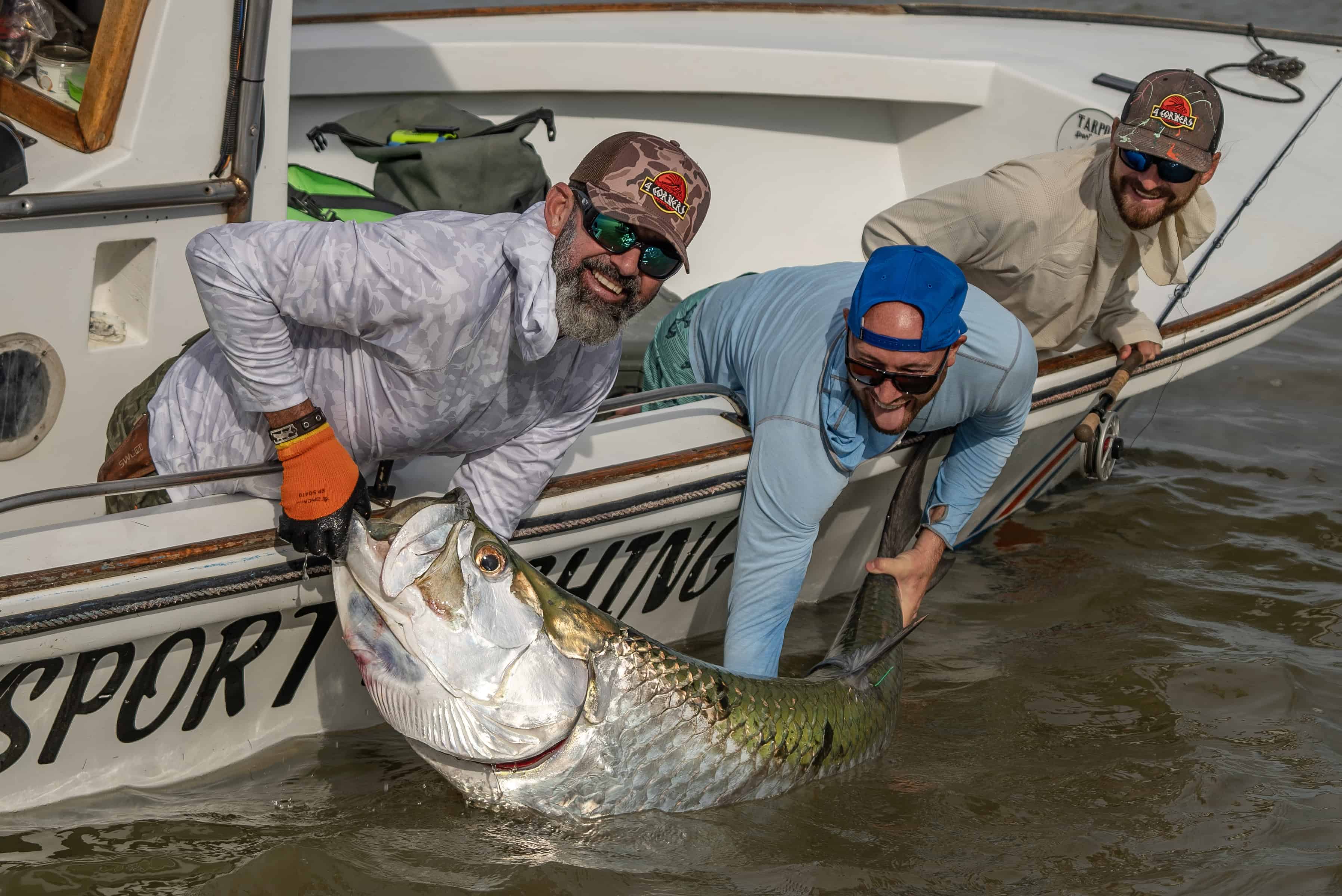
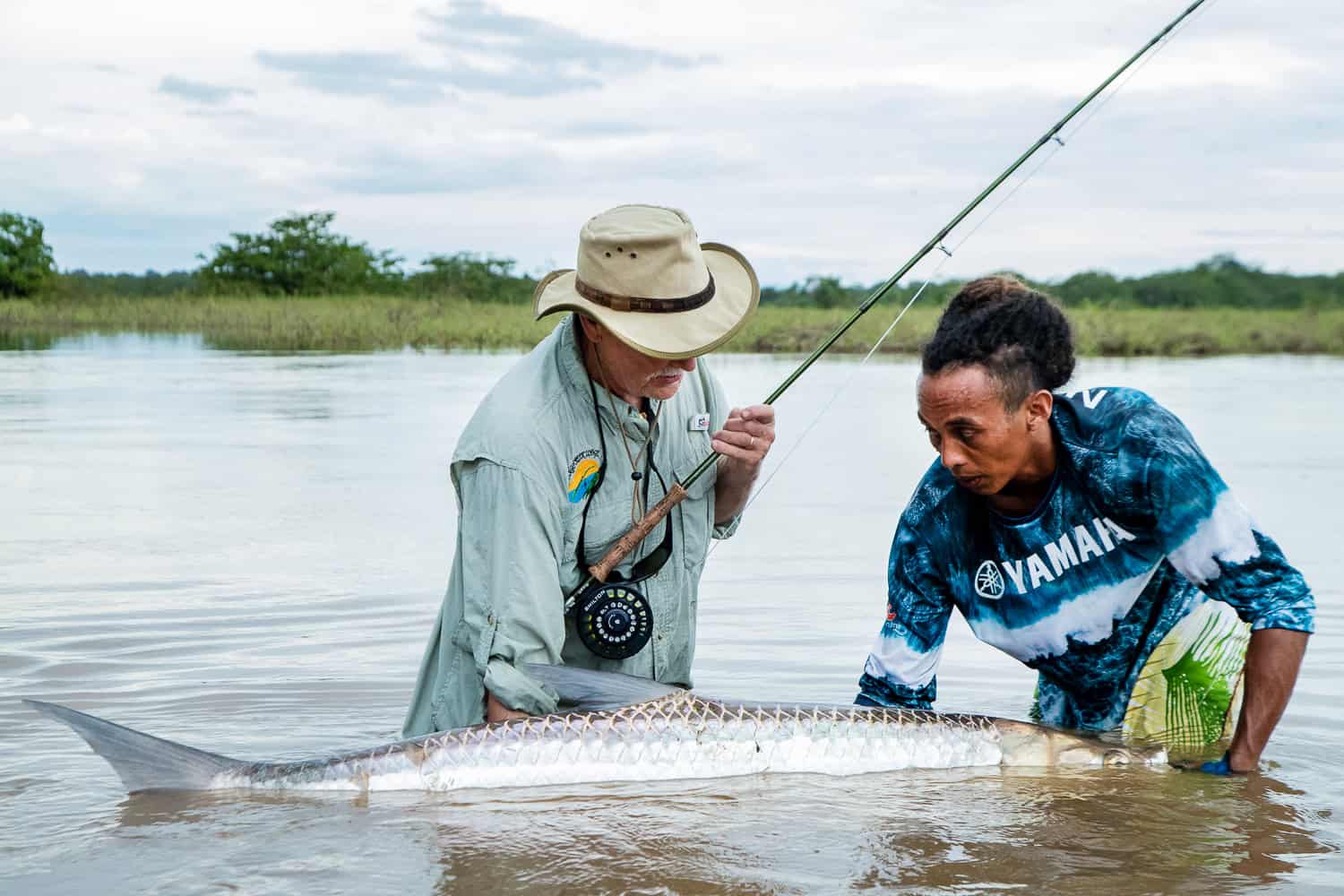
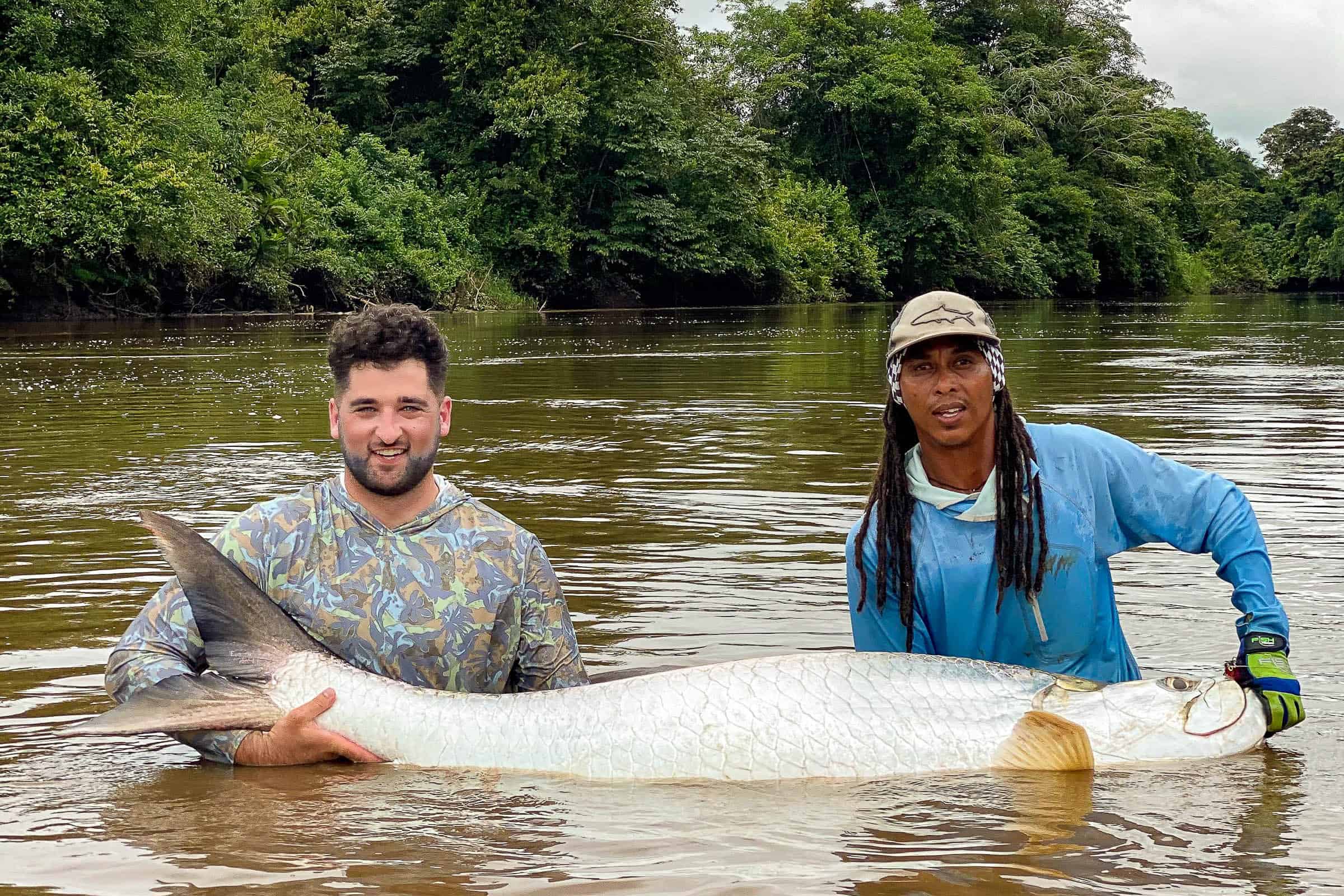
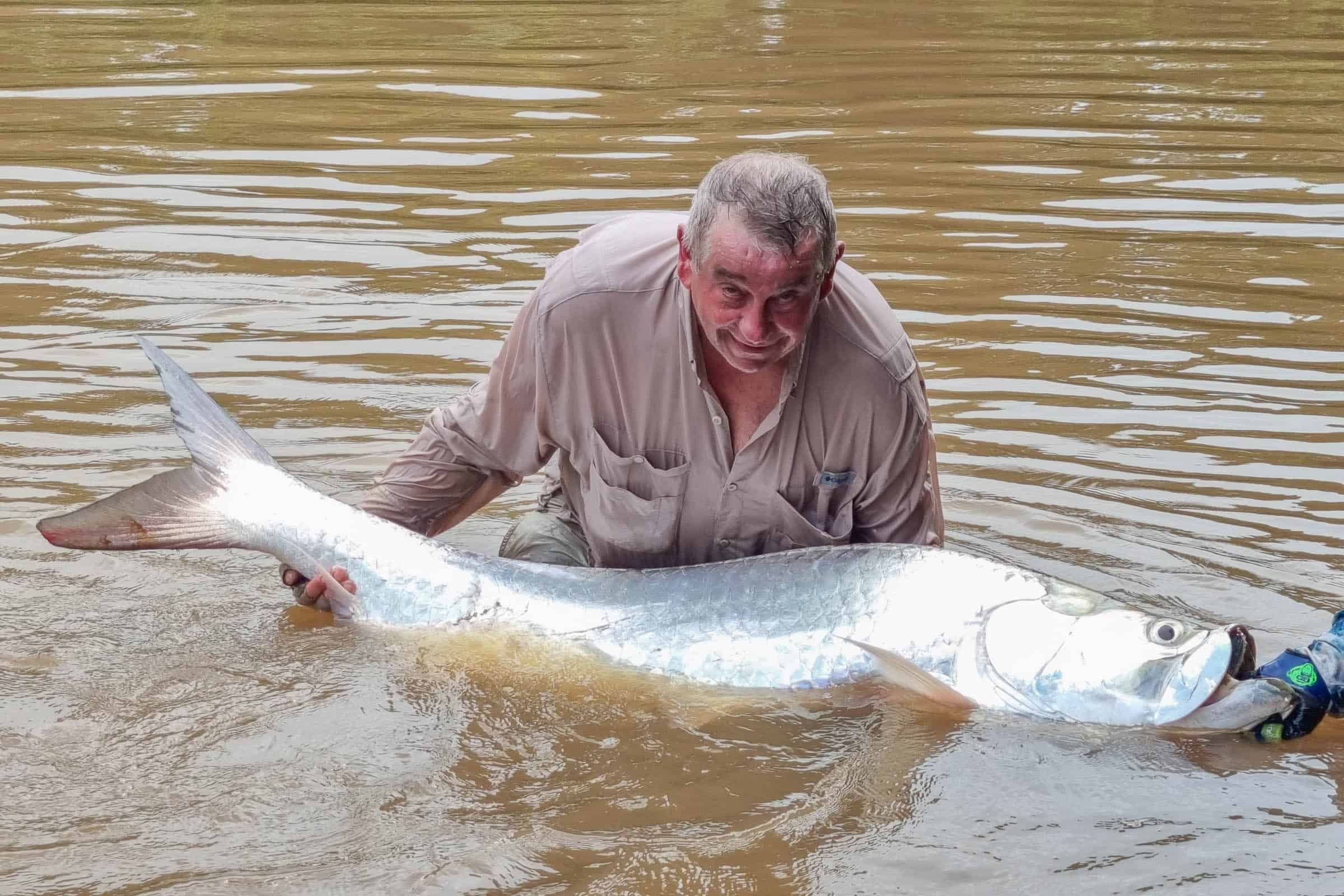
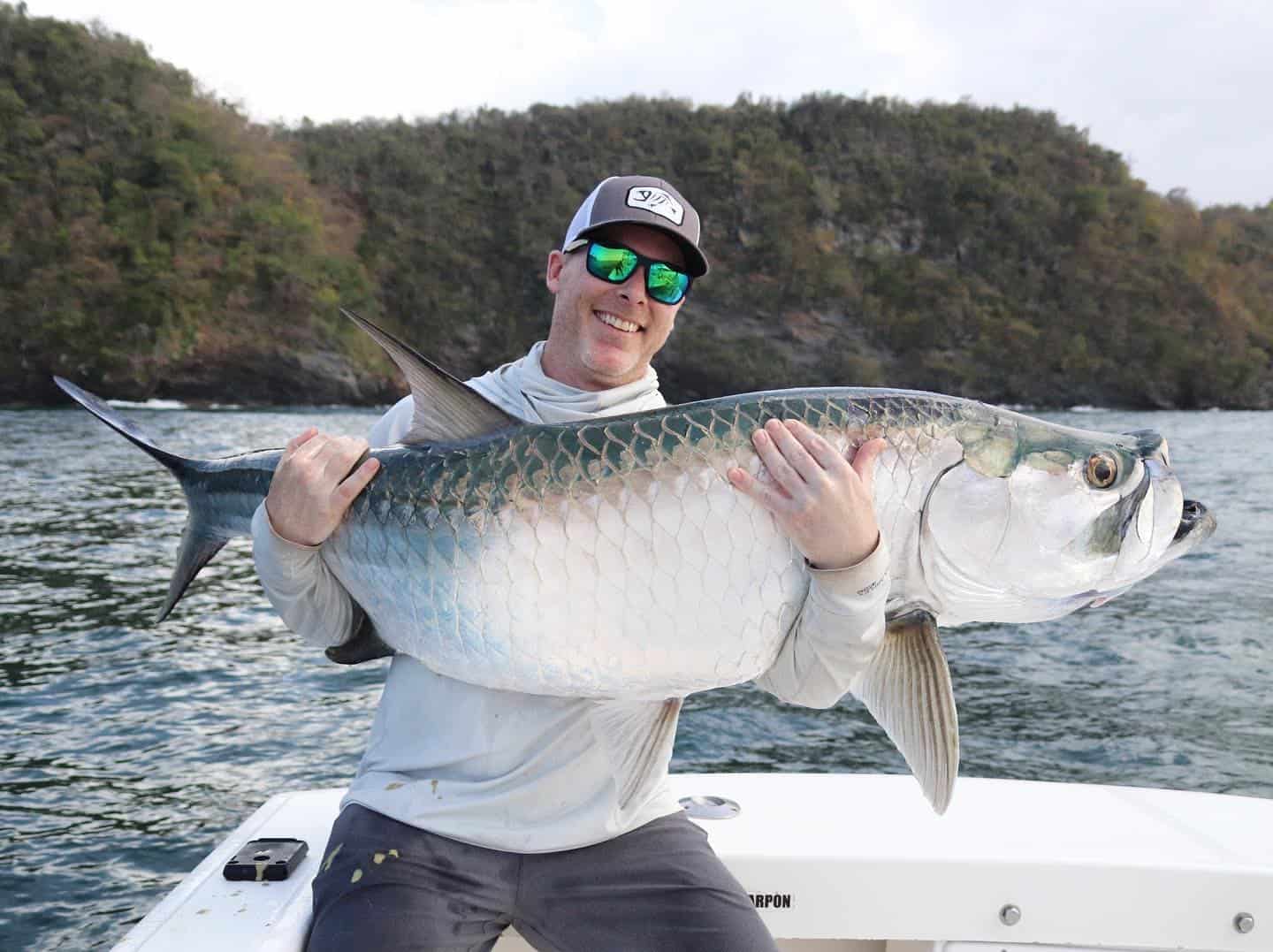
Proper handling is essential. Keep the fish in the water if possible, especially for photos. If you need to lift it, support its belly and avoid hanging it vertically, which can damage internal organs. Most guides these days are on board with this approach, and many fish are tagged and tracked to study movements and survival rates.
A Bucket List Fish Worth the Hype
Tarpon fishing is more than a trip. It’s an experience that sticks with you. It challenges your casting, your patience, your ability to adapt to changing conditions. And it rewards you with one of the most electric fights in sportfishing.
Whether you’re stalking baby tarpon in jungle rivers or hunting giants along white sand beaches, these fish deliver. They look ancient because they are. They act wild because they haven’t been tamed. And they keep coming back year after year, generation after generation, reminding us why they sit so high on the bucket list.
If you haven’t made the trip yet, plan it. Whether it’s Florida, Belize, Trinidad, Costa Rica, or Cuba, tarpon are out there waiting. And once you hook one, I guarantee it won’t be your last.


Get in touch below if looking to plan a tarpon trip and we’ll craft a tailormade adventure to meet your goals and expectations.
Be sure to check out our all inclusive tarpon packages to Trinidad, Costa Rica, and Angola, and don’t hesitate to ask about our exclusive deals and special offers.