
Bucket List Species: Wolf fish
Wolf fish (Giant Trahira) : The Amazon’s Overlooked Predator
In the freshwater fishing world, South America is known for its headline species—peacock bass, golden dorado, and arapaima usually top the list. But among the region’s many rivers and jungle lagoons, there’s a fish that doesn’t get much attention outside of those who’ve encountered it firsthand. That fish is the wolf fish—often overlooked, but never forgotten once caught.
Wolf fish, particularly Hoplias aimara and Hoplias malabaricus, are native to a wide range of waters across northern South America. They’re found in the Amazon and Orinoco basins, as well as the river systems of the Guiana Shield. These fish prefer slow-moving, heavily structured habitats—think muddy creeks, flooded forest channels, and deep, quiet pools with overhanging vegetation or submerged timber. Their ambush-oriented nature means they like cover and low visibility. They don’t chase for long—they wait and strike hard.
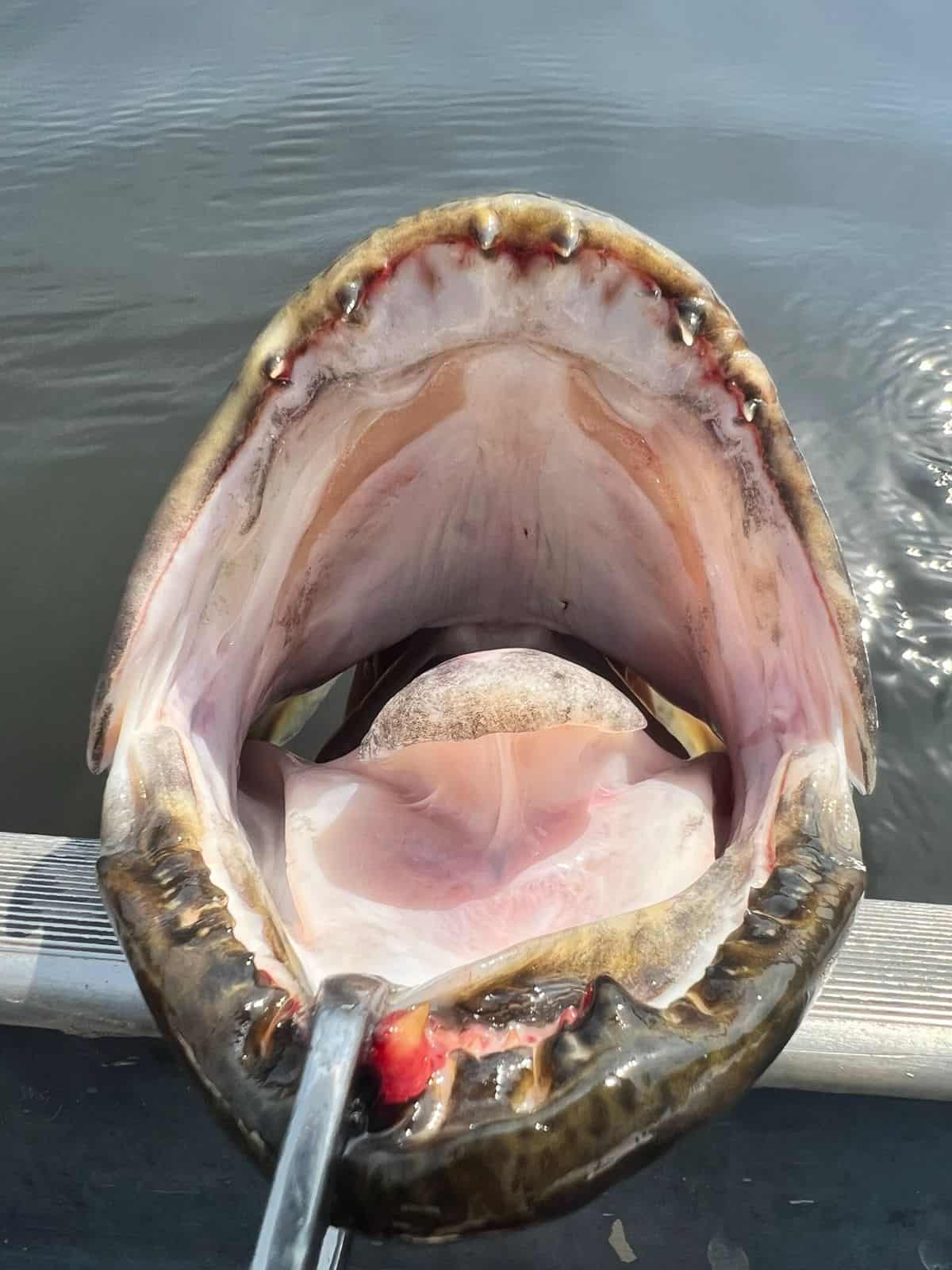
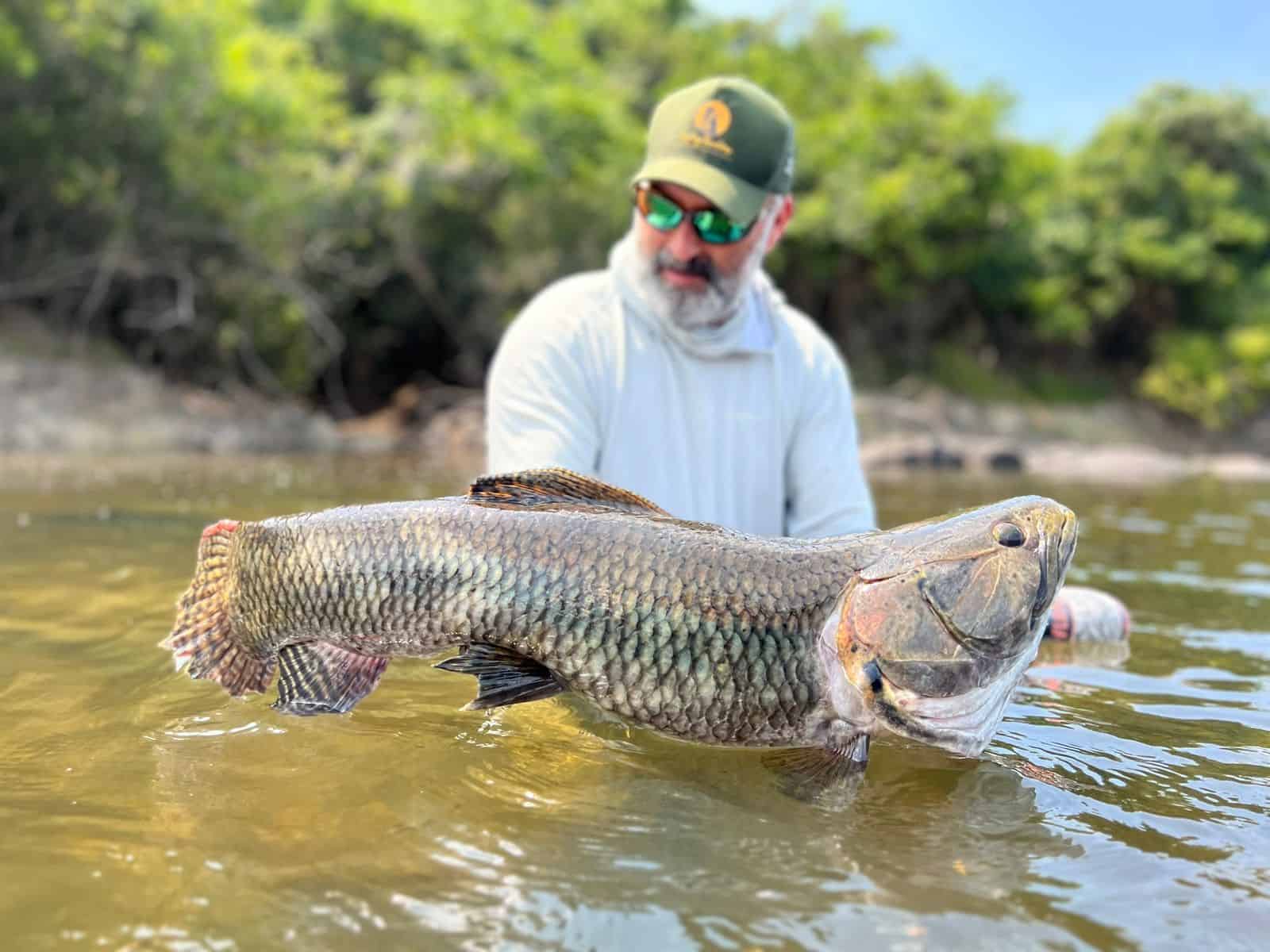
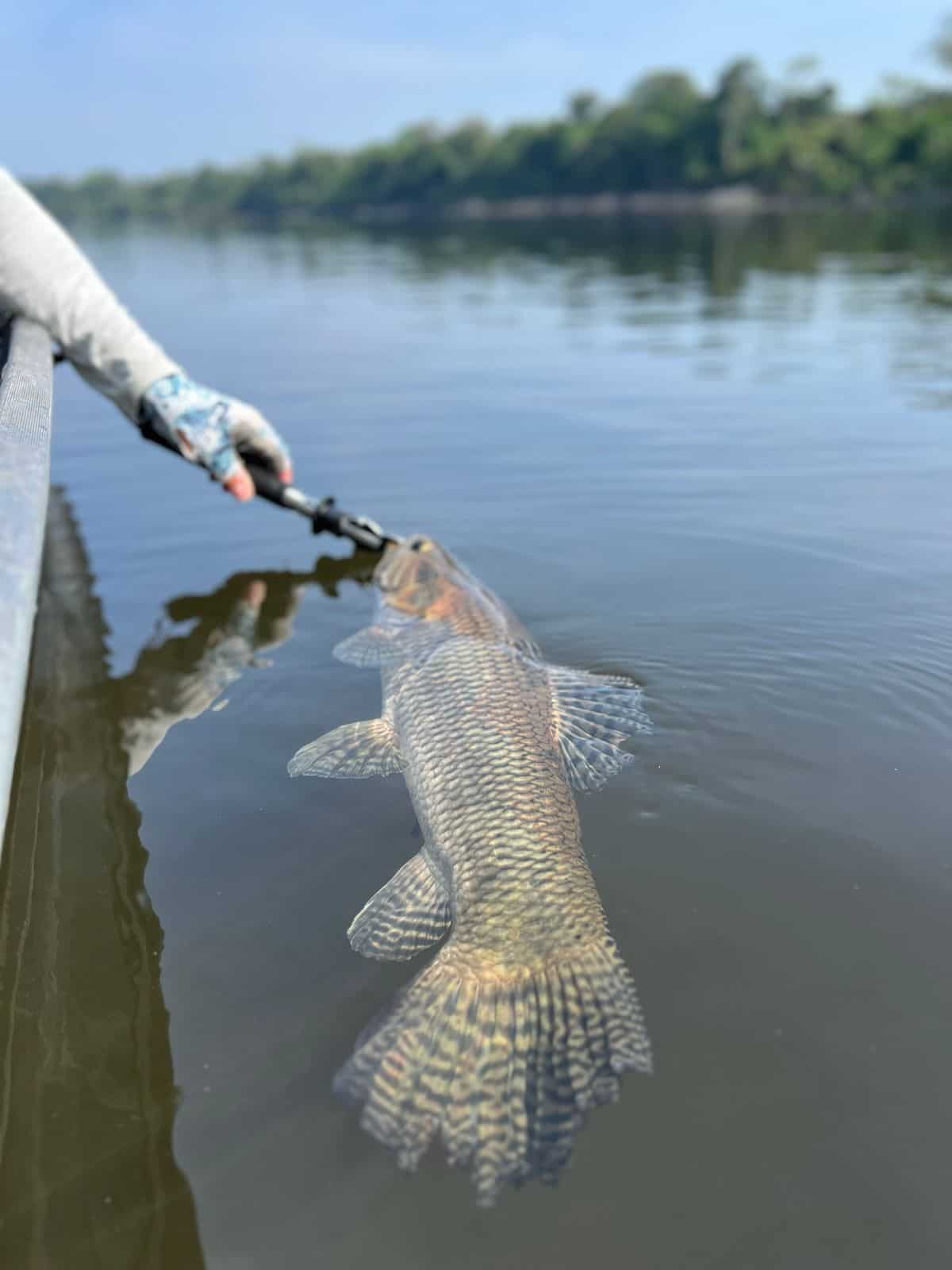
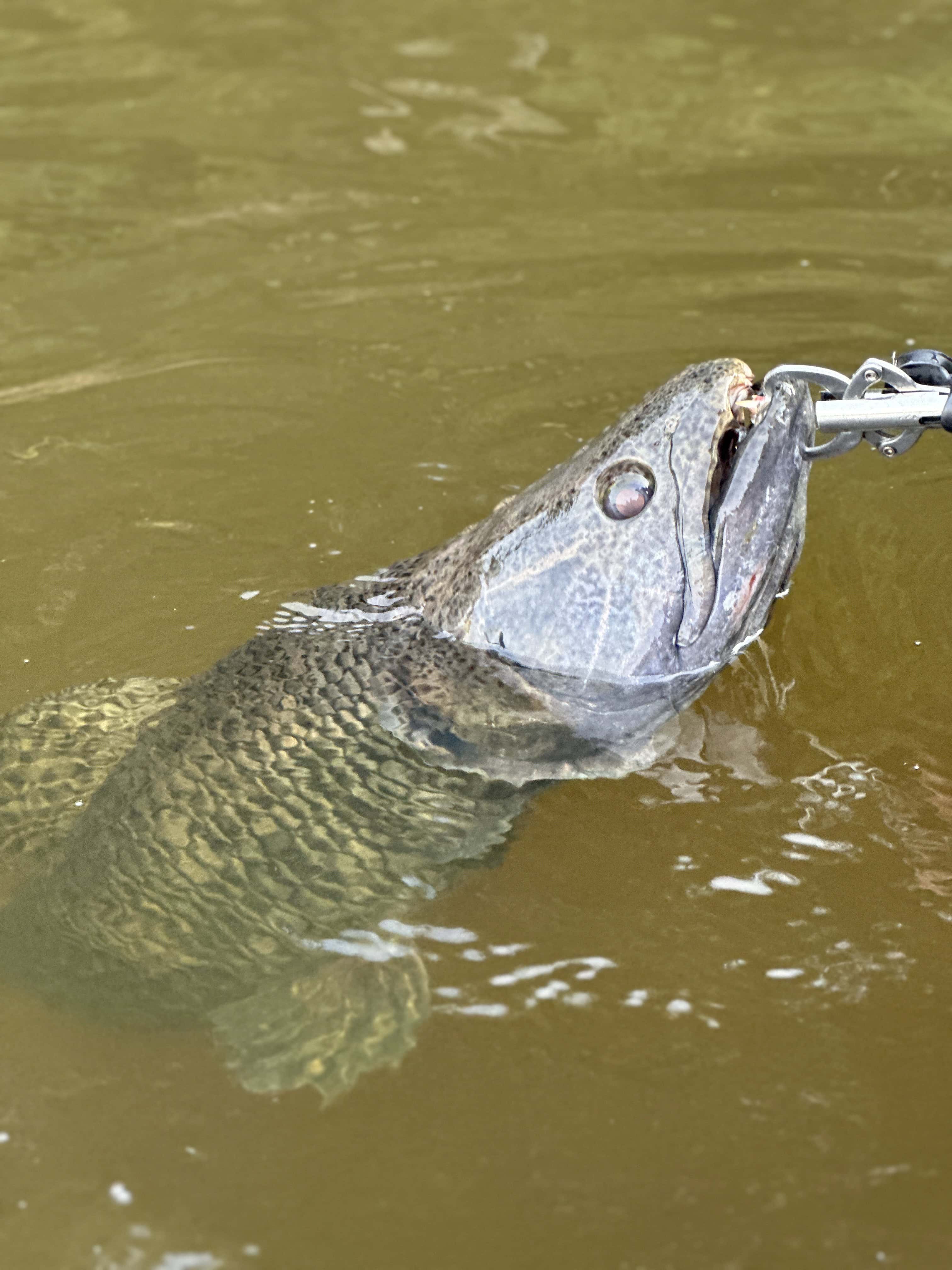
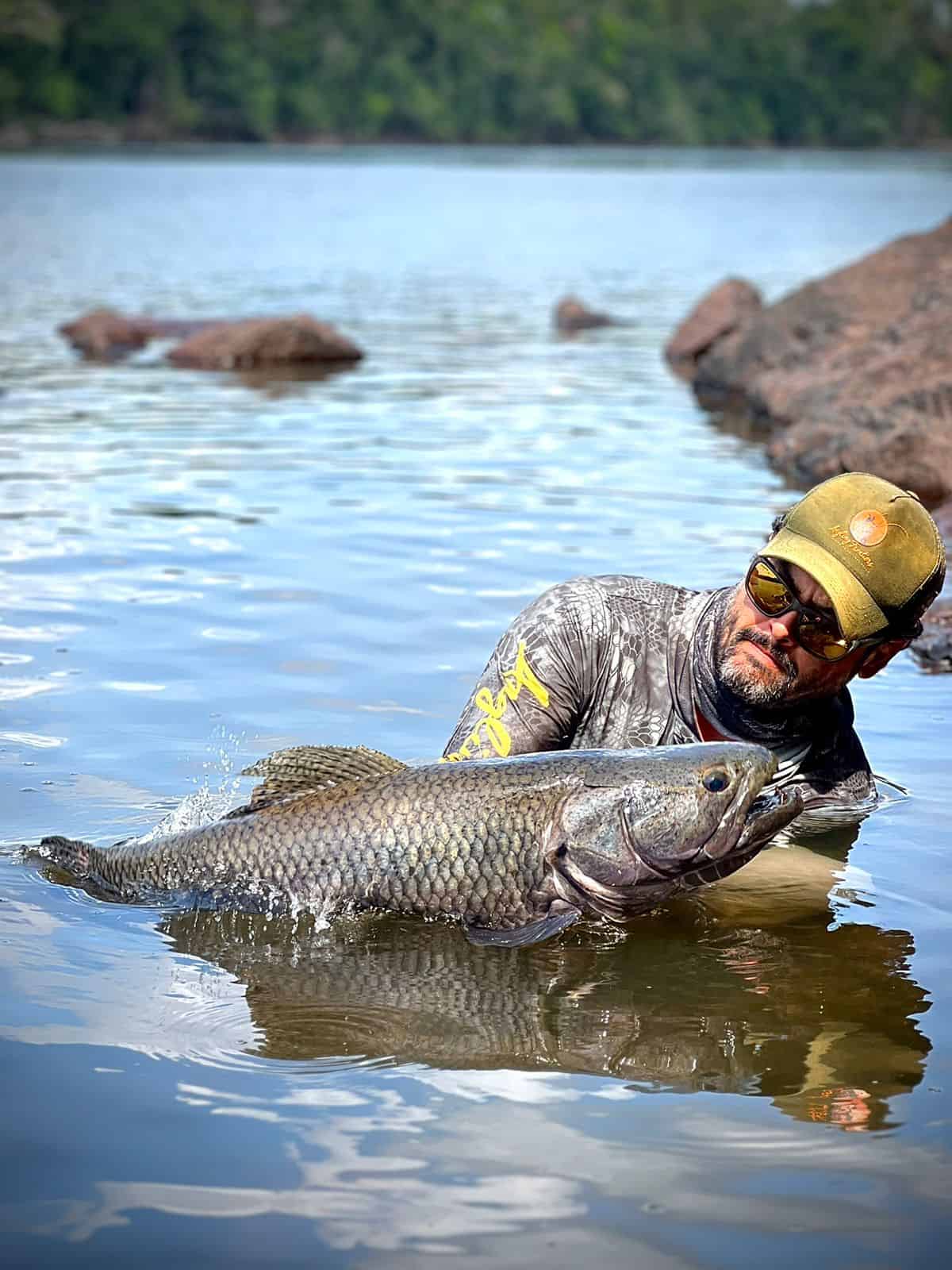
In terms of appearance, the wolf fish has a heavy-set, muscular body, a large head, and a mouth full of teeth that more closely resemble something from a saltwater predator. It’s a fish built for short-range violence, and its shape reflects that. Colors vary slightly between species and environments but usually fall somewhere between dark olive, brown, and grey, with blotchy patterns that help them blend into their surroundings.
Hoplias aimara, locally called the giant trahira or trairão, is the largest of the group, with specimens over 30 inches and 20 pounds not uncommon in remote parts of Guyana, Suriname, and French Guiana. Hoplias malabaricus is the smaller, more widely distributed relative, often found throughout Brazil, Venezuela, Colombia, and Peru. Both species exhibit the same aggressive traits and provide similar angling experiences, albeit on different scales.
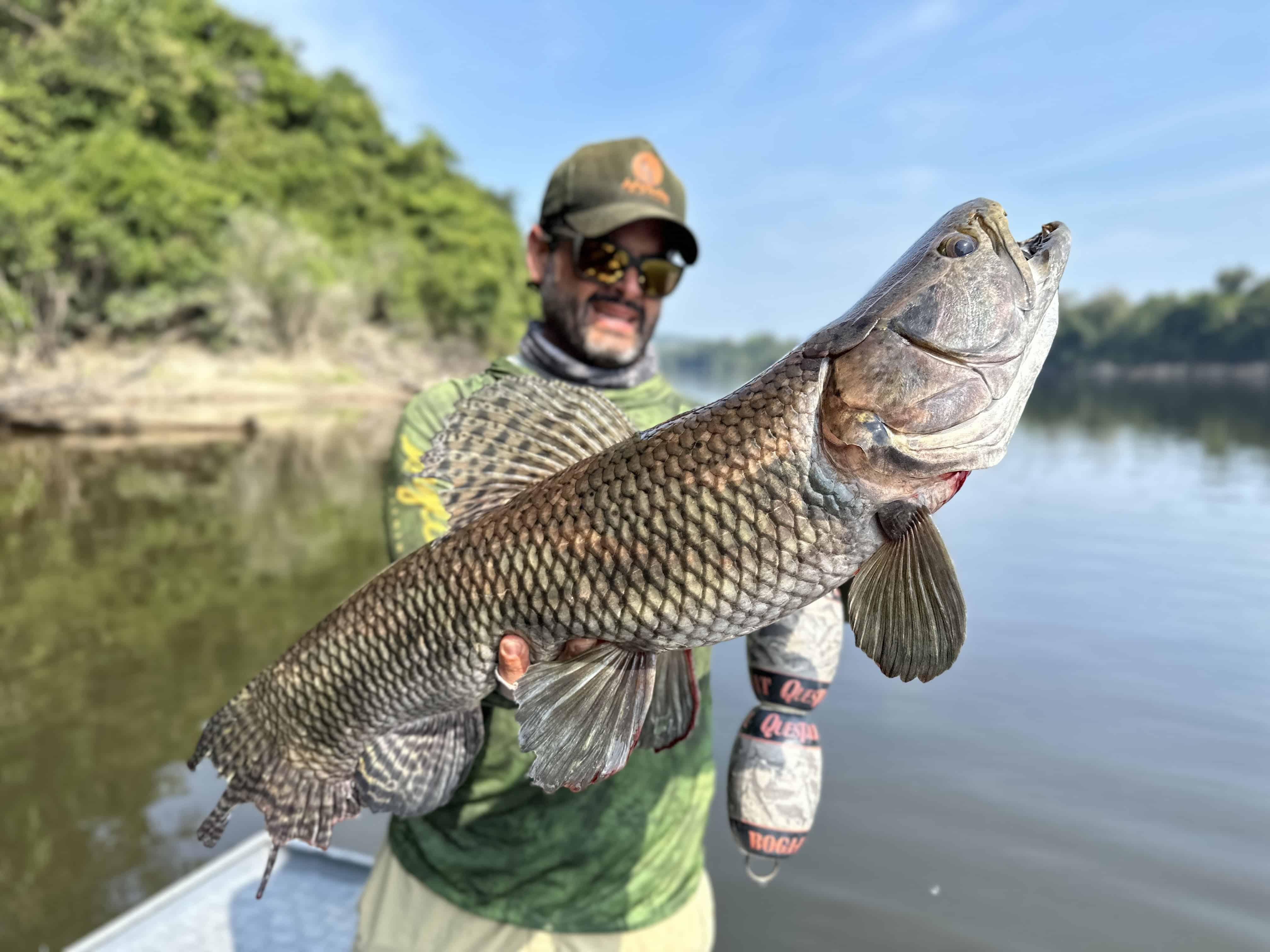
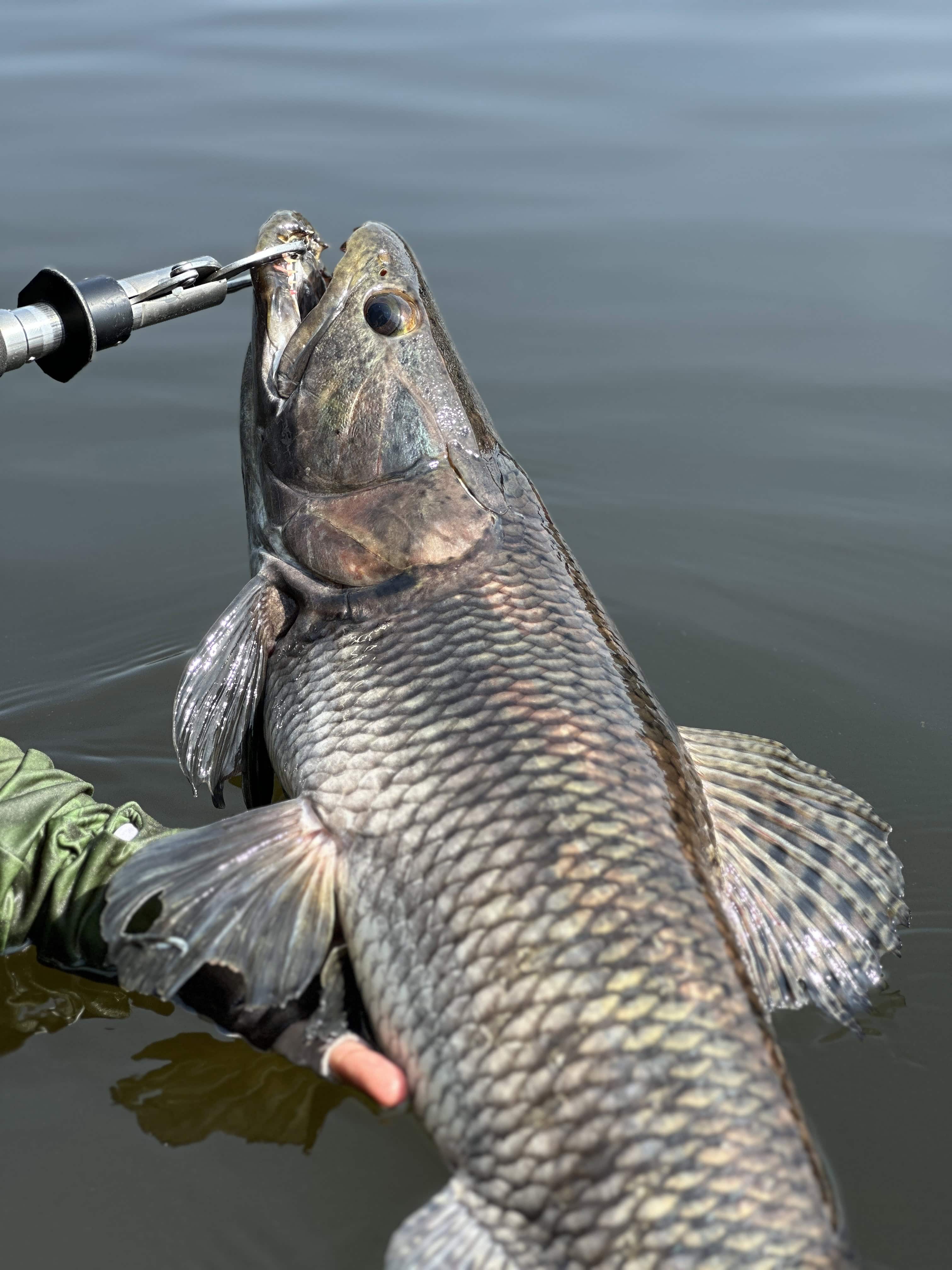

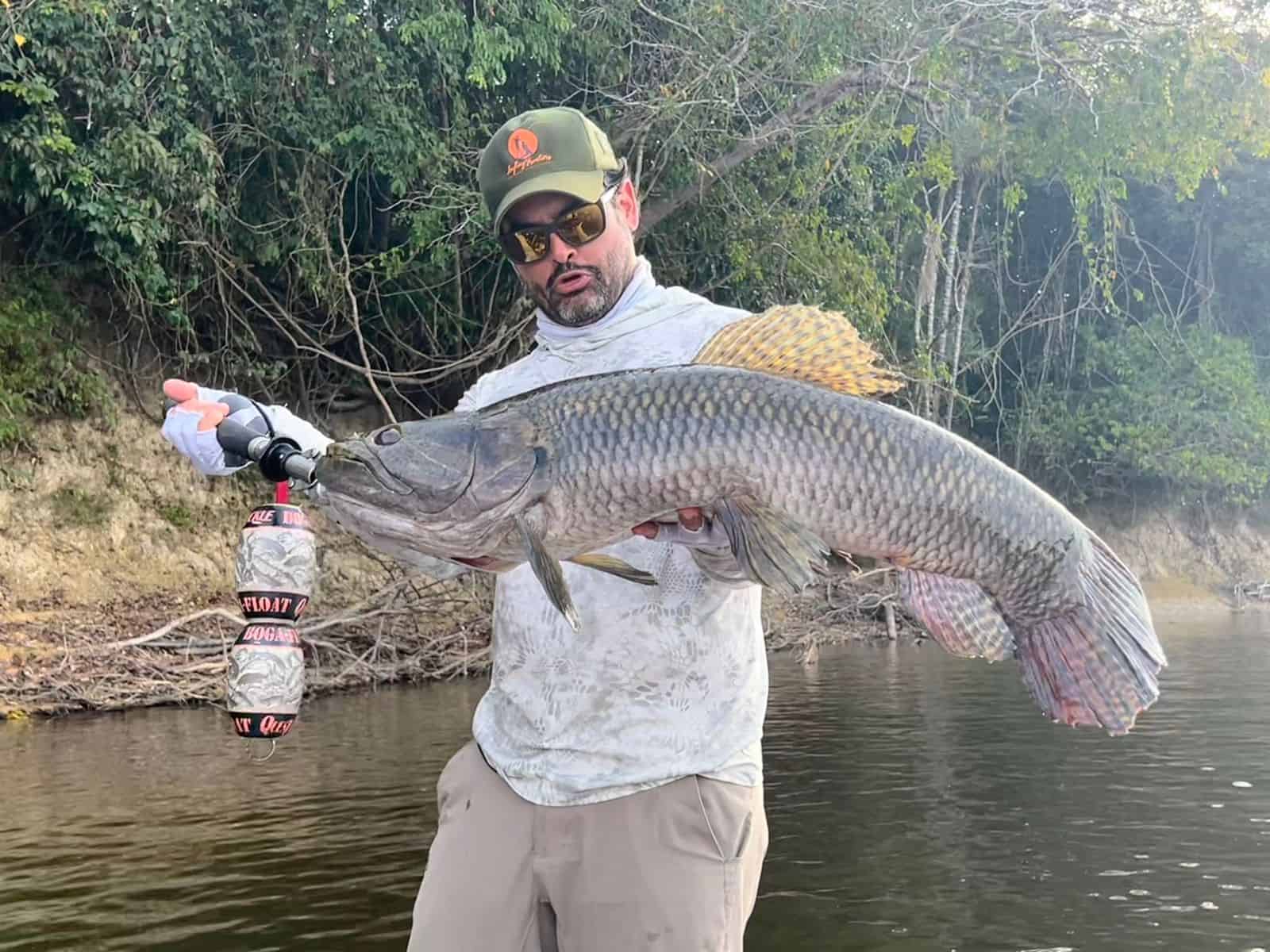
Wherever they’re found, wolf fish tend to occupy similar environments. They prefer slower-moving waters and areas with cover—cut banks, logjams, flooded jungle creeks, or tannin-stained lagoons off the main river channels. Their ambush tactics are simple but effective: lie in wait, explode on anything that moves, and swallow it whole.
The strike is often as memorable as the fight. There’s no finesse. One moment your lure is tracking through water the color of dark tea, and the next, it’s met with a sudden, violent jolt. Hooksets need to be solid—wolf fish have strong jaws and can crush or shake off a poorly placed hook—but once you’re connected, it’s game on. They won’t go airborne like a peacock bass or sprint like a dorado. Instead, they dig deep and fight ugly, using their bulk and brute strength to stay down and outmuscle you at close quarters.
Many anglers encounter wolf fish as a bonus while targeting other species, only to find themselves coming back specifically to pursue them. They’re tough, territorial, and surprisingly common in certain parts of the Amazon and Guianas, especially where fishing pressure is light. In remote regions of Guyana or Suriname, for instance, it’s not unusual to find a stretch of river where wolf fish seem to own every deep hole and submerged root system.
They’re also a great target on foot. In some of the smaller jungle creeks, it’s possible to wade and sight-cast for them, watching as they lurk in the shadows or under vegetation. These settings—tight, technical, and teeming with life—bring out another layer to the challenge. Accuracy matters, as does timing, and once you hook one in these confined spaces, the fight becomes a tug-of-war with the jungle itself.
For all their power and aggression, wolf fish remain relatively under-the-radar among international anglers. Part of that comes down to image—they’re not flashy or photogenic, and their name doesn’t carry the same weight as Amazonian headliners like arapaima or payara. But those who’ve tangled with them know better. They’re dependable predators with serious bite, and they offer the kind of raw, unfiltered fight that keeps you coming back for more.
In a region full of iconic species, wolffish might not be the fish you travel for—but they’re often the one you remember. For anglers looking to go a bit deeper into the region’s species list, to target something less talked about but equally memorable, the wolffish is a natural next step.
Get in touch with us if this fish is on your bucket list.
Frequently Asked Questions:
What species of wolf fish are found in South America?
South America is home to the giant trahira, also known as the South American wolf fish (Hoplias aimara or Hoplias lacerdae depending on region). These fish are fierce ambush predators with powerful jaws and are highly sought after by adventurous anglers.
Where can you fish for wolf fish in South America?
Prime habitats include jungle rivers and lagoons in Guyana, Suriname, French Guiana, and parts of northern Brazil. These remote waterways, often bordered by rainforest, provide the perfect conditions for wolf fish to thrive.
When is the best time of year to fish for wolf fish in South America?
The dry season, typically from September to March depending on the country, is the best time. Lower water levels concentrate the fish and make them easier to locate in lagoons and river pools.
Are wolf fish considered a bucket list catch for traveling anglers?
Yes. The combination of their raw power, vicious strikes, and exotic rainforest settings makes them a true trophy for adventurous anglers. Many compare them to peacock bass for aggression, but wolffish have a more prehistoric look and an even nastier bite.