
Bucket List Species: Lake Trout
Lake Trout: Apex Predator of Northern Lakes
Few freshwater fish capture the imagination like the lake trout. Native to the cold, deep waters of North America, these giants of the char family are built for power and longevity, living decades and growing to jaw-dropping sizes. Picture yourself boarding a floatplane bound for Canada’s wild North, casting in the vast waters of Great Slave Lake under the midnight sun, or drilling a hole through thick ice as the northern lights dance overhead. These trophy char thrive in some of the most remote and spectacular landscapes in North America, making every lake trout trip as much an adventure into the wilderness as it is a chance to battle one of freshwater’s ultimate giants.
Lake trout are the largest members of the char genus Salvelinus in the salmon family Salmonidae. Adults often exceed 3–4 feet long, and can reach lengths of 50+ inches. These cold-water fish are native to deep, oxygen-rich lakes of northern North America – from Alaska across Canada to the Labrador Peninsula, southward through the Great Lakes and into northern New England. In fact, lake trout are the only major sport fish fully adapted to the coldest, deepest oligotrophic lakes in northern Canada and the Great Lakes region .
Size and Record Catches
Lake trout are capable of truly trophy size. Most weigh under 10–20 pounds, but exceptional specimens weigh up to 40 pounds in good fisheries, and the largest authenticated trout have tipped the scales at over 100 pounds. The current IGFA all-tackle world record is a 72 lb (32.65 kg) lake trout caught by Lloyd Bull on Great Bear Lake, NWT, in 1995. Larger lakers (up to ~102 lbs) have been taken in gill nets in Canada and Alaska. These dimensions make lake trout the largest char in the world – and a very worthy trophy on the wall.
Native Range and Distribution
Lake trout were originally endemic to northern North America. They range from interior Alaska eastward across Canada to Labrador, and southward through Canada’s Great Lakes basin, the upper Mississippi watershed (northern Minnesota/Wisconsin), and parts of New England. In these cold, glacial lakes and river systems they thrive in deep, well-oxygenated water. Historically the upper Great Lakes (especially Superior) harbored the greatest abundance – at times yielding 10–15 million pounds of commercial catch annually. However, by the mid-20th century overfishing and invasive sea lamprey decimated lake trout stocks in Lakes Huron and Michigan (and greatly reduced them in Superior). Conservation efforts and lamprey control have since allowed some recovery in the Great Lakes, but lake trout populations remain lower than historic highs.
In cold regions, lakers often move into shallower weedy bays in spring and fall when feeding, but spend summer in deep (>100 ft) cold water.
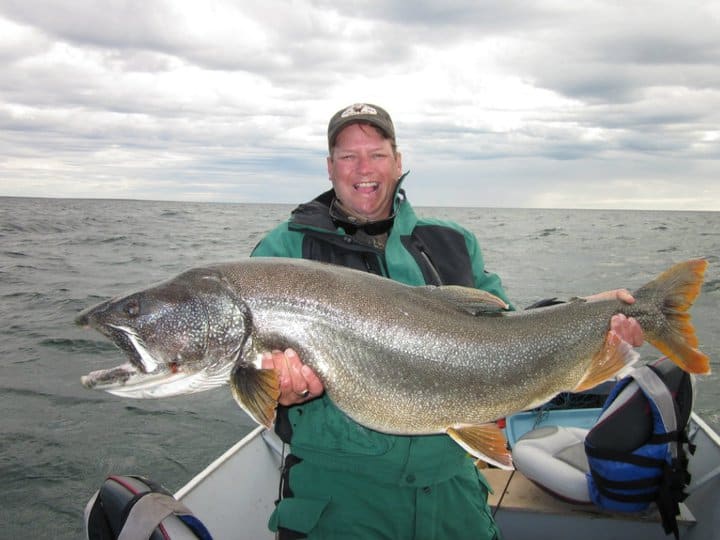
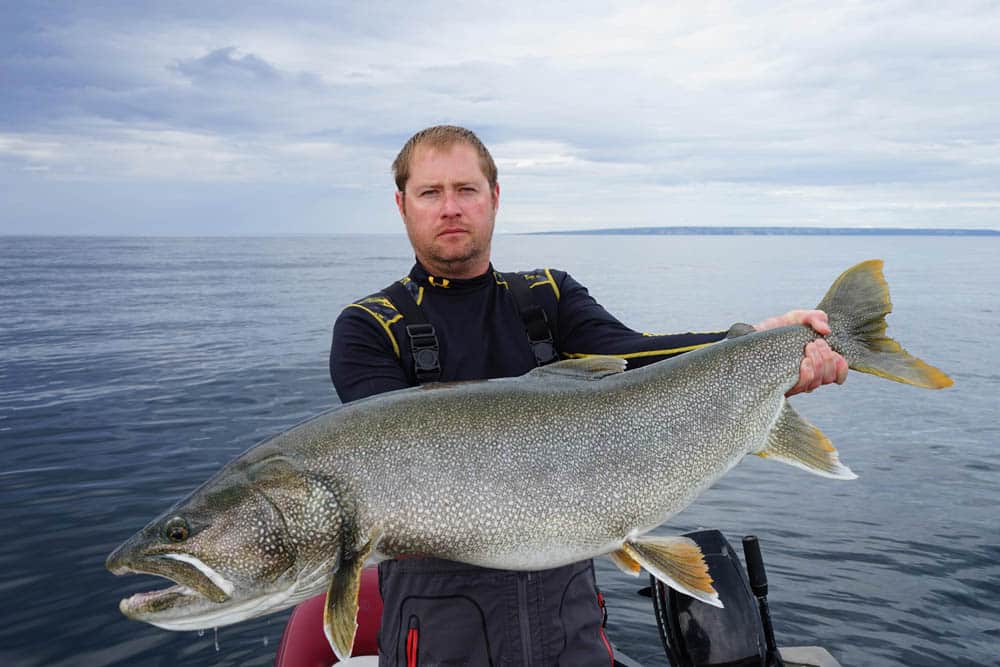
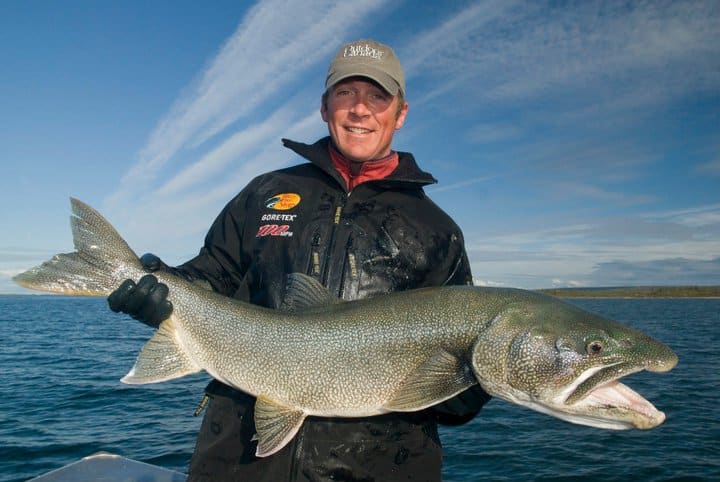


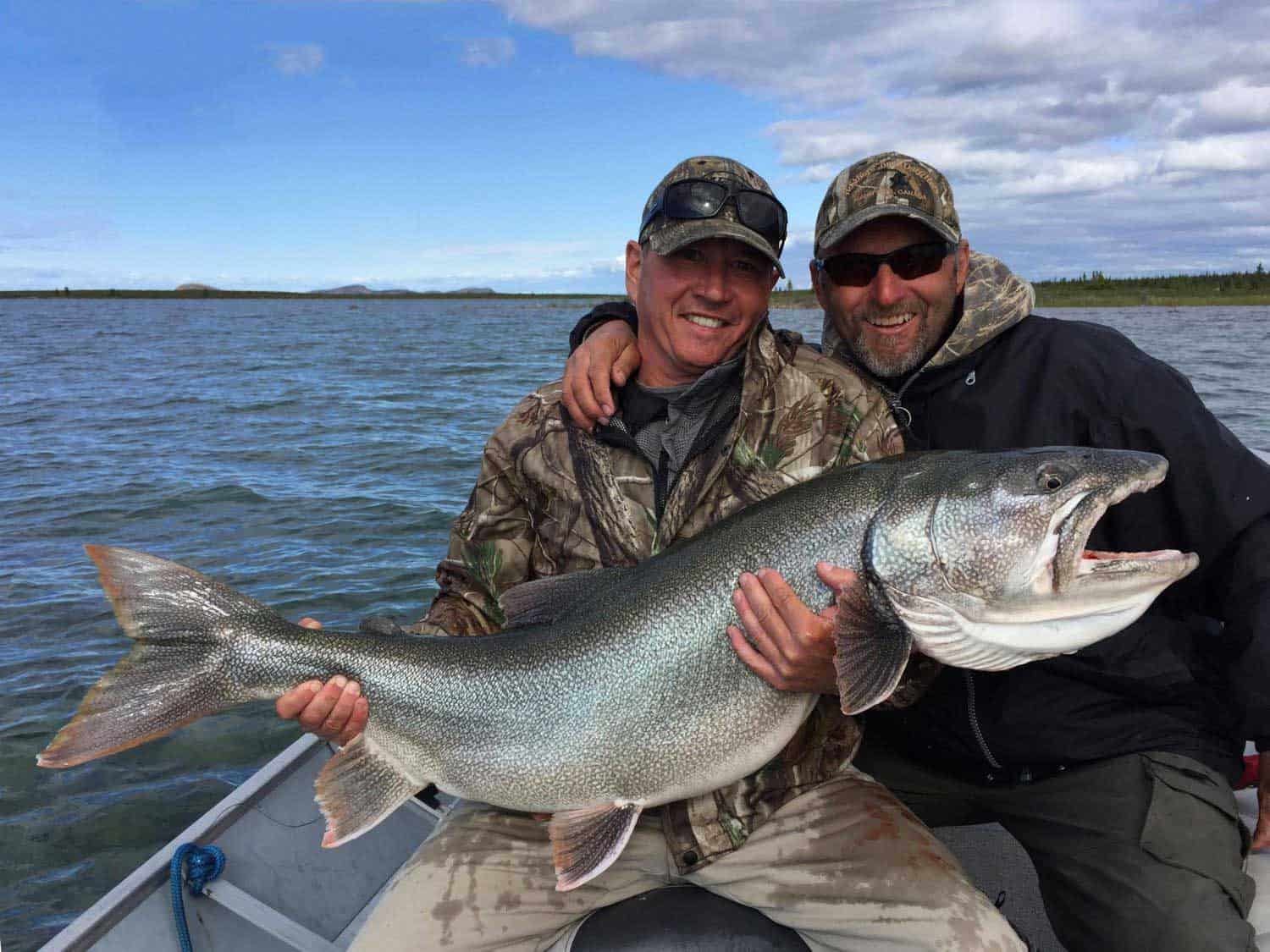
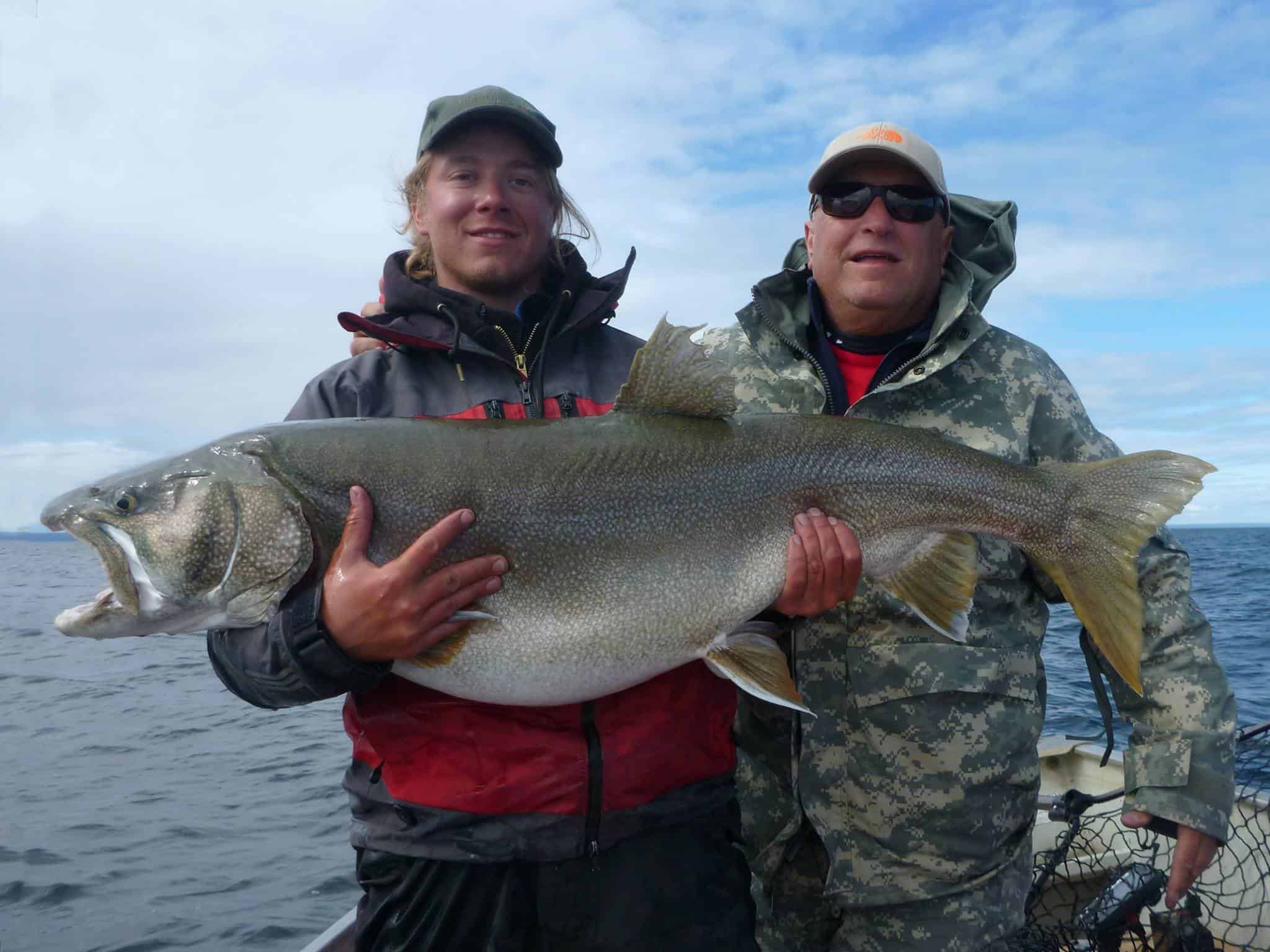

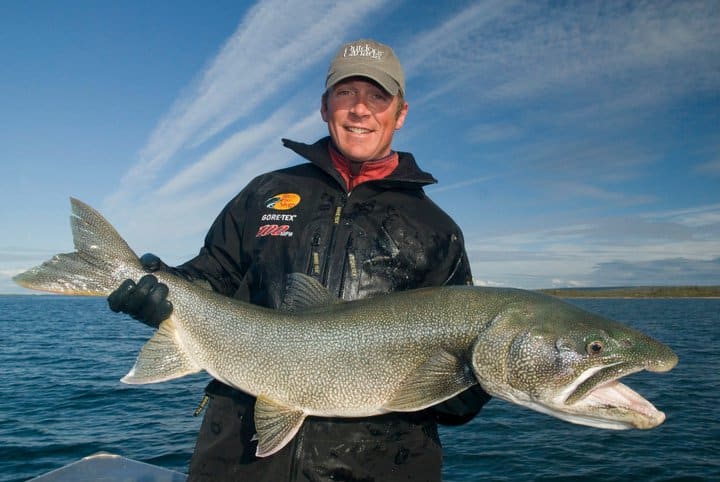
Best Places to Catch Lake Trout
The most famous destinations tend to be the deepest, coldest lakes. Notable bucket-list fisheries include:
Great Bear Lake, NWT (Canada): The world-record laker was hooked here, and Great Bear Lake has produced nearly half of all official trophy catches. In fact, Great Bear is credited with 19 of the 35 existing IGFA world-record lake trout listings. It is extremely remote (fly-in access only), but travelers who reach its rugged 31,000 sq mi waters will have shots at true trophy giant lakers. Thinking of a trip to Great Bear Lake? Check out our Trophy Lake Trout Package.
Great Slave Lake, NWT (Canada): One of the longest-running lodges is Plummer’s Great Slave Lake Lodge at Taltheilei Narrows. Anglers here routinely land trophy lakers, some up to 50–60 lb. Great Slave is relatively accessible (charter flights from Yellowknife) and famous for monster trout and northern pike in a stunning Arctic setting.
Lake Athabasca, AB/SK (Canada): This huge lake (9th largest in North America) has deep, remote waters that produce record fish. In fact, Lake Athabasca is home to what may be the largest lake trout ever recorded – a 102 lb giant taken here. Its clear, cold shallows and reefs are a famed fall fly-fishing venue for lake trout. Learn more about Lake Athabasca.
Lake Superior (Great Lakes, US/Canada): The cold, deep waters of Superior support abundant lake trout year-round. The famed siscowet variety lives at 300–600 ft depths and grows extremely large. While no world-record fish have been rod-caught here recently, Superior’s Ontario and Minnesota shores offer excellent trolling for 20–30 lb lakers.
Other great lake trout fisheries include the waters of northern Ontario (e.g. Lake Nipigon and Eagle-Wabigoon chain), Yukon and Alaska interior lakes, and high Canadian Arctic lakes accessible by floatplane. In short, the best places to catch lake trout tend to be large, cold, clear waters: the bigger and deeper the lake, the better the chance of finding its trophy trout.
Why Lake Trout Belong on Your Bucket List
For traveling anglers, lake trout combine big fish and big adventure. From trolling the endless waters of Great Slave Lake to watching the sunrise over Lake Athabasca, these trips take you deep into pristine northern wilderness where trophy lakers thrive.
Known for their power and size, lake trout are a true test of skill on any tackle. Add in remote lodges, floatplane journeys, and some of the most scenic fishing backdrops in North America, and you have an experience that deserves a place on every angler’s list.
Send us a message and start planning your lake trout adventure today.
Frequently Asked Questions:
How big do lake trout get?
Lake trout regularly reach 10 to 20 pounds, but trophies over 40 pounds are caught in the right waters. The IGFA all-tackle world record is a 72-pound giant landed on Great Bear Lake in Canada.
Where are lake trout found?
They are native to the cold, deep lakes of North America, from Alaska across Canada to the Great Lakes and northern New England. The best trophy fisheries are in Canada’s far north, especially Great Bear, Great Slave, and Lake Athabasca.
What is the best time of year to fish for lake trout?
Spring and fall bring lake trout into shallower water, making them easier to target. In summer they move deep, often 100–300 feet down, and are best fished with downriggers or jigging. Ice fishing in late winter and early spring is also productive.
Why are lake trout a bucket list species?
They are the largest char in the world, living in wild, remote northern lakes that offer both trophy fish and incredible scenery. Catching a big lake trout means combining world-class fishing with an unforgettable adventure into pristine wilderness.