
Bucket List Species
Goliath Tigerfish
World Record
Distribution
Congo River Basin, Central Africa
Season
June to August
Techniques
Conventional tackle, Spinning, Fly fishing
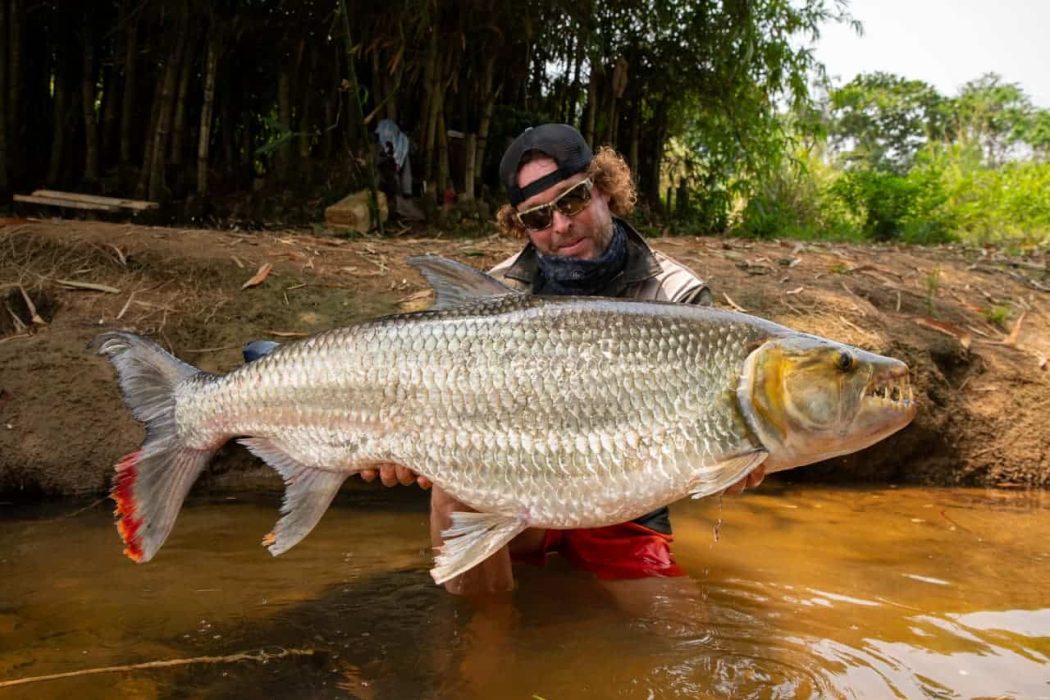
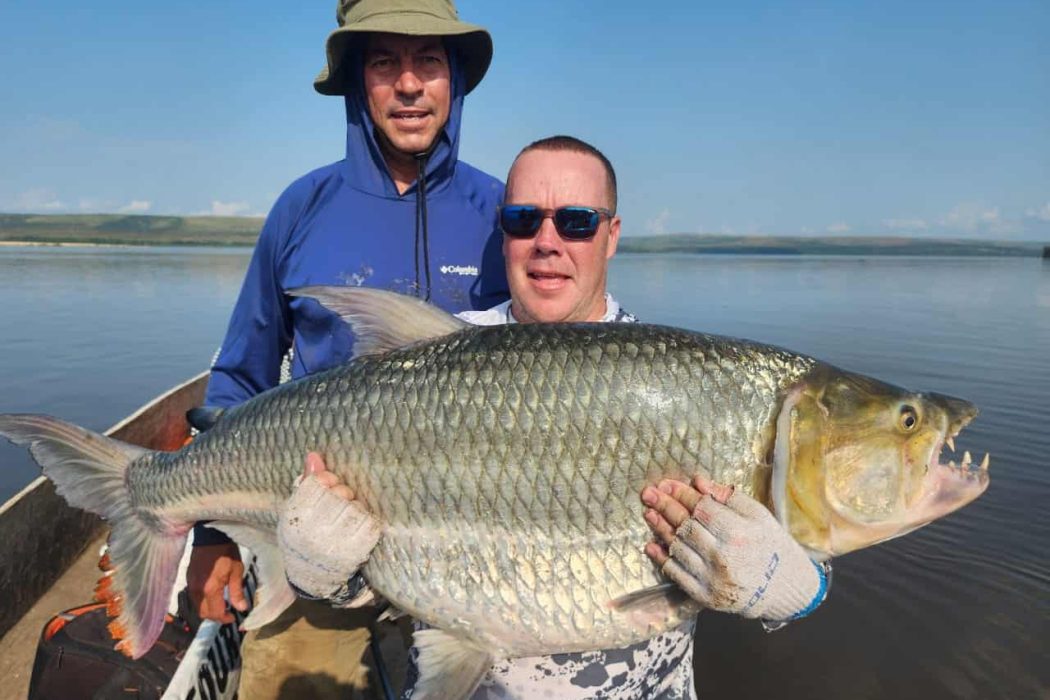
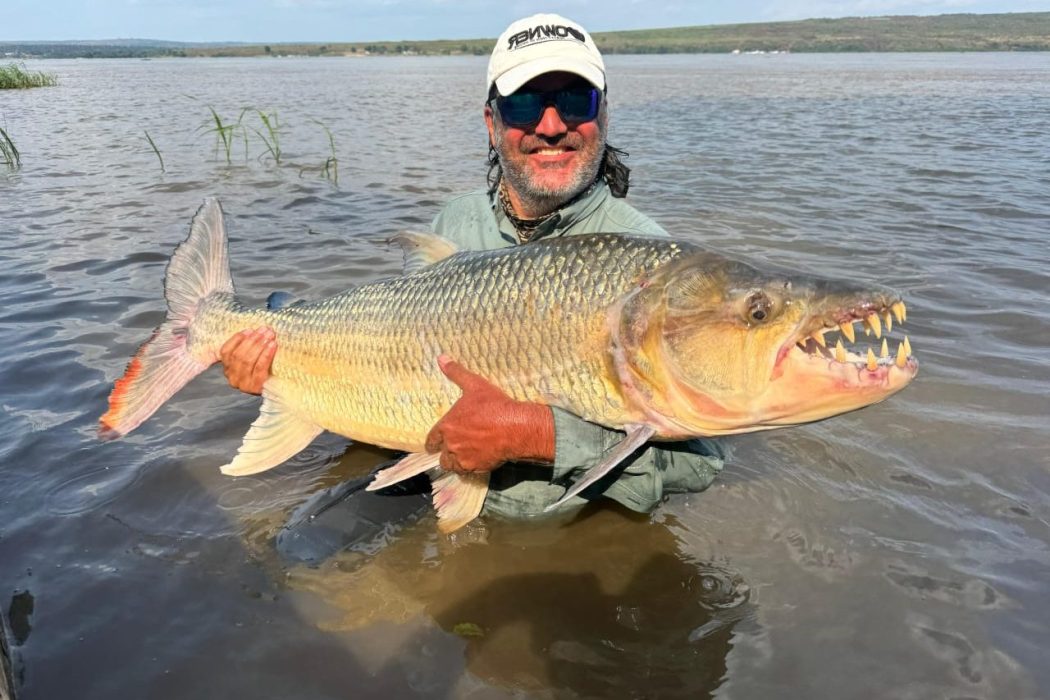
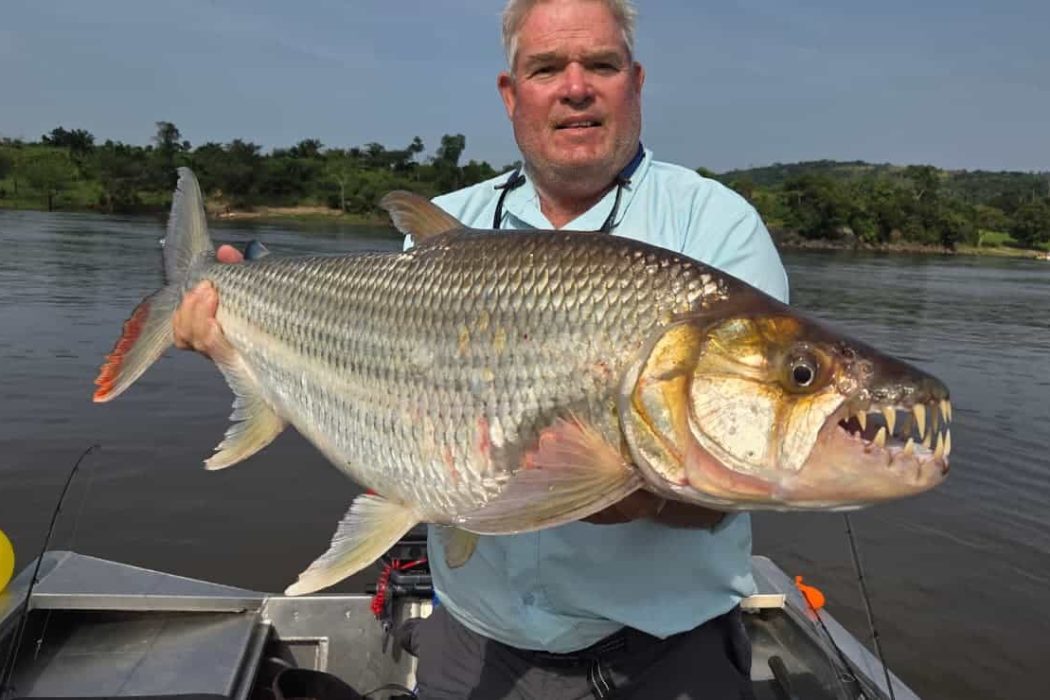
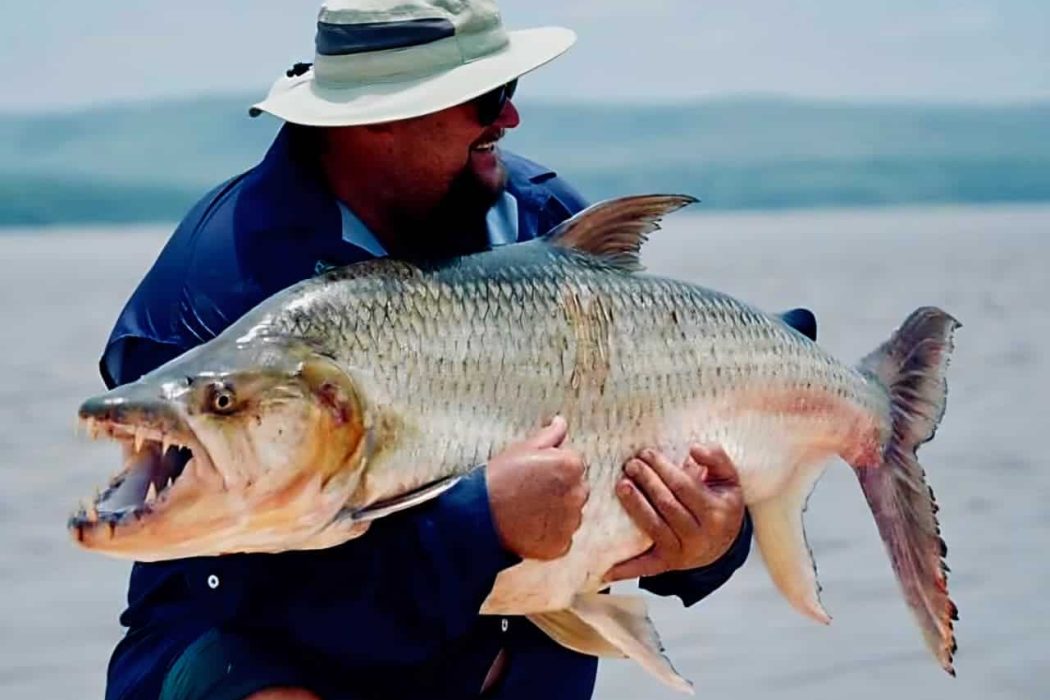
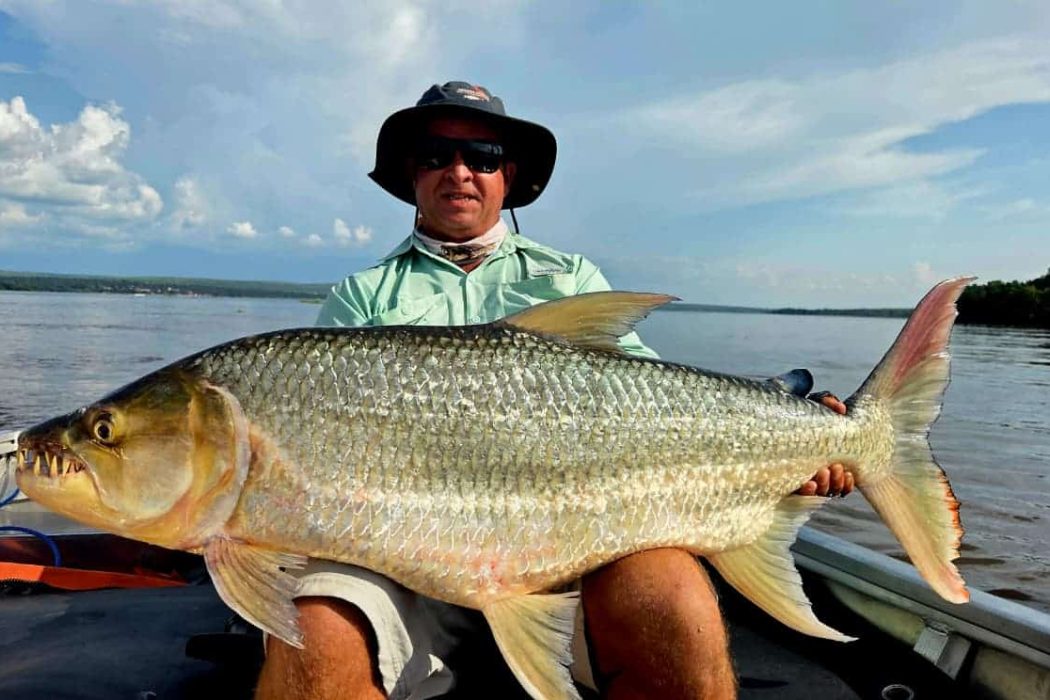
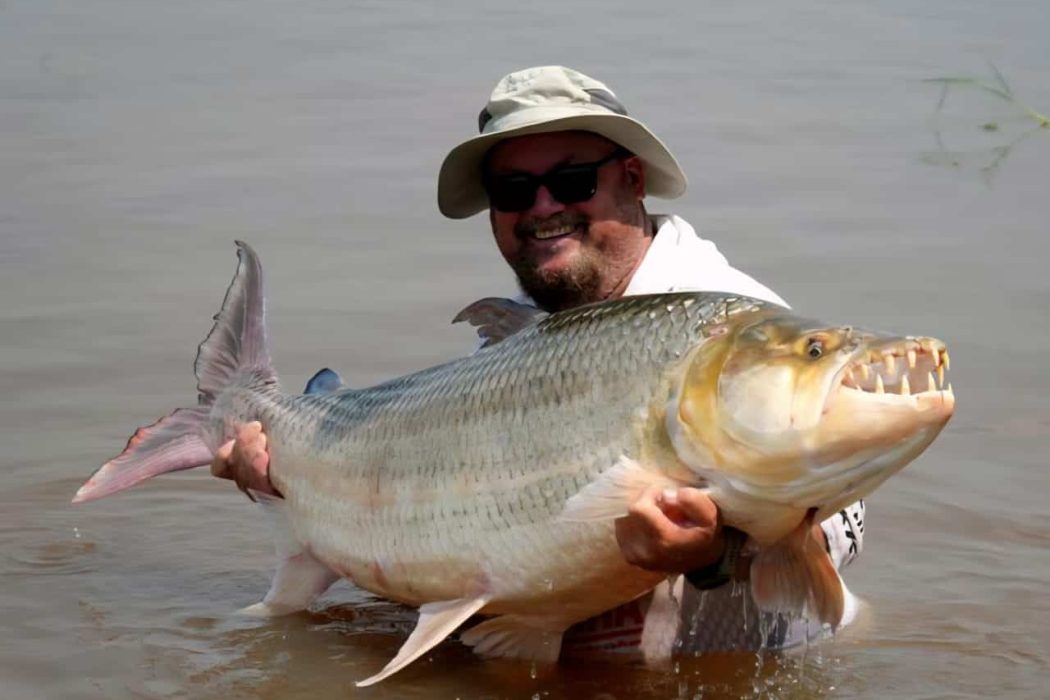
Goliath Tigerfish (Hydrocynus goliath)
Species Overview
Goliath tigerfish (Hydrocynus goliath) are the largest and most intimidating members of Africa’s tigerfish family. They have a long, heavily built silver body, a powerful forked tail, dark markings along the flanks and fins that often carry shades of orange or red. What sets them apart immediately is the head. The jaws are oversized, the mouth is broad, and each tooth is long, sharply pointed and clearly visible even when the fish is handled carefully. Every part of the fish looks built for speed, force and feeding on other fish.
This is not the same species as the more widely distributed African tigerfish, Hydrocynus vittatus, of the Zambezi and Okavango systems. Goliath tigerfish are a true Congo Basin predator and a much larger fish. They are found mainly in the Congo River system and its major tributaries, including parts of the Democratic Republic of the Congo, the Republic of the Congo and the Central African Republic. Within that range, they are most closely associated with the vast, powerful waters of the Congo itself and some of the remote rivers that feed it.
Habitat & Distribution
The scale of that environment is a major part of the species’ identity. The Congo Basin is one of the largest and wildest freshwater systems on earth, made up of huge main river channels, deep pools, rapids, flooded forest, rocky runs and side channels that can change dramatically with rainfall and seasonal flow. Goliath tigerfish are shaped by that water. They are not a fish of small streams or calm lakes. They belong to big current, deep channels and places where the river carries both food and power.
They are most often associated with heavy, oxygen-rich water. Current seams, rocky bottlenecks, submerged ledges, deep holes below rapids and the slower edges beside powerful flow are all classic holding areas. These are places where baitfish are forced into predictable lanes and where a large predator can use the energy of the river to its advantage. In some sections of the Congo, goliath tigerfish may also move through quieter side channels and backwaters, but the species is best known for occupying the more forceful parts of the system.
Size & Feeding Habits
Like all tigerfish, they are dedicated fish eaters. Their diet consists mainly of other fish, and they are fully built for that role. The teeth are designed for gripping and cutting, while the body shape allows fast acceleration through current. A goliath does not need to chase prey for long distances. It can hold in the flow, pick its moment and attack with a short burst of speed. The strike is fast, direct and violent, often followed by an immediate turn back into the current.
There is a reason the species has earned such a fearsome reputation. Stories about goliath tigerfish often focus on the teeth, but the real story is the combination of size and power. A fish of 20 or 30 pounds is already a serious freshwater predator. Fish over 50 pounds are exceptional, and the largest known specimens can exceed 100 pounds. At that size, they are among the most formidable freshwater gamefish in Africa. They are also one of the few species that genuinely look as savage as the stories suggest.
That size comes from more than just genetics. Goliath tigerfish live in a system with enormous biomass, strong current and room to grow. They are apex predators within one of the world’s most complex freshwater environments, and they carry the proportions to match. The head becomes broader, the shoulders deepen and the tail remains powerful enough to control the whole fish in heavy flow. Even out of the water, a big one has a presence that is difficult to overstate.
Goliath Tigerfish Fishing
The fight is one of the main reasons anglers travel so far for them. Goliath tigerfish hit hard, run fast and use the current better than most freshwater fish. They can change direction suddenly, jump when conditions allow and shake violently once hooked. Their mouths are hard, their teeth are formidable and plenty of fish are lost during the first few seconds. Even when everything goes right, a hooked goliath rarely feels under control for long.
Goliath tigerfish are not simply larger tigerfish. They are fish shaped by one of the greatest river systems on earth, built for speed, current and close-range violence. The silver body, the red fins and the oversized teeth give them the appearance, but it is the Congo that gives them their character. In a continent full of iconic freshwater species, the goliath tigerfish still manages to stand apart.