
Bucket List Species: Golden Dorado
Golden Dorado: South America's River Tiger
There’s a certain pull to golden dorado that sets in long before you ever hook one. Maybe it’s the stories you hear from other anglers, or the unmistakable look of the fish itself – bold, muscular, and shining like polished metal. Whatever the reason, if you enjoy fishing for hard-hitting, aggressive predators in moving water, the dorado quickly earns its place near the top of your list.
Golden dorado (Salminus brasiliensis) are native to South America and mostly found in river systems across Argentina, Bolivia, Paraguay, Uruguay, and parts of southern Brazil. They’re not actually related to the saltwater dorado (also known as mahi-mahi), despite sharing the name and some color. These fish are more closely related to salmon and trout, though their behavior leans far more toward ambush predator than migratory cruiser.
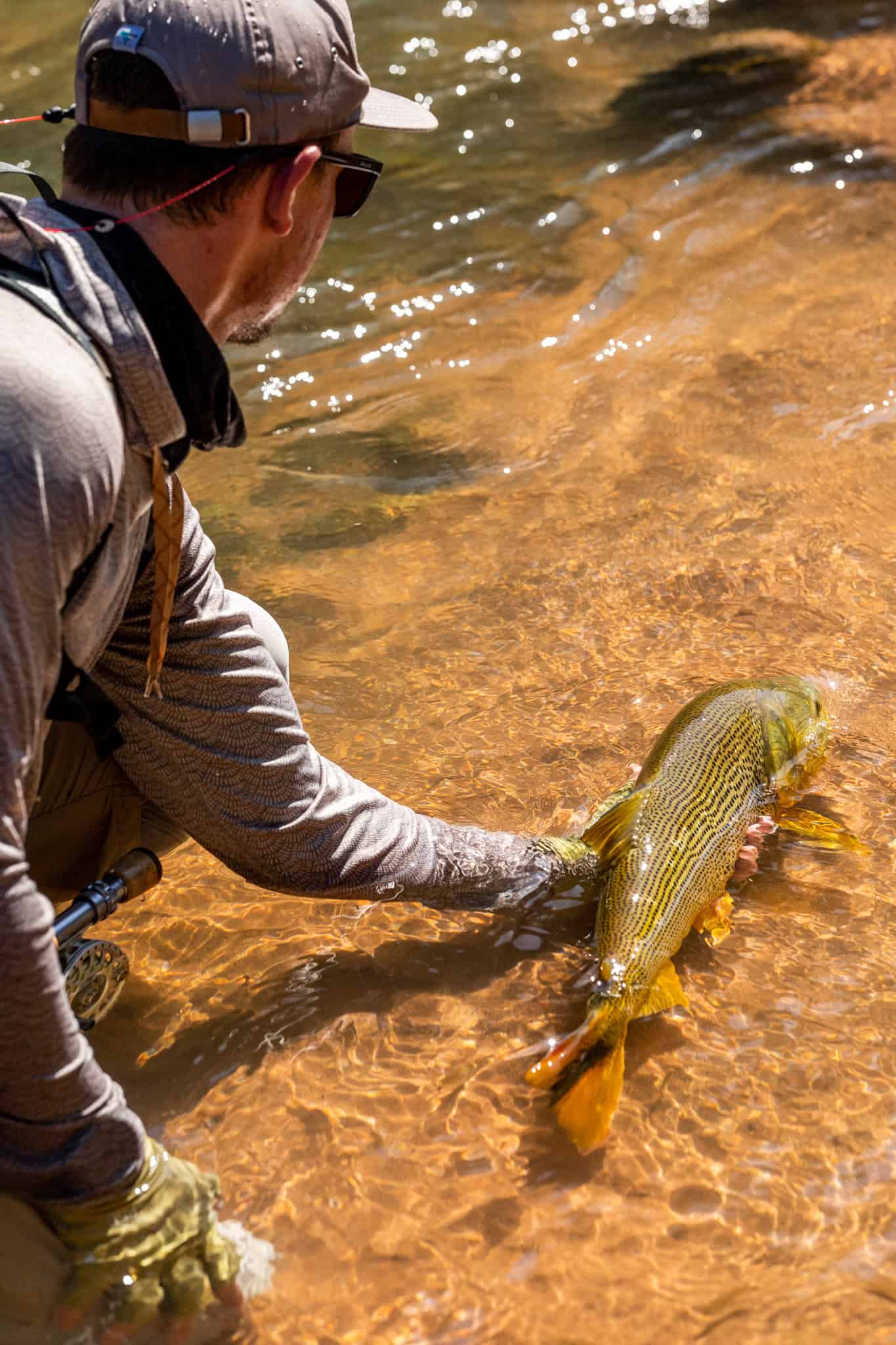
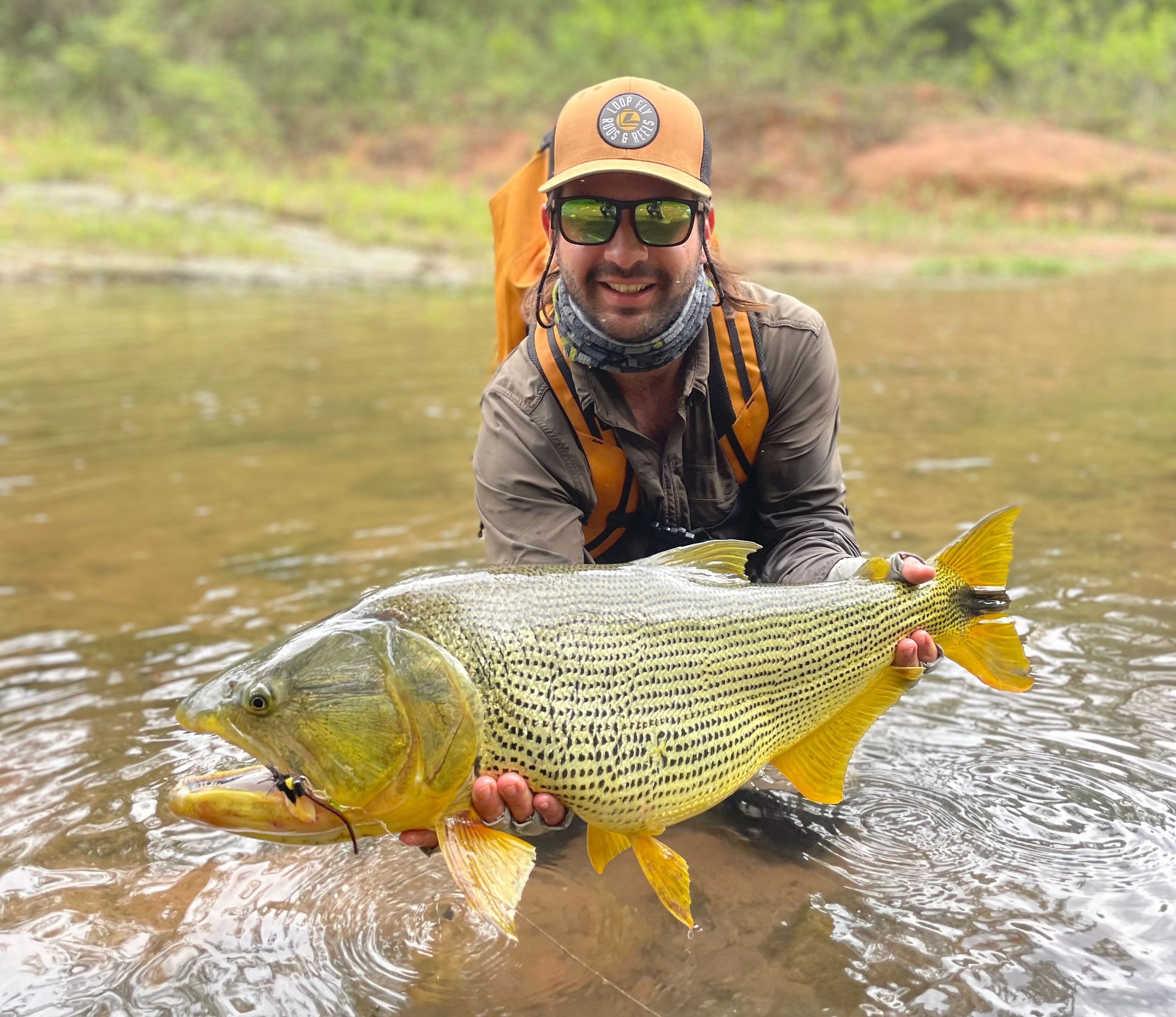
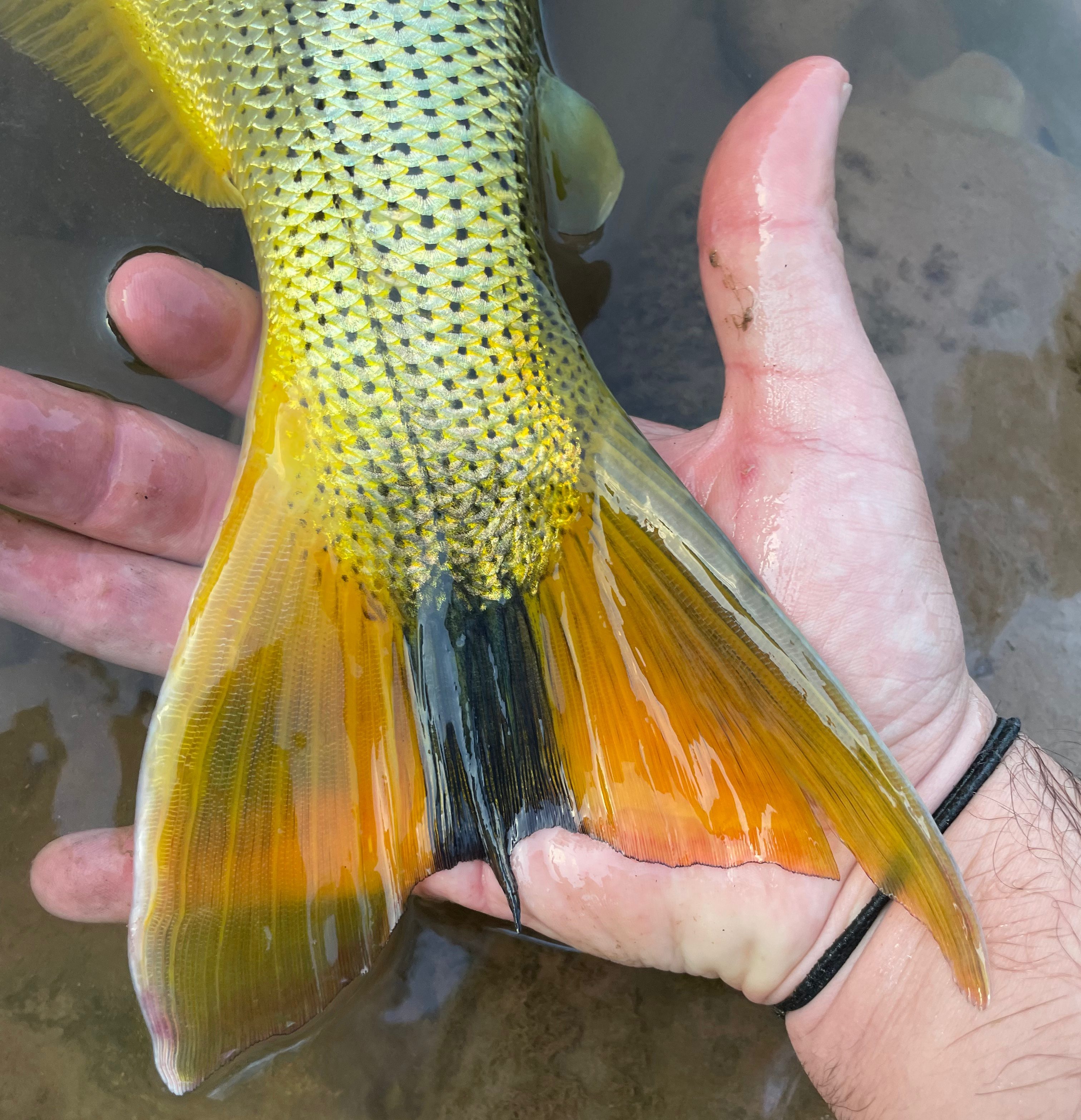
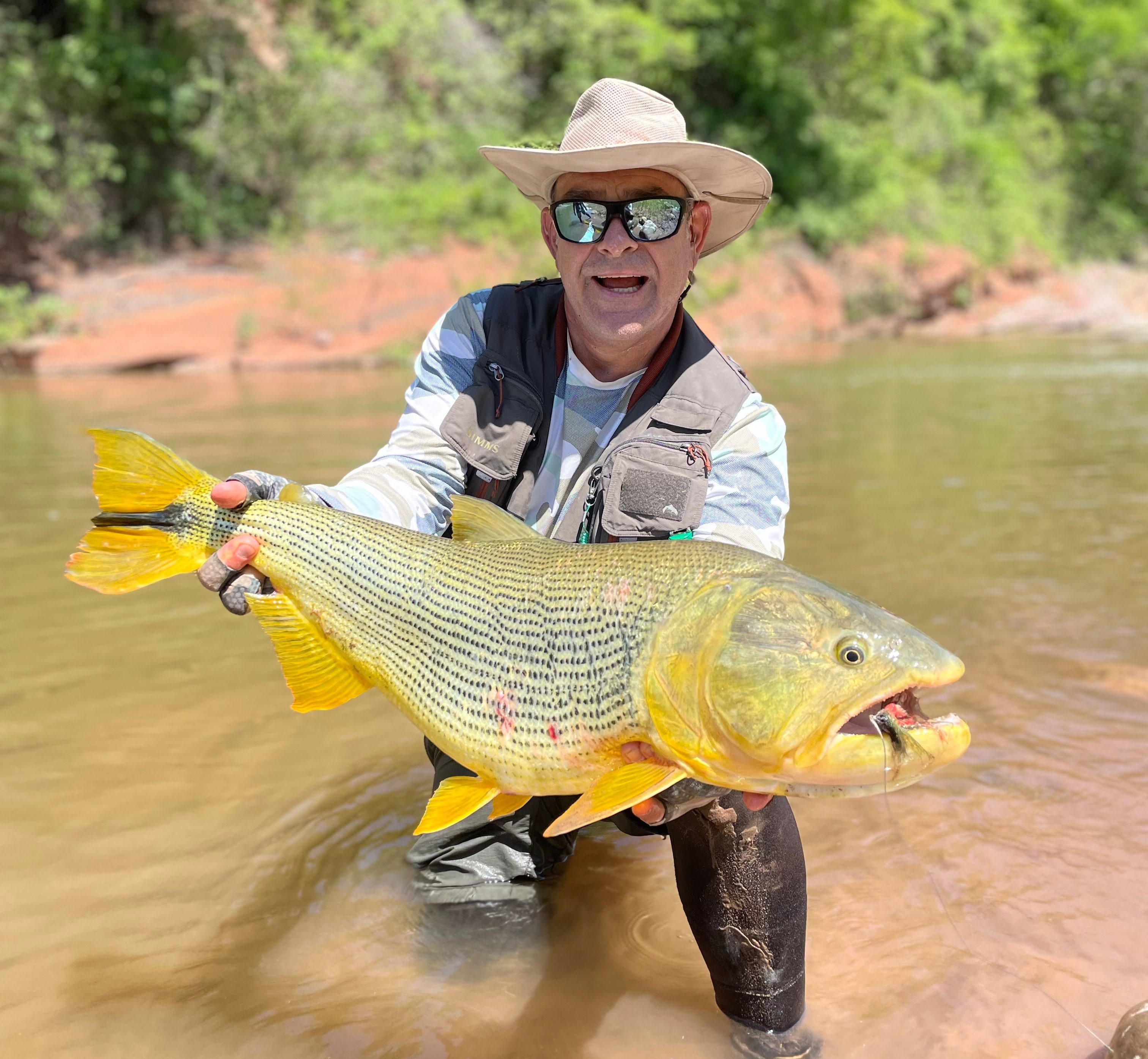
At first glance, the dorado looks like something dreamt up by an artist with a love for metallics and muscle. A deep golden body, iridescent in sunlight, with black speckles along the flanks. The fins are often tinged with orange or red, and the jaws, especially the lower, are pronounced, strong, and filled with teeth that make short work of baitfish. It’s a fish that doesn’t hide its intentions.
Fishing for them is all about reading the river. You’ll typically find them in big systems like the Paraná, Pilcomayo, and upper tributaries of the Amazon basin. In Bolivia, they haunt jungle waters that are clear and fast, often holding near structure like boulders, submerged logs, or the seam of fast and slow water. In Argentina, places like the Iberá Marshlands, the upper Paraná and Corriente offer a mix of backwater creeks and bigger flows, each with their own style of fishing.
You can target dorado with fly or conventional gear. On fly, an 8- or 9-weight rod with a wire leader is standard. These fish will shred a leader otherwise. Poppers and streamers both work, though streamers tend to produce more consistently. Dorado love a moving bait. Strip fast, pause, strip again. When they commit, it’s aggressive. There’s no nibbling or tentative taps. The hit often feels like a truck slamming into your line, followed by aerial acrobatics and a long battle to keep them from diving into structure.
For spin/bait-cast anglers, medium-heavy to heavy gear with a fast action rod works well. Think jerkbaits, spoons, or even topwater lures like walk-the-dog stickbaits and poppers. Again, wire leaders are non-negotiable. These aren’t fish you finesse. They’re built to kill, and they don’t mess around. When they eat, it’s sudden, explosive, and personal.
Size-wise, dorado commonly range between 5 and 15 pounds, but in the right waters, you can find fish pushing 20 or 30. Every now and then, someone lands a true trophy north of 40 pounds, though that’s rare and usually requires remote jungle fishing and a bit of luck. What makes dorado memorable, though, isn’t just their size. It’s their fight. They’re fast, strong, and clever. They’ll run downstream with the current, leap like a tarpon, and turn in a heartbeat. You’re not just reeling them in. You’re negotiating.
What I love most about targeting dorado is that it feels wild. Even in more developed fisheries, you’re never far from wildlife. Capybaras line the banks, howler monkeys call from the trees, and caiman lurk in the shadows. In places like Bolivia, it’s full jungle. You’re hiking in, living out of a tent or a thatch-roof camp, fishing rivers that see more tapirs than anglers.
They also have a mystique to them. Locals often call them “river tigers” or “el tigre del río,” and it fits. Not just for their power, but for their confidence. A golden dorado owns its water. You don’t catch one by chance. You have to earn it. You have to understand current, structure, movement, and timing. It’s technical fishing with just the right amount of chaos thrown in.
So if you’re the kind of angler who enjoys throwing meat at toothy, aggressive fish in dynamic water, dorado might be your next obsession. It’s not delicate fishing. It’s fast-paced, visceral, and at times frustrating. But when it comes together, when the fly lands just right, the strip is perfect, and the gold missile explodes from the undercut bank, it’s as good as it gets. You’ll remember that fish. Probably forever.


Thinking about a Golden Dorado expedition? Get in touch below and let us craft your dream trip.