
Bucket List Species
Dogtooth Tuna
World Record
130 kg (286 lb 9 oz)
Tanzania
Distribution
Tropical Indo-Pacific: East Africa, Indian Ocean islands, Southeast Asia, Australia, Pacific Islands
Season
Year-round, best in stable offshore weather windows by region
Techniques
Jigging, Trolling, Popping
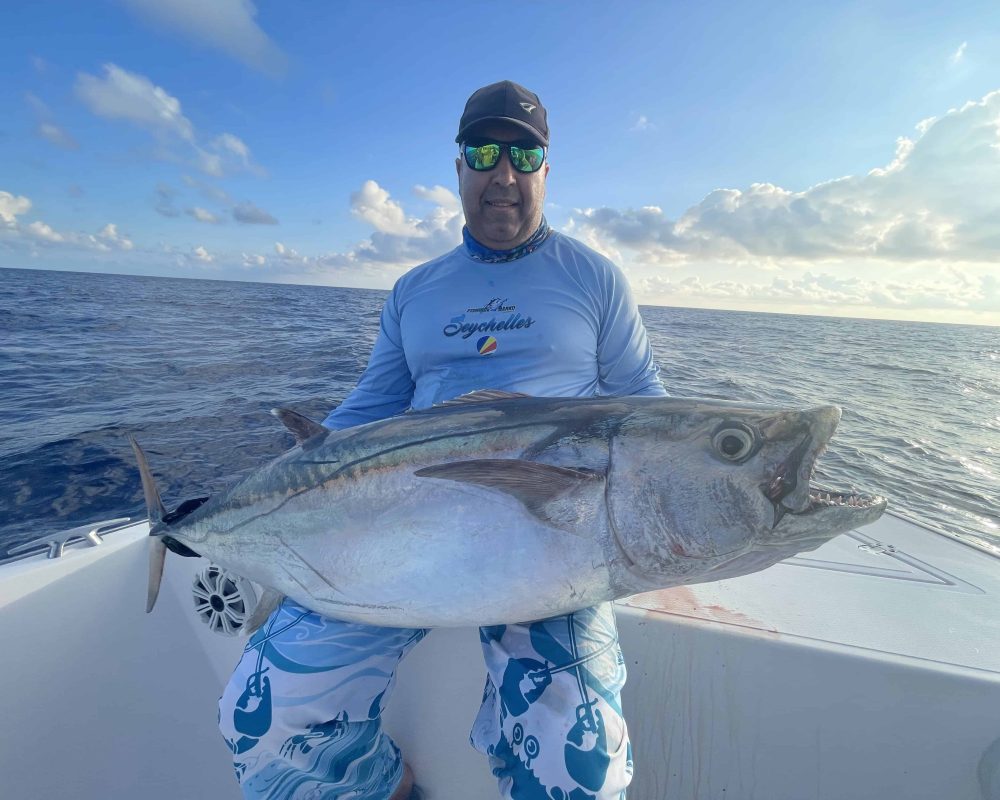
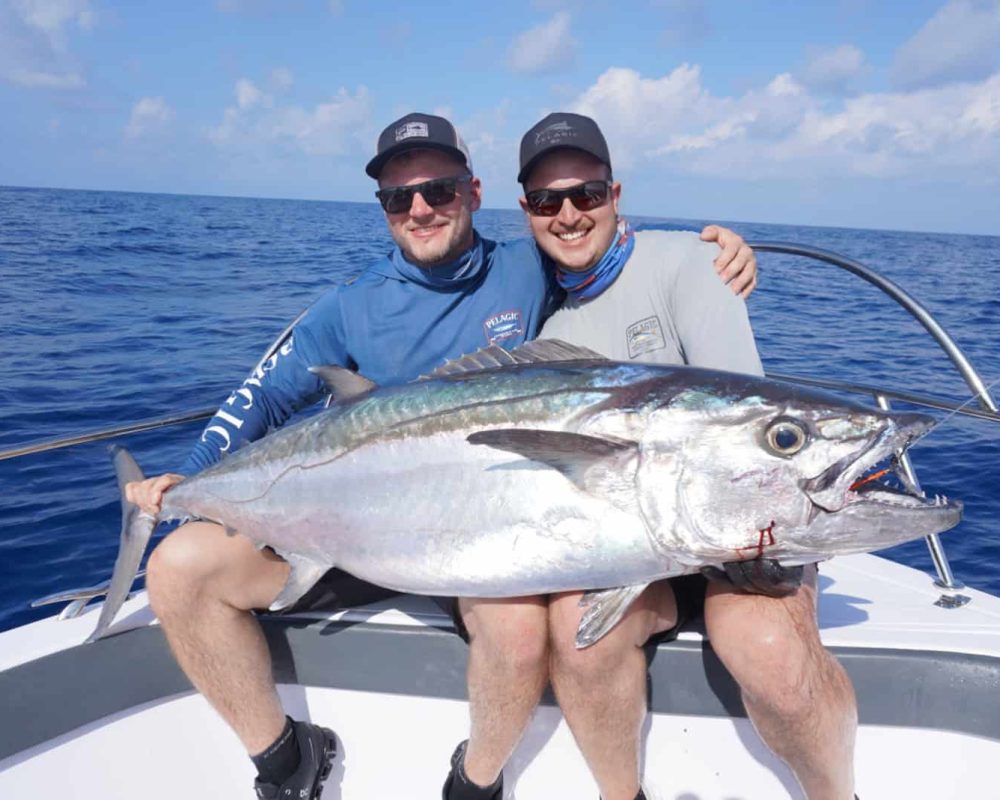


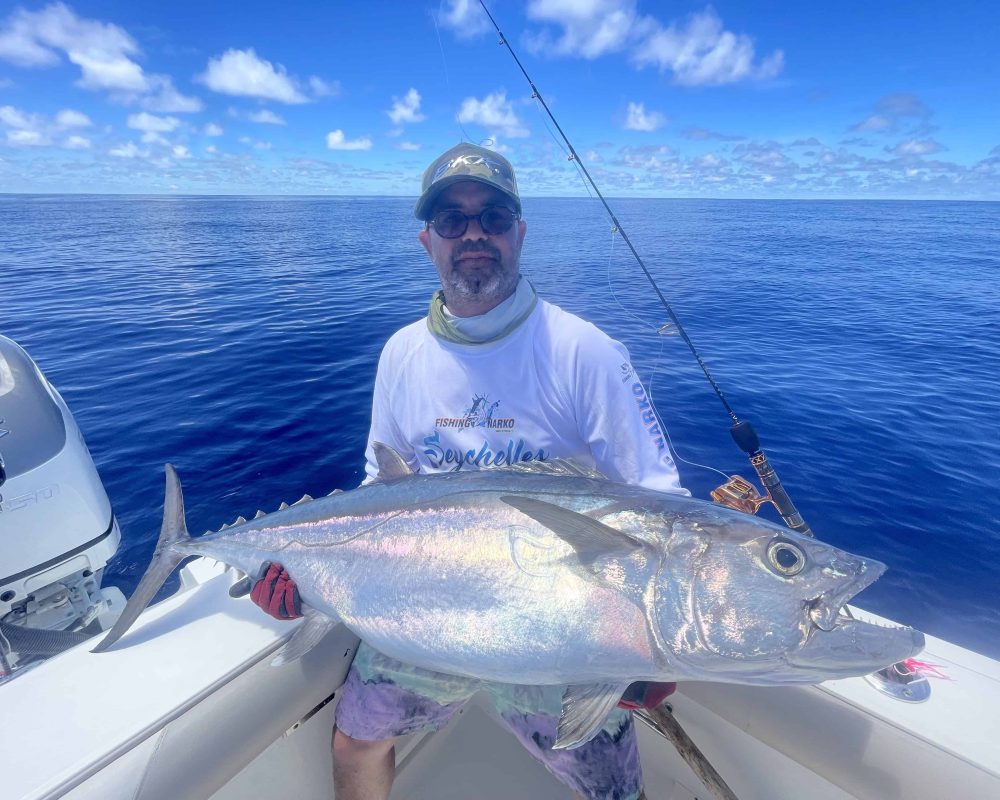
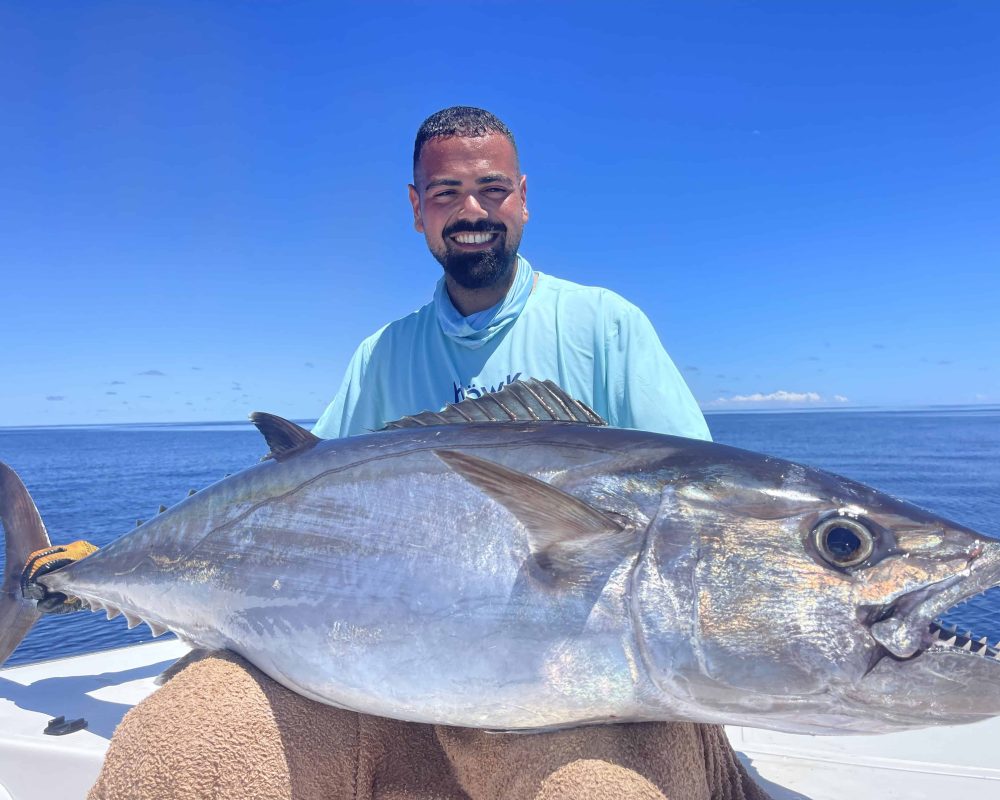
Dogtooth tuna (Gymnosarda unicolor)
Species Overview
Few fish have built the kind of reputation that the dogtooth tuna has among serious offshore anglers. Found along steep reef edges and deep ocean drop-offs throughout the Indo-Pacific, it is not a fish of open water chaos like the classic tunas, but one that lives tight to structure where the margin for error is minimal. Hooking a dogtooth is rarely the challenge. Stopping it is. The first seconds after the strike are what define the outcome, as these fish instinctively drive straight back toward reef, using depth, structure, and sheer power to their advantage. It is this combination of environment and aggression that has made the dogtooth one of the most respected targets in modern big game fishing.
Despite the name, the dogtooth tuna is not a true tuna in the traditional sense, but a distinct species, Gymnosarda unicolor, more closely related to the bonitos within the mackerel family. It is built for short, brutal bursts of speed rather than long-distance pelagic cruising, with a heavy, muscular frame and its defining feature, a set of large, conical teeth designed for hunting sizeable prey. Distributed widely across the tropical Indo-Pacific, from East Africa and the Seychelles through to Indonesia, Papua New Guinea, and the Pacific islands, dogtooth are most commonly associated with reef drop-offs, seamounts, and underwater pinnacles where deep water rises sharply to meet structure. Larger fish in particular tend to hold deeper along these edges, often beyond 50 metres, making them a highly specialised and technical target that sits at the intersection of big game and heavy tackle reef fishing.
Why dogtooth tuna make our list
What makes the dogtooth tuna a true bucket list species is the scale and intensity of the animal itself. This is one of the largest and most powerful predators found along tropical reef systems, capable of reaching well over 100 kg in the right locations. Unlike schooling pelagic species, dogtooth are often encountered as solitary or loosely grouped fish, which adds to their mystique. When one appears on the reef edge, it is rarely by accident. These fish are highly efficient hunters, built for short, explosive bursts of speed, and are known to prey on large reef fish in deep, current-swept water.
There is also a distinct sense of place tied to the species. Dogtooth tuna are found in some of the most remote and visually striking environments in the world, from the outer islands of the Seychelles to the reefs of Papua New Guinea and Indonesia. Their presence is closely linked to healthy reef systems and dramatic underwater topography, which means targeting them often takes anglers far beyond typical coastal fisheries.
Distribution and Habitat
Dogtooth tuna are distributed across a broad swathe of the tropical Indo-Pacific, from the eastern coast of Africa and the islands of the western Indian Ocean, including the Seychelles, Madagascar, and the Maldives, through the Andaman Sea and Southeast Asia, across Indonesia and the Philippines, north into southern Japan, south to northern and eastern Australia including parts of the Great Barrier Reef, and eastward through the tropical Pacific to island groups such as Papua New Guinea, the Solomon Islands, Fiji, Samoa, and other oceanic archipelagos. Although the species has a wide range, it is not evenly spread throughout that range. Dogtooth are most strongly associated with specific offshore environments, so their presence tends to be concentrated around islands, reef systems, and steep submarine structure rather than across open expanses of ocean.
Their habitat is shaped by reef topography, current flow, and immediate access to deep water. Dogtooth tuna are most commonly found along outer reef edges, steep drop-offs, submerged pinnacles, reef passes, and seamounts where oceanic water pushes bait and prey against hard structure. These are places where the seabed falls away quickly and where large predatory fish can move easily between depth and the upper water column. Bigger fish are often linked to deeper outer reef systems and current-swept ledges, while smaller fish may at times be encountered higher in the water column or around shallower reef zones. More than most species commonly referred to as tuna, dogtooth are defined by this close relationship with coral reef environments, which is why the best fisheries are so often found in remote tropical island systems with dramatic underwater relief.
Dogtooth tuna vs yellowfin tuna vs bluefin tuna
Although commonly grouped with tuna, the dogtooth tuna is quite different from species like yellowfin and bluefin in both biology and behaviour. It is the only species in its genus, Gymnosarda unicolor, and is more closely related to bonitos than to the true tunas of the Thunnus genus. While yellowfin and bluefin are highly migratory, open-ocean fish that travel vast distances in large schools, dogtooth are far more structure-oriented and typically found as solitary or small-group predators along reef systems. They are built for short, explosive bursts of power rather than sustained long-distance speed, and their feeding behaviour reflects this, relying on ambush and aggression around underwater terrain rather than chasing bait in the open ocean. Physically, the difference is just as clear, with dogtooth displaying a heavier, more compact build and a set of large, conical teeth that are far more pronounced than those of most true tunas.
Dogtooth Tuna
Yellowfin Tuna
Best locations for dogtooth tuna
The best dogtooth tuna fisheries are consistently found in remote tropical regions where deep ocean water meets steep reef structure, creating ideal feeding conditions. In the western Indian Ocean, the outer islands of the Seychelles and the offshore banks and drop-offs around Rodrigues, off the coast of Mauritius and Madagascar, are widely regarded as some of the most productive areas in the world. Along the East African coastline, Tanzania has also emerged as a serious big fish destination, producing the current IGFA all-tackle world record of 130 kg (286 lb 9 oz). Across the Pacific, Papua New Guinea has built a reputation for producing some of the largest specimens, while island systems such as Fiji and other central Pacific archipelagos offer consistent encounters in current-rich reef environments. Northern and eastern Australia, particularly sections of the Great Barrier Reef, also hold strong populations, especially along outer reef edges and isolated pinnacles, rounding out a global spread of fisheries where truly large dogtooth tuna can be found.
best time to plan a dogtooth tuna trip
There is no single global “season” for dogtooth tuna, as their range spans multiple oceans and hemispheres, but the common thread across top destinations is stable weather, manageable currents, and access to offshore structure. In the western Indian Ocean, including the Seychelles, Mauritius, and Tanzania, the prime window generally falls between April and November, when conditions are calmer and more consistent for reaching offshore drop-offs. In Papua New Guinea and much of the equatorial Pacific, dogtooth can be targeted year-round, though calmer periods outside of peak monsoon or cyclone seasons tend to offer the best access and most reliable fishing days. Further south, along the Great Barrier Reef, the season typically aligns with Australia’s cooler, drier months from around May to October.
Fishing for dogtooth tuna
Vertical jigging is widely regarded as the most effective and consistent way to target dogtooth tuna, particularly over deep reef edges, seamounts, and pinnacles where these fish hold close to structure. The approach is built around controlled drifts over productive terrain, dropping heavy metal jigs, typically in the 200–400 g range depending on depth and current, and working them back through the water column with a rhythmic, mechanical action. The key is maintaining a near-vertical line angle to stay in the strike zone, as dogtooth often sit tight to structure or intercept prey moving upward. Most bites come either deep on the initial lift or midway through the retrieve, and they are typically aggressive, leaving little room for hesitation.
Tackle needs to match the environment. Short, powerful jigging rods paired with high-capacity spinning or overhead reels, heavy braided line, and strong fluorocarbon leaders are standard, with drag settings pushed far higher than in most other forms of fishing. The objective is not just to hook the fish, but to immediately turn it away from structure in the first few seconds. Boat positioning plays a critical role, with experienced crews working drifts across contour lines and current seams to keep anglers over productive ground. While topwater methods can produce spectacular strikes in certain conditions, vertical jigging remains the most reliable technique for consistently connecting with dogtooth tuna in the depths where they spend much of their time.
Few fish combine power, speed, and environment in the way the dogtooth tuna does, which is why we consider it, pound for pound, one of the hardest-fighting fish an angler can encounter. This is not a fight defined by long runs in open water, but by raw, sustained pressure against a fish that knows exactly how to use depth and structure to its advantage. Every stage of the battle demands focus, from the initial strike to the final metres at the boat, with no margin for error. It is a test that goes beyond strength, requiring composure, timing, and execution under pressure.
More than that, it is the complete experience that sets it apart. Targeting dogtooth tuna takes us into some of the most remote and visually striking parts of the world, fishing over deep blue water that drops away beneath coral reef systems. Encounters are never guaranteed, and success is often hard-earned, which only adds to the significance of landing one. For us, a true trophy dogtooth is not just another species on a list, but a benchmark fish that represents the upper end of what offshore fishing can offer.