
Bucket List Species
Cubera Snapper
World Record
124lbs 12oz
Louisiana, USA
Distribution
Atlantic, Pacific, West Africa
Season
Region Specific
Techniques
Conventional, Spinning, Fly Fishing
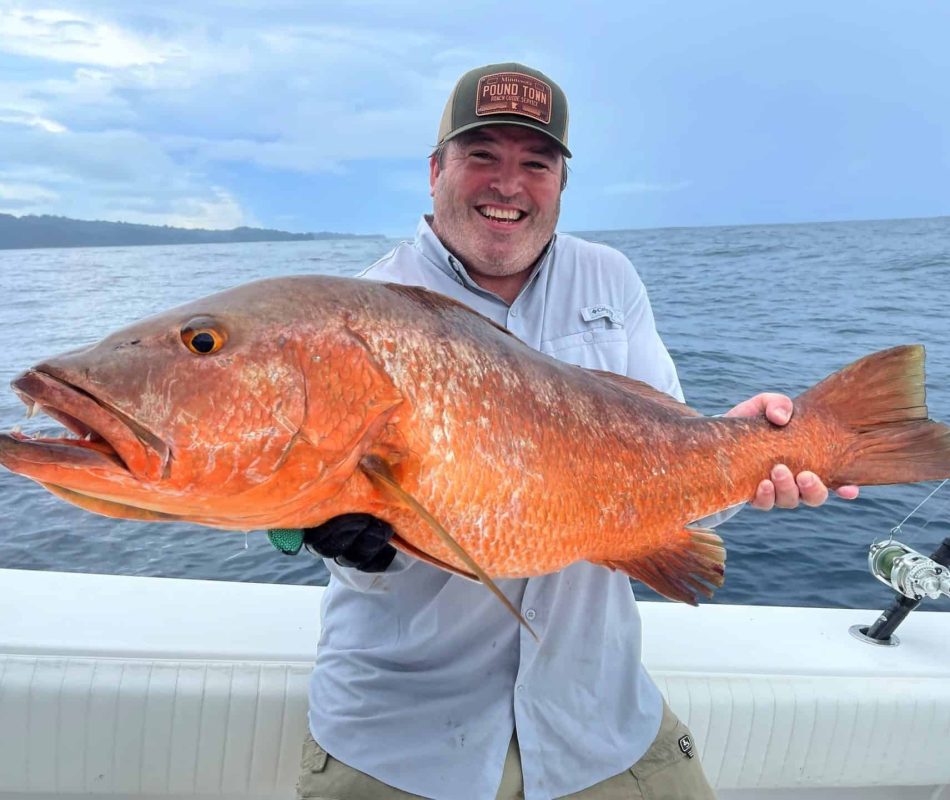
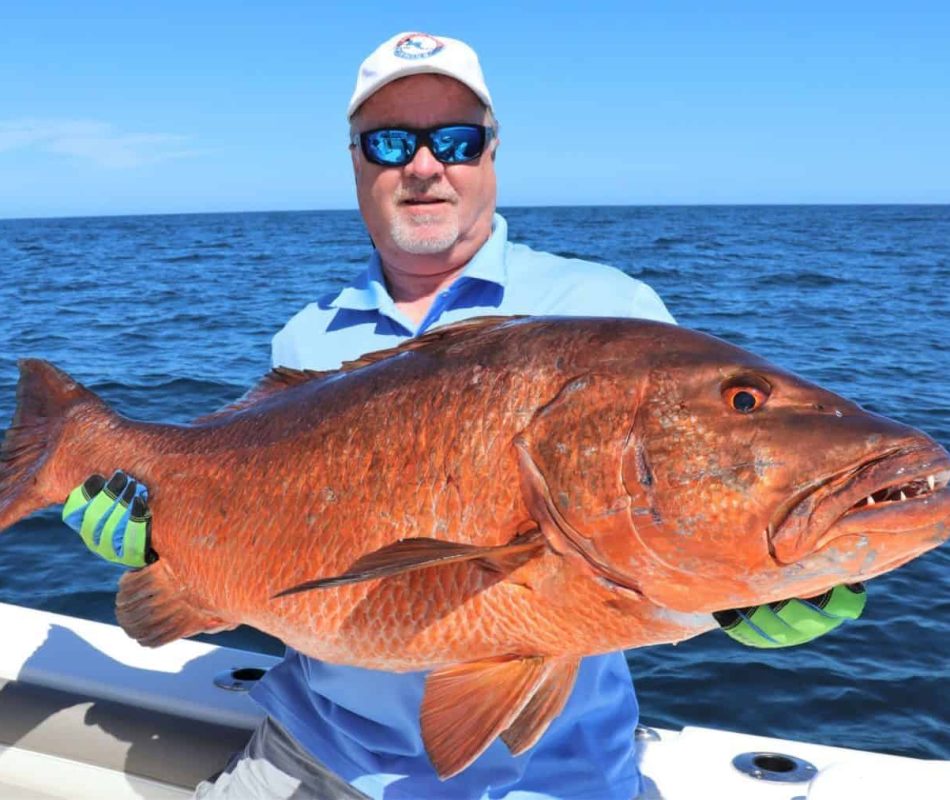
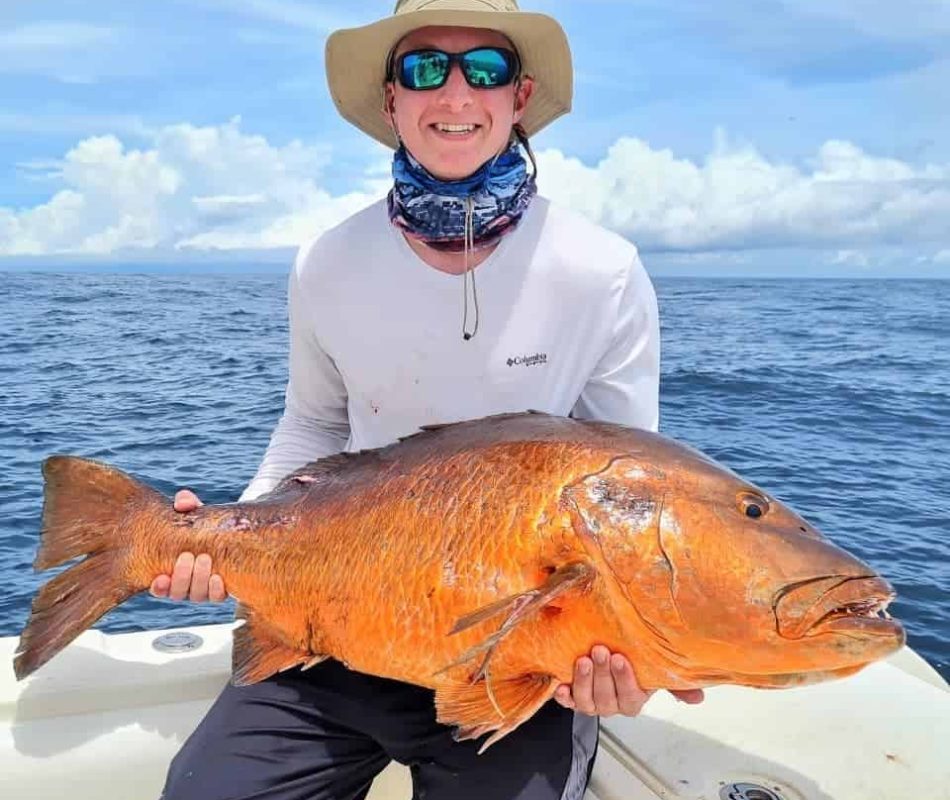
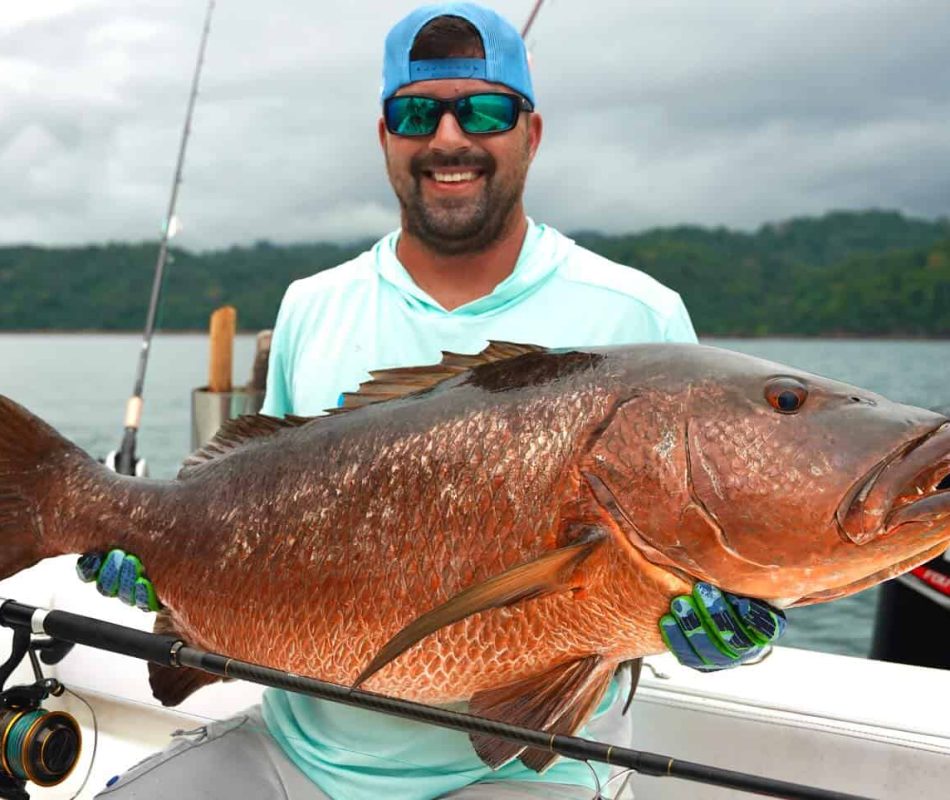
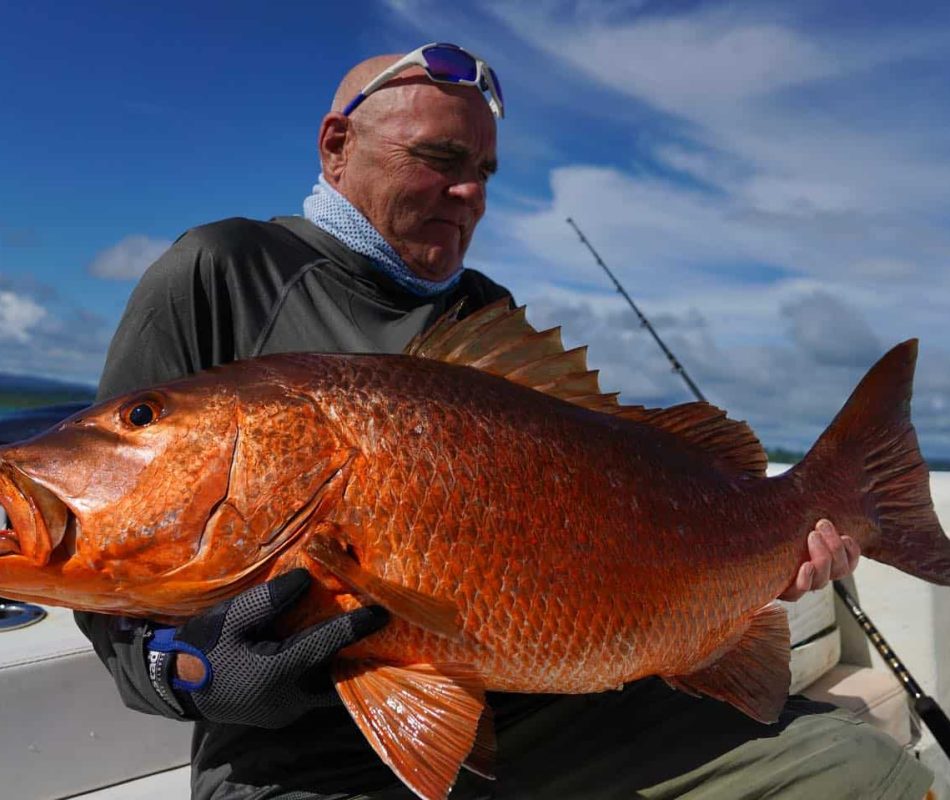


Cubera Snapper
Species Overview
Cubera snapper are a group of large, heavily built predators that includes the Atlantic cubera (Lutjanus cyanopterus), Pacific cubera (Lutjanus novemfasciatus) and West Africa’s cubera snapper (Lutjanus agennes). All three share the same unmistakable build, with deep muscular bodies, broad heads, powerful jaws and prominent canine teeth. Their colour varies from dark red and copper to bronze or grey, but mature fish are most easily recognised by their thick shoulders, oversized heads and the sheer weight they carry through the body.
Distribution and Habitat
The three species occupy different regions. Atlantic cubera range from Florida and the Gulf of Mexico through the Bahamas, Caribbean and tropical Atlantic coastlines of Central and South America. Pacific cubera are found along the eastern Pacific, from Baja California south through Mexico and Central America. African cubera snapper occur along the West African coast, where they inhabit tropical waters from Senegal towards Angola.
Regardless of the coastline, cuberas are closely tied to structure. Mature fish favour rocky headlands, reefs, wrecks, deep channels, submerged pinnacles and steep drop-offs. They may also move into mangrove channels, estuaries and tidal river mouths, especially where deep water and strong currents provide access to feeding areas.
In places such as Panama and Costa Rica, Pacific cubera are regularly encountered around isolated islands and exposed reefs where waves break over rock and the bottom drops away quickly. Atlantic fish are commonly associated with offshore reefs, wrecks and complex coastal systems, while African red snapper can be found around rocky shorelines and estuary mouths, sometimes surprisingly close to land.
Size and Feeding Habits
Cuberas are ambush predators rather than long-distance hunters. They use broken bottom, current and low light to approach prey before striking at close range. Young fish feed on smaller crustaceans and baitfish, while large adults are capable of taking substantial fish, crabs and lobsters. Their heavy jaws and canine teeth are well suited to controlling prey around hard structure.
Size is a major part of their reputation. Atlantic cubera can exceed 100 pounds, with the all-tackle record standing at 124 pounds 12 ounces. Pacific cubera are generally smaller but can still approach 80 pounds. The West African cubera snapper is capable of reaching similar or greater size than its Atlantic relative, with a record of 132 pounds 4 ounces. Fish of that scale have the strength to overpower seriously heavy tackle.
Cubera Snapper Fishing
Cubera snapper can be caught on spinning, conventional and fly tackle depending on the area. Live baits account for most large fish in the Atlantic, particularly around deeper reefs and wrecks, while jigs can be used to reach fish holding lower in the water column. Casting surface lures and poppers around rocky points and reef edges offers the most visual version of the encounter and often the most popular method in the Pacific and West Africa. A cubera rising through clear water towards a popper is difficult to mistake. The strike is direct, violent and followed by an immediate turn back towards the bottom. Unlike a tuna, a cubera does not need to run hundreds of metres to win. A few powerful tail beats towards a ledge, wreck or coral head can be enough to cut the line or break the leader.
When stopped short of cover, the fight becomes a series of heavy surges and stubborn circles beneath the boat. Their broad bodies create considerable resistance, and even a moderate fish can feel far heavier once it turns sideways in the current. Cubera snapper combine the appearance of a prehistoric reef predator with the power of a genuine big-game fish. The oversized head, heavy teeth and thick body tell us exactly what the fish is built to do. Near reefs, rocks and wrecks, few predators are better equipped to end the encounter before it has properly begun.