
Bucket List Species: Chinook Salmon
Chasing Kings: The Thrill of Chinook Salmon Fishing
There’s something about Chinook salmon that gets under your skin. Maybe it’s the sheer power they carry in their thick shoulders and tails, or the way they peel line off your reel like a runaway freight train. For many of us, the Chinook, also known as the king salmon, isn’t just another target species. It’s the fish. The one that turns a fishing trip into a full-on obsession.
I’ve chased Chinook in everything from remote rivers in British Columbia to saltwater haunts off the Alaskan coast, and I can tell you this: every encounter with one of these beasts feels like a personal challenge. Whether you’re trolling bait in the Pacific, casting hardware into a tidewater estuary, or swinging a fly through fast current on a broad river, when a Chinook hits, you know it. You feel it in your bones.
The King of Salmon
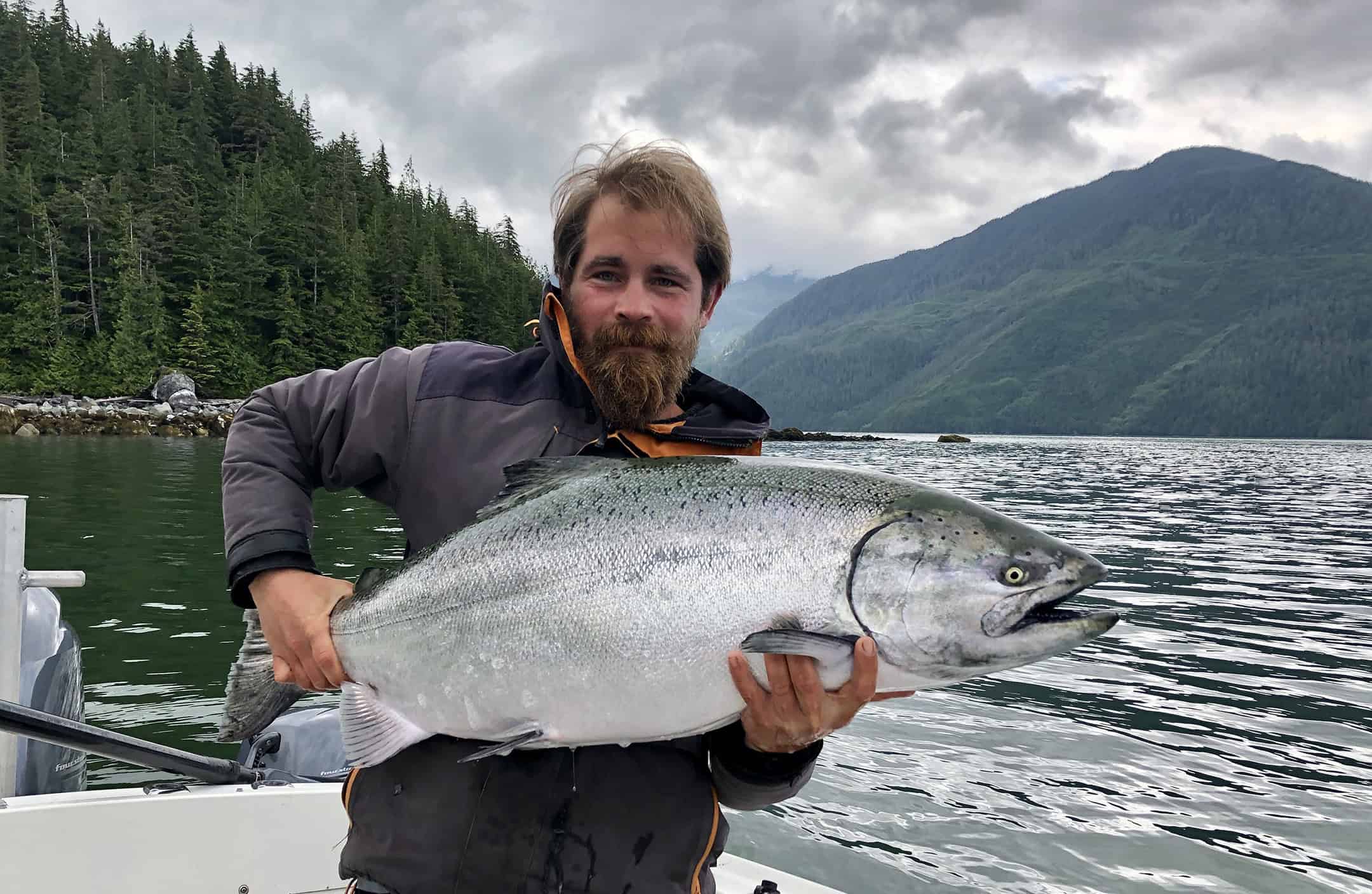
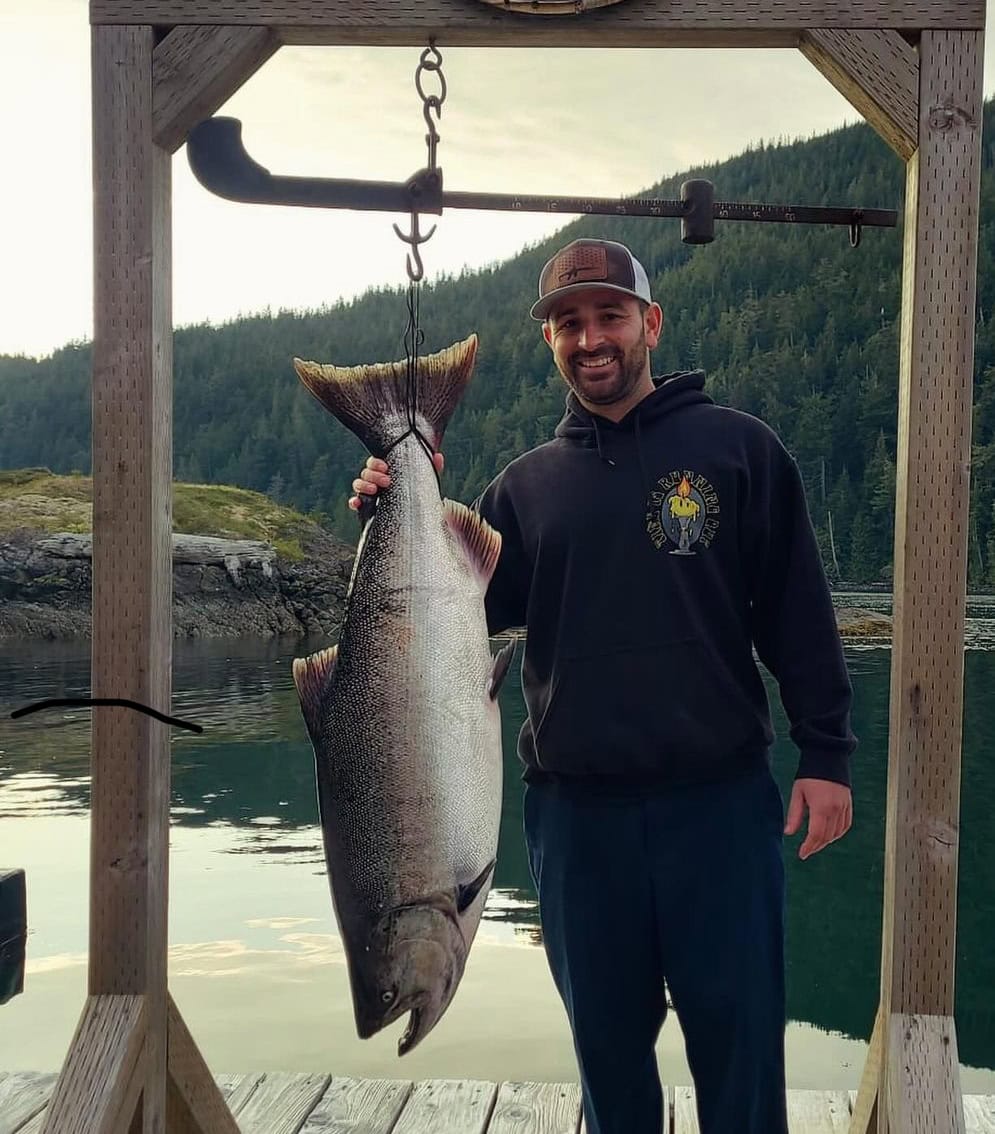
Chinook salmon (Oncorhynchus tshawytscha) are the largest of all Pacific salmon. Mature fish typically range from 10 to 50 pounds, but every year, anglers land giants pushing 60 or even 70 pounds. The current sport-caught world record? A jaw-dropping 97-pound 4-ounce Chinook pulled from the Kenai River in Alaska back in 1985.
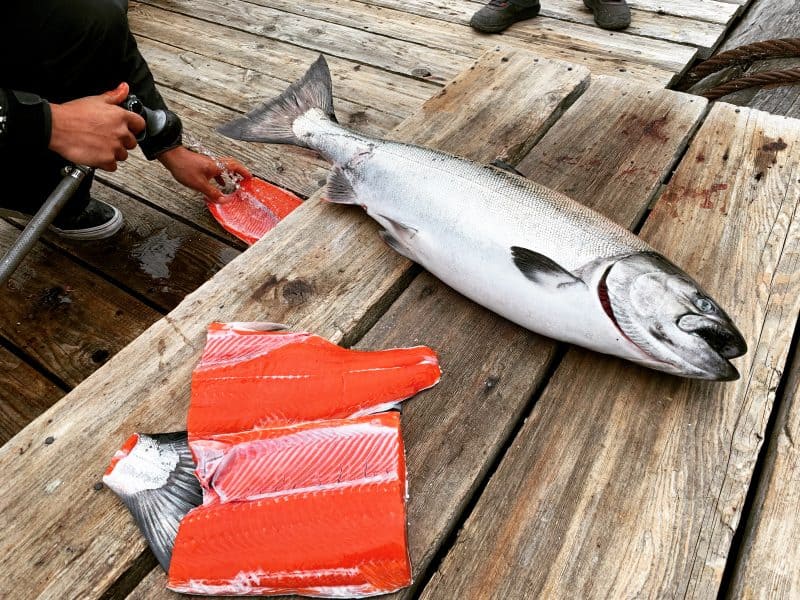
These fish are built for endurance and power. Their migrations can span hundreds of miles, pushing upstream through rapids and strong current with a kind of relentless purpose that seems almost mythical. In the ocean, they feed voraciously on herring, anchovy, squid, and other baitfish, packing on weight before heading inland to spawn. It’s that fat-rich diet that gives them their fight and their famous deep red flesh that chefs and anglers alike dream about.
Where to Find Them
For many, Alaska is the ultimate Chinook destination. Rivers like the Kenai, Nushagak, and Karluk draw anglers from around the world during the summer runs. You can catch them on fly gear, baitcasting setups, or heavy trolling rigs depending on the water and conditions. The scenery alone is worth the trip: glaciers, grizzlies, and remote camps that feel like another world.
But you don’t have to head north to find kings. The Pacific Northwest offers fantastic opportunities in both freshwater and salt. The Columbia River has a strong spring Chinook fishery that’s become almost legendary. Oregon’s Rogue River and California’s Sacramento system still kick out quality fish. British Columbia’s Fraser and Skeena River systems are another world-class option, especially if you’re into spey casting and want to swing flies through some of the most storied salmon water on the continent.
Then there’s the salt. If you’ve never trolled for Chinook off Vancouver Island, Haida Gwaii, or even down into Puget Sound, you’re missing out. Saltwater Chinook are ocean-bright and full of fire. They’ll hit a trolled herring or spoon with shocking force and test every knot and inch of your gear. I still remember the first one I hooked near Ucluelet. I thought I’d snagged the bottom until it ran 60 yards straight down and never looked back.
Great Lakes Kings
One of the best-kept secrets in North American salmon fishing is the thriving Chinook fishery in the Great Lakes. Introduced to the region in the 1960s to control invasive alewife populations, Chinook adapted quickly and established self-sustaining populations in lakes Michigan, Huron, Ontario, and Superior.
These fish might not get quite as massive as their Pacific cousins, but they’re still plenty big. Fish in the 15 to 25-pound range are common, and 30-pounders show up every season. What’s remarkable is the variety of fishing opportunities the region offers. You can troll from big charter boats off places like St. Joseph or Ludington, Michigan, or you can wade into rivers like the Pere Marquette or the Salmon River in New York during the fall runs and hook kings on foot.
River fishing for Great Lakes Chinook is gritty, visual, and totally addictive. You’ll often spot fish holding in pools or charging through shallow riffles. Some are chrome-bright just in from the lake, while others are turning dark and gnarly as they prepare to spawn. Either way, they’re aggressive and unpredictable. A well-presented spawn sack, plug, or even a big streamer can trigger savage takes.
And if you’re into DIY trips or weekend getaways, the Great Lakes region offers accessibility that’s hard to beat. Plenty of affordable lodging, strong local guide networks, and relatively easy logistics make this an ideal way to get a taste of Chinook action without booking a fly-in lodge or buying a plane ticket to Alaska.
Tactics and Gear
Chinook are versatile fish to target, but they demand good gear and attention to detail. In rivers, bait fishing with cured roe under a float is a time-honored method, especially in deeper pools or travel lanes. If you’re swinging flies, think big and heavy. Intruder-style patterns on sink tips, with Skagit heads and stout two-handed rods, are the norm. These aren’t delicate fish. You want gear that lets you put the brakes on when they decide to bolt.
In the salt, trolling is the most common method. Flashers, bait rigs, hoochies, and spoons all have their place, and depth control is key. Chinook often cruise deeper than other salmon, especially in warmer water. Downriggers make a huge difference here, letting you present your offering exactly where it needs to be.
One tip: match your leader strength to the fish you’re chasing. I’ve seen too many kings lost to overconfident anglers using steelhead setups or trout leaders. Go heavy. You’re not going to finesse one of these monsters in.
When to Go
Timing depends heavily on the system you’re fishing. In general, Chinook runs span from late spring through early fall. Springers, those early arriving fish, are prized for their flavor and fight, and often show up in April and May. Summer runs peak through June and July in many places, while fall Chinook, also called upriver brights or tules in some regions, can keep rivers full of action into September and October.
Each run has its quirks. Springers are often smaller but wildly energetic. Summer fish tend to be larger, and in some systems, they’re the real bruisers. Fall fish can be darker and closer to spawning, but they’re often abundant and aggressive. In the Great Lakes, fall is prime time, with kings flooding the rivers by late September and peaking through early October.
Why It Belongs on Your Bucket List
Chinook salmon fishing is a full-sensory experience. It’s the crash of the take, the screaming reel, the deep, head-shaking runs, and the long, dogged fights that feel like a tug-of-war with a fish that refuses to quit. But it’s more than just the battle. It’s the rivers, the ocean sunrises, the wildlife, and the camaraderie that forms around a fish camp or a bouncing drift boat.
There’s something primal about it. You’re not just fishing. You’re taking part in one of the great migrations of the natural world. The Chinook’s journey from ocean to headwater is legendary. And when you connect with one, even just for a few minutes, you feel a part of that story.
So if you’ve been wondering what to put on your next fishing bucket list, put Chinook salmon right at the top. Whether it’s a fly-in lodge in Alaska, a guided drift on the Columbia, a pier in Lake Michigan, or a saltwater troll off the coast of British Columbia, chasing kings will leave a mark. It’s the kind of fishing you’ll talk about for years.
And who knows? You just might meet the fish of a lifetime.


Looking to tick the Chinook Salmon off your bucket list? Get in touch below and we’ll craft a tailormade adventure to fit your goals and expectations! Be sure to ask about exclusive deals and special offers.
Fancy a fly-in trip to the Pacific Northwest? Check out this all-inclusive package to some of British Columbia’s most productive chinook waters.