
Destination: Robinson Crusoe Island
Robinson Crusoe Island Fishing Guide: Chile’s Giant Yellowtail Frontier
Perched 400 miles off Chile’s Pacific coast, Robinson Crusoe Island is the jewel of the Juan Fernández Archipelago and one of the most unique sportfishing destinations anywhere in the Southern Hemisphere. While it’s famous for inspiring Daniel Defoe’s novel, the real treasure here isn’t literary—it’s the chance to target colossal yellowtail that routinely grow larger than anywhere else in the world.
A Raw, Expedition-Level Experience
Unlike more developed fisheries, Robinson Crusoe offers a raw, expedition-level experience. There are no luxury resorts or fleets of charter operators. Just a small community of fishermen, a handful of guesthouses, and an ocean brimming with some of the strongest yellowtail you’ll ever hook.
Where You’ll Base Your Adventure
You’ll base your adventure in San Juan Bautista (Cumberland Bay), a quiet village tucked in a volcanic bay surrounded by sheer cliffs and rolling hills. From here, local captains run 28-32 foot center consoles equipped with powerful twin outboards, fish finders, and the heavy tackle needed to handle these extraordinary fish. Charters typically last 8-10 hours per day, often running 15-40 miles offshore to fish underwater pinnacles that rise from thousands of feet to just 180-300 feet beneath the surface.
The Main Attraction: Giant Yellowtail (Seriola lalandi)
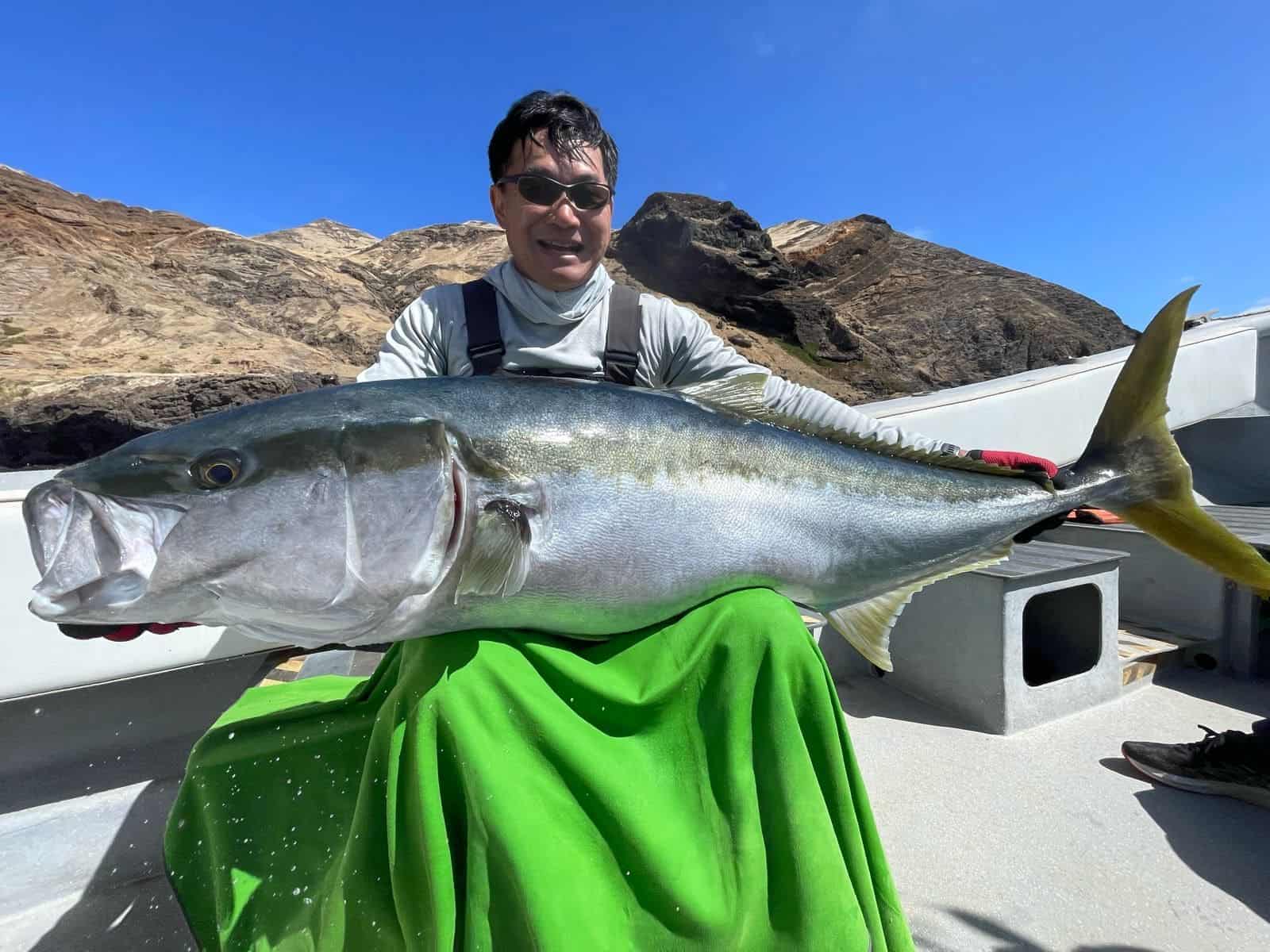
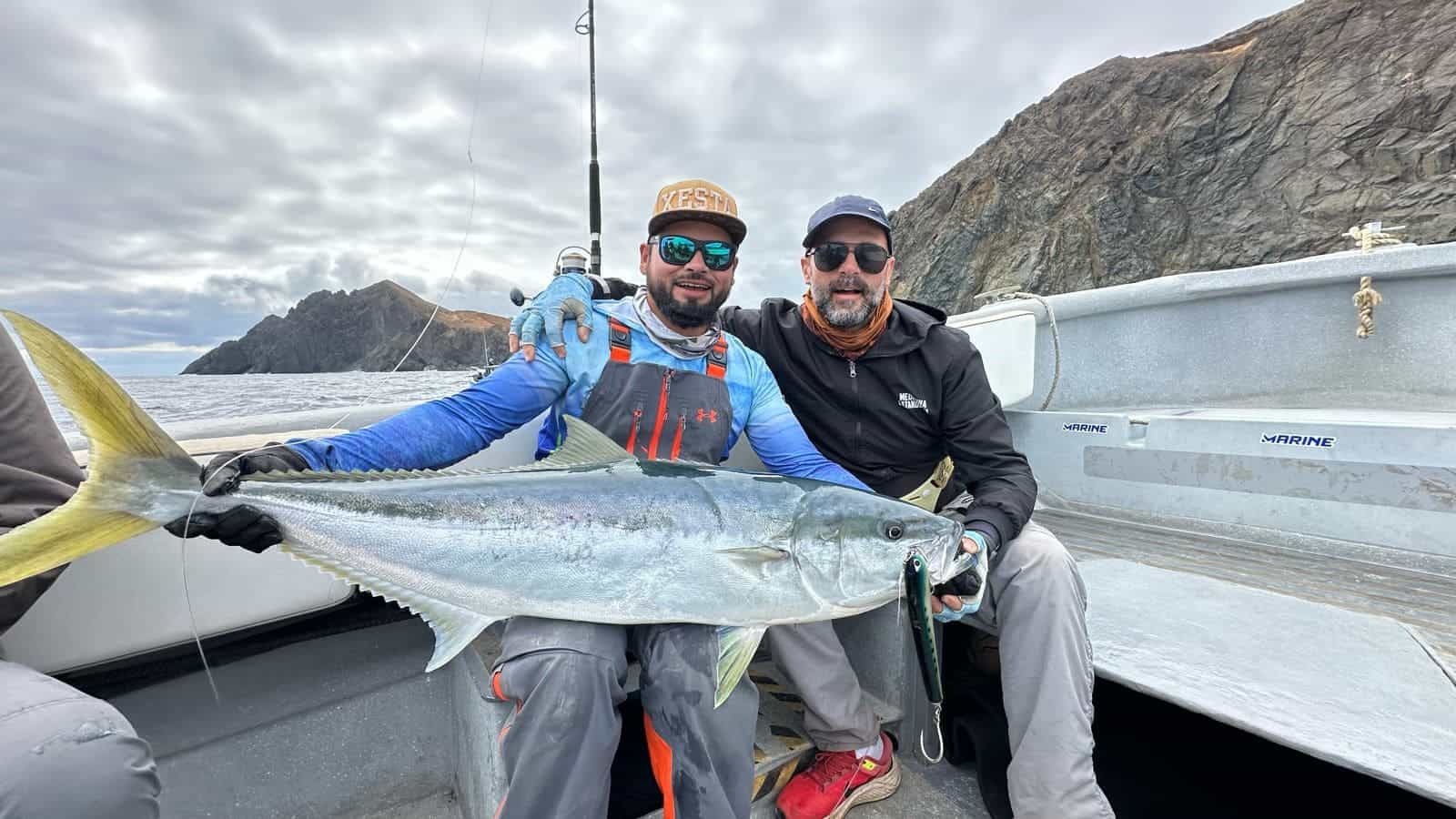
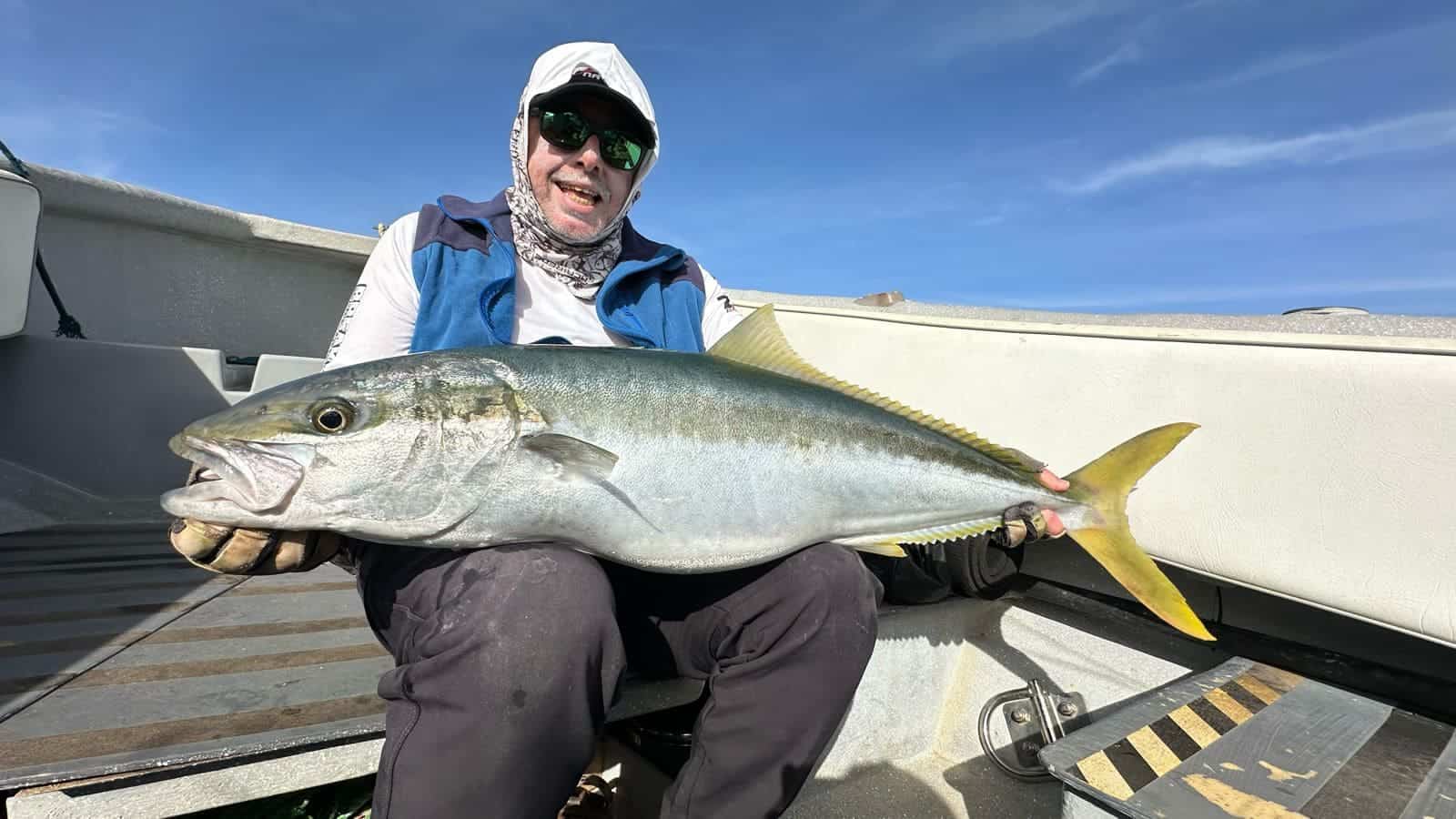
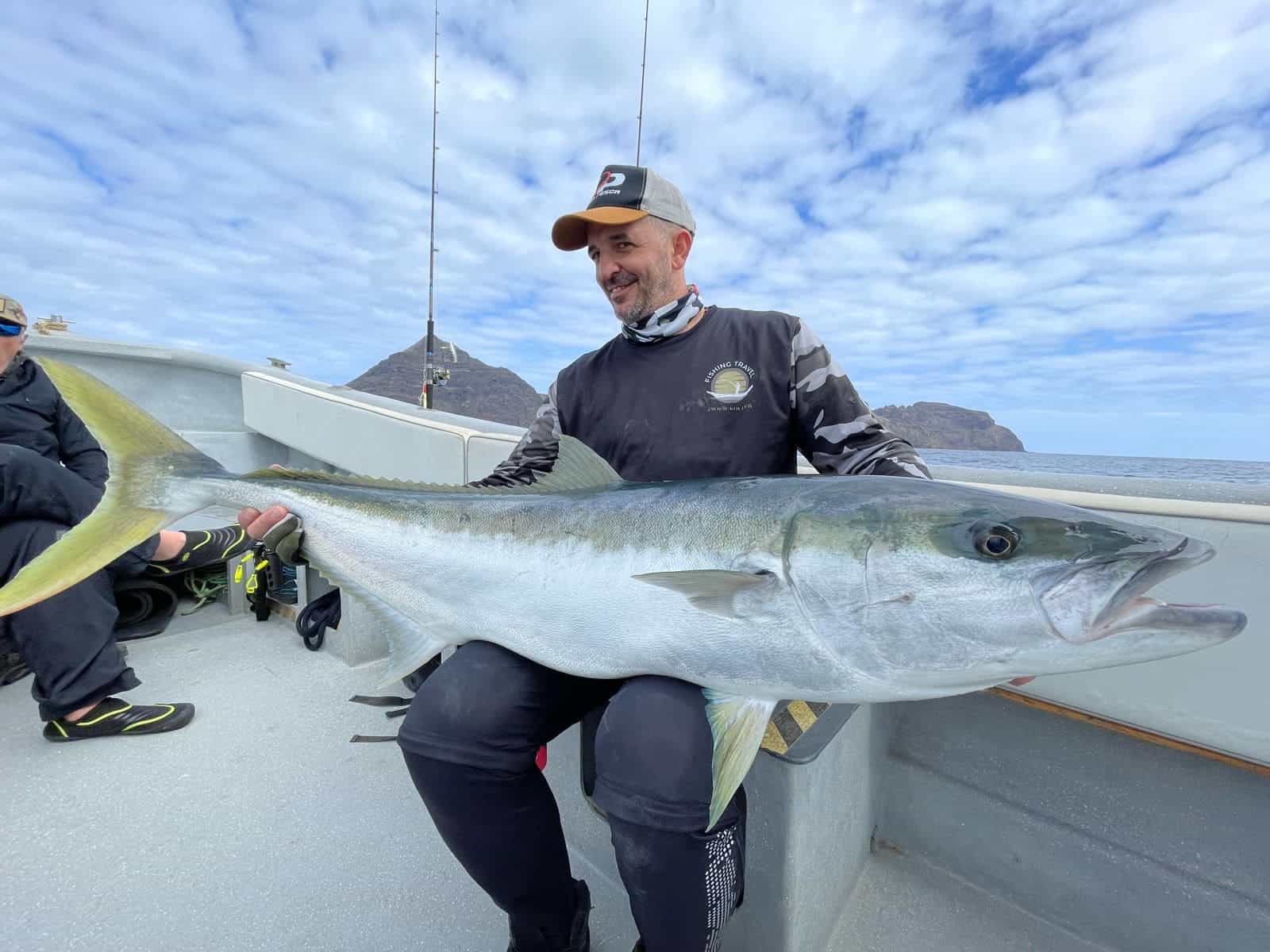
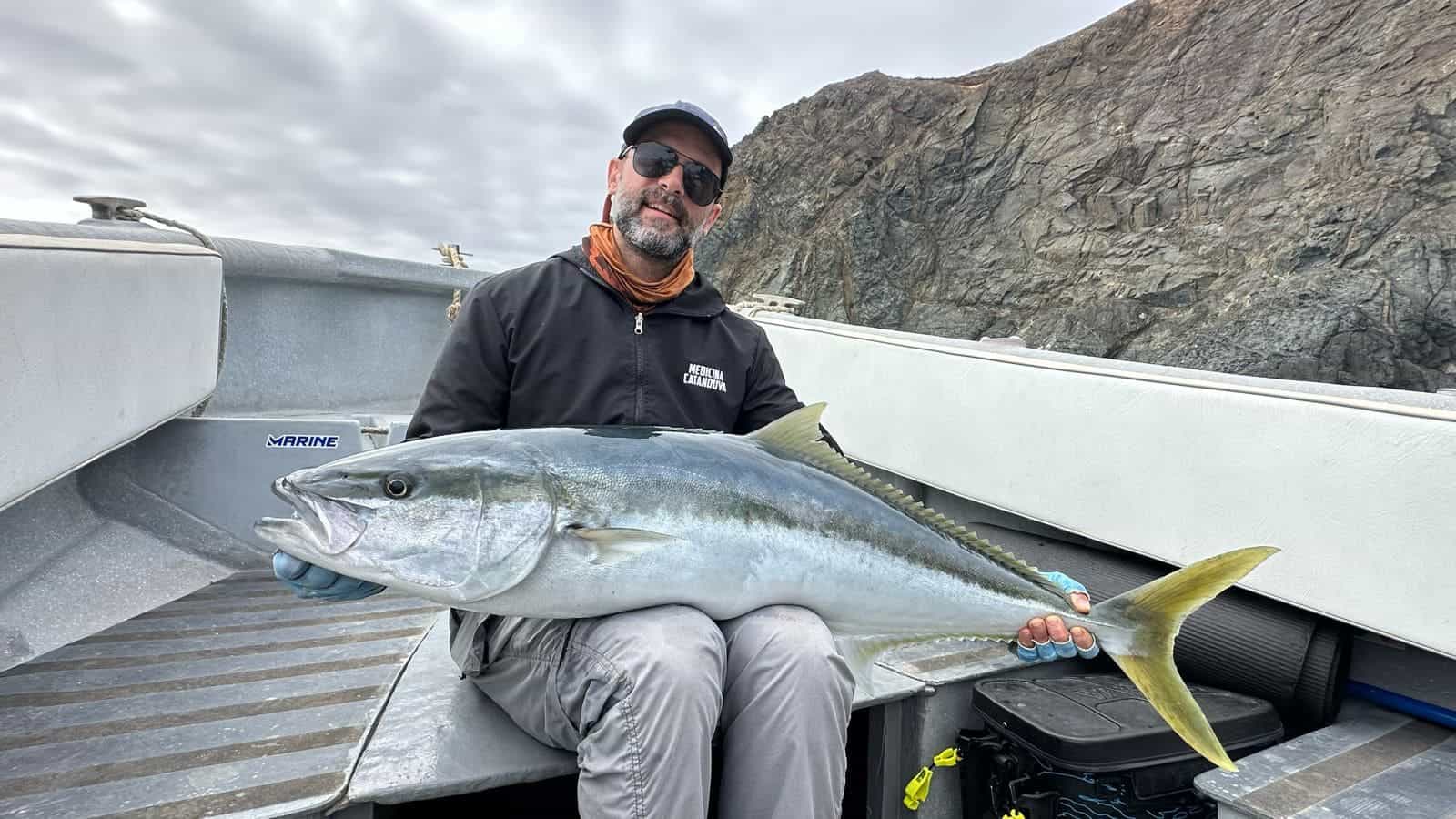
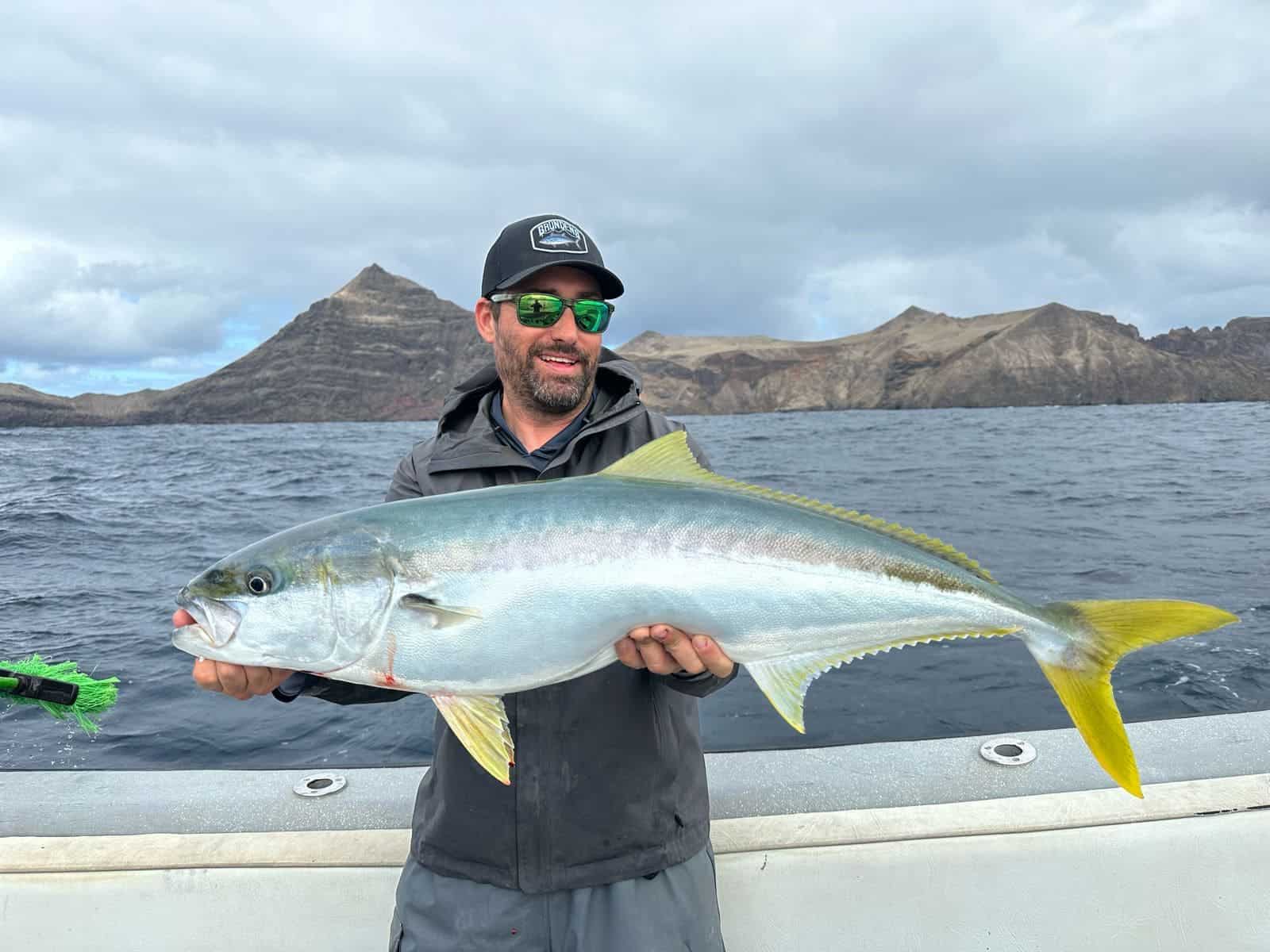
The main attraction is the giant yellowtail or yellowtail kingfish as they are known in Australia and New Zealand. In this remote region, 60-80 lb fish are common, and every season produces monsters over 90 lbs. These fish school in massive numbers, attacking vertical jigs and stickbaits with explosive power. On a good day, it’s possible to catch dozens of big yellowtail in a single session, and fights routinely last 20-30 minutes or more. Unlike yellowtail you may have caught in California or Australia, the fish here are bigger, meaner, and fight with relentless determination.
Other Species You’ll Encounter
In addition to the monster Yellowtail, big Marlins, Tuna and a variety of reef fish also frequent these waters. The island is the only island in Chile where nets are not allowed and one of the reasons why the ecosystem is so healthy. It is believed that the waters around the island have some of the highest concentrations of marine life found anywhere on earth. Other species that can be caught are endemic breca, bacalao, lenguado, jurel de juanfernadez, sierra, salmonete, coginova, jergilla, pampanito, and corvina.
Best Time to Fish
Peak fishing takes place during the austral summer between December and April when the seas are calmer and baitfish are abundant. The best months for the heaviest yellowtail tend to be January to March. Because trips are often weather-dependent and logistics are complex, it’s smart to build in a buffer of extra days in case of delays.
Recommended Tackle and Techniques
Tackle should be heavy and purpose-built. Bring 80-100 lb braided mainline, reinforced jigging rods rated for 300-400 grams, and large spinning reels with smooth drags. Shimano stellas are our go to. Most anglers use a mix of vertical jigs and stickbaits rigged on 200 lb fluorocarbon leaders to withstand repeated strikes and abrasion. If you’re used to light tackle, be prepared: this is one of the most demanding jig fisheries on the planet.
Where to Stay
Accommodations are comfortable but simple. Lodging often includes home-cooked meals and the chance to swap stories with visiting scientists and fellow anglers who make the long journey to this remote outpost.
Getting There
Getting to Robinson Crusoe Island is part of the adventure. You’ll first fly into Santiago, Chile, then board a small propeller plane operated by ATA Aerolineas. The flight takes about 2.5 hours and lands on a rugged airstrip on the opposite side of the island. From there, a boat transfer brings you to San Juan Bautista. Because flights are limited to a few days per week and weather frequently disrupts schedules, it’s essential to confirm logistics carefully and pack with flexibility in mind.
Beyond Fishing
Beyond fishing, the island is a UNESCO Biosphere Reserve home to endemic plants, fur seals, and rare birdlife found nowhere else. When you’re not on the water, you can hike to Selkirk’s lookout for panoramic views or explore the island’s colonial ruins.
Final Thoughts
Robinson Crusoe Island isn’t just a fishing destination. It’s a place where every day feels like an expedition, where you’ll battle the biggest yellowtail of your life and return each evening to a quiet village that seems frozen in time. For anglers who crave true adventure and a fishery that remains raw and unspoiled, there is nowhere else quite like it.


Ready to plan your own giant yellowtail expedition? Check out our Robinson Crusoe Island Fishing Package or contact us and we’ll help you build the trip of a lifetime
Frequently Asked Questions:
1. Why is Robinson Crusoe Island unique for yellowtail fishing?
This isolated Pacific outpost is renowned for its monster yellowtail—60–80 lb specimens are common, with fish over 90 lb caught each season. The island is protected from net fishing and lies within a thriving marine ecosystem.
2. When is the best time to fish at Robinson Crusoe Island?
The prime season runs from January to May, with the heaviest yellowtail action peaking between January and March. Read full guide.
3. What other species can I expect to catch?
Beyond yellowtail, anglers may hook marlin, tuna, and a suite of reef species—from endemic reef fish to grouper, sole, croaker, and more.
4. How do I get to Robinson Crusoe Island?
We arrange a charter flight from Santiago to the island. A boat transfer brings you to San Juan Bautista, your home base in a village nestled in Cumberland Bay.
5. What else can I explore beyond fishing?
When you’re not battling giants, explore rugged hiking trails, ruins, endemic wildlife (like rare birds and fur seals), and UNESCO-protected natural reserves. The island’s unique flora and the colonial vibe of San Juan Bautista add rich layers to the expedition.